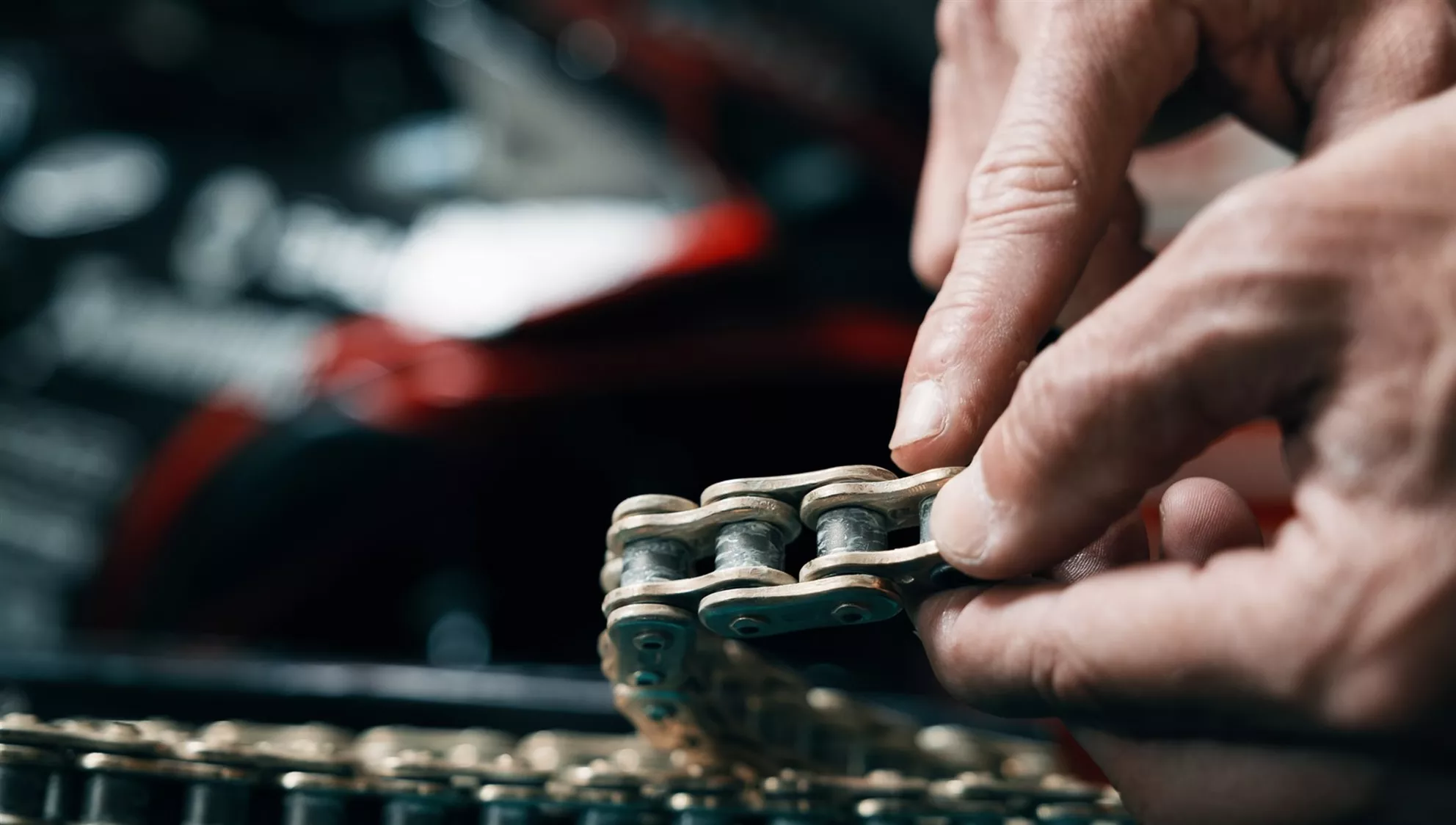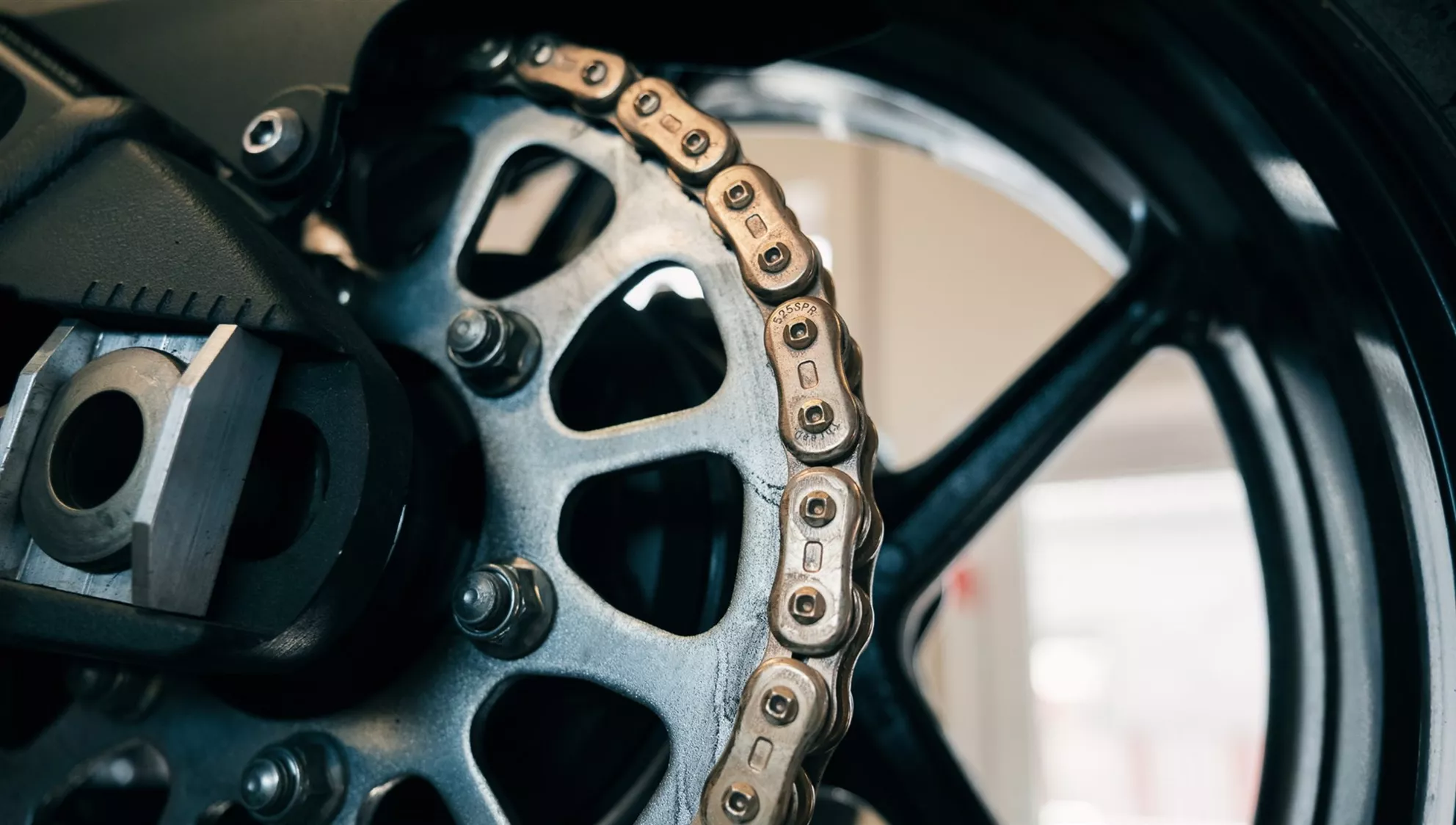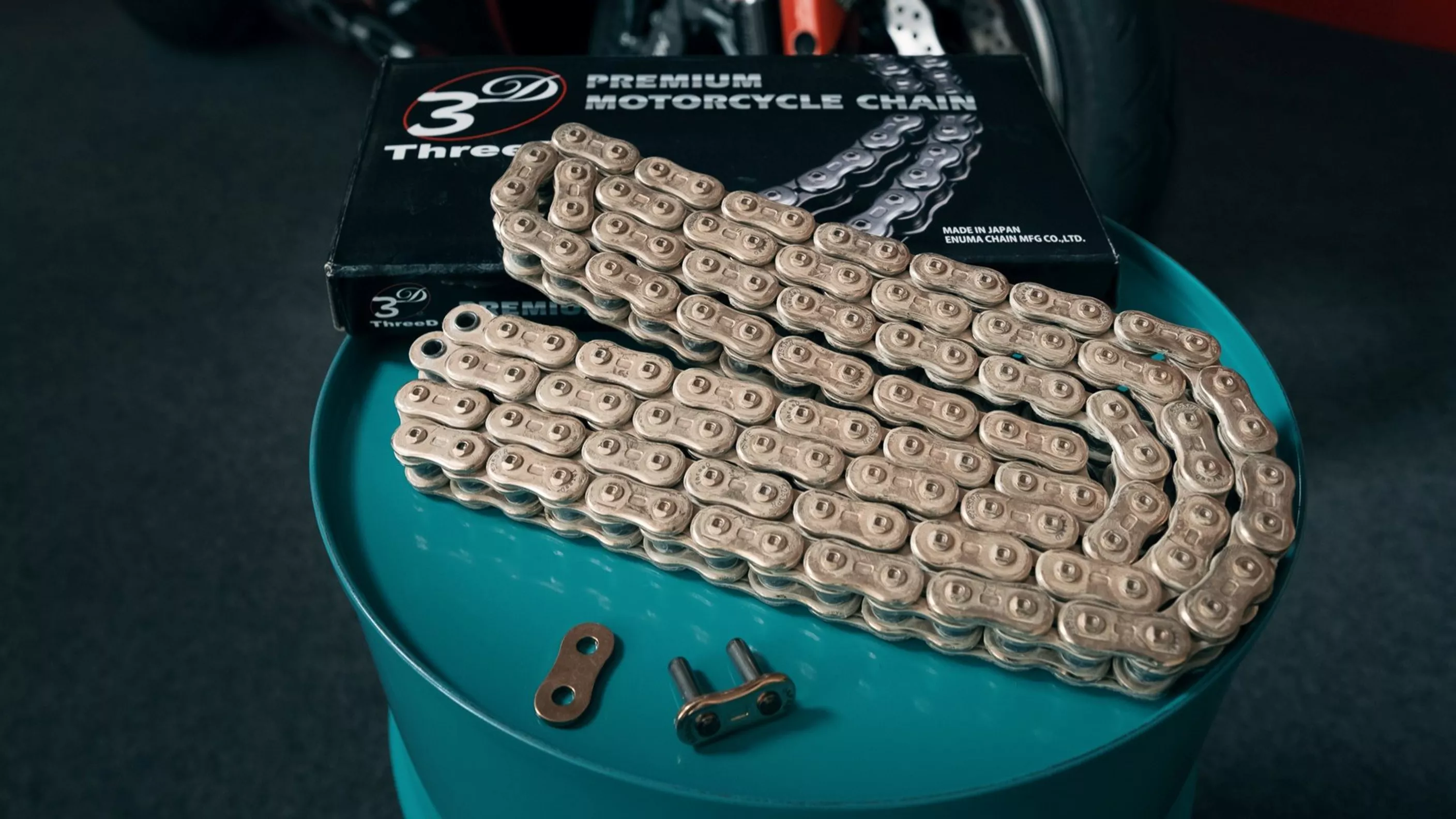

For most riders, it honestly doesn't matter day-to-day which chain is fitted to their bike. When the standard OEM chain wears out, people often just go back to the same spec — simply because it works and requires no further thought.
In the tuning world, things look a bit different. Here, riders frequently switch to narrower and lighter chains, often combined with new sprockets. The idea behind this makes sense: less rotating mass should provide a more direct response and better performance.
In practice, however, a more nuanced picture emerges, because lower weight doesn't automatically lead to better overall performance. Especially with narrower chains, the loads on each component increase. This can lead to increased wear — both on the chain itself and on the front and rear sprockets. At the same time, friction often increases as mileage builds up, meaning any potential performance gain from the lower weight is gradually lost again. The result: more maintenance effort, higher follow-up costs, and a benefit that fades over time.
Especially with powerful bikes, a different approach therefore makes sense. Instead of relying on a lighter but potentially less durable solution, it's worth investing in a high-quality chain in the dimension specified by the manufacturer. This way, load capacity is maintained while efficiency and lifespan can be improved at the same time.