If you're in the market for a mid-range naked bike under 8,000 euros, you'll quickly find yourself choosing between two very different concepts: on one side, the new Kawasaki Z650 S, and on the other, the distinctly more extroverted CFMOTO 675 NK. Both are priced closely, with only nuances separating them in weight and engine displacement. However, after the first few kilometers, it's evident: while these two motorcycles target a similar audience, they rely on entirely different virtues.
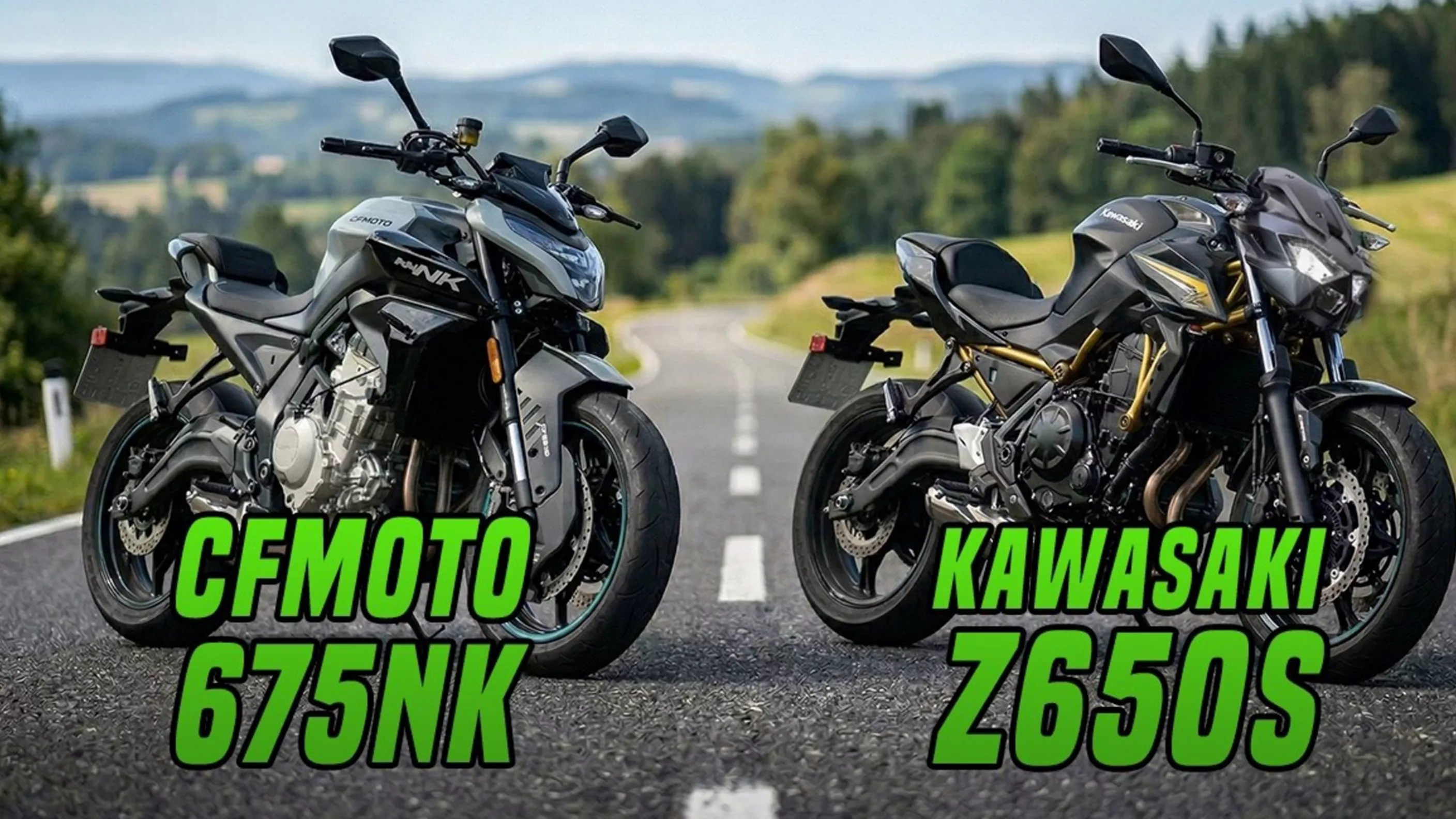
CFMOTO 675 NK vs Kawasaki Z650 S Comparison
Two Naked Bikes Under 8000 Euros in Direct Comparison
Two mid-range naked bikes, two entirely different characters: The Kawasaki Z650 S focuses on control and accessibility, while the CFMOTO 675 NK emphasizes sound, power, and emotion. Our comparison reveals which bike impresses more in everyday use and on winding country roads.
&width=72&height=72&bgcolor=rgba_39_42_44_0&mode=crop "Author: Der Horvath")
Der Horvath
published on 10/04/2026
2,825 Views
Design: Delicate Sugomi Line vs. Futuristic Powerhouse
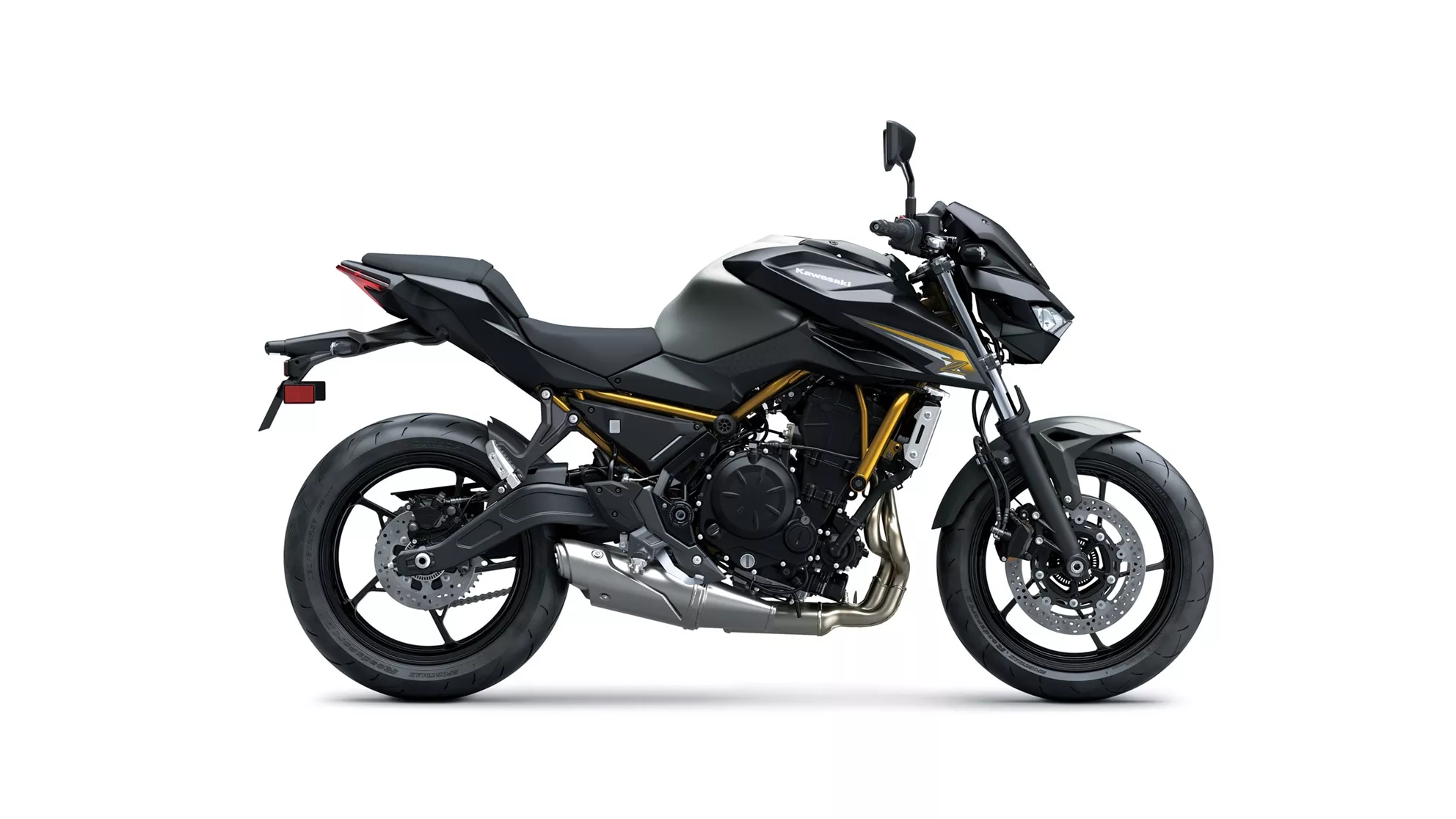
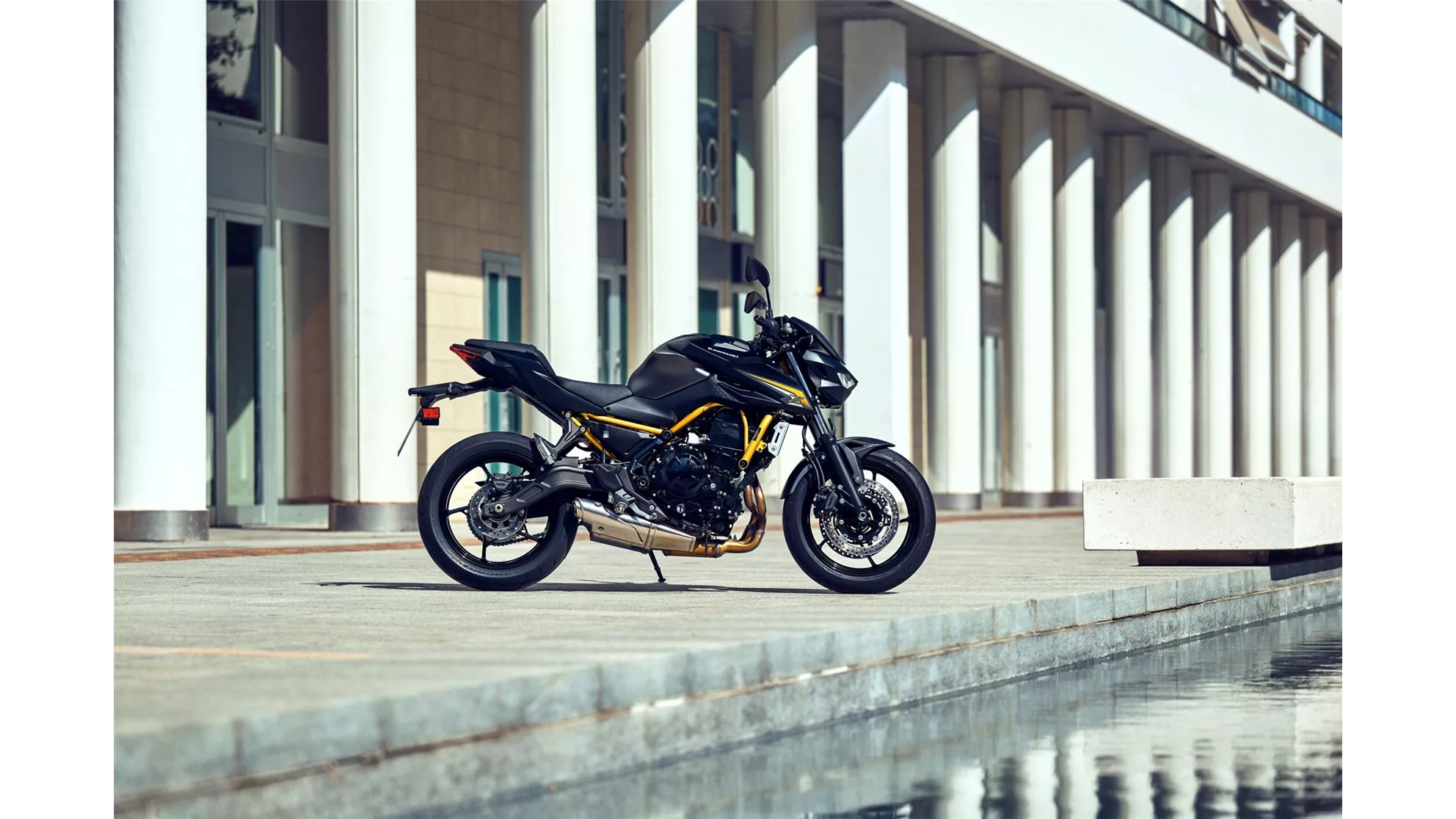
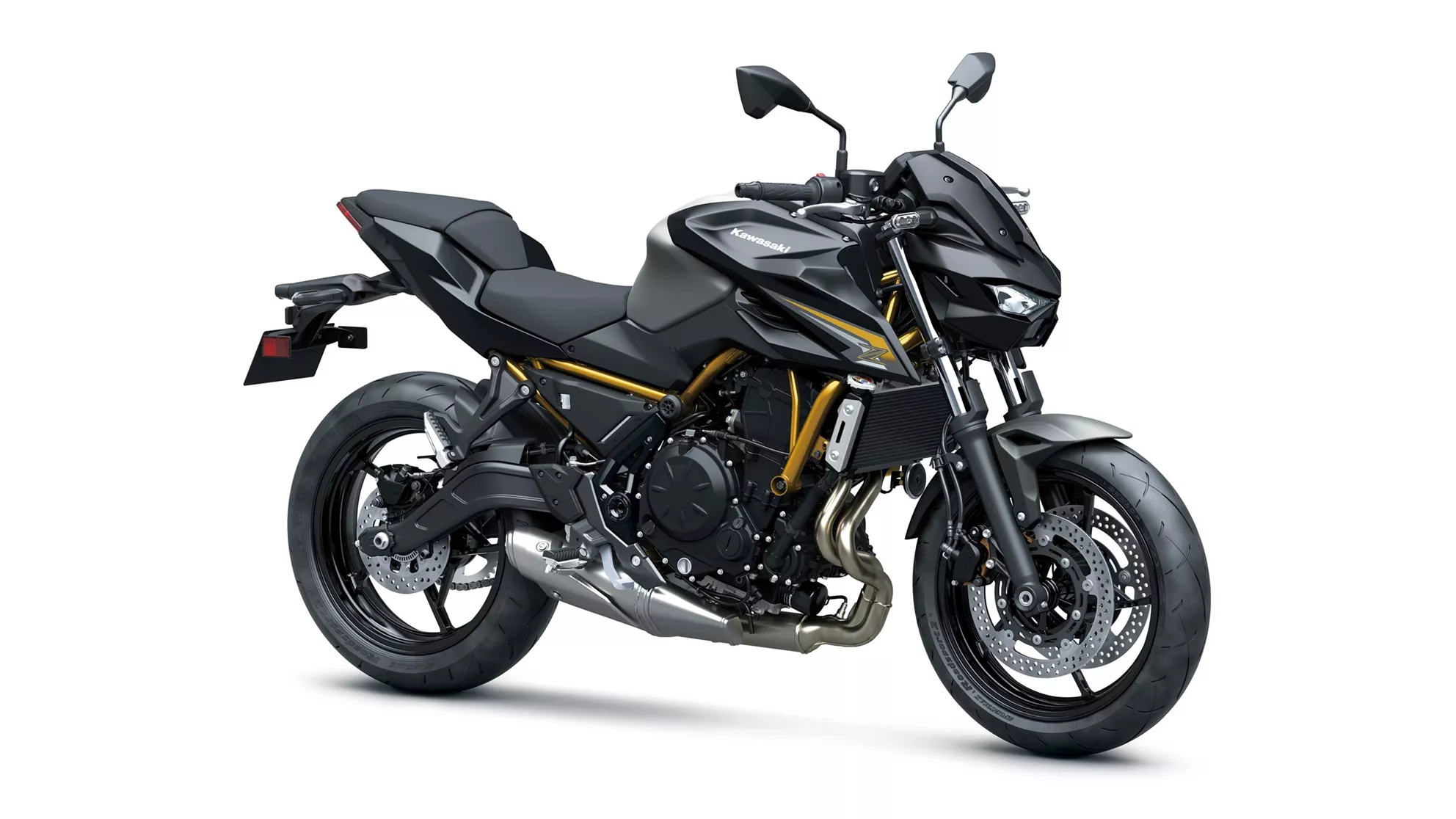
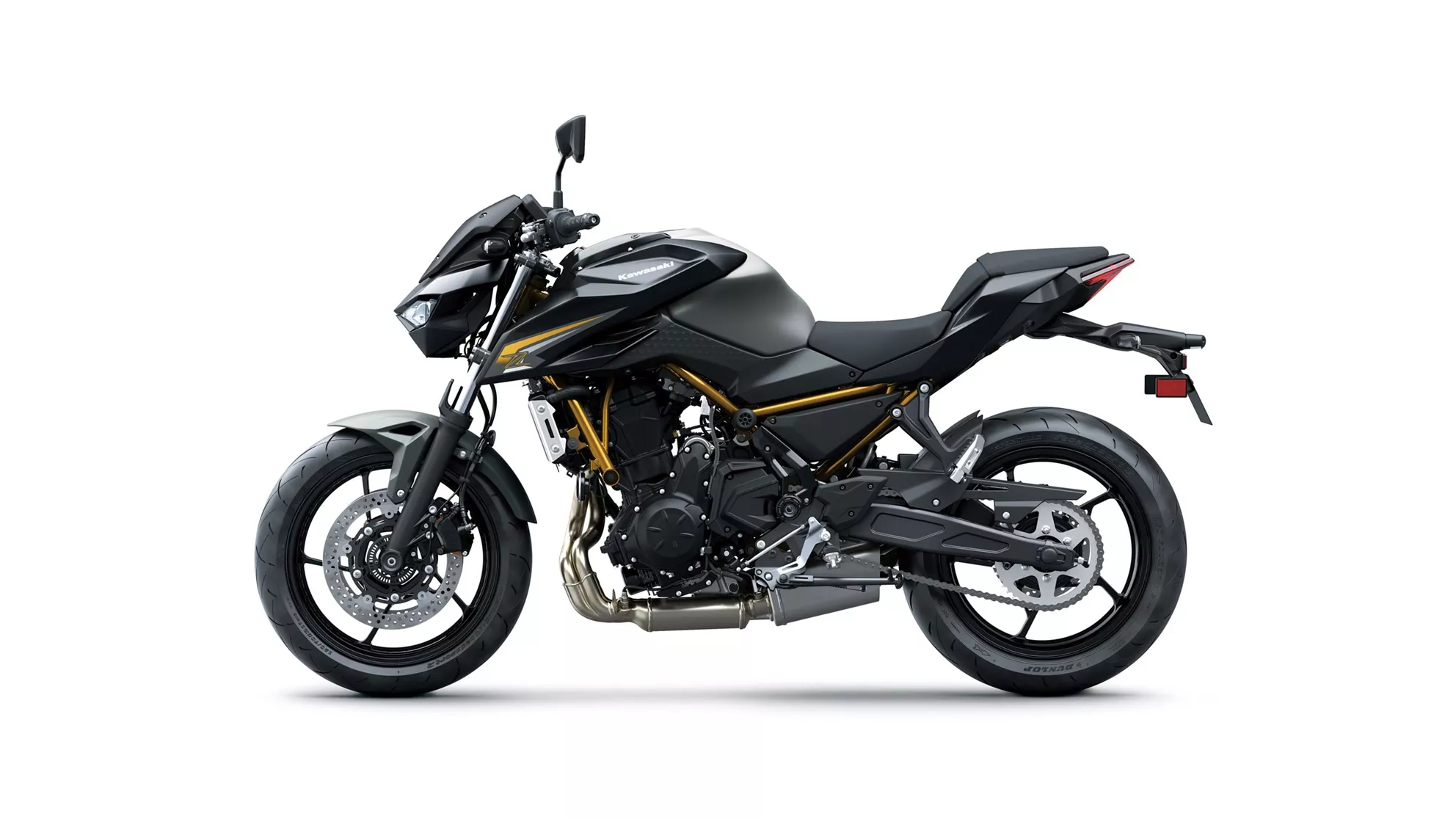
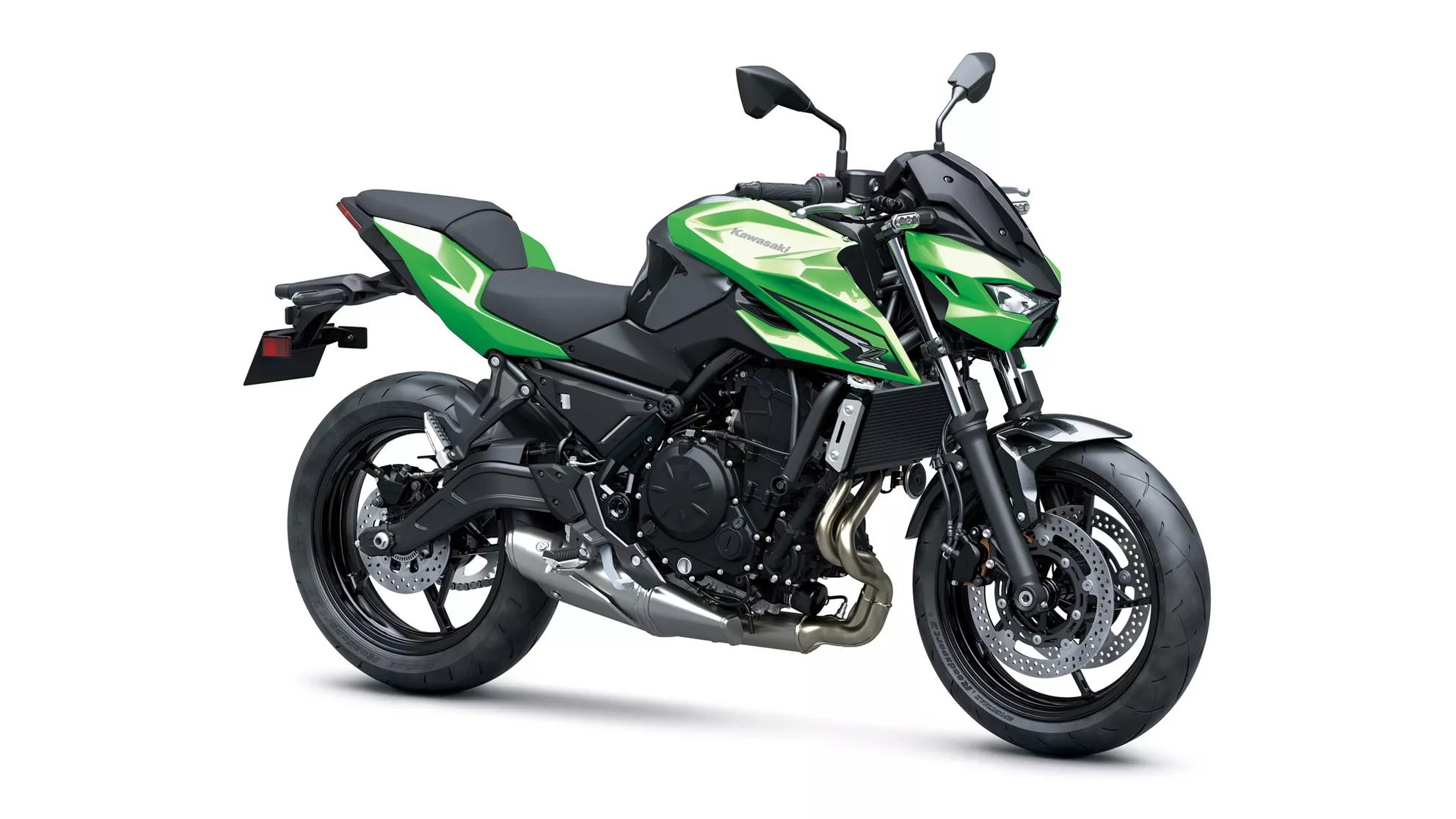
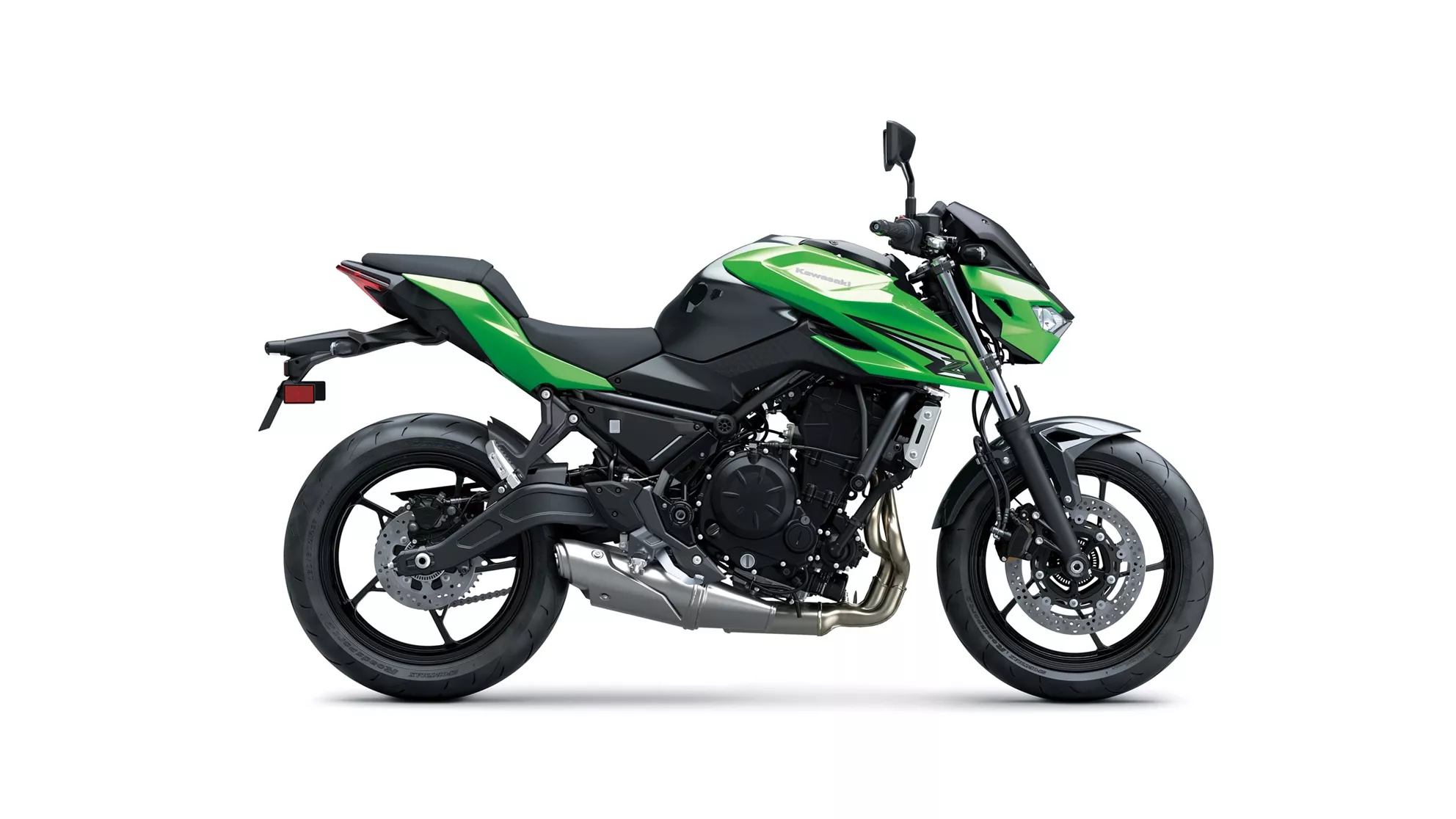
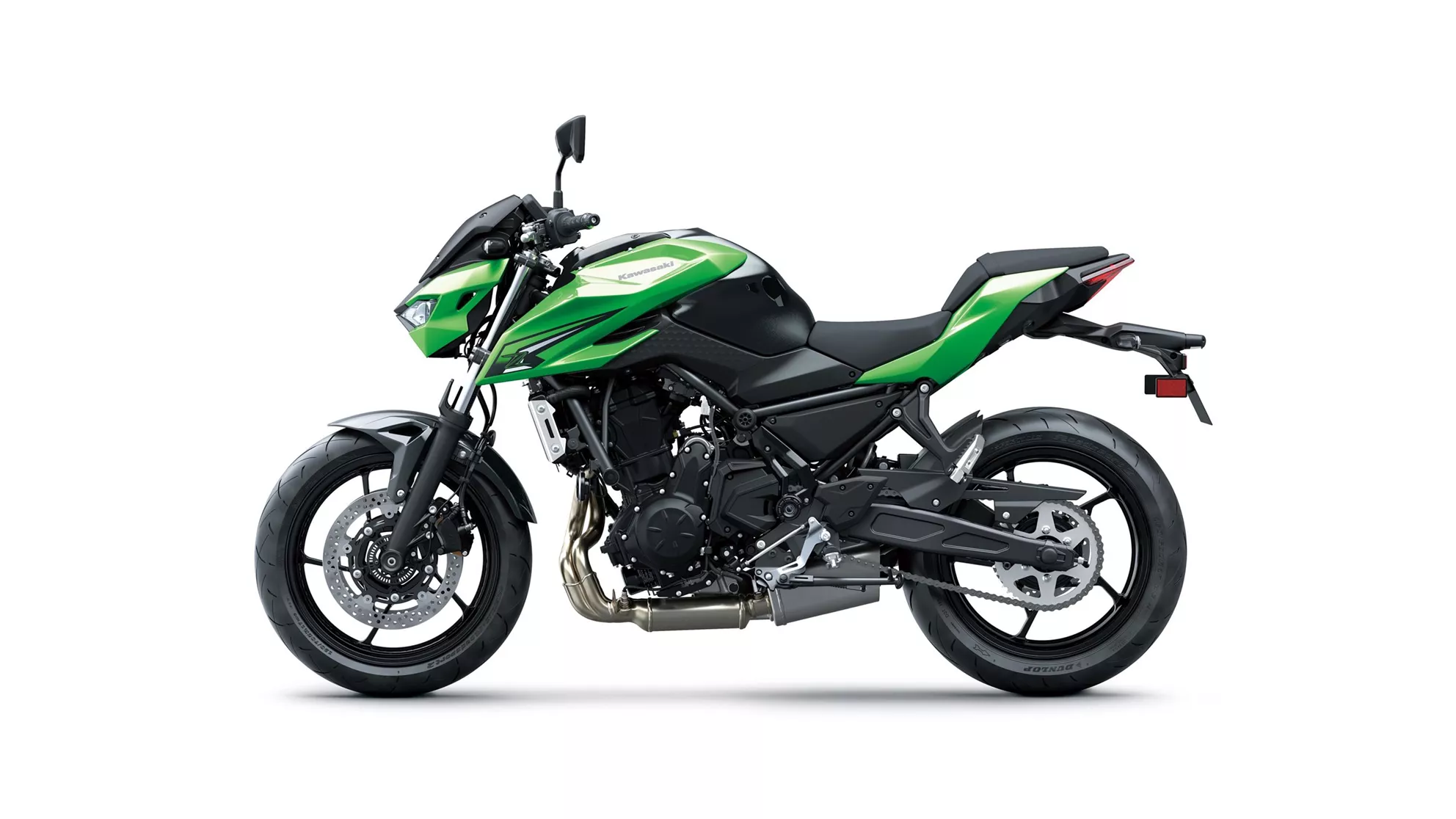
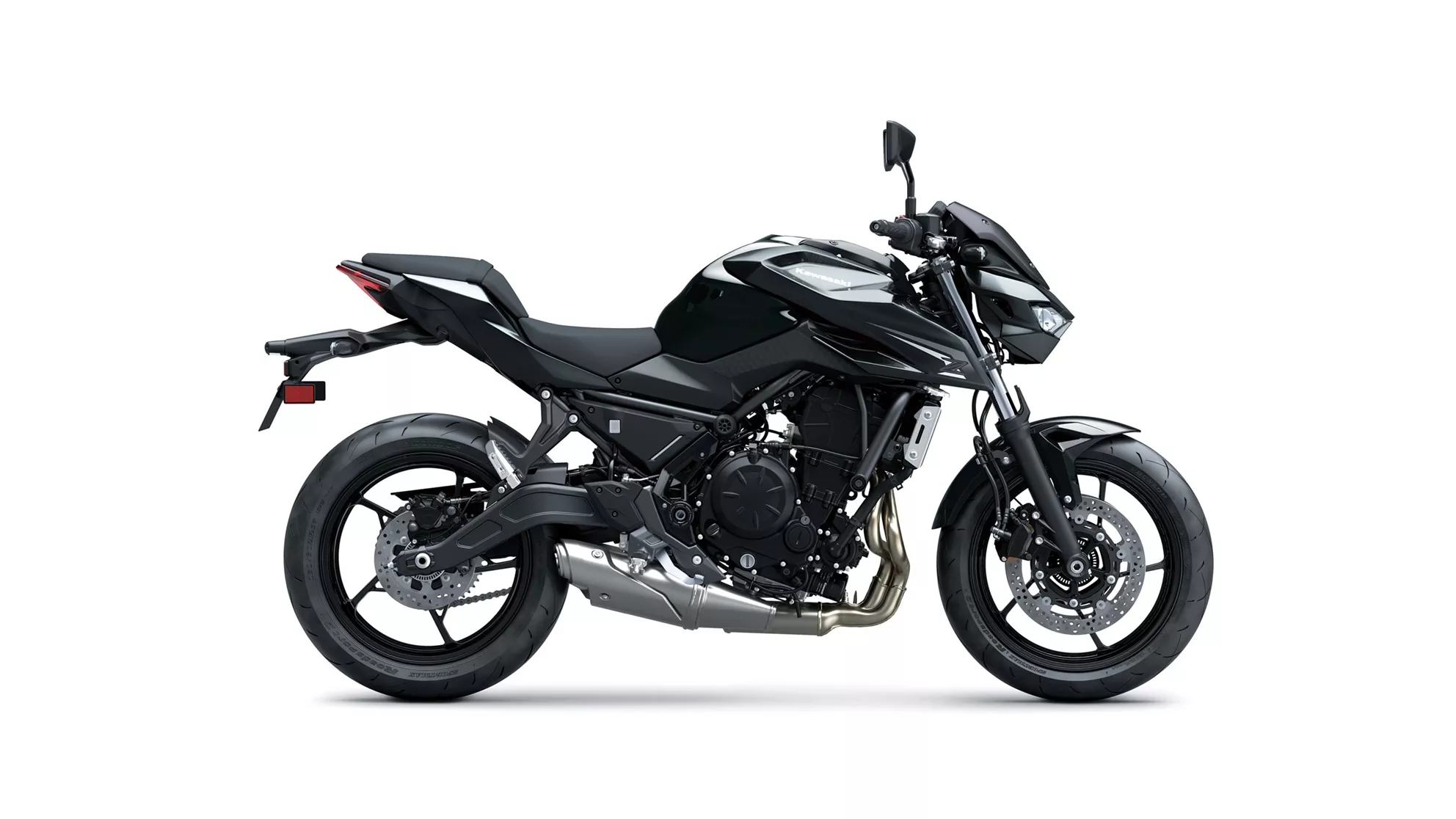
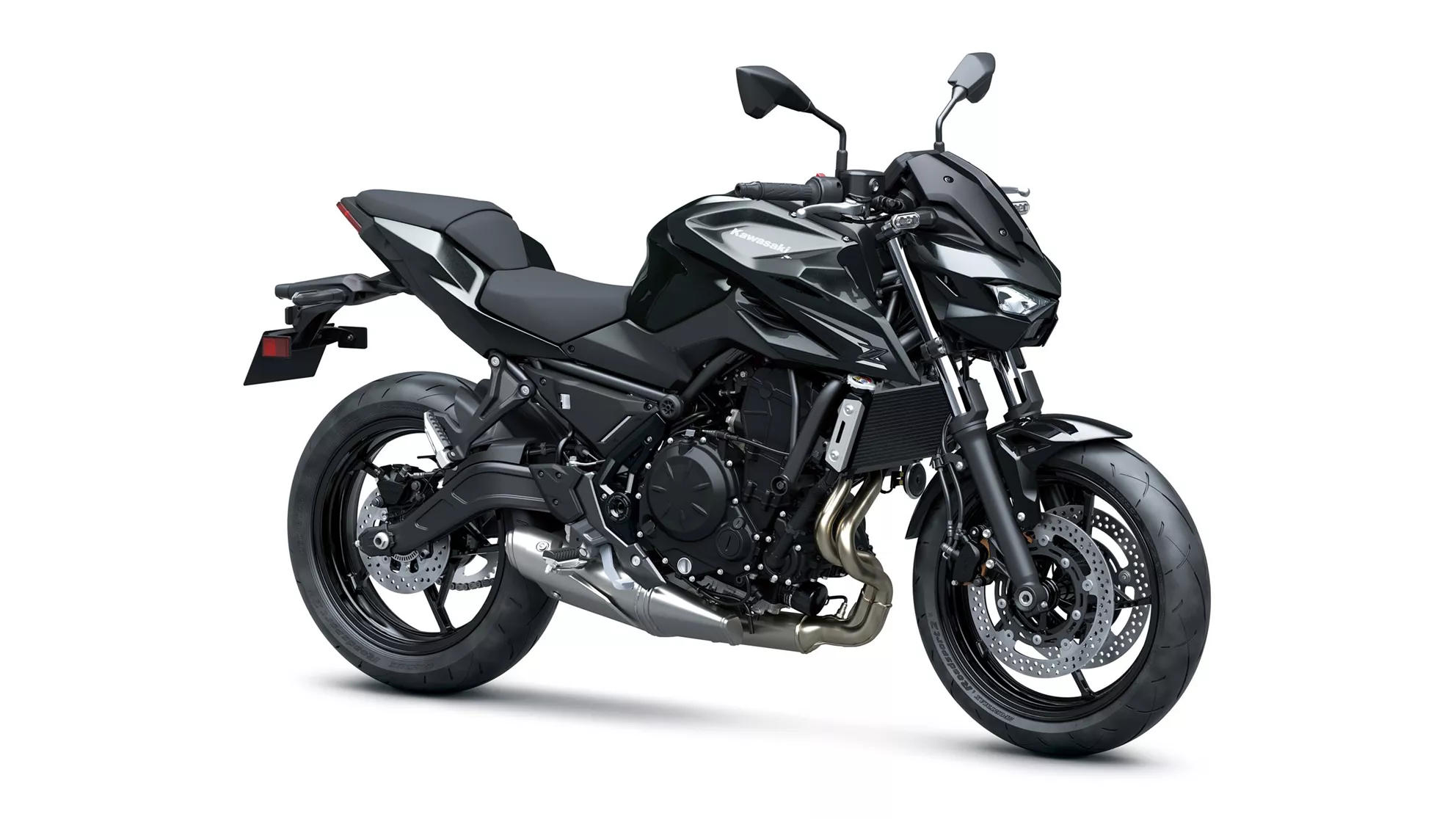
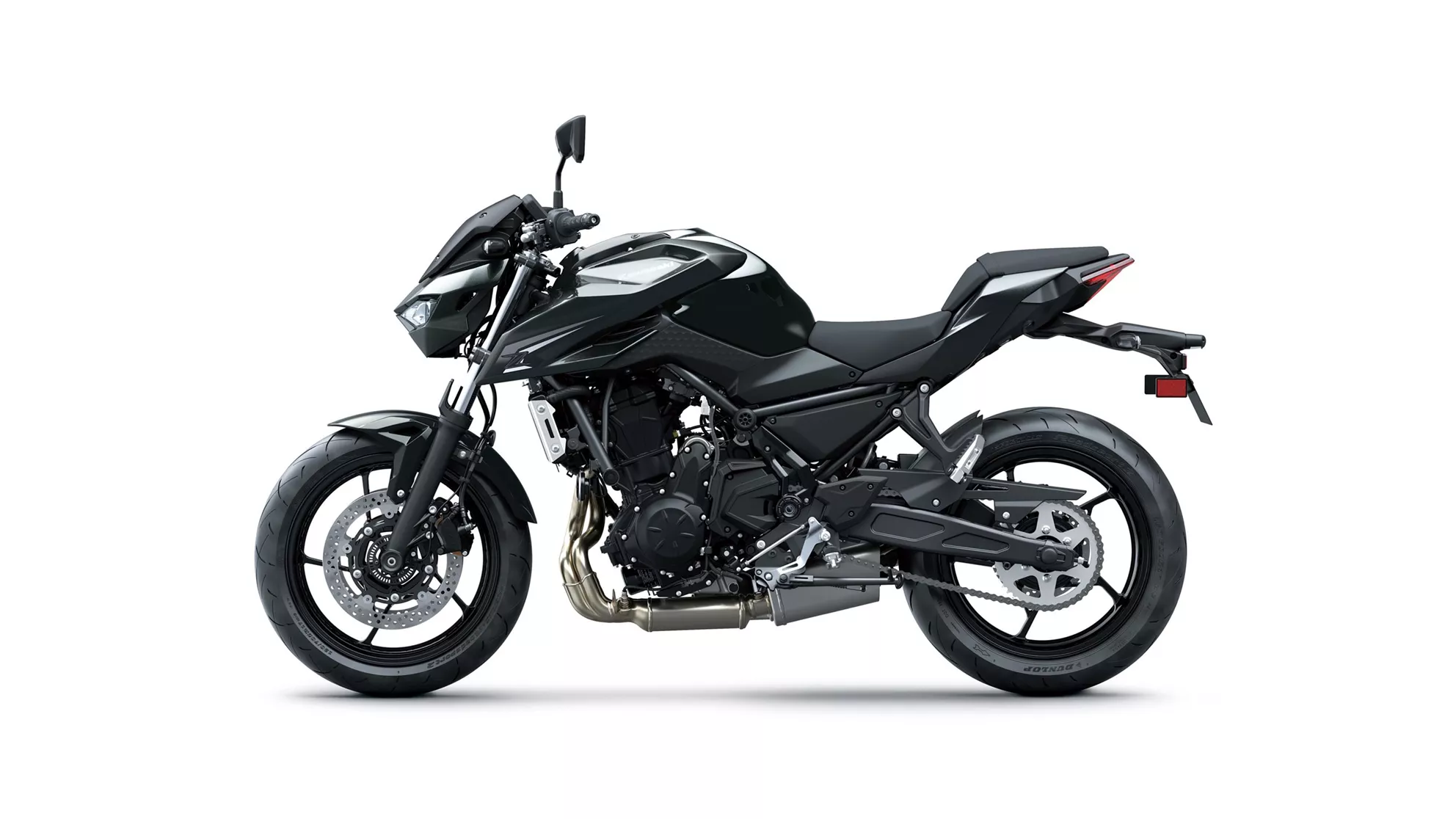
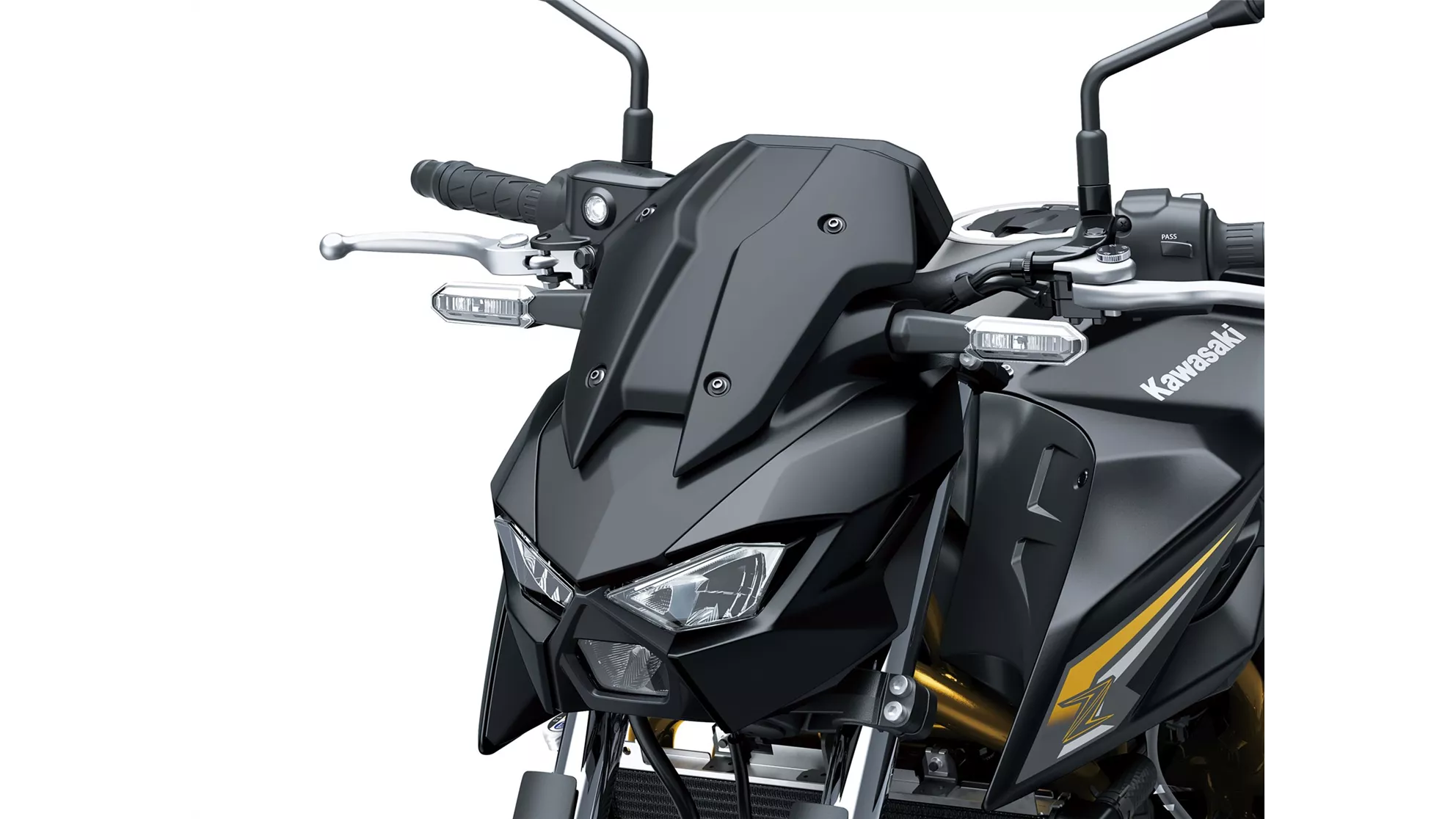
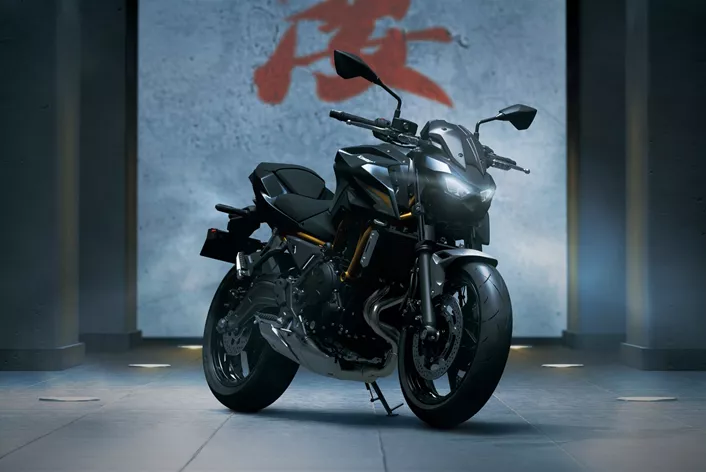
In terms of design, both manufacturers clearly showcase their intended direction. The Kawasaki Z650 S sports the new Sugomi face, which visually aligns closely with larger sibling models like the Z900. The revamped rear, featuring a taillight inspired by the Z500, clearly reflects the current Kawasaki line. As a result, the Z650 S appears modern, sharply drawn, and quintessentially Kawasaki—though it also visually brings the smaller and larger models of the family closer together.
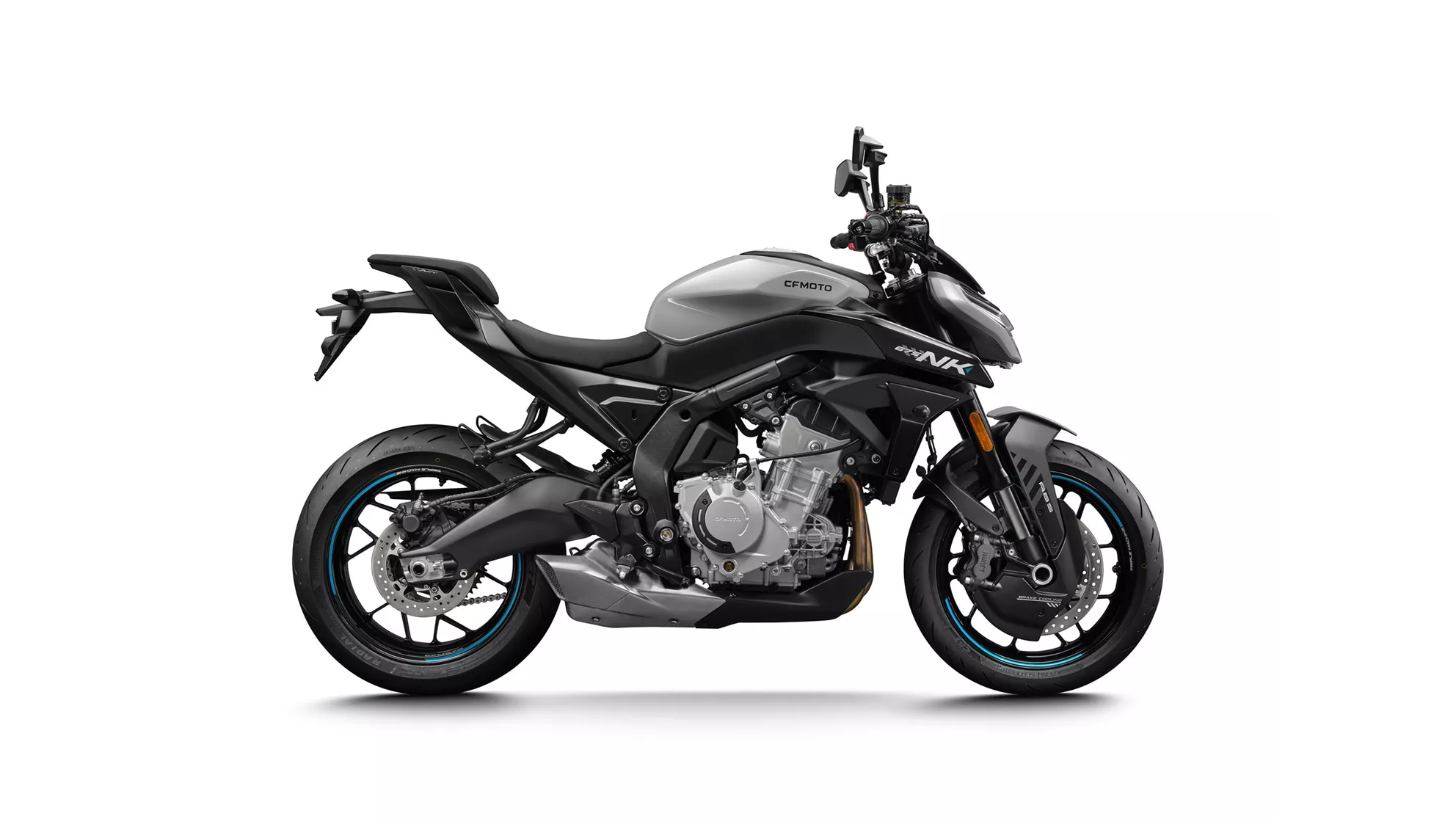
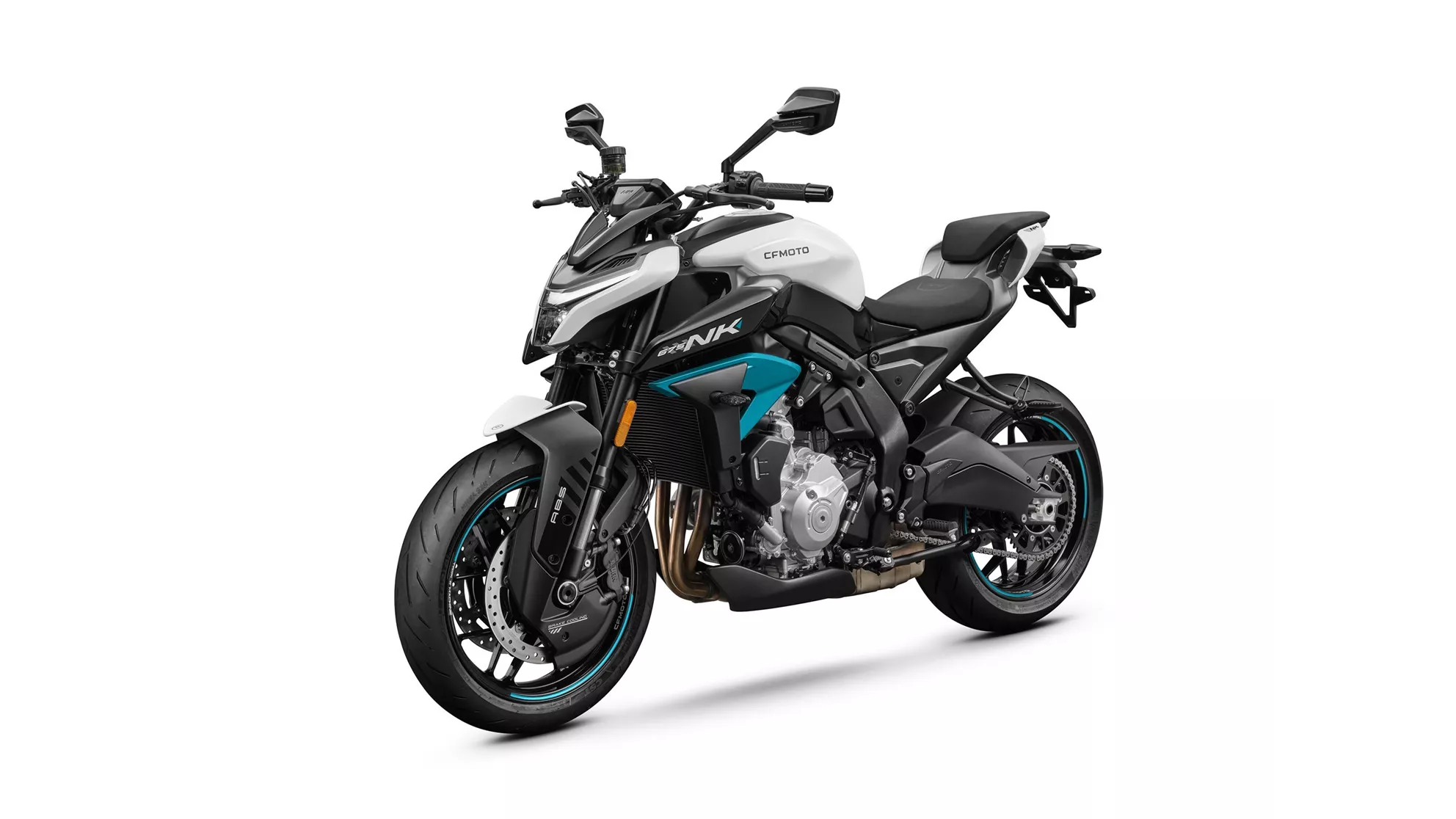
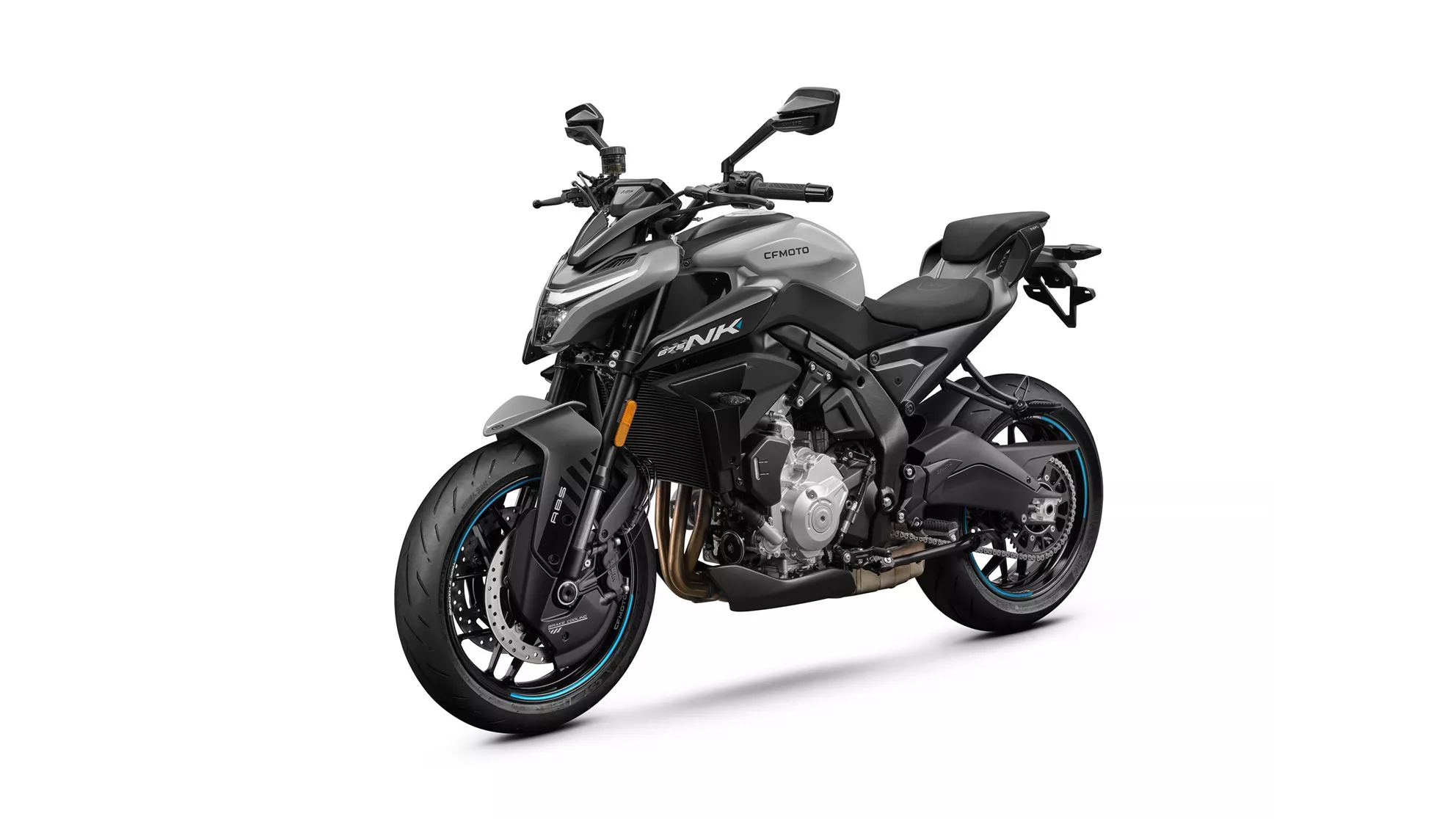
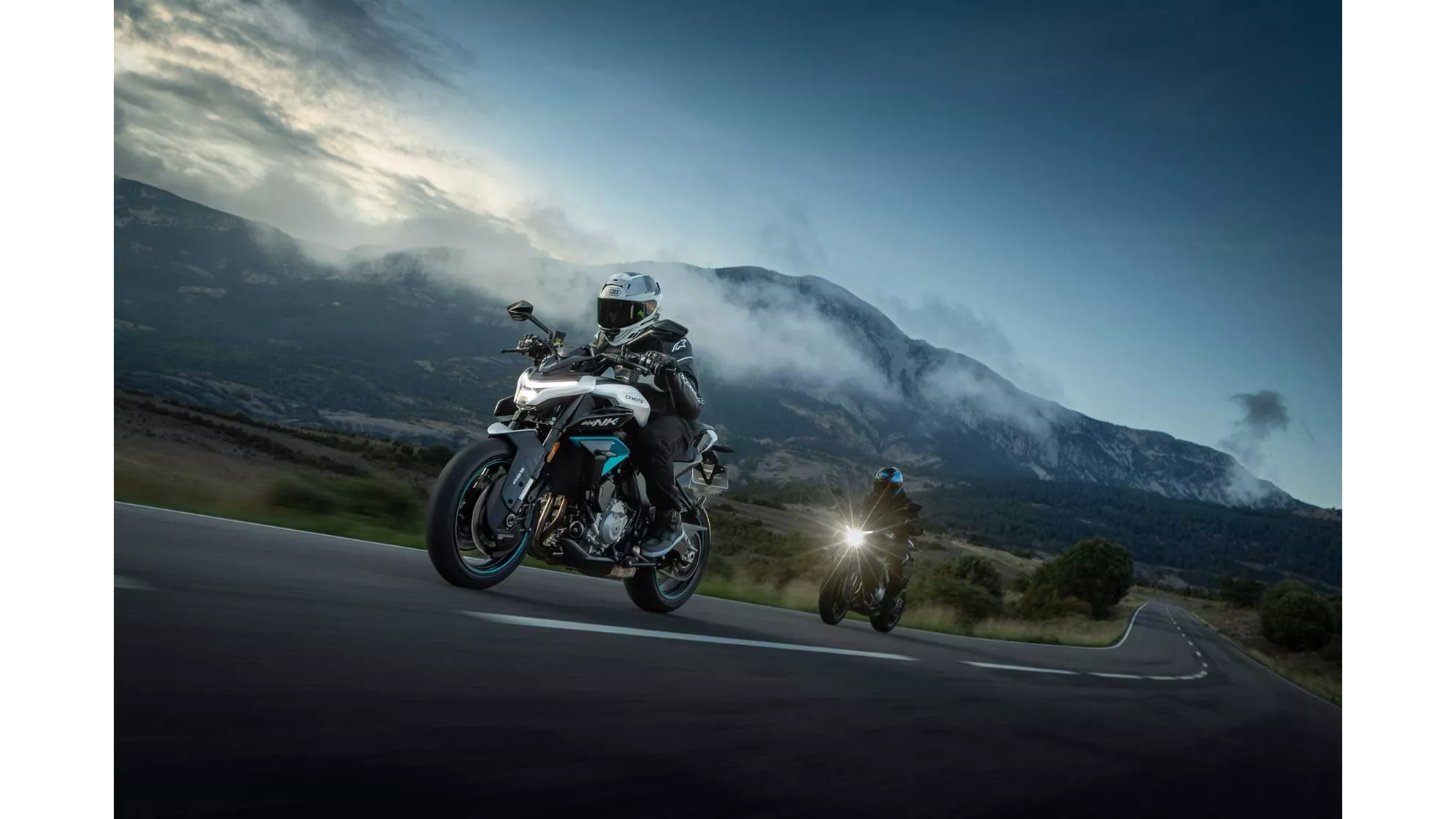
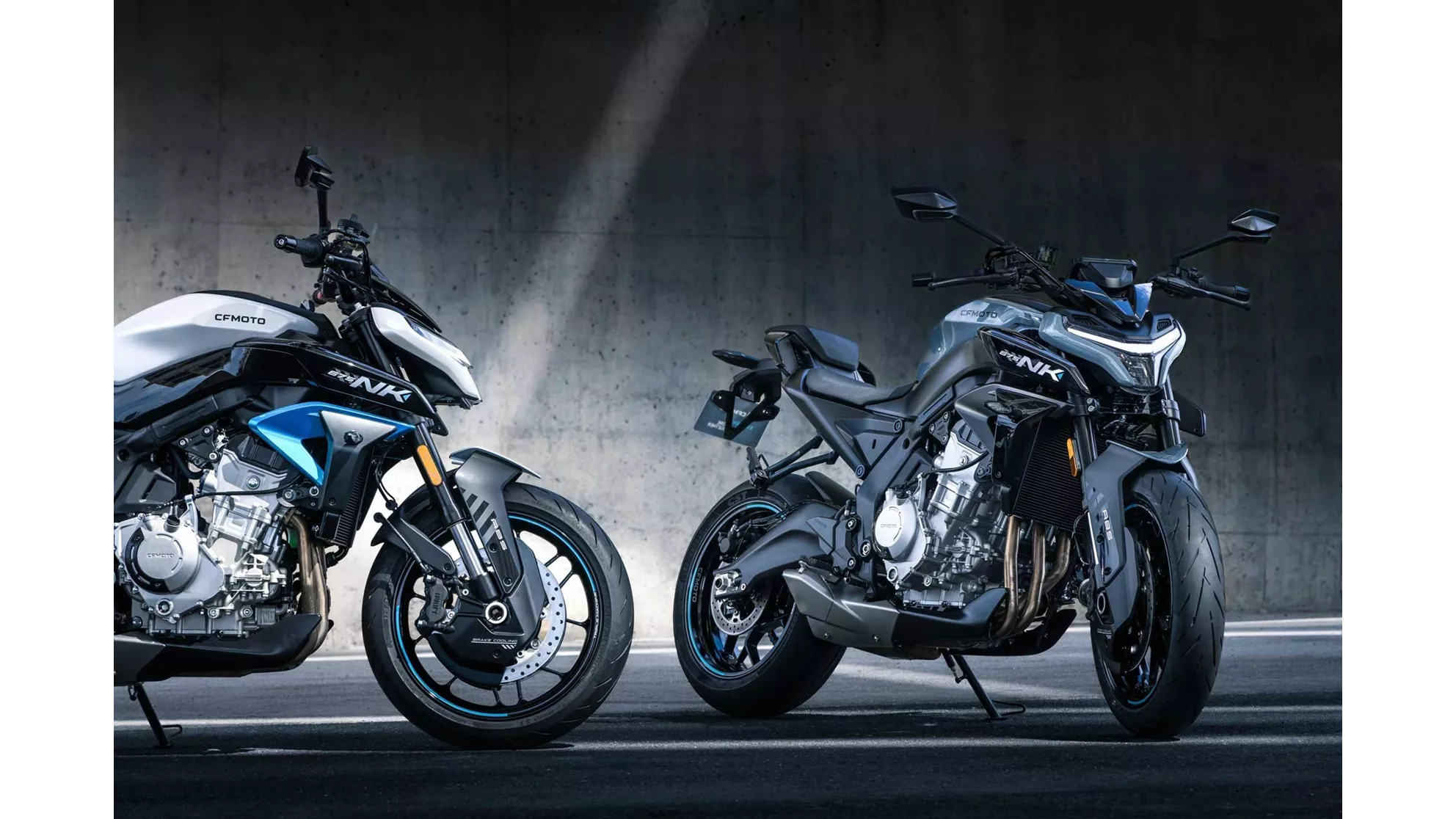
The CFMOTO 675 NK takes a completely different direction. It looks futuristic, aggressive, and distinctly sporty. The front and its bold lines give it a very commanding presence. Adding to this are visual details like the striking front brake discs with cooling elements, further emphasizing the racing look. While the Kawasaki appears more delicate and compact, the CFMOTO is broad, muscular, and almost provocative.
Ultimately, it comes down to personal taste. Objectively speaking, the Kawasaki integrates harmoniously into the brand's established DNA, while the CFMOTO aims to stand out, deliberately opting for a bold, almost cheeky appearance.
Engine: Reason vs. Emotion
Kawasaki Z650 S: Proven, Linear, Uncomplicated
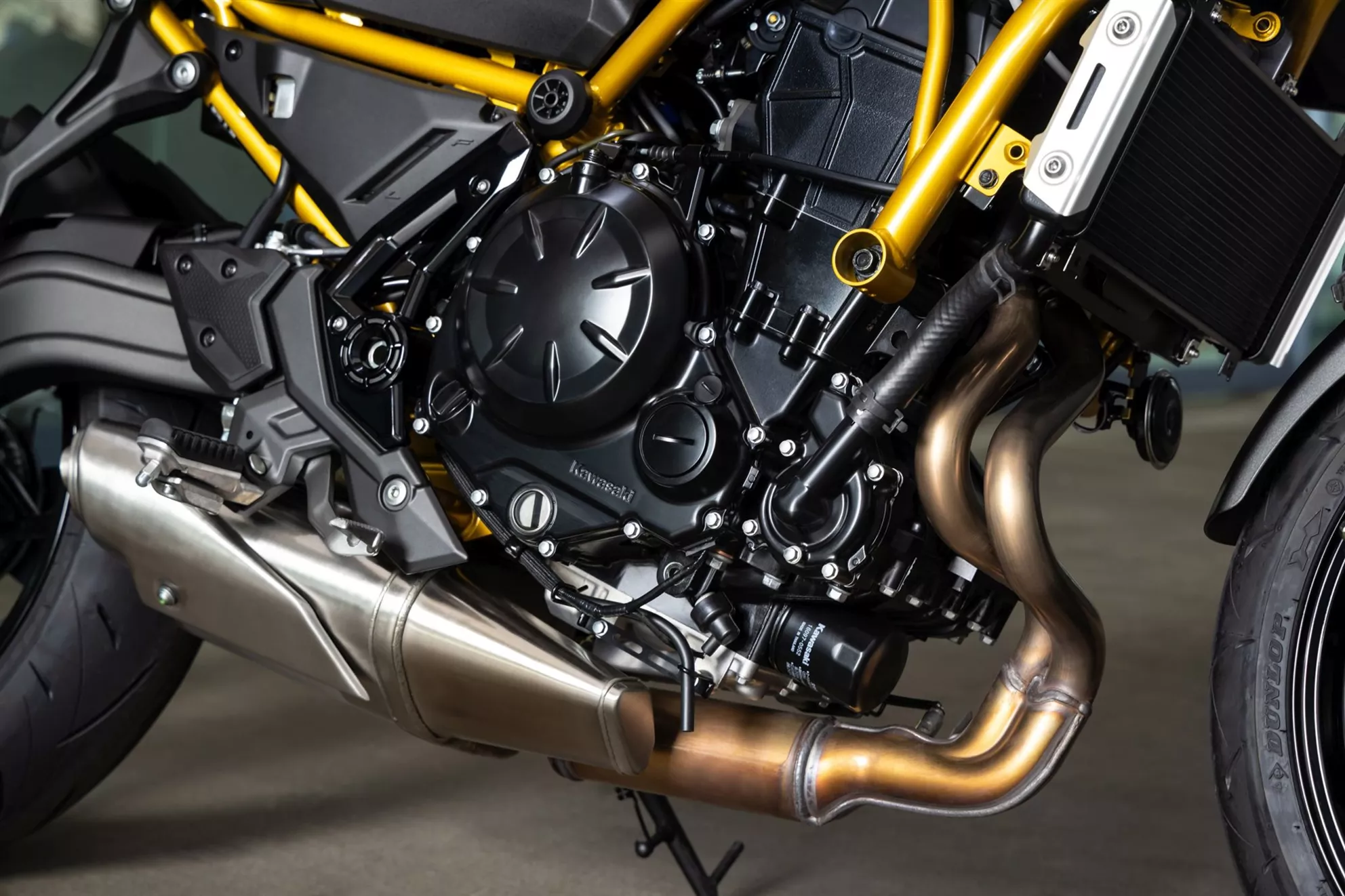
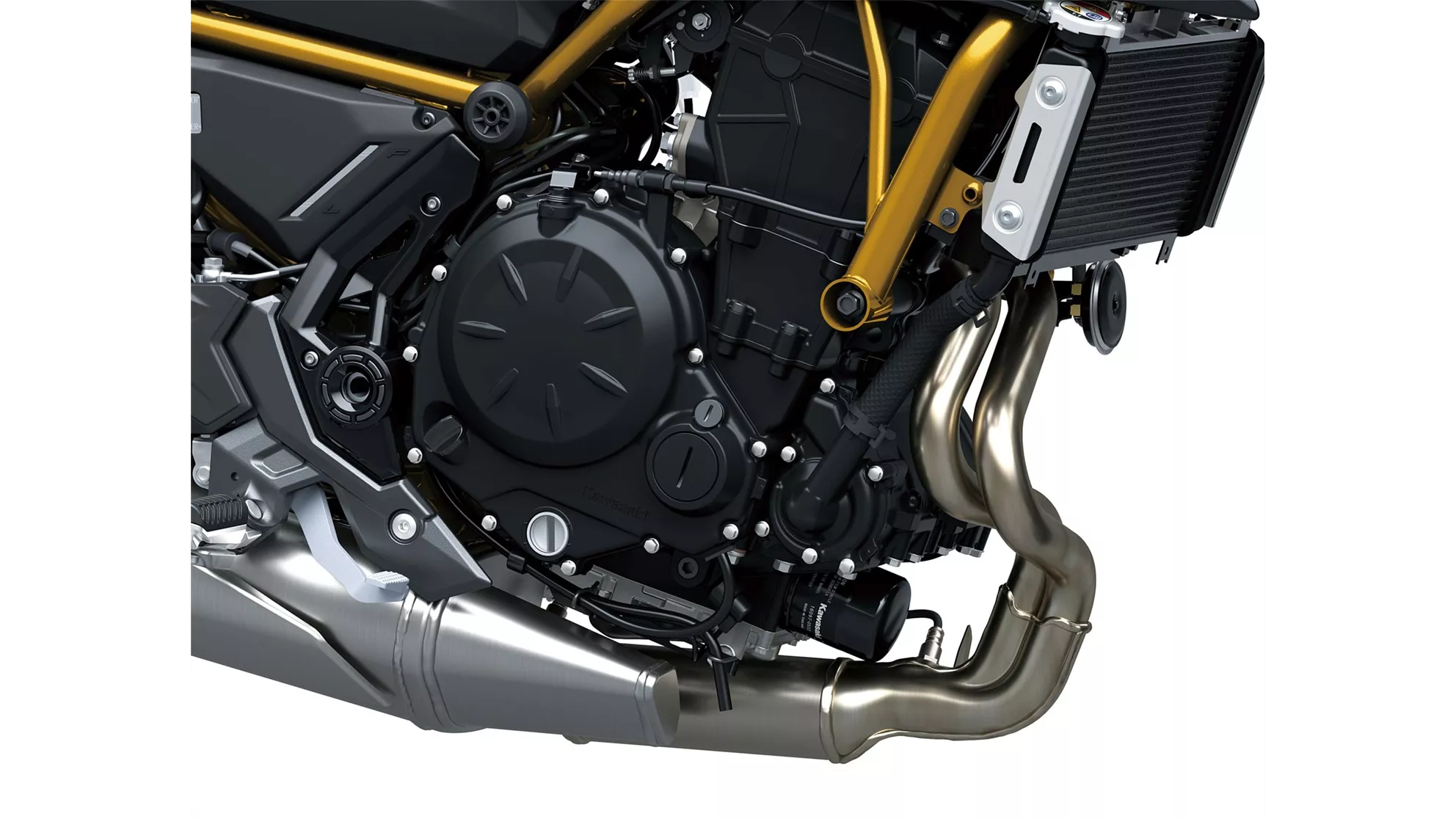
In the engine department, perhaps the biggest difference between the two motorcycles becomes apparent. The Kawasaki relies on its well-known 649cc parallel-twin engine, delivering 68 HP at 8,000 rpm and 64 Nm at 6,700 rpm. This unit has been tried and tested for years and does exactly what you'd expect: it works. And it does so consistently.
The twin provides ample torque at low revs, forgiving an imperfect gear choice and making the bike very accessible overall. This is a real advantage, especially for beginners or those returning to riding. The power delivery is linear, predictable, and free from surprises. However, this is also its weakness: the engine does its job reliably, but stirs limited emotions. Those who enjoy revving high and hope for a noticeable power boost at the top end will find it rather uninspiring.
CFMOTO 675 NK: Three-Cylinder with Character and Sound

The CFMOTO is a completely different story. Its 674cc inline three-cylinder engine delivers 90 HP at 11,000 rpm and 68 Nm at 8,250 rpm. This provides significantly more peak power and only slightly more torque than the Kawasaki—and this difference is reflected in its character. The 675 NK thrives on revs, responds more emotionally to the throttle, and comes across as significantly more spirited overall.
The three-cylinder engine achieves the classic balance of offering some low-end torque with noticeable high-rev excitement. Adding to this is a very pronounced sound, which significantly shapes the riding experience. Combined with the standard quickshifter, it creates a powertrain that delivers noticeably more drama, acoustics, and event character than the Kawasaki.
The catch with the CFMOTO? It exhibits somewhat rough throttle response, especially at lower revs. This can lead to an uncomfortable jerk through the bike, particularly in tight corners or at low speeds. In this aspect, the Kawasaki is clearly smoother and easier to ride.
Handling: Nimble Kawasaki vs. Solid Stability of CFMOTO
The two nakeds also differ significantly in terms of handling. On paper, they are practically the same weight, with the Kawasaki at 190 kg and the CFMOTO at 189 kg ready to ride. However, on the road, they feel completely different.
CFMOTO 675 NK: Mature, Stable, Big

- How much does a CFMOTO 675NK cost?
- Here you will find an overview of the price level of new and used motorbikes!
The CFMOTO gives off the vibe of a larger motorcycle even when stationary. The wide tank, expansive fairing parts, and high-mounted, broad handlebars create an imposing presence. Additionally, the 180 rear tire contributes both visually and dynamically to its solid road stance.
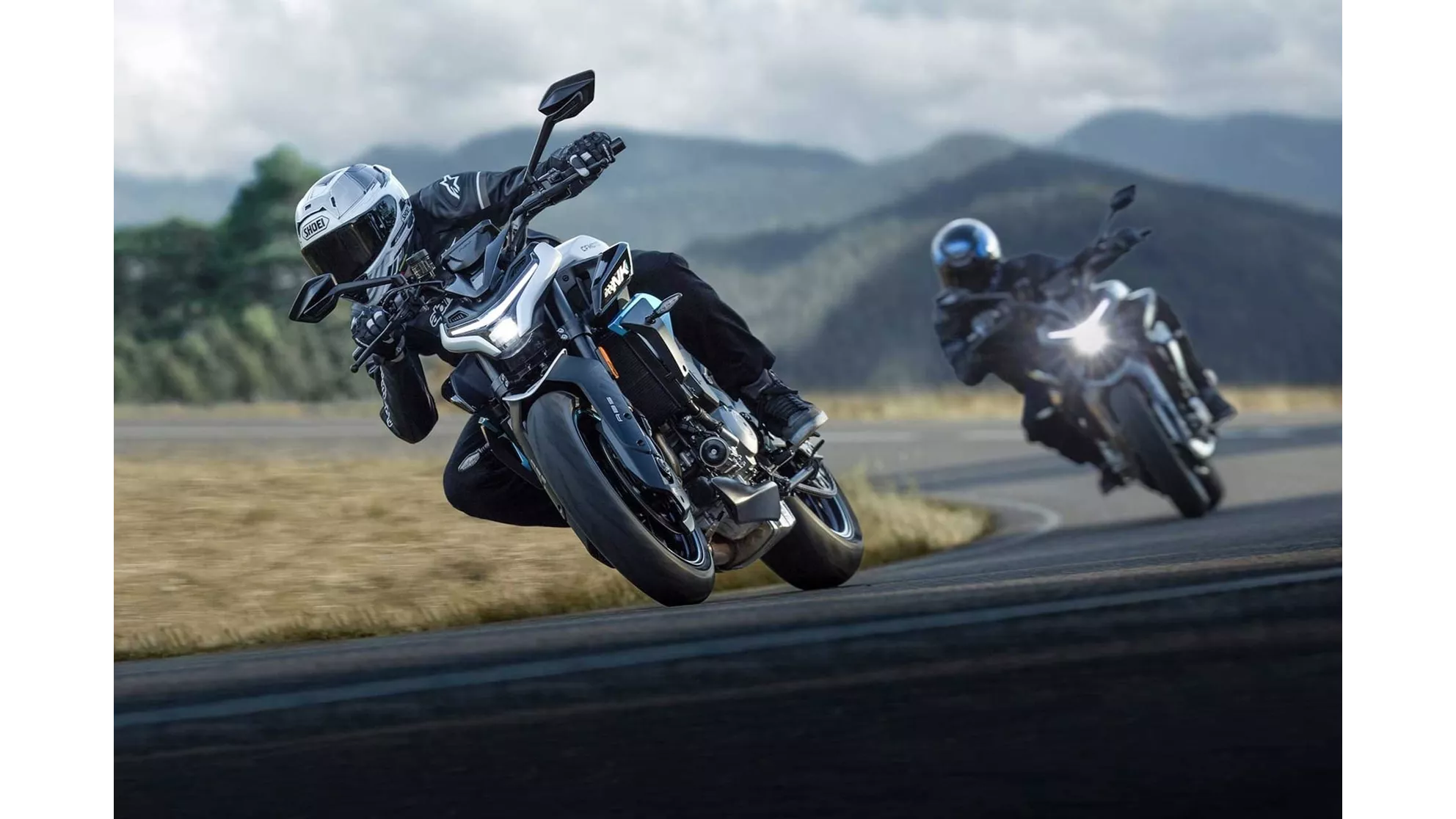
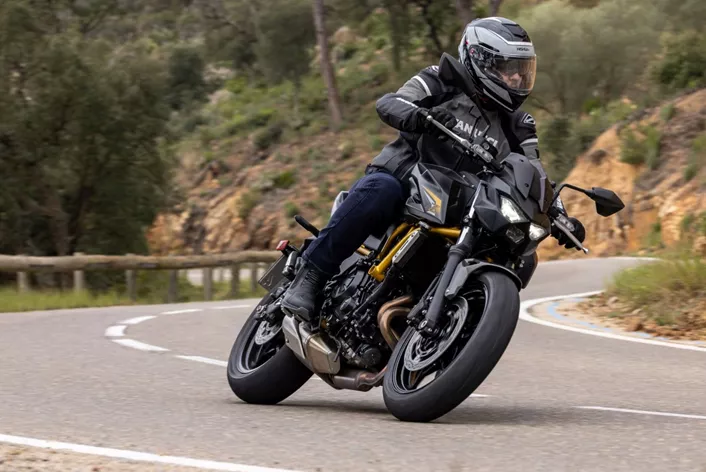
On the open road, the 675 NK feels correspondingly stable. It maintains long lines cleanly, sits firmly on the road, and provides a sense of calm as speed increases or curves widen. This is supported by the higher-quality suspension setup with a 41-mm KYB USD fork and adjustable KYB monoshock. However, the CFMOTO requires a bit more decisive input in tight corners. It's not an unwieldy bike, but it does demand more effort than the Kawasaki.
Kawasaki Z650 S: Agile, Playful, Accessible
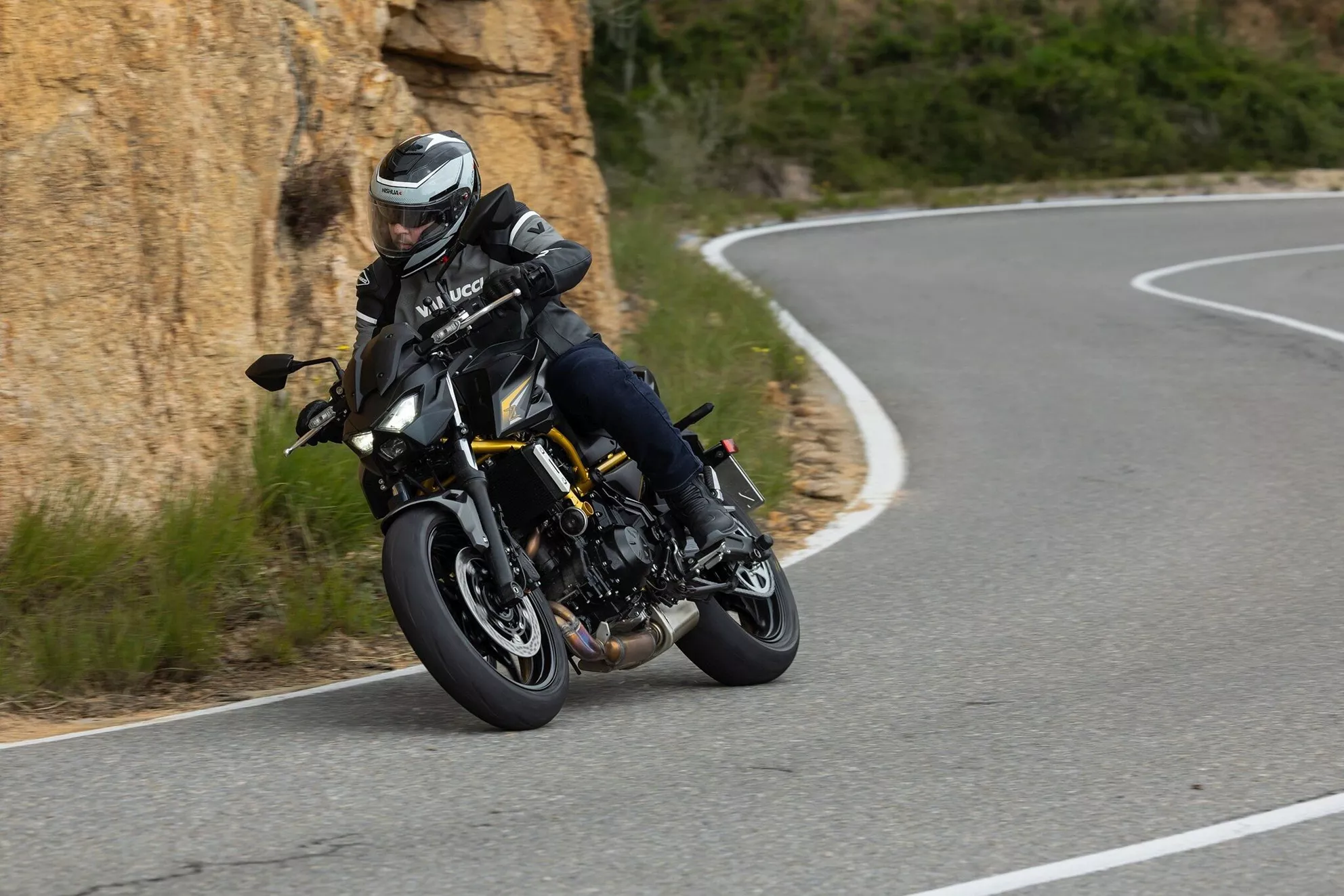
The Kawasaki takes the opposite direction here. With a 160 rear tire, narrower appearance, and simpler suspension, it feels noticeably lighter and more playful. The 41-mm telescopic fork is non-adjustable, and the rear shock can only be adjusted for preload—making the setup overall more classic and straightforward.
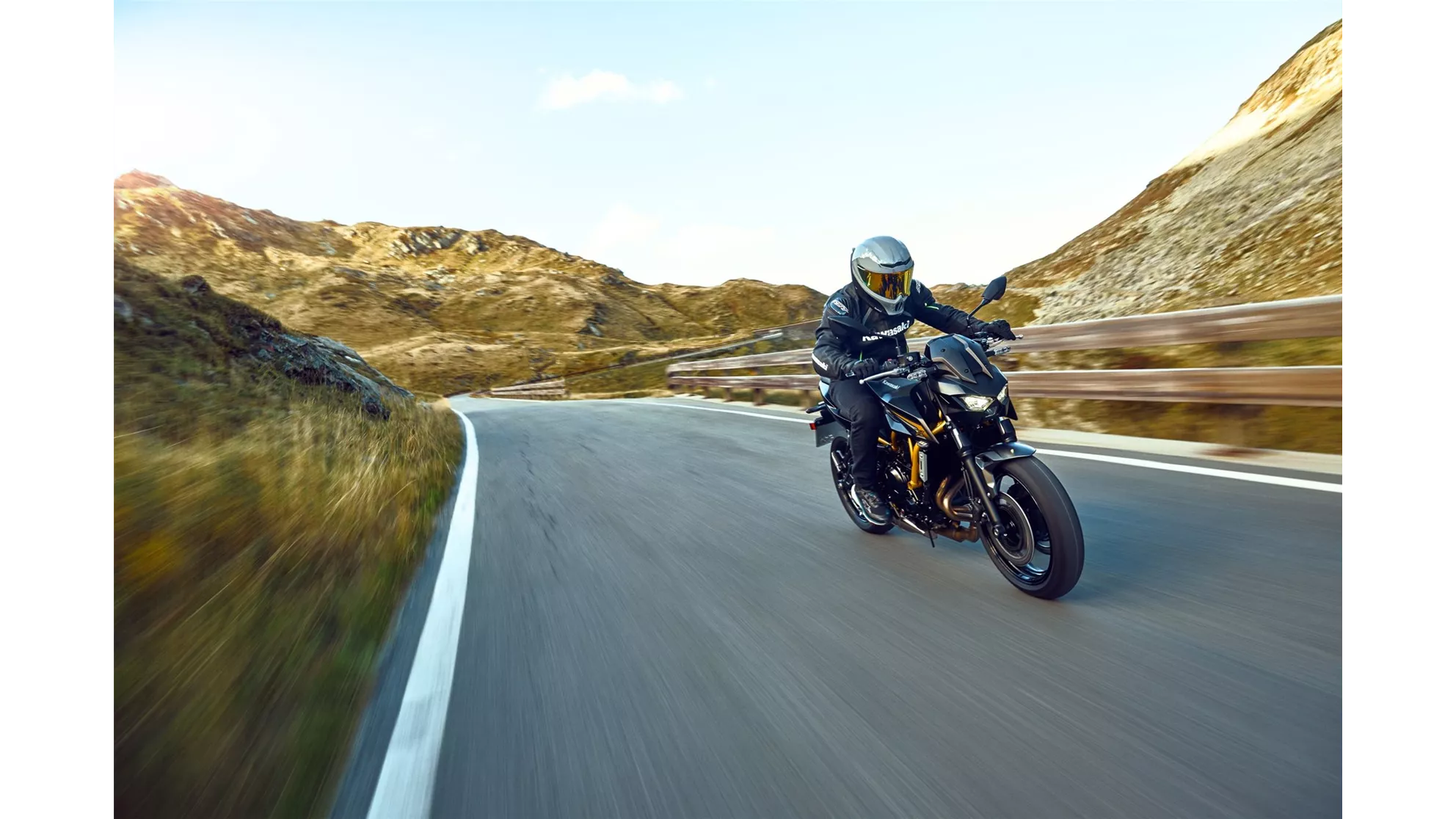
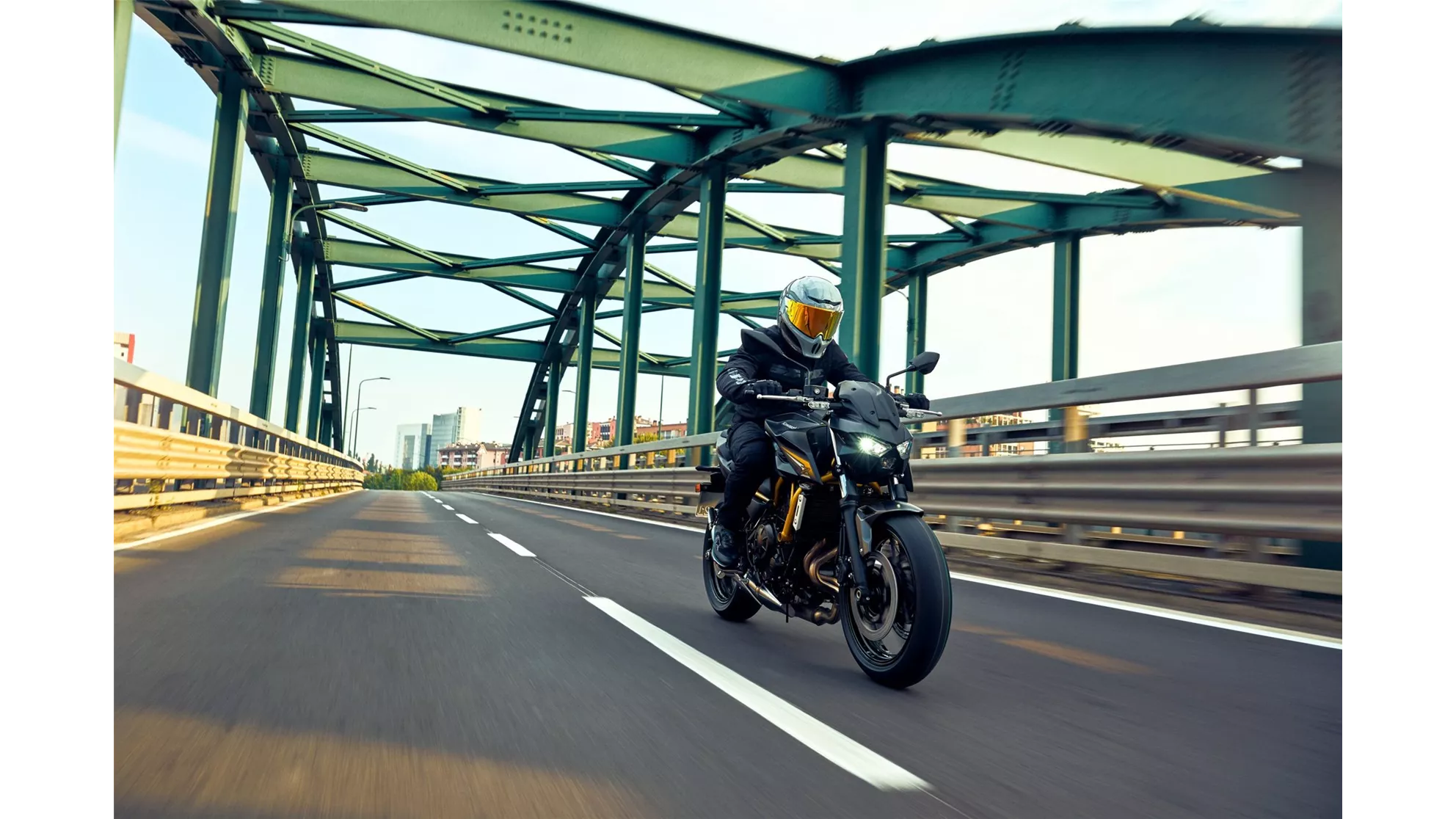
This plays to its advantage in tight corners. The Z650 S leans easily, playfully falls into the radius, and feels particularly at home on narrow country roads or in urban environments. There, it scores with accessibility and nimbleness. However, as speeds increase, curves lengthen, or the asphalt becomes rougher, it shows a bit more movement and nervousness compared to the CFMOTO.
Brakes: Solid on Both Sides
On paper, there are differences in the braking systems, but in practice, both motorcycles are closer than one might expect. The CFMOTO features 300-mm dual discs up front with radial four-piston calipers from J.Juan, and a J.Juan setup at the rear as well. The Kawasaki also uses 300-mm dual discs at the front, but with simpler twin-piston calipers.
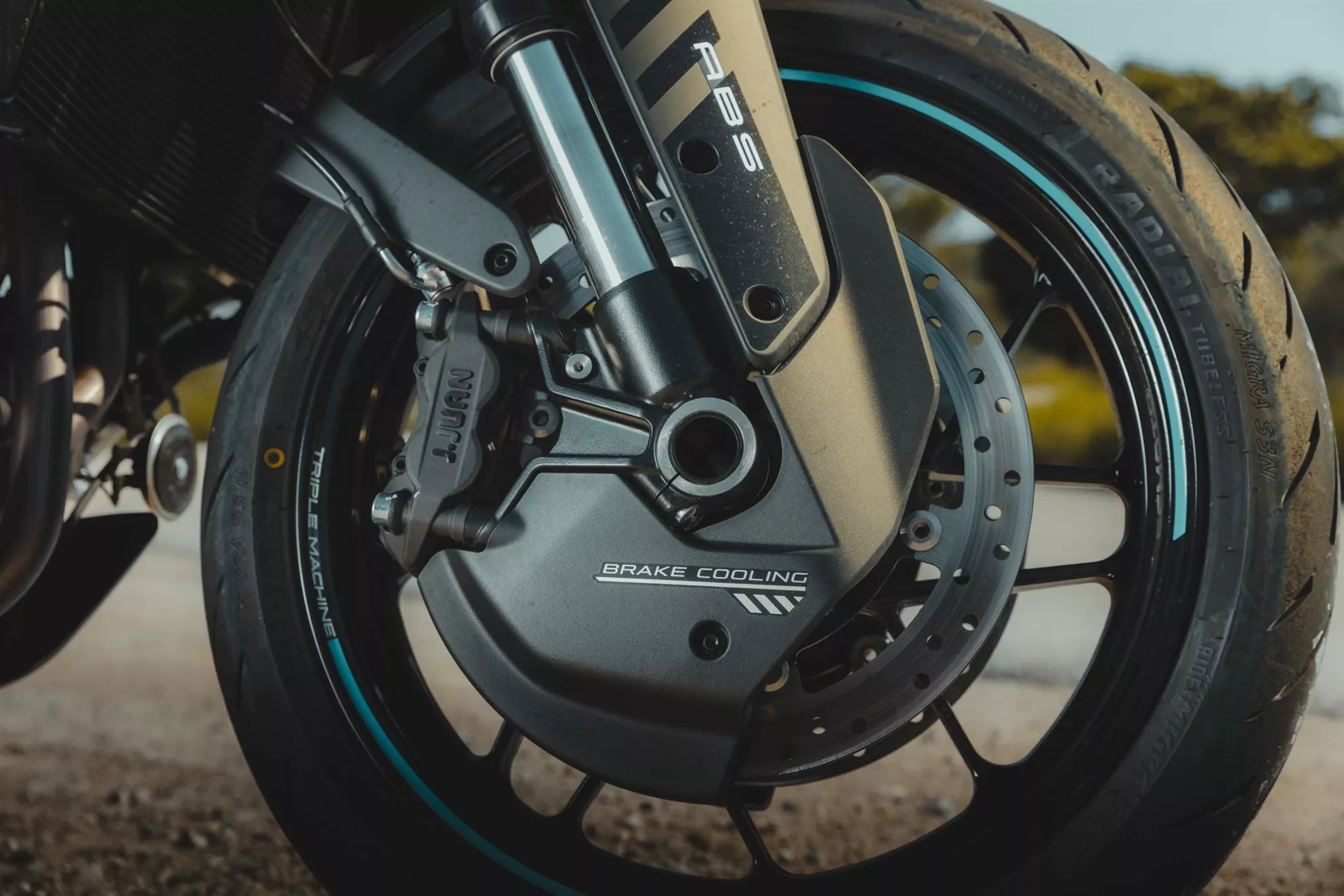
With Brake Cooling, CFMoto makes a statement towards sportiness.
In operation, both motorcycles deliver good, practical braking performance. The setup is noticeably not overly aggressive, which suits the target audience. Beginners, in particular, benefit from the fact that the brakes don't engage too sharply. Neither braking system is particularly spectacular—but that's not necessary in this class.
Features and Build Quality: Surprisingly Close
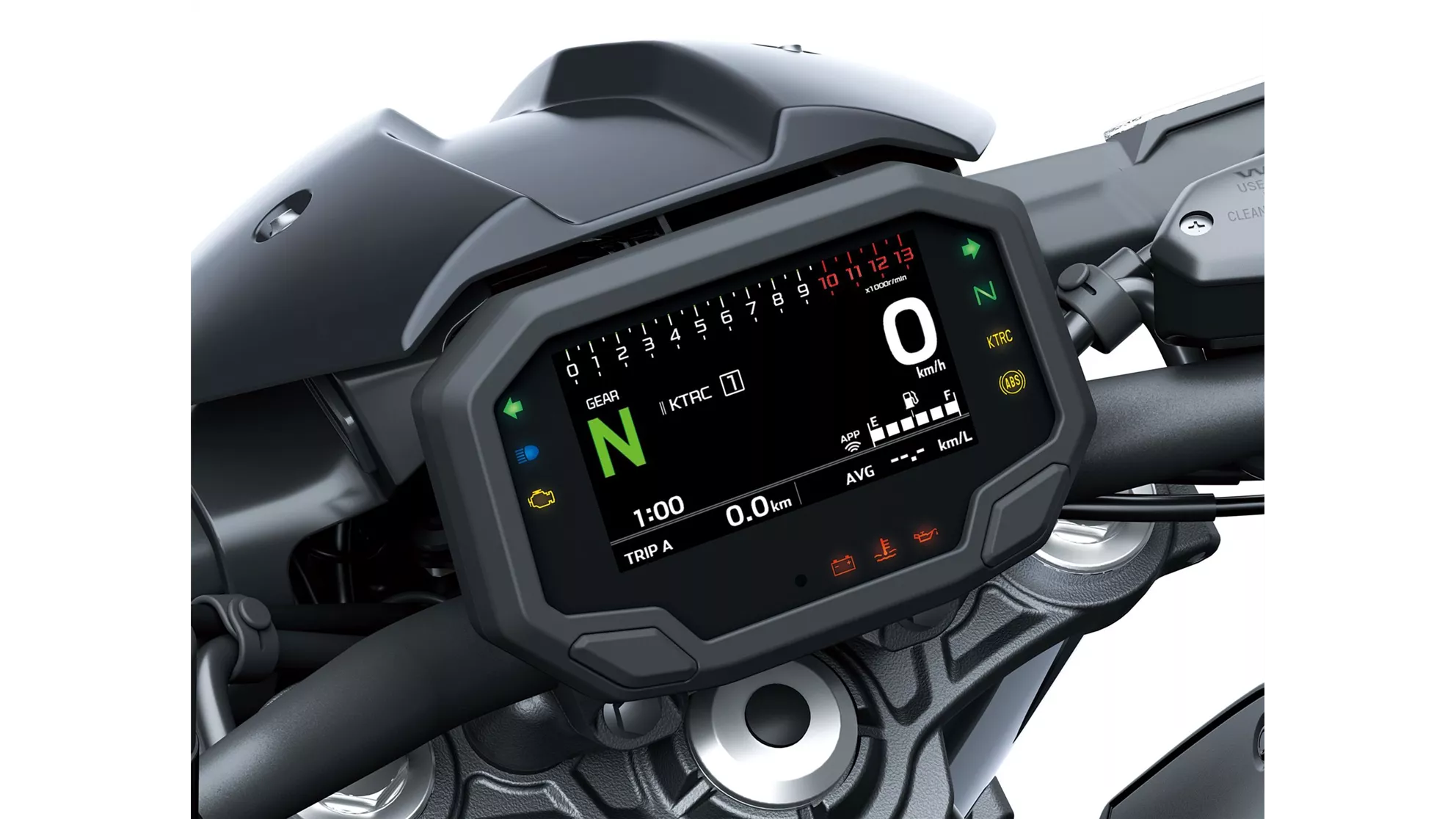
In terms of features and build quality, both motorcycles are surprisingly close. Both offer a TFT display with connectivity, LED lighting, ABS, and traction control. Adjustable brake and clutch levers are also included—which is by no means standard in this price range.
The CFMOTO also features a steering damper, which complements its overall stable impression. In terms of operation, it feels somewhat more modern, while the Kawasaki comes across as more classic in some areas. Both are impeccably assembled, solidly built, and robust enough for their intended use, with no real shortcomings in craftsmanship.
Who Should Choose Which Bike?
In Germany, the Kawasaki is priced higher at 7,970 euros compared to the CFMOTO at 6,999 euros. In Austria, the situation is slightly different: the Kawasaki costs 7,899 euros, while the CFMOTO is 7,999 euros.
Kawasaki Z650 S: The Kawasaki is the right choice for those looking for a bike that feels instantly familiar. It's accessible, forgiving, agile, and pleasantly straightforward. Beginners and returning riders alike will find a naked bike here that doesn't artificially dramatize anything, which is precisely what makes it appealing. If you value a proven overall package, you can't go wrong with the Z650 S.
CFMOTO 675 NK: The CFMOTO is aimed at riders seeking the most character for their money in this class. The three-cylinder engine delivers significantly more emotion, the sound is prominent, the suspension setup is higher quality, and the overall presence is much more extroverted. If you're looking for a bold, sporty naked bike with genuine character and can live with the rougher throttle response, you'll find this to be the more exciting motorcycle.
- How much does a Kawasaki Z650 S cost?
- Here you will find an overview of the price level of new and used motorbikes!
&width=60&height=60&bgcolor=rgba_39_42_44_0&mode=crop "Author: Der Horvath")
CFMOTO 675NK 2026 - Experiences and Expert Review
Der Horvath
The CFMOTO 675NK is a well-executed naked bike for solo riders seeking something distinctive. It offers plenty of features, good handling, and a cool look—with minor weaknesses in engine tuning and comfort. However, these are easily forgiven when you see the price tag and hear the purr of the three-cylinder engine.
Kawasaki Z650 S 2026 - Experiences and Expert Review
Der Horvath
The Kawasaki Z650 S 2026 is precisely the upgrade many have been hoping for. Without altering the proven core concept, Kawasaki has fine-tuned the right elements. The new ergonomics, in particular, make a noticeable difference, elevating the bike to a new level for both taller riders and everyday use. In essence, the Z650 S isn't spectacular, but it's an exceptionally well-balanced motorcycle—and that's exactly why it's so successful. Often, that's all that's needed in this class.
More from 1000PS Magazine
CFMOTO 675 NK vs Kawasaki Z650 S Comparison Images
Source: 1000PS