Embedded in the tradition-rich surroundings around Modena, not far from Bologna, a product is being created here that almost completely dissolves the boundaries between racing and the road. The Superleggera has now reached its fourth generation and remains true to its own ambition: it is the uncompromising flagship of the brand. Although it visually resembles the well-known Ducati Panigale V4, almost every detail has been reworked or completely rethought. Particularly striking is the consistent use of carbon - and in areas that were previously considered nearly untouchable in production motorcycle construction.
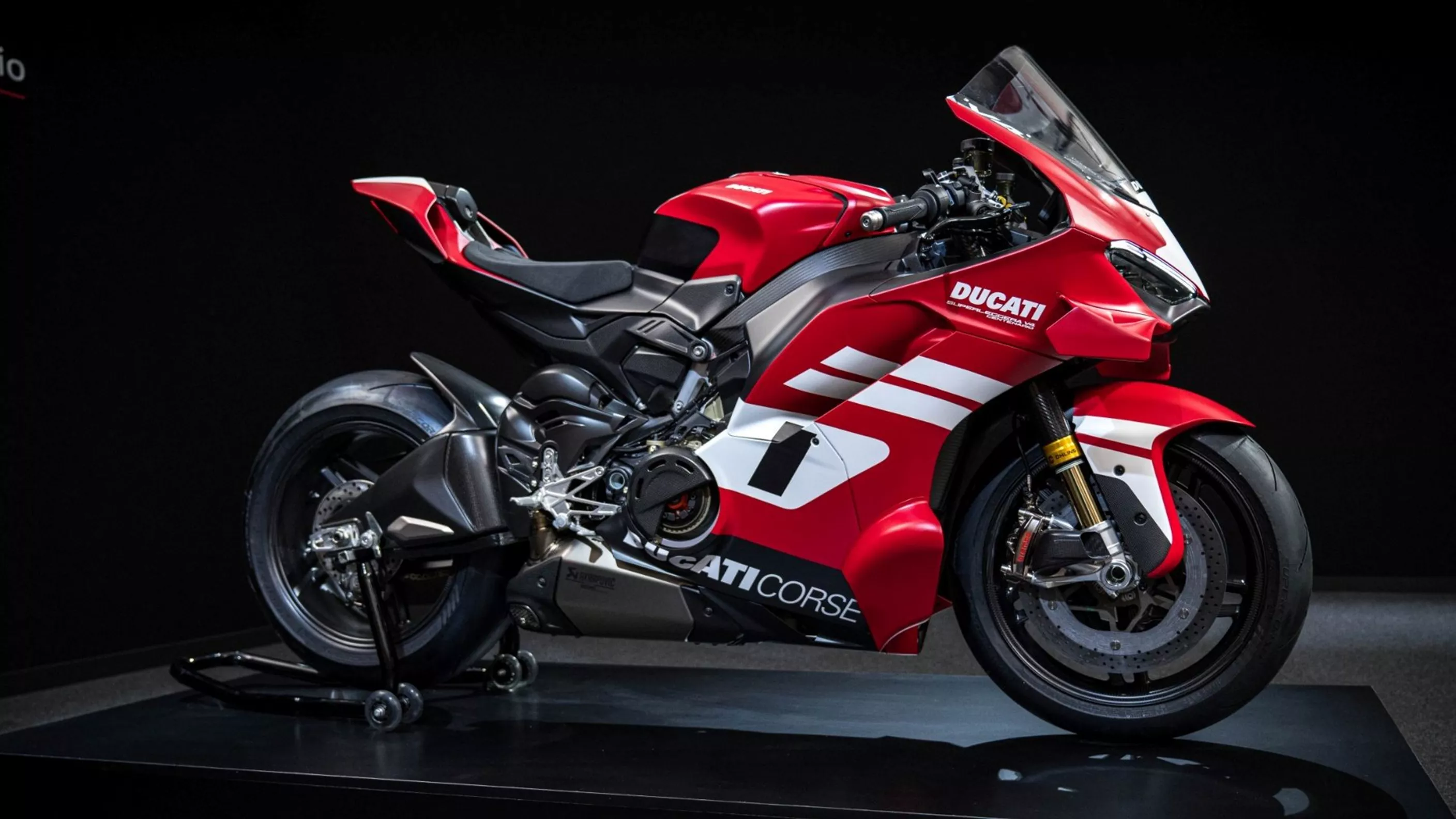
Ducati Superleggera V4 Centenario - MotoGP dream for the road
Ducati's sharpest supersport bike of all time
With the Ducati Superleggera V4 Centenario, Ducati once again presents a motorcycle that must be understood less as a production vehicle and more as a technical manifesto. It's packed with technical world firsts and the finest materials that can be fitted on two wheels. Racer and technician Martin Bauer analyzes Ducati's most extreme ultra sportbike.
&width=72&height=72&bgcolor=rgba_39_42_44_0&mode=crop "Author: Martin_Bauer")
Martin_Bauer
published on 27/03/2026
22,098 Views
With a strictly limited production run of just 500 units worldwide, the Superleggera remains an exclusive collector's item. At the same time, it is fully homologated for road use - a circumstance that makes its technical performance even more remarkable.
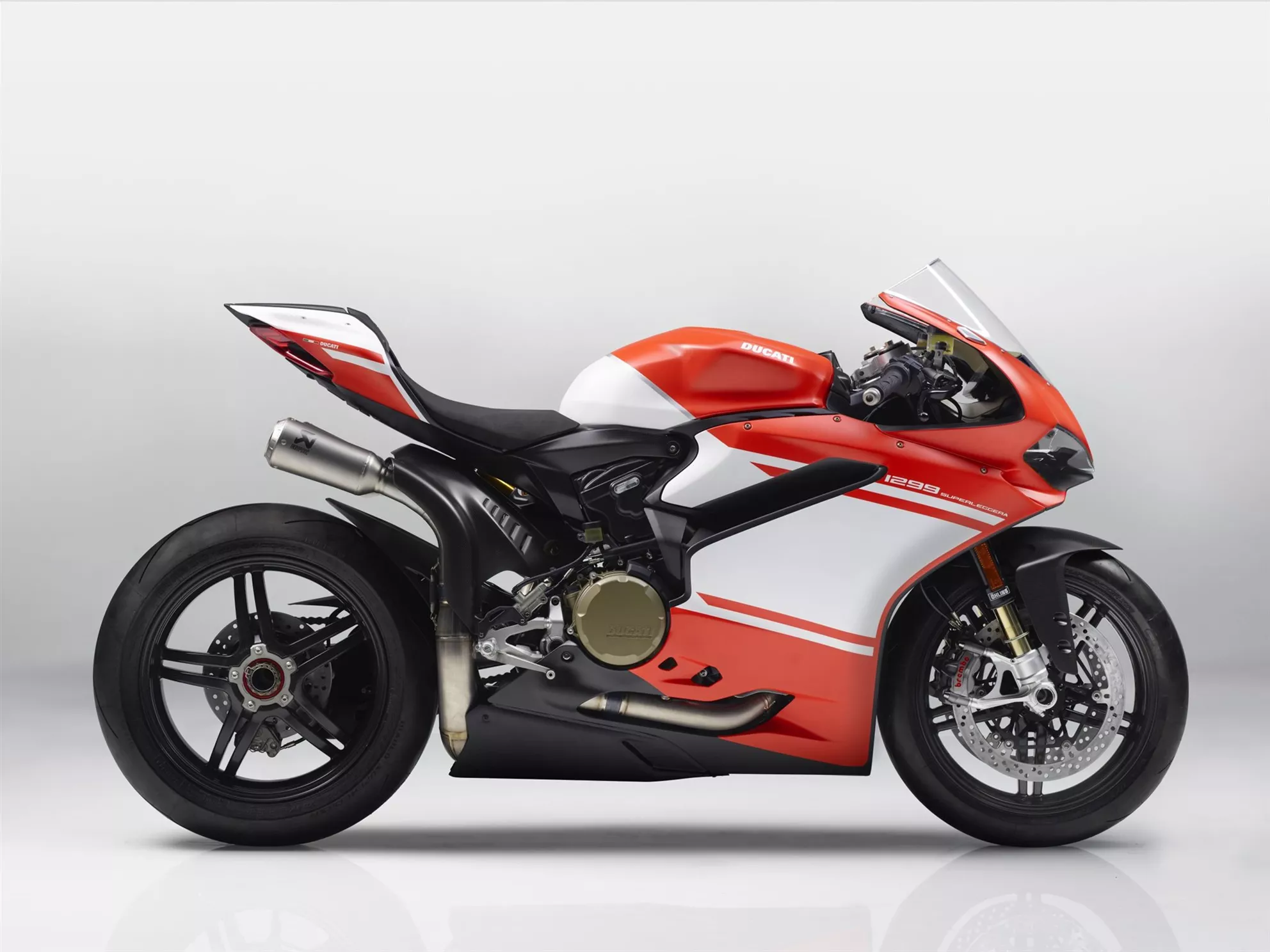
Since the Superleggera 1199, not only have 12 years passed, but the technology has also made great leaps over the course of the two Superleggera generations since then.
Up to 247 hp! - The engine of the Ducati Superleggera V4 Centenario
The heart of the Superleggera is based on the racing DNA of the Panigale V4R, but has been specifically further developed to deliver maximum performance both on the road and on the race track. While a displacement limit of 1,000 cubic centimeters applies in the Superbike World Championship, Ducati uses the freedom of a bike that doesn't have to be constrained by regulations and increases the displacement to 1,103 cubic centimeters for the Superleggera.
This increase is achieved via a longer stroke, which directly leads to increased torque. Particularly in the lower and mid rev range, the bike benefits from significantly more pulling power. Output already stands at an impressive 228 hp in the standard configuration and can be increased to up to 247 hp in the optional Race configuration with a Race exhaust system. With the increased displacement, not only is there plenty of peak power available now, but also the torque that is even more important for the road. That's something that isn't the top priority on the V4R, which the base engine comes from and which is primarily built for the race track.
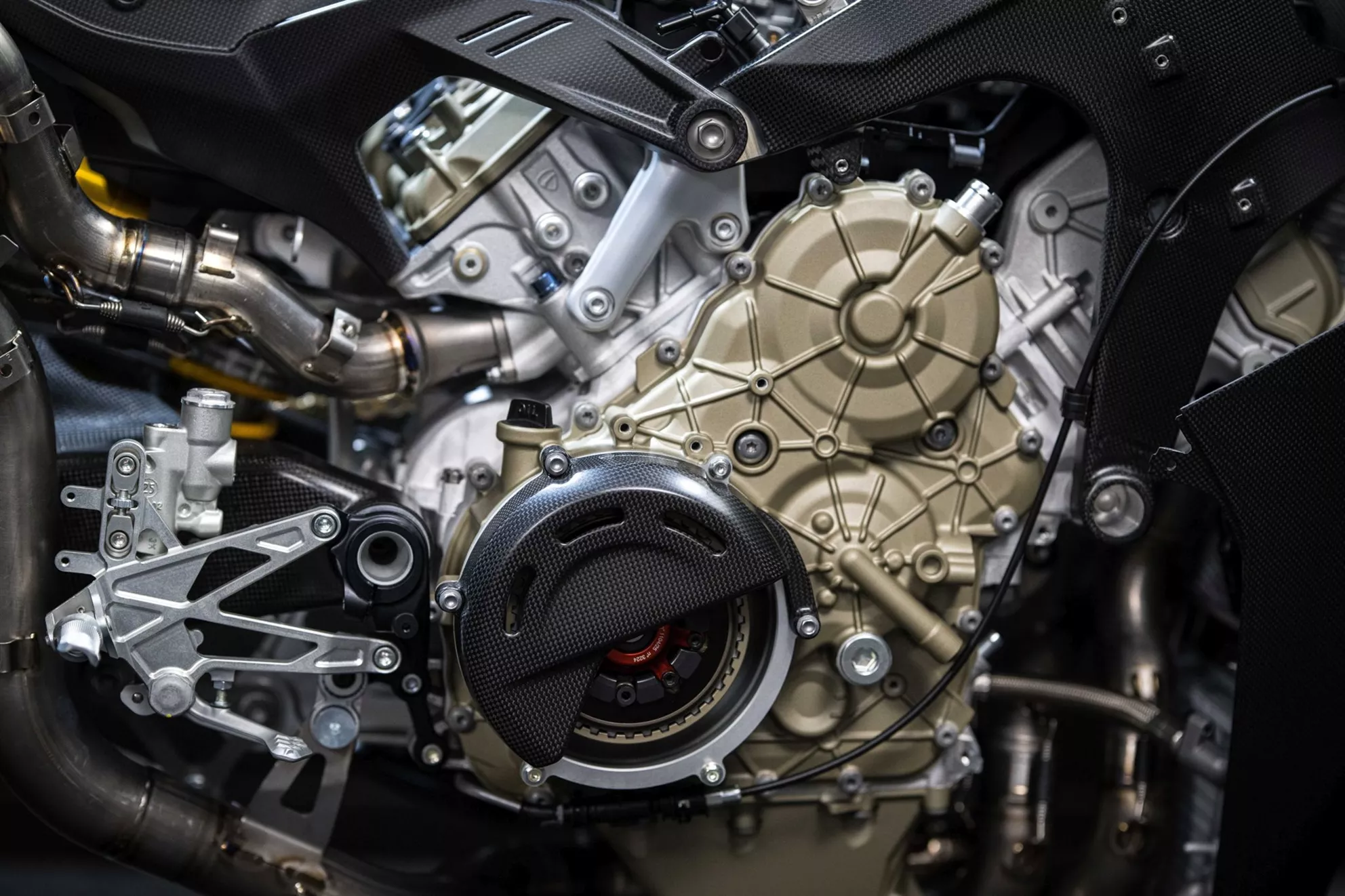
More power, less weight! Sounds simple, but at the level of a Superleggera it demands the optimization of every single component, no matter how small.
But the pure increase in performance is only part of the story. Ducati consistently focuses on weight reduction within the engine. Titanium intake valves, numerous titanium bolts, and a specially optimized crankshaft significantly reduce total weight and rotating mass. The latter was not only made lighter but also aerodynamically optimized to minimize resistance in the oil bath. This is complemented by the use of tungsten weights, which create mass centralization.
In total, the engine is made about 3.6 kilograms lighter compared to the Panigale, with 1.1 kilograms alone being shaved off the crankshaft.
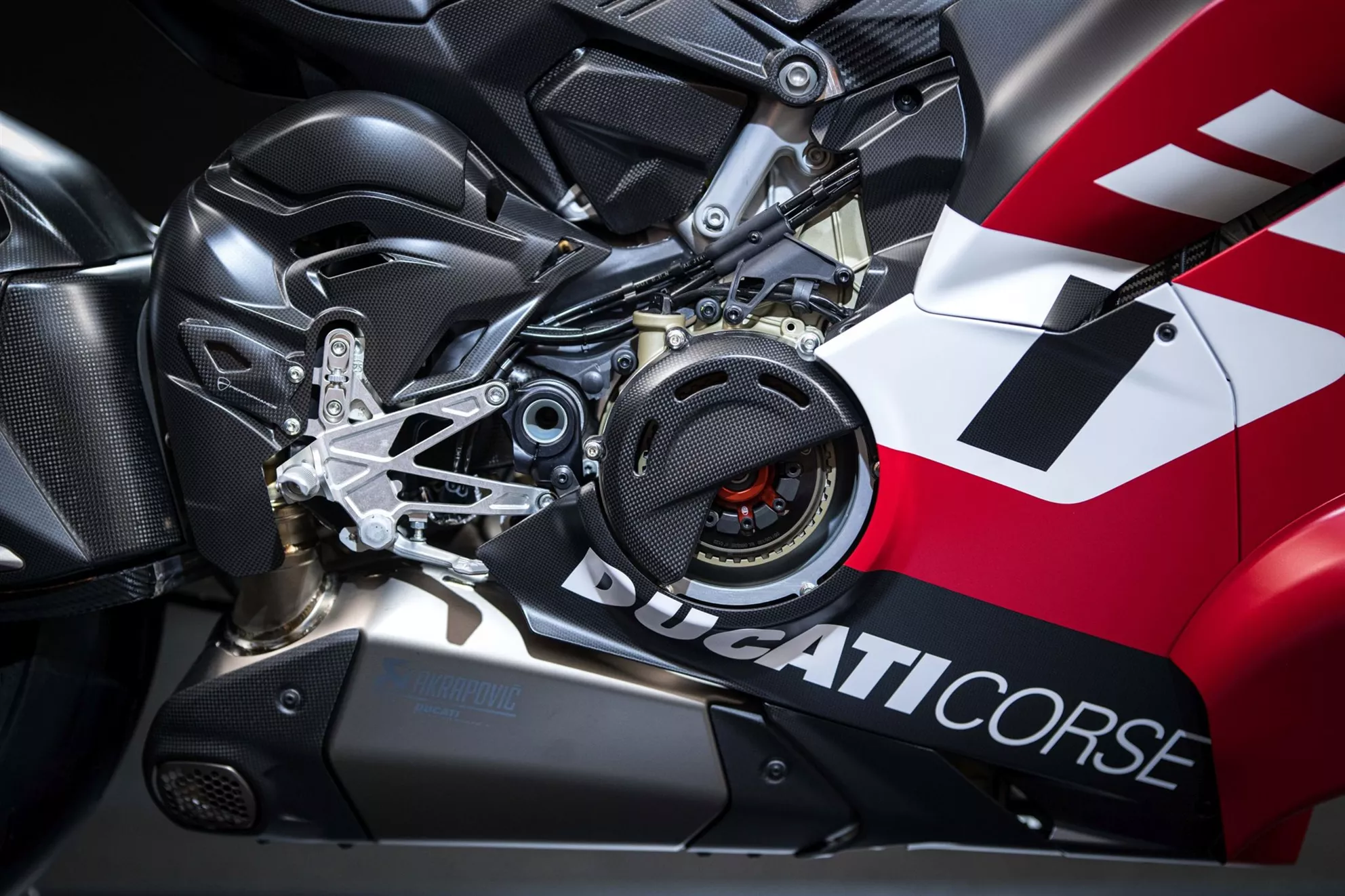
In Ducati's racing gearbox, which is also fitted in the Superleggera V4 Centenario, neutral is located below first gear.
Of course, the new racing gearbox is also used in the Superleggera. Here, neutral is not located between first and second gear as usual, but hidden "below" first gear. This means that when shifting from first to second gear, you don't have to pass through neutral. This allows for a shorter and, above all, more precise gear change. To avoid accidentally ending up in neutral when hastily downshifting during a battle through corners, a neutral lockout can be activated on the handlebar.
Barely recognizable as a frame anymore - Chassis of the Ducati Superleggera V4 Centenario
With the chassis, it becomes particularly clear how strongly the development has been influenced by findings from MotoGP. While maximum rigidity used to be the top priority, Ducati today deliberately relies on controlled flex behavior to improve rideability in corners.
The Superleggera's frame is barely recognizable as a classic frame anymore. It's rather an extremely compact, monocoque-like carbon structure that only handles the connection between the engine and the steering head. Through targeted adjustment of the material layers, Ducati manages to precisely define both torsional and longitudinal rigidity while saving about 20% of the weight.
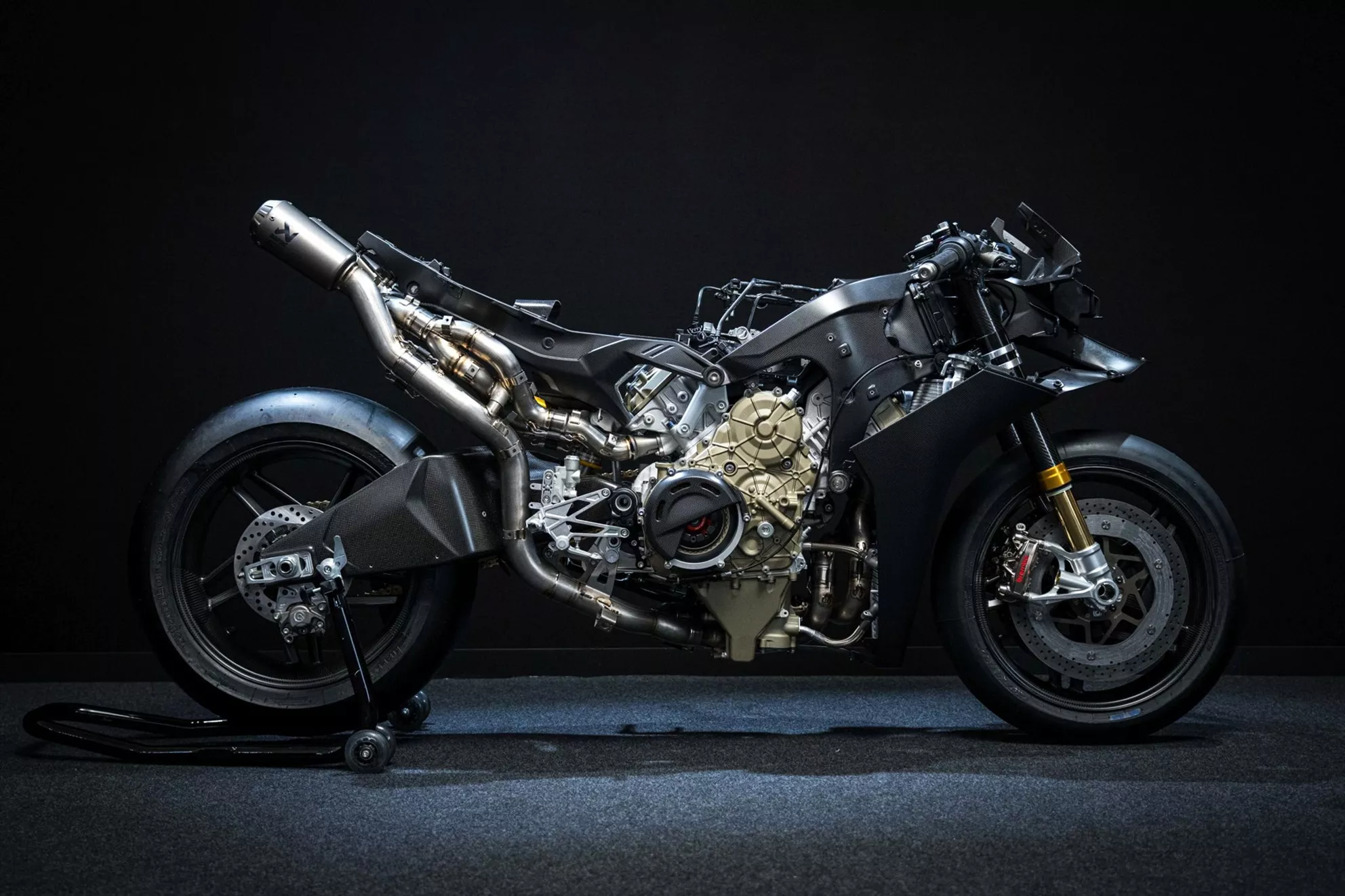
The elaborate monocoque frame is made of carbon from the triple clamp to the tail, as are the swingarm, brakes, forks and rims of the Superleggera.
The swingarm is also made entirely of carbon - a component that is only extremely rarely found in this form in production. Its hollow structure requires a highly complex manufacturing process, which among other things requires working with inflatable bladders. Additionally, Ducati integrates a QR code directly into the structure, enabling complete traceability of each individual component.
The subframe also follows the lightweight construction principle and is designed as a self-supporting carbon element. Overall, the chassis contributes significantly to further reducing the total weight of the bike while at the same time optimizing riding dynamics.
First carbon fork in a production bike - Ducati Superleggera V4 Centenario
In the suspension area, Ducati works closely with Öhlins and relies on components that come directly from racing. The front fork represents one of the biggest technical highlights.
For the first time, the NPX25/30 fork uses outer tubes made of carbon - an innovation that has not previously existed in production motorcycle construction. Since carbon reacts sensitively to point loads, a hybrid solution had to be developed. In particularly stressed areas, such as at the clamping points, aluminum inlays are used to ensure the necessary stability when clamping in the triple clamps.
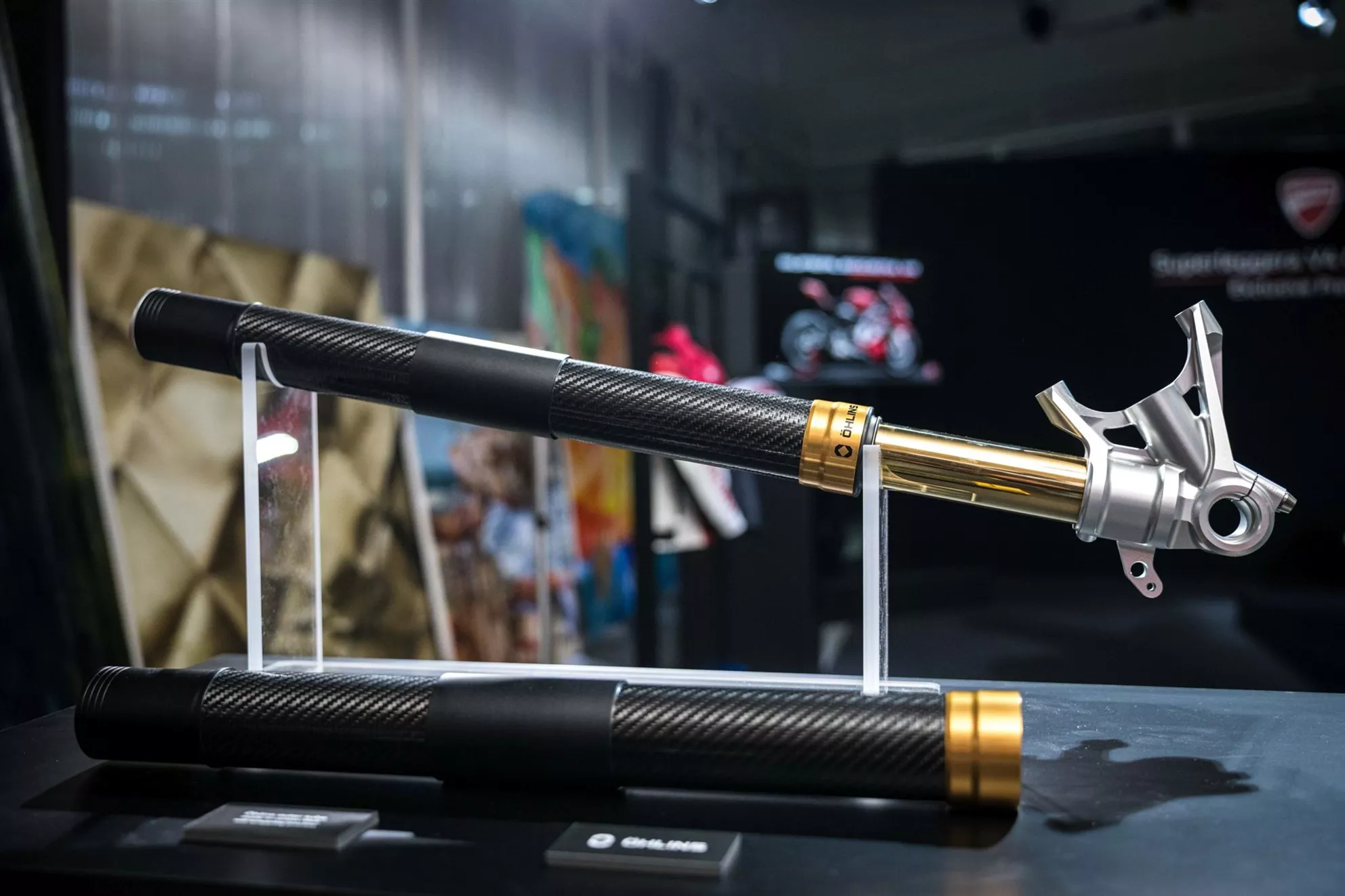
The Öhlins NPX25/30 fork, with its carbon outer tubes, is a world first in the field of production motorcycles.
High-quality racing components are also used inside the fork, including a closed-cartridge system that guarantees maximum performance. Through the fork's construction alone, a weight saving of up to one kilogram can be achieved.
The rear TTX shock is also based on a specially developed lightweight version and contributes to further reducing unsprung mass. Combined with the carbon rims, the result is a chassis that reacts extremely agile and is designed to enable precise turn-in behavior.
Ducati Superleggera V4 Centenario with carbon brakes despite street homologation
Ducati writes another revolutionary chapter together with Brembo in the field of brake technology. While carbon brake discs have long been established in racing, they were previously considered unsuitable for road use, since they only develop their full performance at high temperatures.
The solution lies in a newly developed carbon-ceramic blend that enables reliable braking performance already at low temperatures. This makes it possible for the first time to combine the advantages of carbon brakes, namely low weight and high load capacity, with the requirements of road use. Thanks to the low weight of carbon, it's also possible to upgrade to deceleration-friendly large diameters of 340mm and 8mm wall thickness.
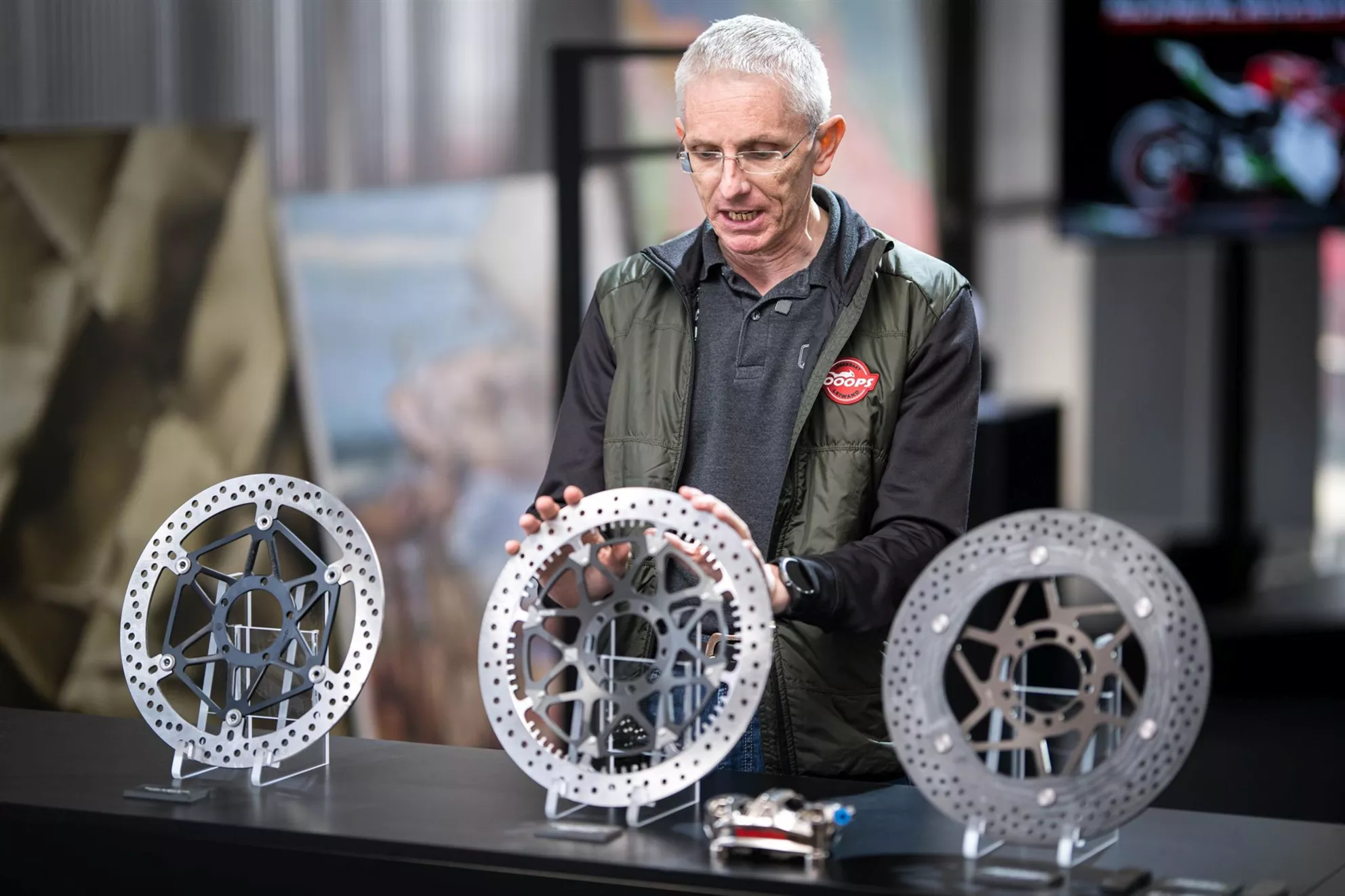
Until now, carbon brakes were considered unusable in public road traffic. With the Superleggera V4 Centenario, that changes.
The brake discs not only offer outstanding deceleration performance but also significantly reduce the rotating mass at the front wheel. This has a direct effect on the agility and handling of the bike. What is "state of the art" in racing has thus now made its debut in road vehicle construction for the first time.
New Superleggera V4 naturally comes with carbon rims
What might already be classified as "more ordinary" is the use of carbon technology in the rims. These premium parts have long been available as an aftermarket option for some motorcycles, but rarely with homologation or road approval. Carbon is very sensitive, especially when it comes to shock loads, and this can quickly become dangerous in the wheel area during hard road use. That's why many strict tests and very precise manufacturing specifications had to be met during production in order to meet these requirements. Through intensive cooperation with the company BST, however, this hurdle was also overcome.
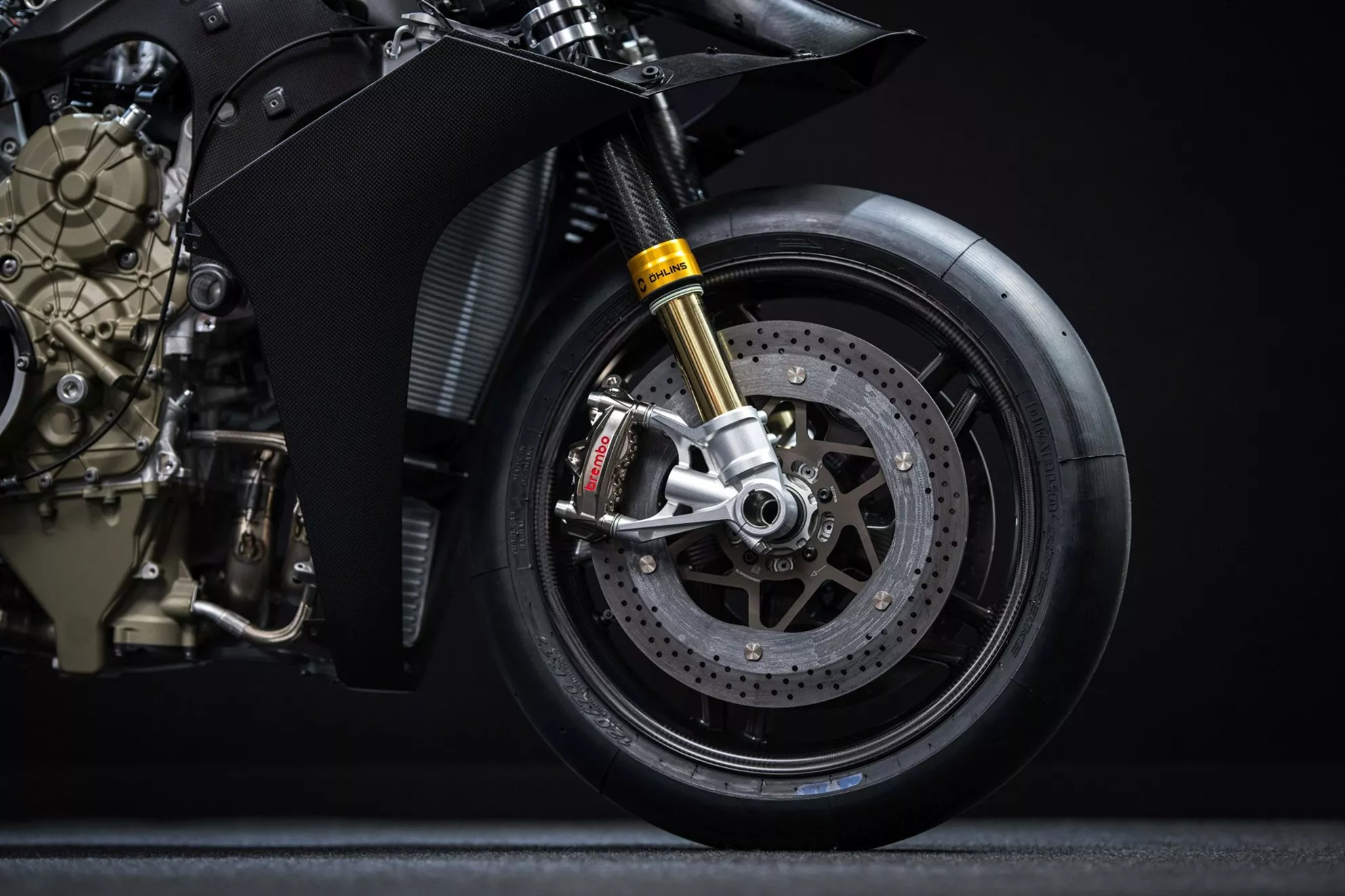
Amid all the top-level high-tech in the Ducati Superleggera V4 Centenario, the premium carbon rims from BST almost get overlooked.
High-tech and optimizations wherever you look - Ducati Superleggera V4 Centenario
The Superleggera V4 Centenario is a melting pot of technological innovations. Particularly noteworthy is the consistent use of carbon in almost all areas of the bike - from the frame to the swingarm to the fork and the wheels.
Equally impressive is the level of detail with which Ducati approaches weight optimization. Every component is questioned, every gram saved, without making any compromises in stability or safety.
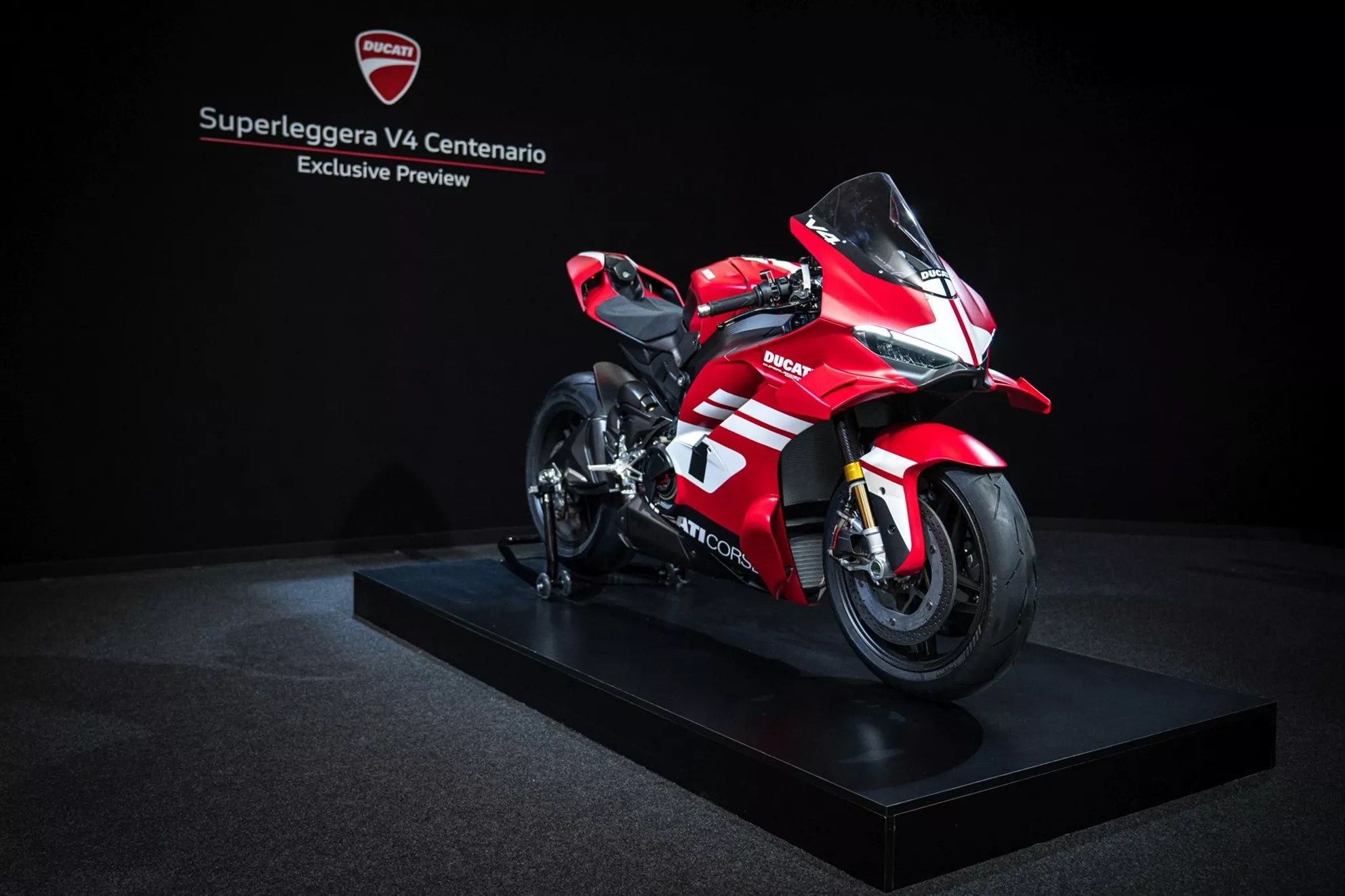
The fact that the Ducati Superleggera, with its brutal performance and racing technology, achieved street homologation is a sensation in itself.
Another highlight is the combination of extreme performance and full road homologation. Despite its closeness to racing, the Superleggera remains a bike that can legally be ridden on public roads. This is a balancing act that only a few manufacturers master in this form.
With a price of around 150,000 euros and a strict limitation to 500 units, the bike is aimed at a very exclusive target group and will probably remain inaccessible to most of us. Nevertheless, it fulfills an important role: it shows what is technically possible when economic limits recede into the background.
You can't bring more MotoGP onto public roads!
The Ducati Superleggera V4 Centenario is by far the most consistent attempt yet to bring MotoGP technology to the road. It combines extreme performance, radical lightweight construction and innovative materials into an overall package that has no equal.
Of course, it remains a niche product - very exclusive, too expensive and too uncompromising for the everyday use of many riders. But that's exactly where its fascination lies. It's not a bike for everyone, but a symbol of what is currently technically feasible and a glimpse of what we might one day find in stripped-down versions of off-the-shelf supersport bikes.
Fact is: with 247 hp at just 173 kg, the new Ducati Superleggera V4 Centenario is, as a street-legal motorcycle, closer to MotoGP than ever before!
Ducati Superleggera V4 Centenario - MotoGP dream for the road Images
Source: 1000PS


