With the new BMW R 1300 RS, BMW Motorrad is opening a new chapter in the history of its Boxer sport tourers. Rather than merely evolving the previous R 1250 RS, they've replaced it with a completely new generation. A new engine, new frame architecture, and a much stronger focus on sporty riding dynamics aim to bring the RS closer to a roadster, without losing its touring capabilities. BMW itself calls it the most dynamic RS ever. The bar is set high.
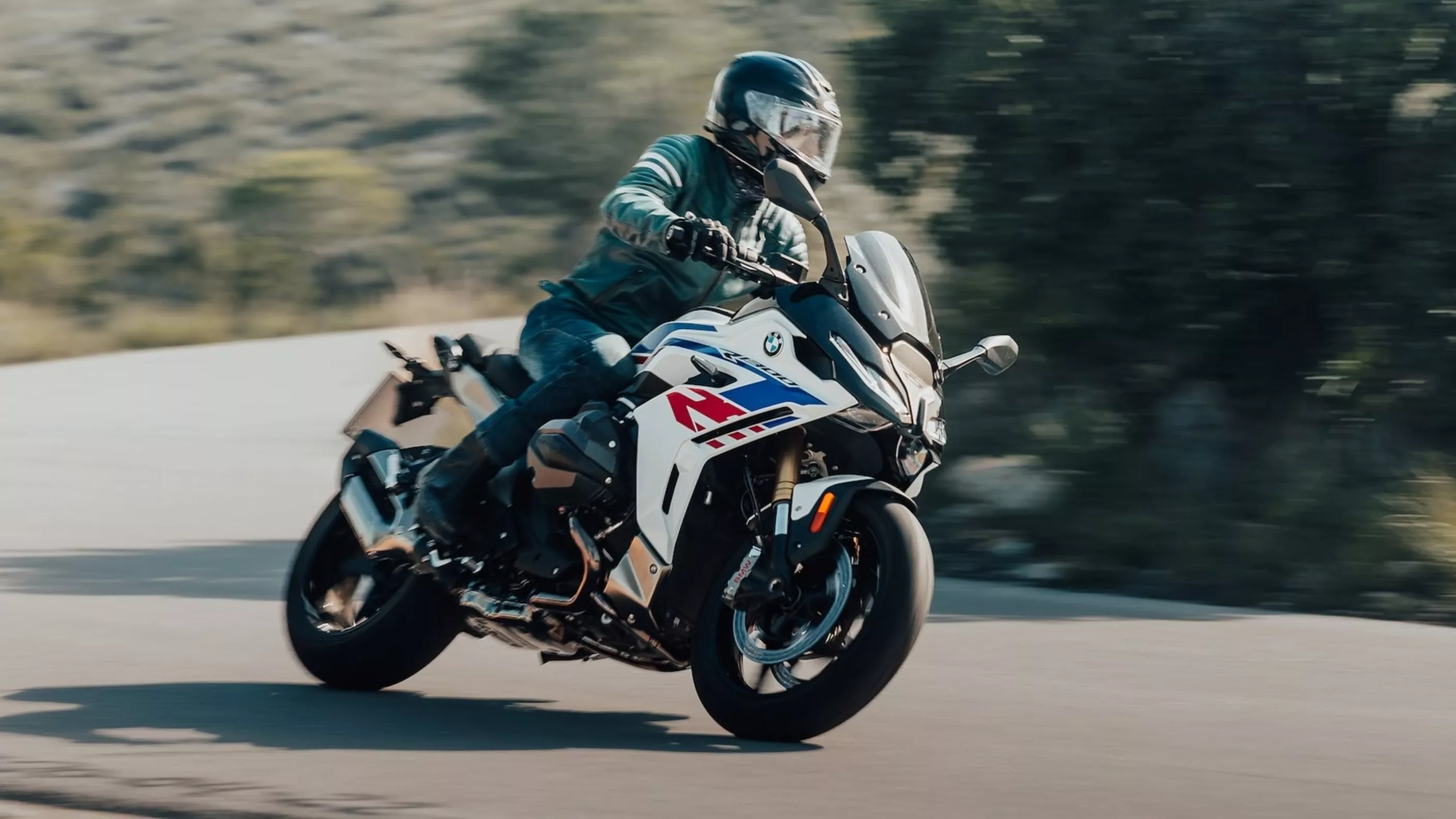
BMW R 1300 RS Review: The Most Dynamic RS Yet?
New 145 HP RS: How Sporty is the Boxer Sport Tourer?
According to the manufacturer, the BMW R 1300 RS is set to be the most dynamic RS ever. With a new 1300cc Boxer engine, a completely revamped chassis, and noticeably sportier ergonomics, this sport tourer aims to edge closer to a roadster. But how does it actually perform on the road?
&width=72&height=72&bgcolor=rgba_39_42_44_0&mode=crop "Author: Gregor")
Gregor
published on 10/03/2026
19,643 Views
For our test, we had the R 1300 RS in the Performance variant. This version not only features the new 1300 Boxer engine but also includes a sport suspension, sport brakes, Riding Modes Pro, and additional performance extras. With 145 HP, a completely new chassis architecture, and revamped aerodynamics, the RS is designed to be even faster and more agile. At the same time, it remains a motorcycle capable of handling long stretches as well as twisty country roads.
The central question of the test is: Does the new RS remain the classic sport tourer that combines comfort and dynamism, or is it increasingly evolving into a faired roadster interpretation within the Boxer family?
BMW R 1300 RS - What's New? Focus on Sportiness
The development of the new R 1300 RS had a clear goal: more dynamism. This begins with the fundamental architecture of the motorcycle. BMW developed an entirely new chassis concept with a steel sheet metal main frame and an aluminum trellis rear frame. Compared to the previous steel tube construction, this design offers significantly higher stiffness while allowing for a more compact build. This concentrates the mass more around the vehicle's center of gravity, which is intended to enhance handling and riding precision.
The packaging has also been fundamentally changed. The engine and transmission are more compactly arranged, giving the motorcycle an overall slimmer appearance. As a result, the RS looks sportier and more agile than its predecessor. At the same time, it remains recognizable as a sport tourer, albeit with a much stronger focus on dynamism.
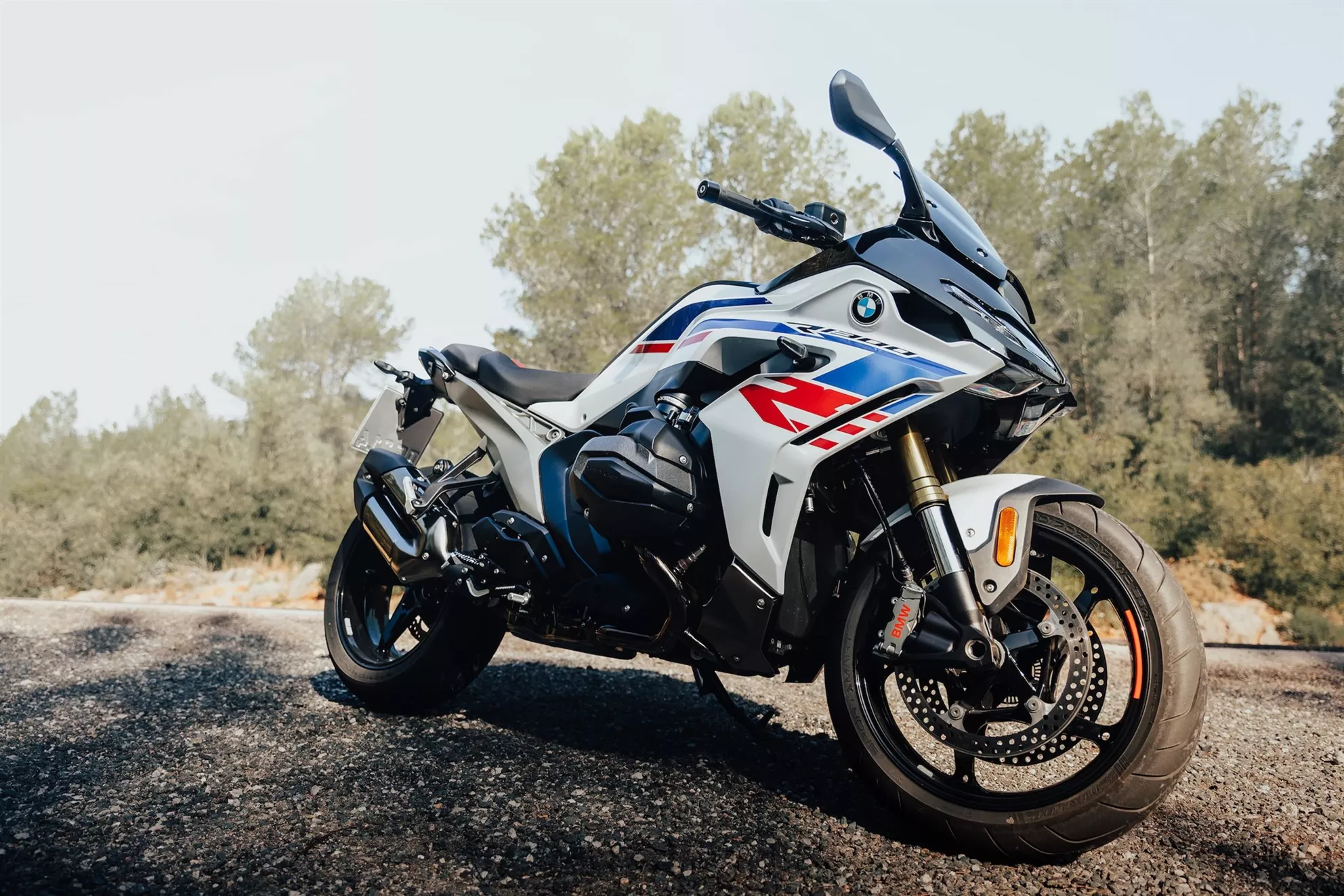
The new, sporty orientation of the R 1300 RS is evident from the outside.
Visually, the new generation appears significantly sharper. The front end looks more aggressive and modern. The slim full-LED headlight with separate high beam gives the RS a distinctive face. The fairing has been aerodynamically redesigned with a stronger focus on sporty lines. In the Performance variant, additional details are included: engine spoiler, dark chrome headers and exhaust, special design wheels, and a tinted windscreen emphasize the model's sporty intent.
New 1300 Boxer in the BMW R 1300 RS
The centerpiece of the new RS is the renowned 1300 Boxer, already used in other models of the current generation. With exactly 1300 cubic centimeters of displacement, the air- and liquid-cooled twin-cylinder now delivers 145 HP at 7,750 RPM and produces a maximum torque of 149 Newton meters at 6,500 RPM.
The structural changes are extensive. The bore has been increased while the stroke has been reduced. A new crankshaft and larger valves further enhance power delivery. The compression ratio increases to 13.3:1, and the maximum RPM is set at 9,000. Despite the increased performance, fuel consumption remains moderate at 4.8 liters per 100 kilometers, according to WMTC measurements.
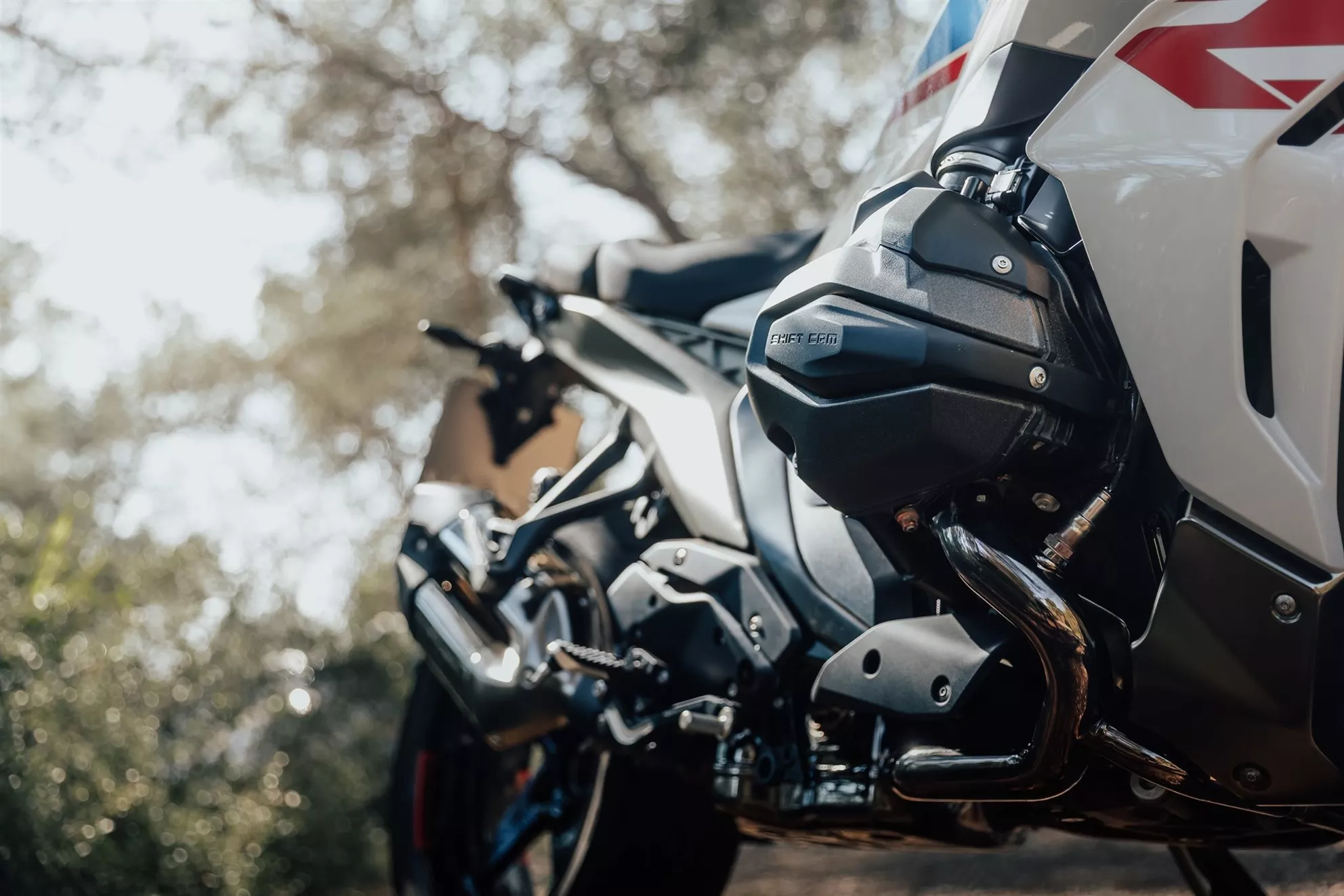
The new 1300 Boxer engine, with its dynamic character, fits perfectly into the R 1300 RS.
In operation, the engine impresses primarily with its immense dynamism. The combination of a powerful Boxer and a rev-happy tuning results in a versatile riding experience characterized by acceleration orgies. Unsurprisingly, there's plenty of power available in every situation. At the same time, the engine responds smoothly and is well-mannered at the wrist if desired.
It's also interesting how well the character of the new Boxer engine suits the RS. The 1250 Boxer was more impressive with its torque punch at lower RPMs rather than great dynamism across the rev range. Personally, I found this tractor-like torque more fitting for an adventure tourer like the GS than the new Boxer. However, the 1300 seems tailor-made for the RS. Especially in a sport-oriented sport tourer, the more rev-happy character truly shines.
Enhanced Aerodynamics of the 2026 BMW R 1300 RS
A key aspect of the redevelopment is the revised aerodynamics. The fairing has been completely redesigned and optimized in the wind tunnel. The goal was to combine sporty lines with classic RS wind protection while also improving stability at high speeds.
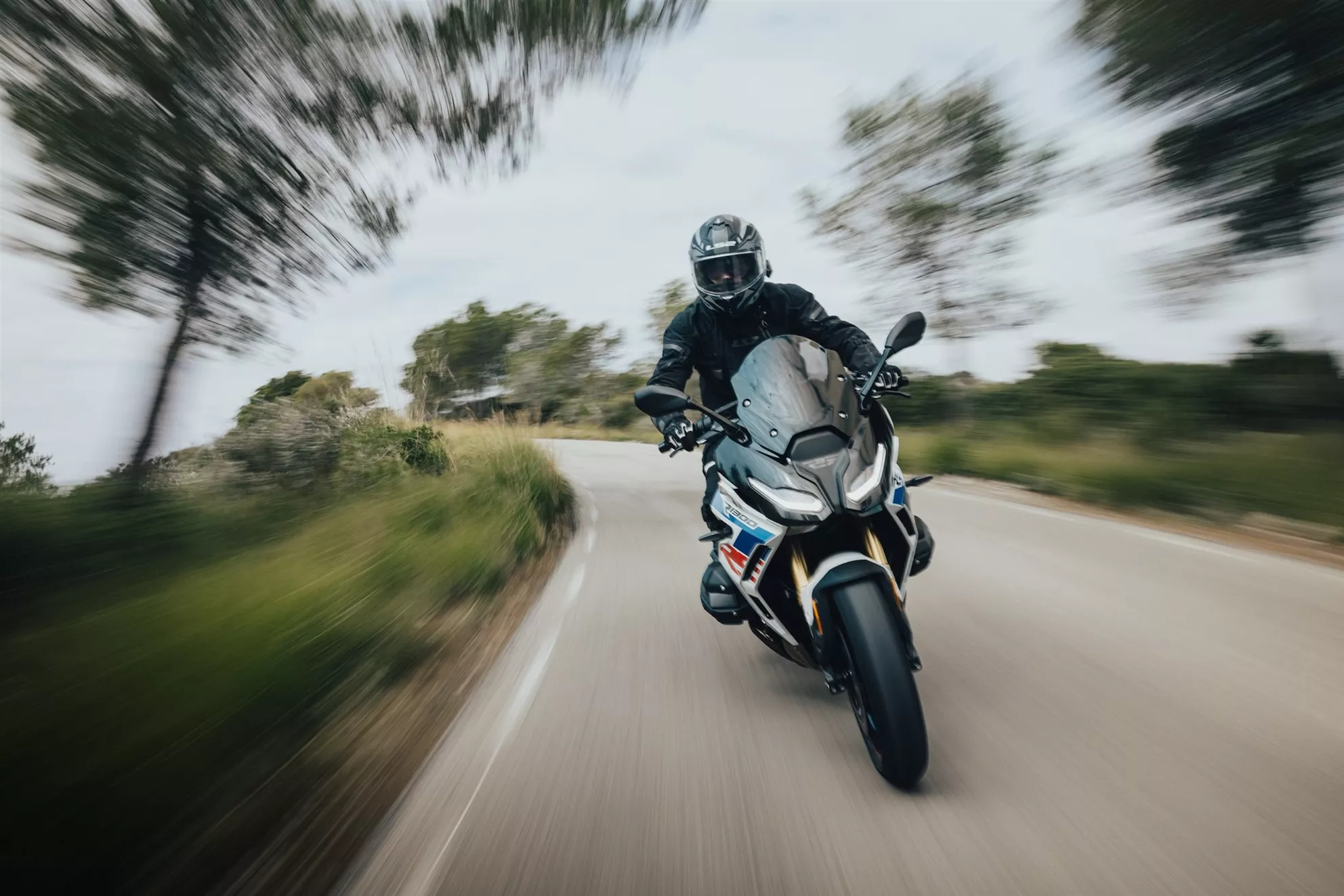
The wind protection on the R 1300 RS is adequate, with the helmet positioned directly in the airflow.
The windscreen can be adjusted, but only manually by pulling on it. This can be a bit cumbersome at higher speeds. At a height of about 1.85 meters, the wind hits around chin level, causing slight turbulence at the helmet, while keeping the upper body well protected. Overall, the RS provides solid, though not exceptional, wind protection.
The revised aerodynamics also contribute to the higher top speed. According to the manufacturer, the new RS can reach up to 245 km/h while remaining stable on course.
Even Sportier Riding Position on the R 1300 RS
Alongside the technical overhaul, the ergonomics have been made significantly sportier. The handlebars are flatter and about 35 millimeters wider than the predecessor, while the foot pegs have been moved further back. This shifts the rider's position forward, providing more feedback from the front end.
Despite this sportier layout, the seating position remains surprisingly relaxed. Sitting more towards the front of the saddle puts little pressure on the wrists. The posture feels comfortably upright, making it suitable for longer rides. However, shifting back allows for a noticeably more active riding stance.
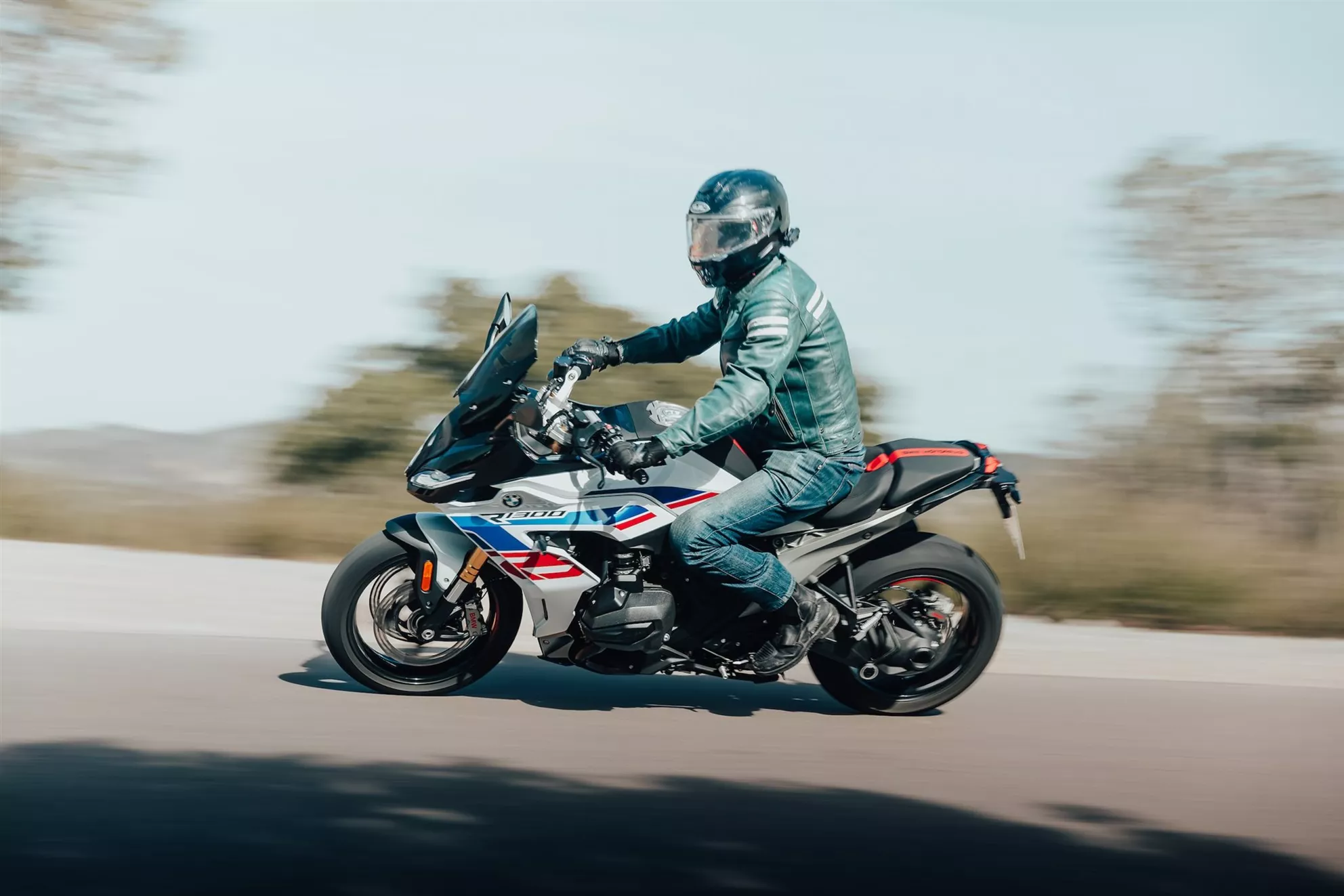
The seating position of the RS has become sportier but is far from radical or uncomfortable.
In the Performance variant, the sport suspension is also employed, raising the motorcycle by about ten millimeters. Combined with the high sport seat, this results in a seat height of around 845 millimeters. The bike's elevation also provides more ground clearance, supporting the machine's sporty orientation. On the stunning Spanish roads, the footpeg only scrapes at a lean angle of 48° according to the BMW sport display.
Riding Dynamics: Suspension, Handling, and Brakes
The new suspension concept is one of the most significant technical changes in the R 1300 RS. Up front, there's a 47-millimeter upside-down fork, while at the rear, a single-sided swingarm with an advanced EVO Paralever is utilized. Additionally, lighter 17-inch cast wheels are used, saving more than 1.4 kilograms in weight.
The Performance variant also features the electronic DSA suspension. This Dynamic Suspension Adjustment continuously adapts both damping and spring rate to the current riding situation. According to BMW, it is the first production fork where the spring rate can be electronically adjusted.
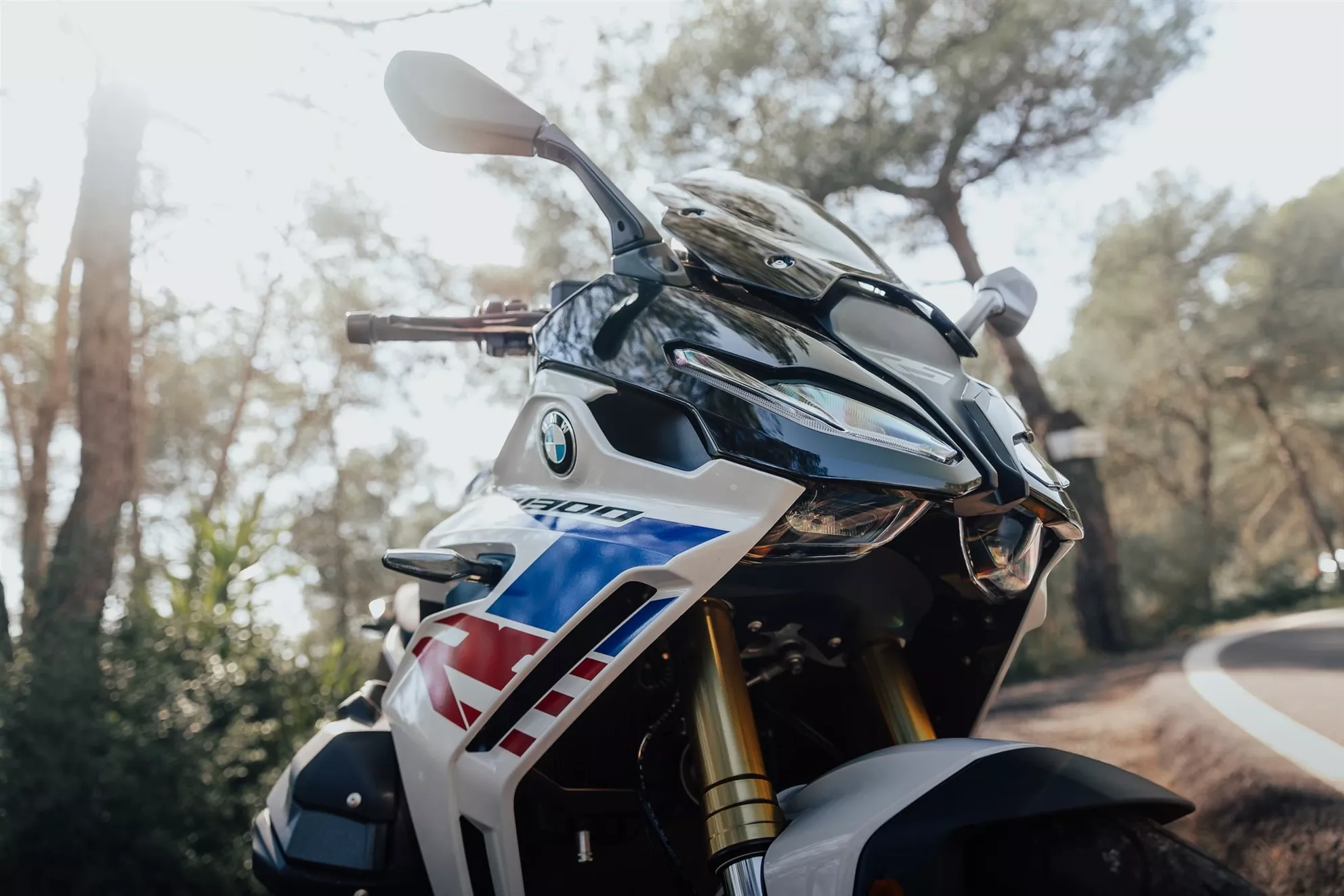
The first production fork with adjustable spring rate ensures an excellent connection between the rider and the road.
This state-of-the-art suspension harmonizes with the new ergonomics, resulting in a wonderfully precise riding experience. You feel deeply connected to the front end and gain a clear sense of the road's grip conditions. The motorcycle remains stable and planted in corners while allowing for very precise steering.
The sport brake also impresses with a sporty yet well-modulated character. Since the RS is also meant to excel in touring, the motorcycle remains stable and shows minimal stand-up tendency.
Thanks to the performance suspension, lean angle capacity is increased. Even with very spirited riding, there is still ample reserve available.
BMW R 1300 RS Electronics in Riding Operation
The new RS is extensively equipped electronically. In the tested Performance version, alongside the standard modes Rain and Road, Dynamic and the configurable Dynamic Pro are also available. Depending on the selected mode, not only throttle response and engine characteristics are altered, but also ABS Pro, traction control, engine drag torque control, and the semi-active suspension are adjusted.
More New Model Tests from Spain
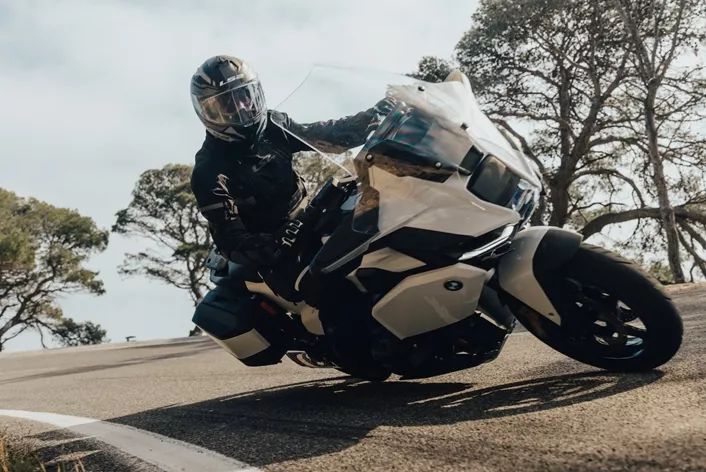
The standard quickshifter allows for clutchless upshifts and downshifts. Despite the shaft drive, the system operates very smoothly in most situations. Occasionally, there can be noticeable load changes in partial load areas, but overall, the shift assistant works very reliably.
BMW also offers an optional automated shift assistant called ASA. This system automatically handles the clutch operation and allows both manual and fully automatic gear changes. However, this system was not installed on our test motorcycle.
Touring Capability of the BMW R 1300 RS
Despite its stronger sporty orientation, the RS remains a motorcycle designed to handle longer distances comfortably. The seat comfort of the sport saddle is on the firmer side but still tolerable for extended periods. With some wind pressure and an upright seating position, there is no pressure on the wrists with minimal body tension. However, the knee angle can become quite acute for taller riders, so a thorough test ride is recommended for them.
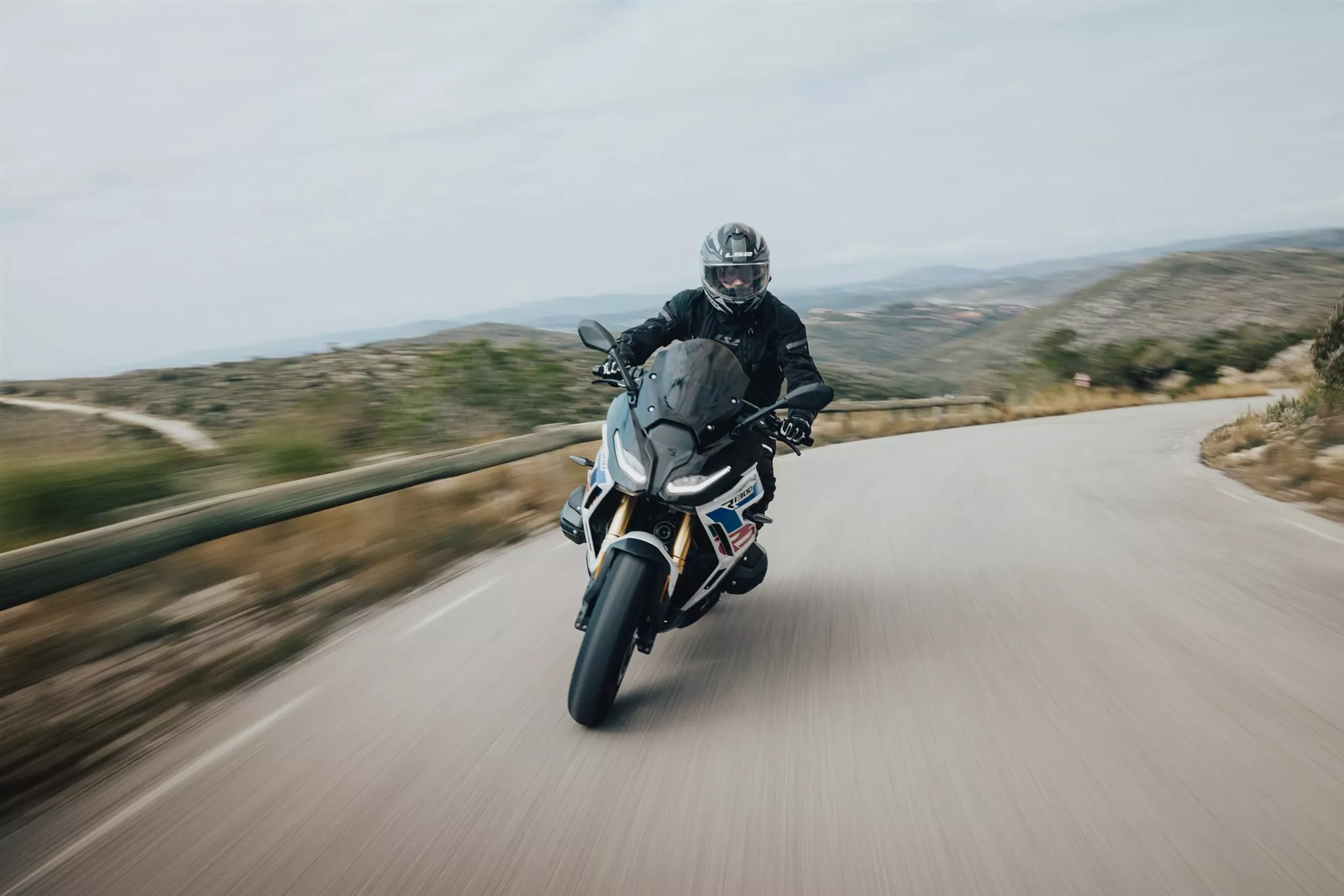
The motorcycle weighs in at 245 kilograms ready to ride and features a 17-liter tank. Combined with the fuel-efficient engine when ridden gently, it offers a practical range of over 300 km. The biggest advantage, however, is the semi-active suspension. With adjustments at the push of a button, the suspension offers great versatility, absorbing bumps comfortably and softly in Road mode, and then carving precisely through curves with Dynamic Pro and tighter damping.
Electronically, there is also a 6.5-inch TFT display with connectivity features, cruise control, and numerous assistance systems available. Optionally, adaptive cornering lights, radar-based riding assistance systems, and Vario cases with central locking are available.
Value for Money Analysis & Conclusion of the 2026 BMW R 1300 RS Test
The 2026 BMW R 1300 RS is priced from €17,050 in Germany and from €19,130 in Austria. The Performance variant we tested requires an additional premium of around €3,600. This places the RS in quite a significant price range. So, who is it worth investing this amount for?
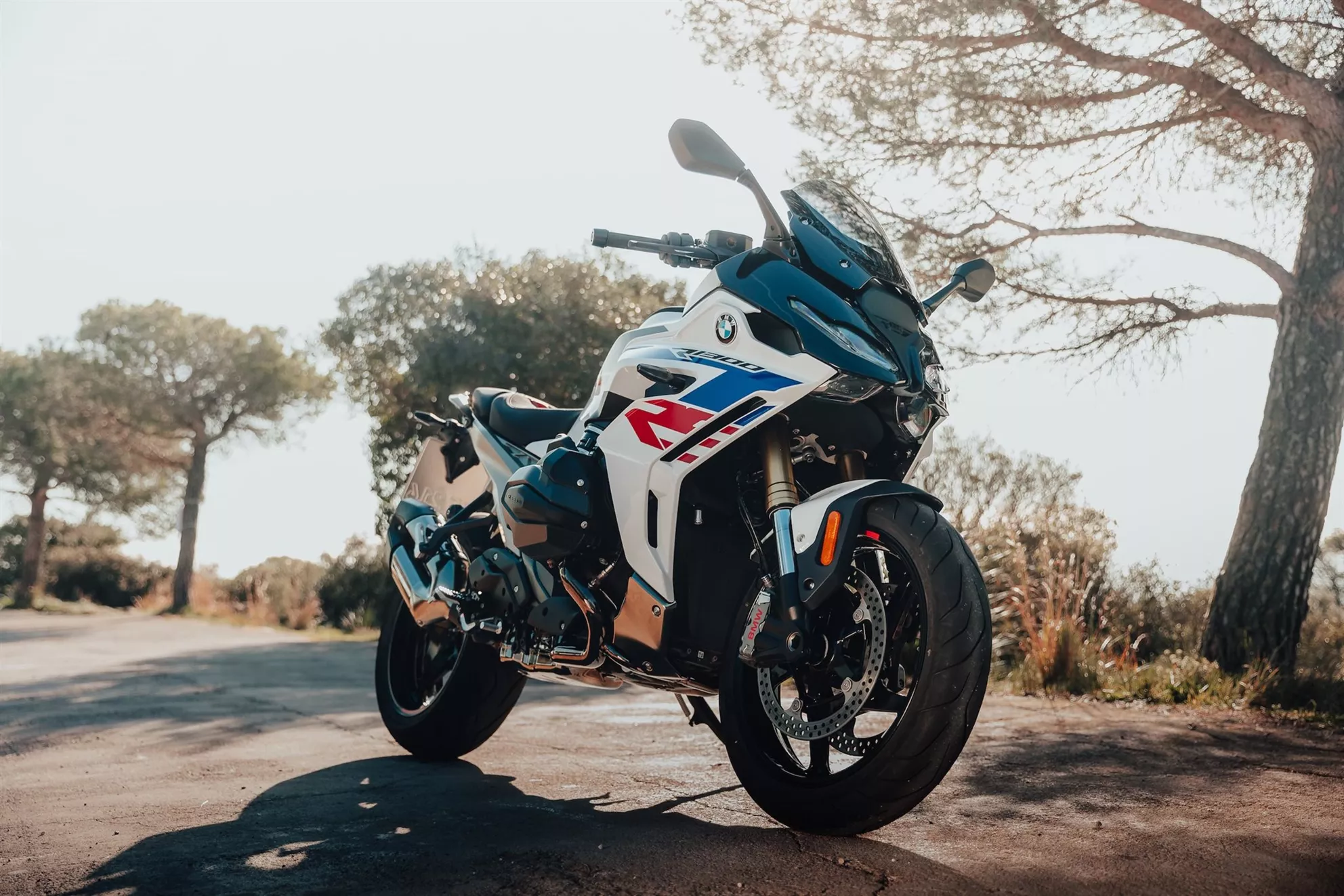
The BMW R 1300 RS is an excellent motorcycle with few weaknesses and many strengths.
Classic sport tourers have become rare in the motorcycle market over the years. Most major manufacturers, if they offer one at all, usually include only a single representative of this category, increasingly focusing instead on tall crossover motorcycles. The BMW R 1300 RS is such a rare, classic sport tourer. Thanks to its perfectly matched 1300 Boxer and new front-wheel-oriented ergonomics, it is more so than ever before. The complete package is rounded off with high-quality suspension and the latest electronics. Overall, it's a motorcycle that presents few weaknesses yet offers a lot at a certain price.
- How much does a BMW R 1300 RS cost?
- Here you will find an overview of the price level of new and used motorbikes!
&width=60&height=60&bgcolor=rgba_39_42_44_0&mode=crop "Author: Gregor")
BMW R 1300 RS 2026 - Experiences and Expert Review
Gregor
The BMW R 1300 RS combines the powerful 1300 Boxer with precise, semi-active suspension and modern electronics. Compared to its predecessor, BMW's sport tourer has become significantly more dynamic and sporty. It particularly shines on twisty roads but doesn't shy away from longer journeys either.
BMW R 1300 RS Review: The Most Dynamic RS Yet? Images
Source: 1000PS


