
Continental TKC 80² - first roll-out in Portugal

Continental TKC 80² - first roll-out in Portugal

The second generation of the tyre icon

After four decades, Continental is for the first time sending a completely new generation of its iconic knobby tyre for adventure bikes into the race. The TKC 80 gets a true successor in the TKC 80². The designation of the second generation is written by Conti in superscript, but the model name is spoken as „TKC 80 Gen Two“. Tread, rubber compound and carcass have been extensively modified. We were already able to test the new tyre in the 50:50 segment in Portugal.

Clemo

Clemo

published on 27/02/2026

17,290 Views

Manufacturers love to wrap their new releases in grand promises, even when technically little more than a cosmetic update has happened. In this case, however, the big words seem surprisingly justified. After four decades, Continental is for the first time sending a completely new generation of its iconic knobby tyre into the race. The TKC 80 gets a true successor in the TKC 80². The designation of the second generation is written by Conti in superscript, similar to a squared sign – but the model name is spoken as „TKC 80 Gen Two“.

The original TKC 80, by the way, remains in the lineup as a „second liner“ with a full 25 sizes. It was continuously developed over the years, but at some point, according to Conti engineers, a technical limit had been reached. To achieve noticeable progress, tread, rubber compound and carcass had to be extensively modified. This was something they had long shied away from, since the TKC 80 had been extremely popular for decades. But after 40 years, the time had come to take this step.
Conti TKC 80²

Conti TKC 80²

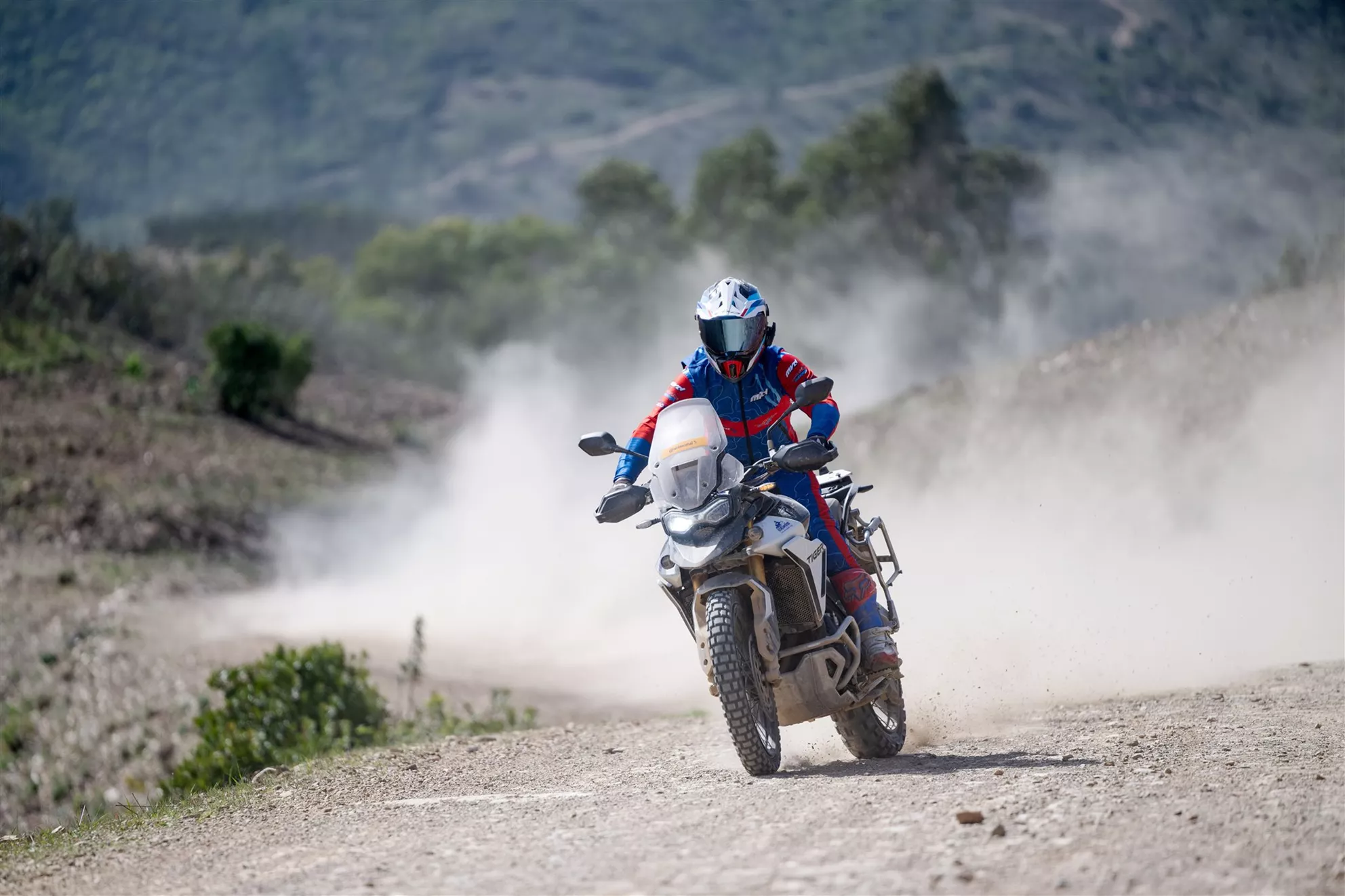
A central requirement for the developers was that the new TKC 80 Gen 2 remain visually uncompromising and unmistakable. The tyre was meant to continue looking coarse, rugged and clearly off-road oriented. It had to be clear at first glance that this tyre is intended for use off paved roads. Like its predecessor, the TKC 80² is designed as a 50:50 tyre for road and off-road. However, the second generation was meant to noticeably improve on both surfaces. A difficult undertaking, as shown for example by the search for the ideal „compound“: hard rubber compounds perform significantly better off-road and are less prone to damage, while softer variants generate significantly more grip on asphalt.

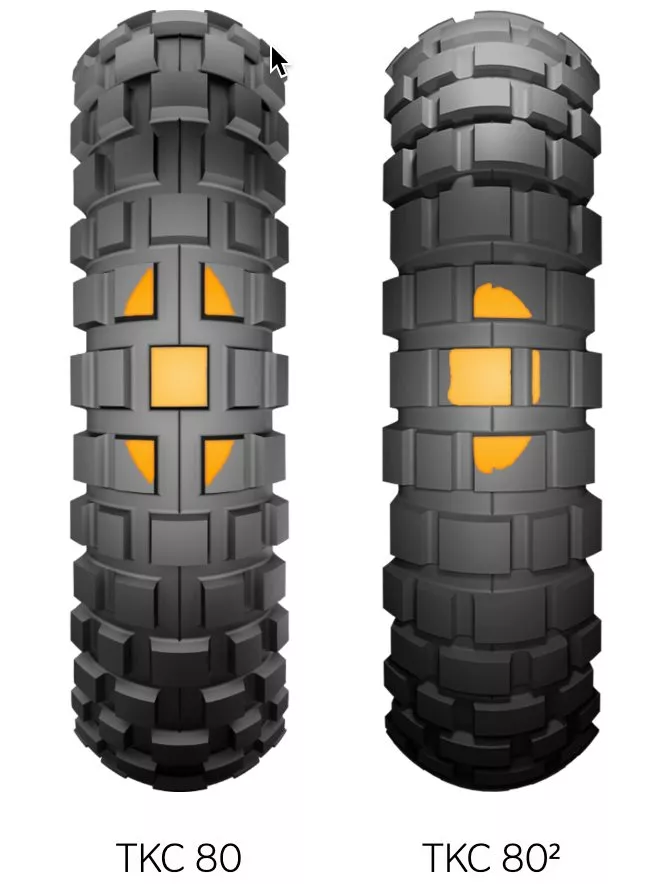
Rearranged tread blocks on the TKC 80²

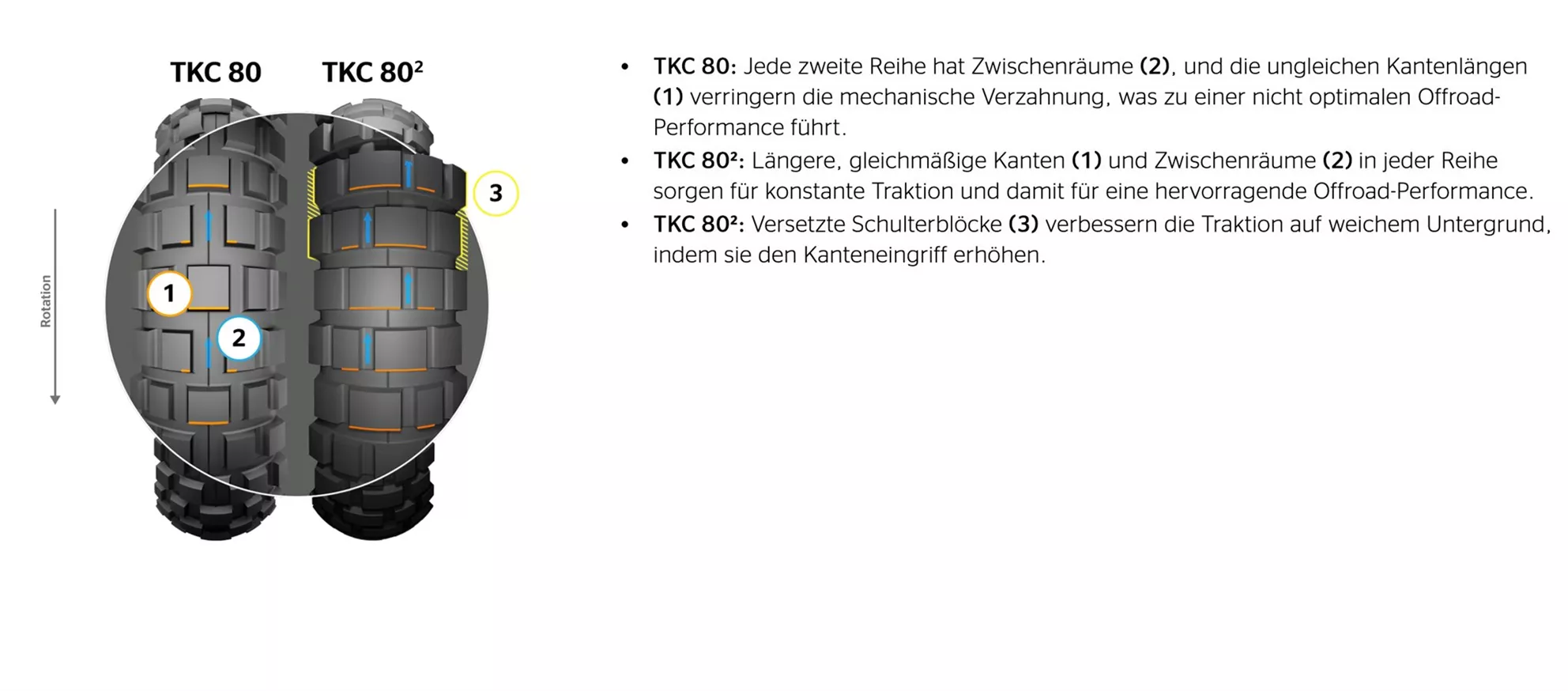
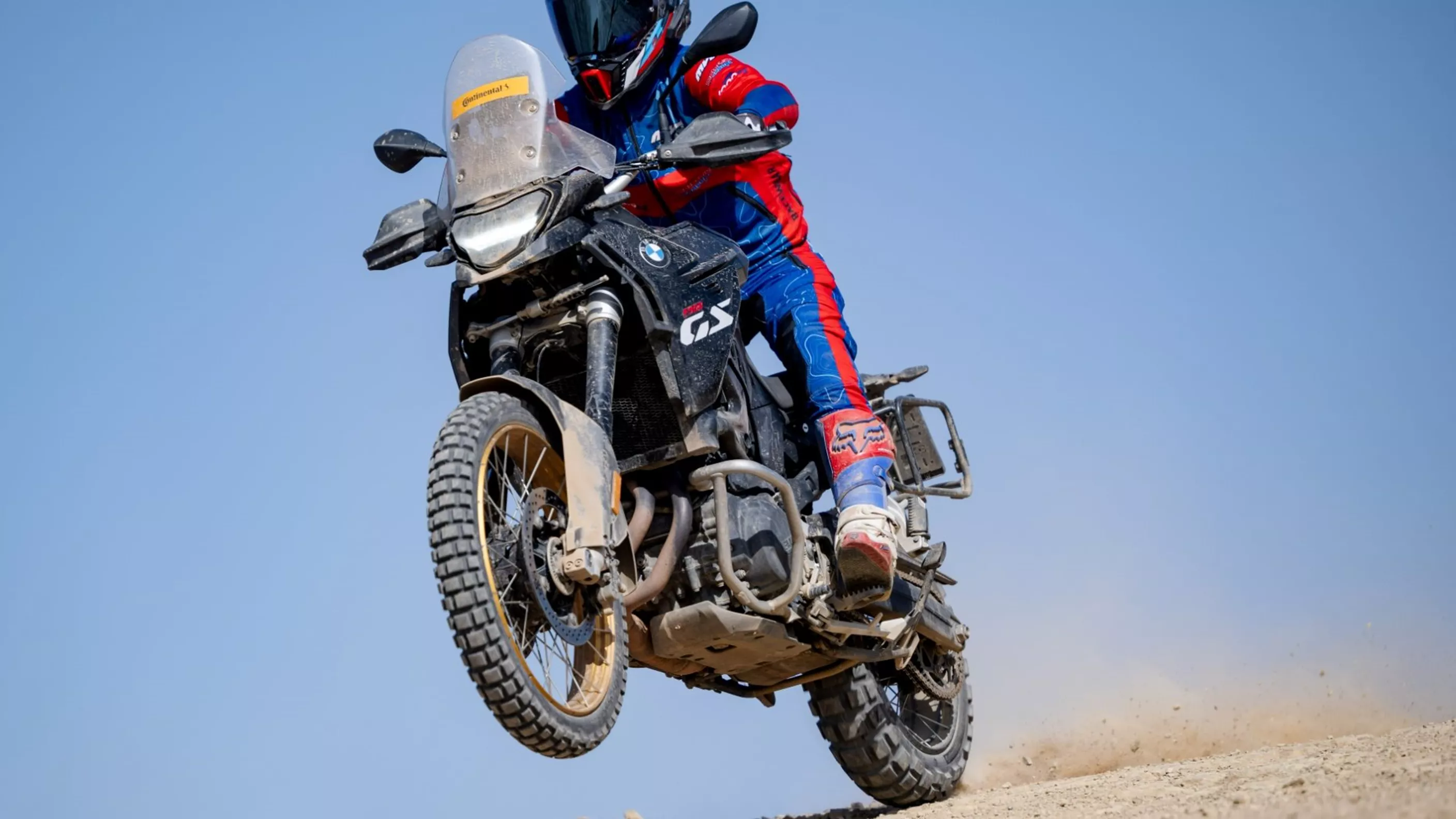
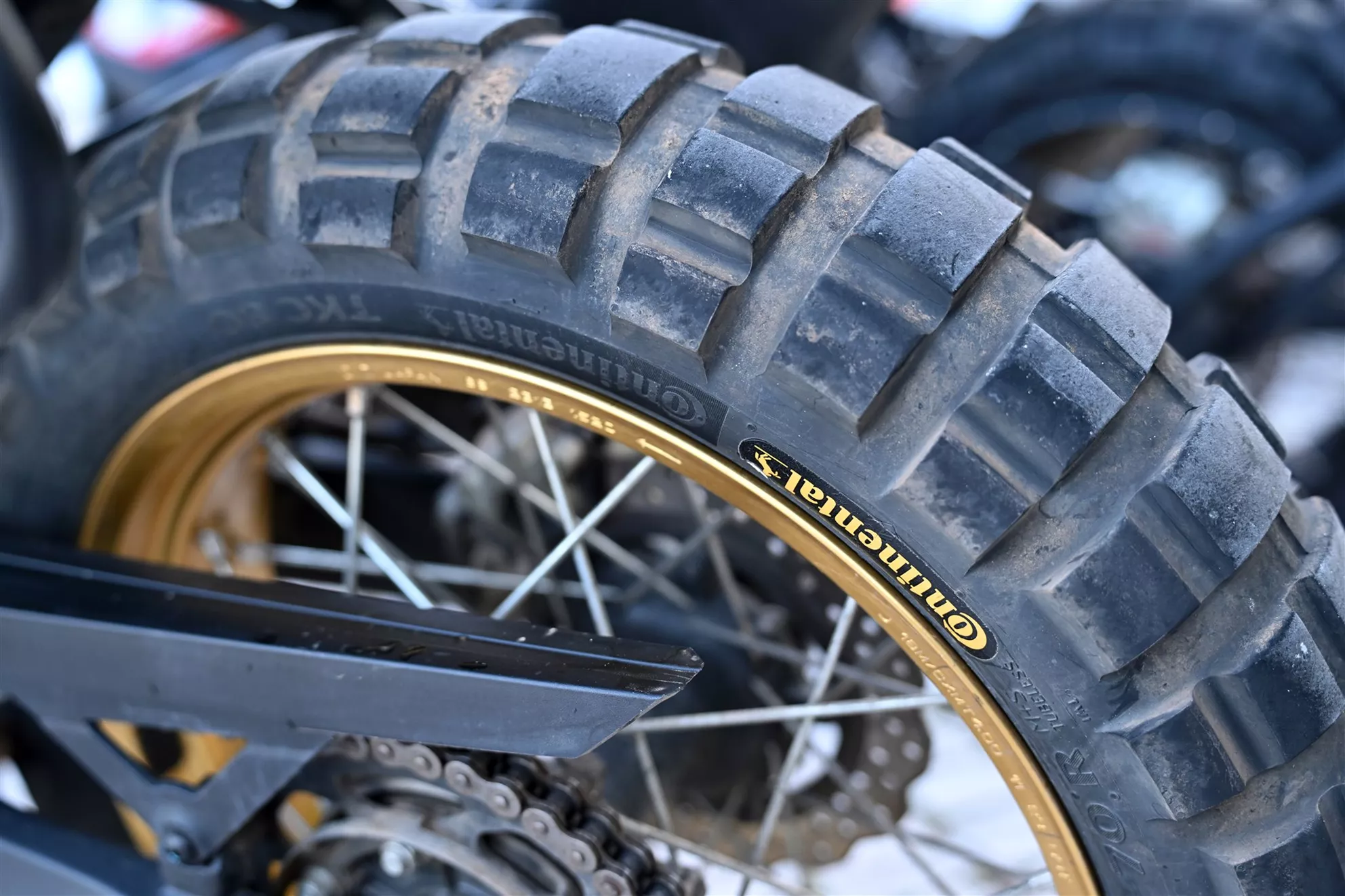
A look at the tread surface shows where Conti made its changes. The sequence of tread blocks has been redesigned so that more rubber is permanently in contact with the road. Especially in the central area, the footprint has grown thanks to a modified arrangement of the central knobs. This is meant to improve stability at high speeds while also reducing rolling noise. Overall, the positive tread on the tread surface grows by as much as 17 percent. Despite the larger rubber contact patch, the tyre is not meant to lose bite off-road. On the contrary: thanks to the new block design, there are constantly more engagement edges available, which increases mechanical traction on loose surfaces and makes it more consistent. This is meant to give the rider more control. In addition, the outer knobs have been offset and the negative tread portion enlarged to improve lateral grip off-road.

The front and rear tyres also differ deliberately in tread pattern. On the front wheel, the tread blocks are strongly angled in the direction of travel to generate more grip when braking off-road. On the rear wheel, the block design is laid out in the opposite direction, so that maximum traction is available under acceleration.

Conti TKC 80²

More contact patch, optimised knob arrangement

Conti TKC 80²

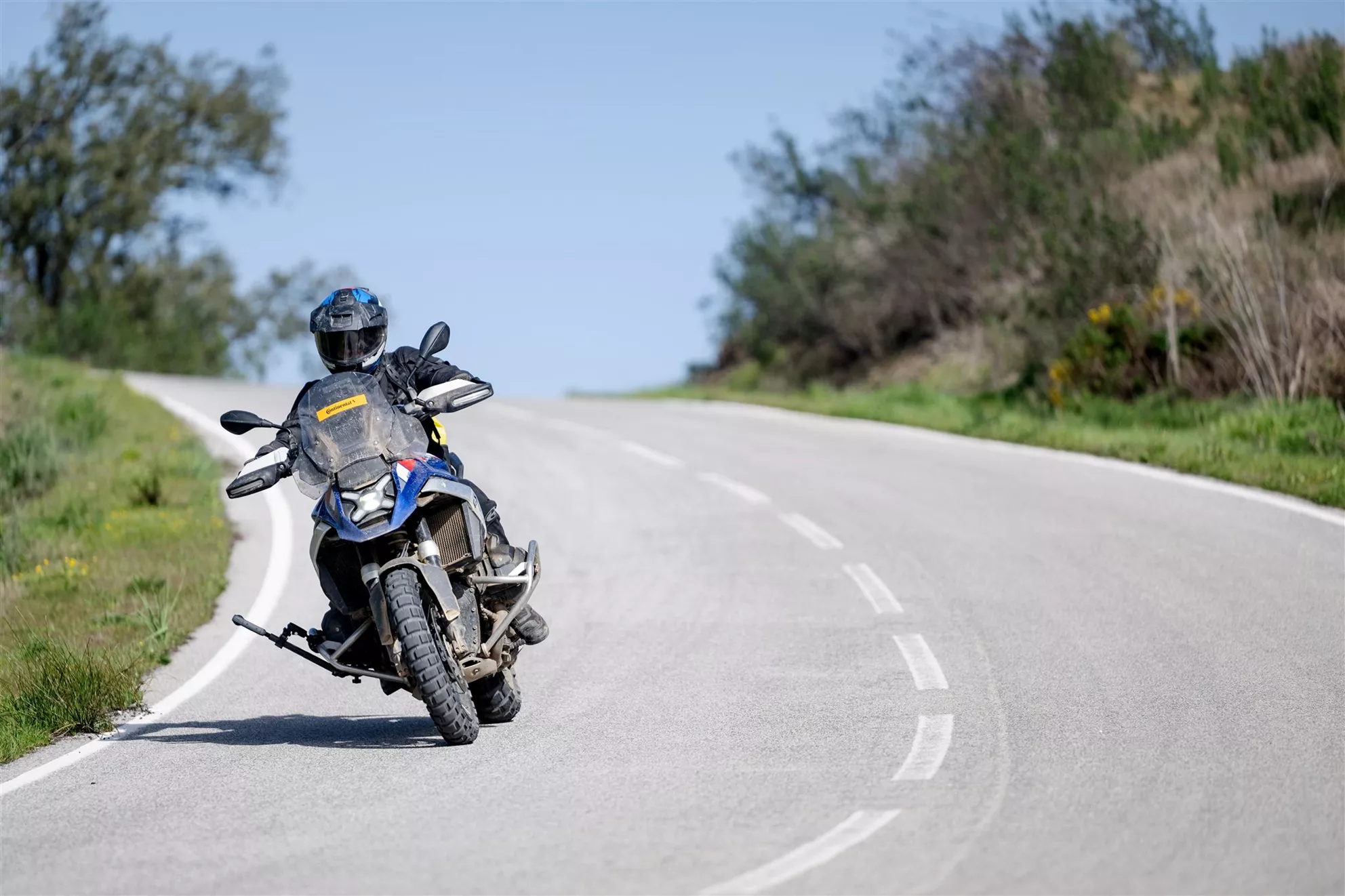
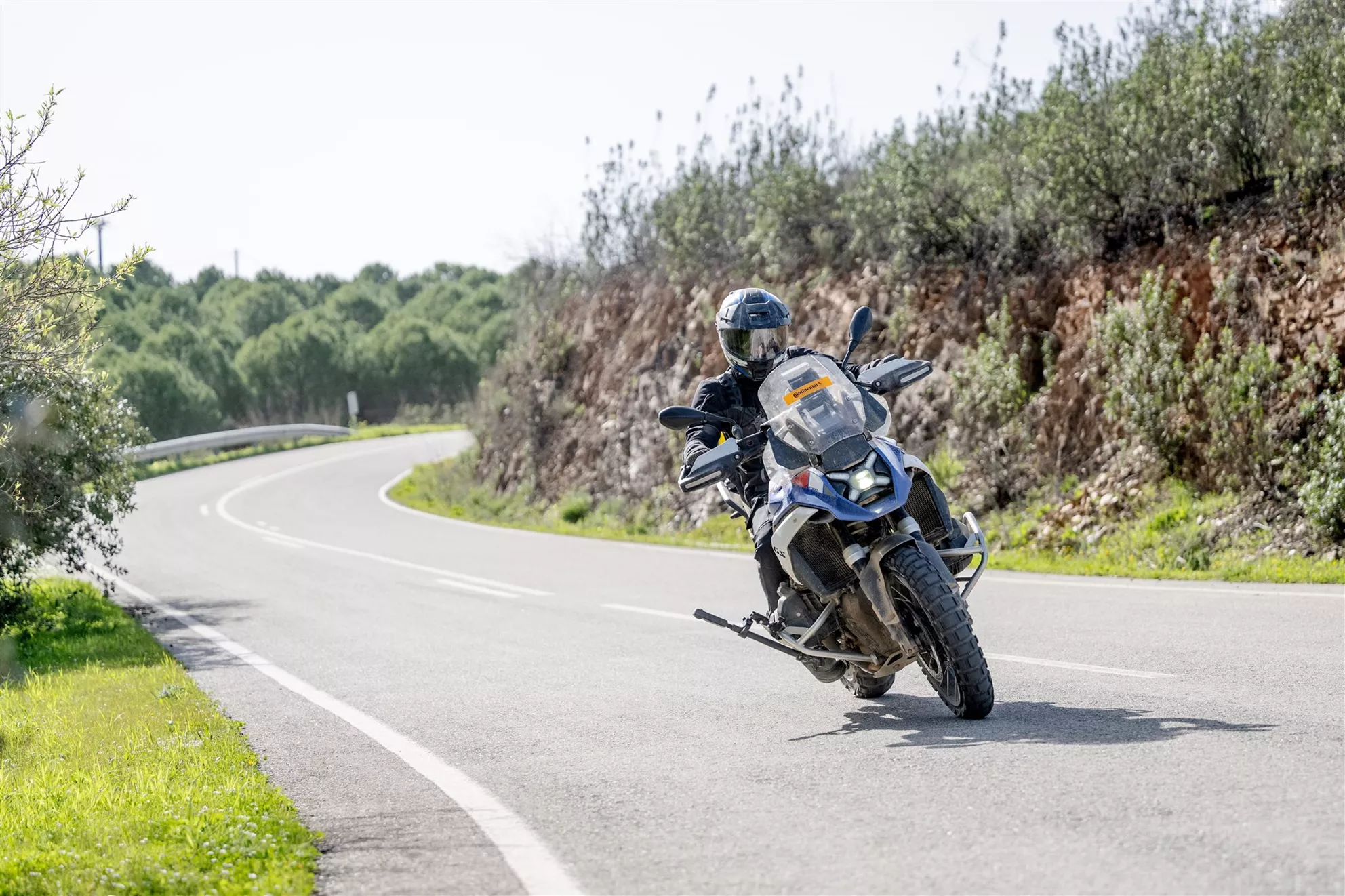
Conti TKC 80² on a BMW R 1300 GS

Major improvement on wet roads

Besides the tread, the rubber compound of the tread surface and the carcass have also been reworked – thanks to new nylon materials it's now said to dampen better, while its contour remained untouched. Off-road, extra-thick rubber is meant to make the tyre as resistant as possible to sharp-edged rocks and similar hazards, while on the road they didn't want to sacrifice ride comfort. A conflict that Conti claims to have solved with the new carcass tuning and the larger contact patch.

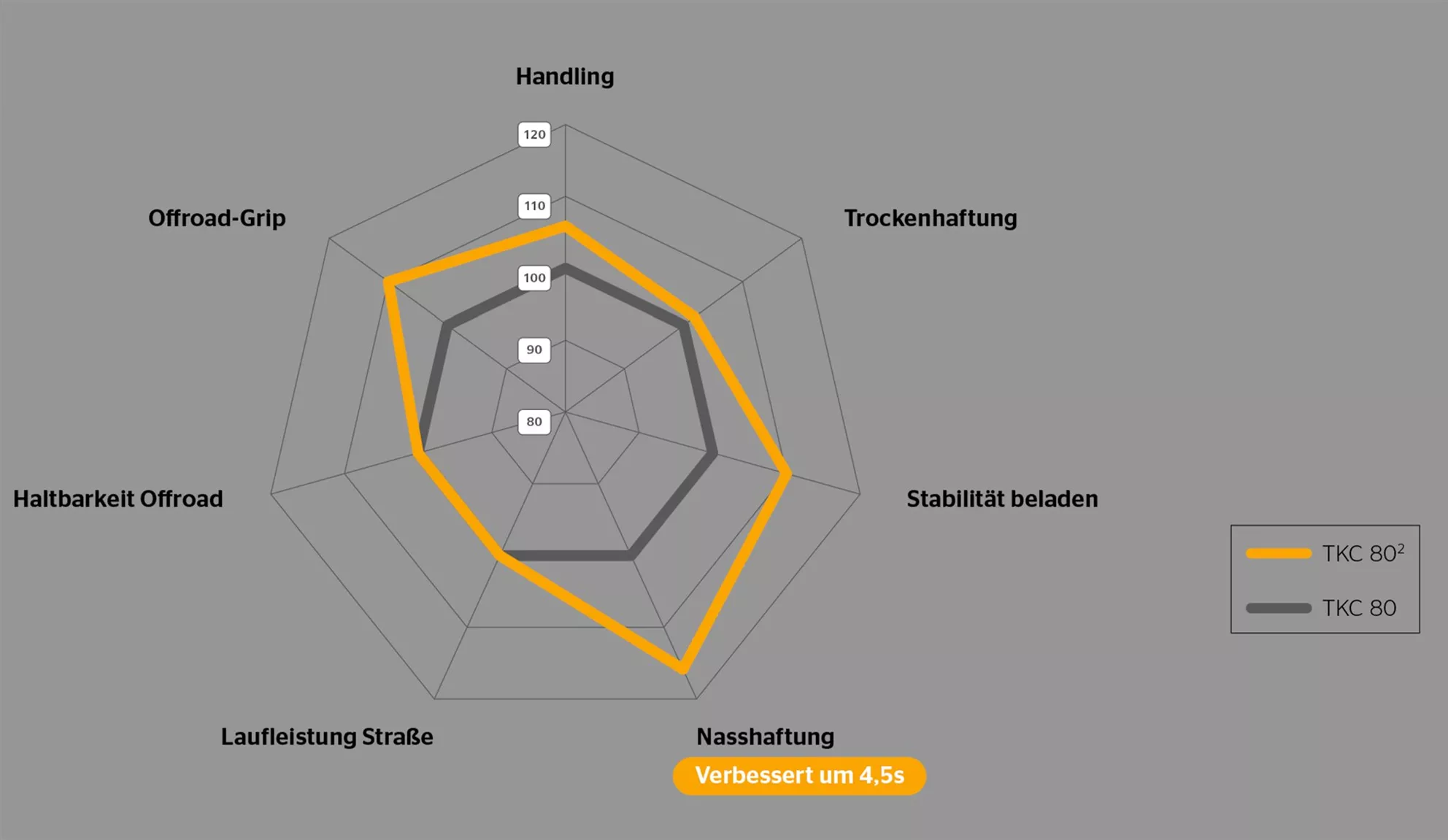
On asphalt, the TKC 80 Gen 2 is said by developers to feel significantly more road-oriented, almost like a 70:30 tyre – a promise we were actually able to verify while carving corners on the grippy roads of the Portuguese hinterland. Even at ambitious speeds and considerable lean angles, the TKC 80² consistently builds up an astonishing amount of grip, and the limit under aggressive braking or acceleration is wide and easy to feel. This means that even with a potent R 1300 GS, you can always back off the throttle in time before the planned power-drift mutates into an unwanted highsider catapult. However, Conti sees the biggest development leap in wet-road behaviour. In comparative tests on the Contidrom, the new tyre was 4.5 seconds faster than its predecessor in wet conditions, at a lap time of under a minute – a clear plus in safety in the rain for average riders in practice, too.

Conti TKC 80²

Significant improvements of the Conti TKC 80² compared to its predecessor

Conti TKC 80² – developed entirely in Texas

Although Conti does not promise any notable extension of tread life for the second generation of the TKC 80 due to the significant improvement in wet grip (combining both is said to be nearly impossible), the new generation is still meant to make small progress in wear. Wear is meant to occur more evenly, which should particularly please riders of heavy adventure tourers. On long motorway stretches, coarse-knobbed tyres tend to wear down into an angular shape quickly, which noticeably worsens handling and especially steering precision. The TKC 80 Gen 2 is meant to retain its round basic profile longer, thereby offering consistent riding behaviour over a longer period. Conti also claims to have audibly reduced rolling noise in both high and low frequency ranges – here they rely on so-called „frequency interruption“ through varying spacing between the central blocks of the tread.

In summary, Conti promises that the TKC 80 Gen 2 is a tyre that owes its legendary predecessor nothing in any discipline, while clearly improving in many areas. Progress should be particularly noticeable in wet grip, mechanical traction off-road, and stability at high speeds. Better performance is also expected in handling and grip on dry asphalt. Tread life and durability in off-road use are meant to remain at the level of the familiar TKC 80.

An interesting detail on the side: the successor to the iconic TKC 80 was not developed at motorsport events such as the Dakar Rally or various adventure test rides around the globe, but entirely under ideal testing conditions at a Conti development centre in the US state of Texas. There, 24 uniform test loops are available, enabling a meaningful direct data comparison of individual prototypes.

The new TKC 80² will be available from spring 2026 in ten common sizes for all current adventure bikes.

Conti TKC 80²

Conclusion: Continental TKC 80² Gen 2: the knobby icon reimagined

After four decades, the TKC 80 gets a true successor in the TKC 80² Gen 2, rather than just a model refresh. On the grippy roads of the Portuguese hinterland, the tyre builds up an astonishing amount of grip even at ambitious speeds and considerable lean angles, and the limit under braking and acceleration is wide and easy to feel. This makes it feel significantly more road-oriented on asphalt than a classic 50:50 knobby tyre, almost like a 70:30. The manufacturer promises the biggest progress in wet grip, which according to comparative tests is clearly above the predecessor. The 17 percent larger positive tread brings more contact patch and quieter rolling noise, without giving up bite off-road. Tread life remains at the predecessor's level, wear is meant to be more even and the round basic shape is meant to last longer. For riders of heavy adventure tourers who combine a lot of motorway and country roads with occasional off-road riding, this is the more well-rounded choice, because handling stays more consistent over the tyre's lifespan.


Road-oriented riding behaviour

Wide, noticeable limit range

Significantly better wet grip

Quieter rolling noise

More even wear

Tread life only at predecessor's level