As a young rider born in 1996, I only know the motorcycle market the way it looks today: crammed with electronics, shaped by adventure bikes and dominated by machines that easily put out more than 200 hp. A two-wheeled world without the BMW GS, without rider aids and without a high-tech cockpit seems almost unimaginable. But that's exactly the interesting part: it wasn't always like this. You don't have to look back very far to discover a motorcycle landscape that had completely different heroes, favoured different manufacturers and set different technical priorities. In the 90s, carburetted all-rounders and cruisers ruled the roads, later came the ABS breakthrough, and only in recent years has the electronic arms race in the saddle really exploded. This report analyses the most popular bikes of the last almost 40 years and uses them as a mirror of their time. Because the bestsellers reveal not only what was technically possible, but also how riders rode and thought, and how our hobby has evolved together with the riders.
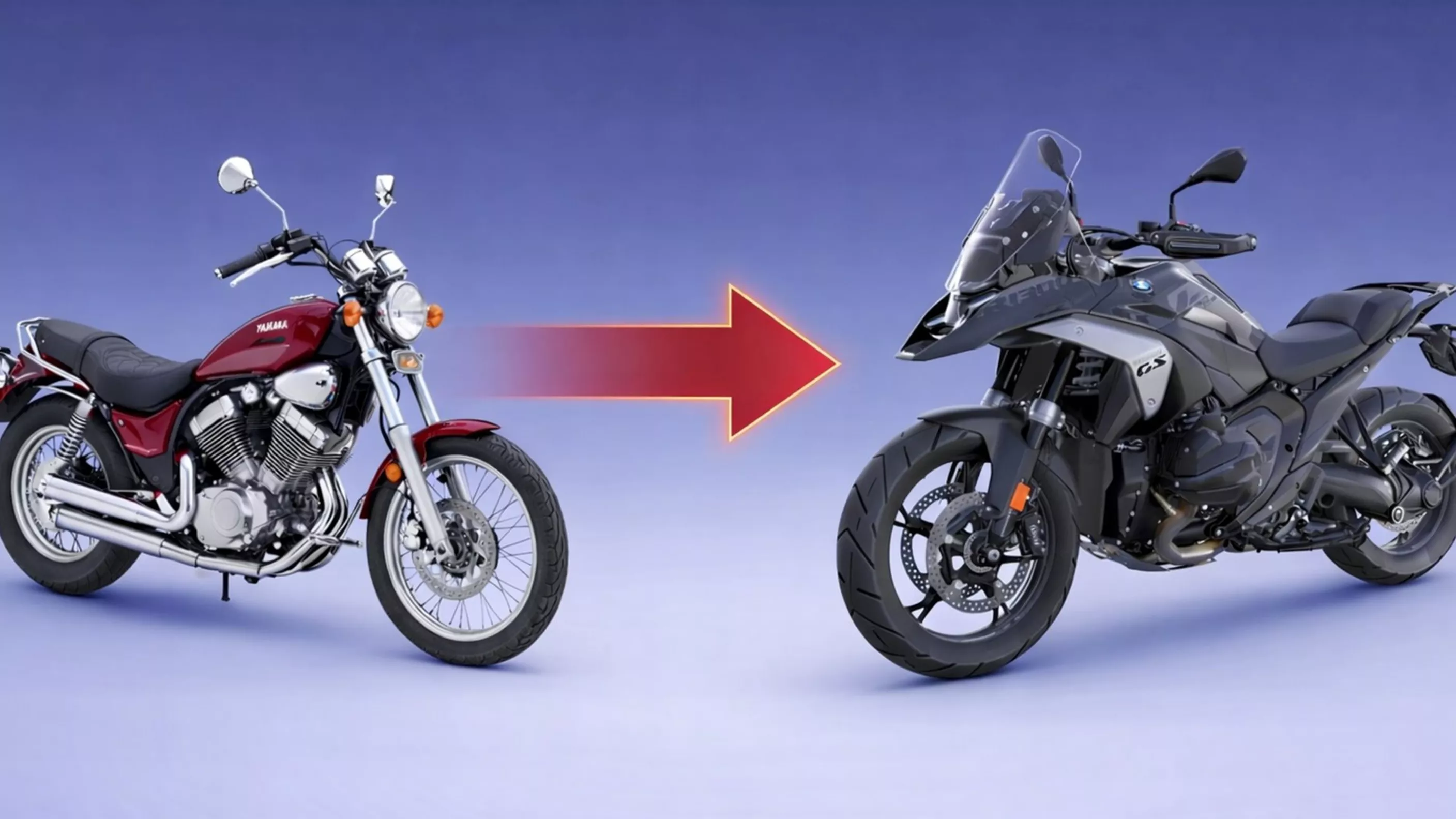
1986 - 2026: How bikes have changed over 40 years!
How our favourite bikes have changed over 40 years
200 hp superbikes, GS dominance and electronic fireworks on bikes are taken for granted by many today. But just a few decades ago, the motorcycle market looked completely different. We compare the most popular models since the 90s and show how technology and riding feel have changed.

Gregor
published on 28/11/2026
The 90s motorcycle boom: record registrations and the soft chopper shift
The 90s were defined by a genuine motorcycle boom. The market grew, thrived and, from today's perspective, seems almost unimaginably dynamic. In 1996, a whopping 271,723 bikes over 50 cc were newly registered in Germany, 177,278 of them over 125 cc. For comparison: even in the strongest year of this century so far, 2024, despite the Euro emissions changeover and lots of early pre-registrations, the market 'only' reached 152,704 new registrations over 125 cc. So in the 90s, riding didn't become a niche but a mass hobby, and the scene changed along with the growth. As late as 1989, 64.4 percent of buyers were on classic road bikes, mainly naked bikes, sport touring bikes and supersports. 22.4 percent sought adventure on enduros, while only 13.1 percent showed any interest in choppers at all. But just five years later the picture shifted significantly: the share of road bikes dropped to around 50 percent, while a quarter of all machines were already long-forked soft choppers, mostly from Japanese manufacturers.
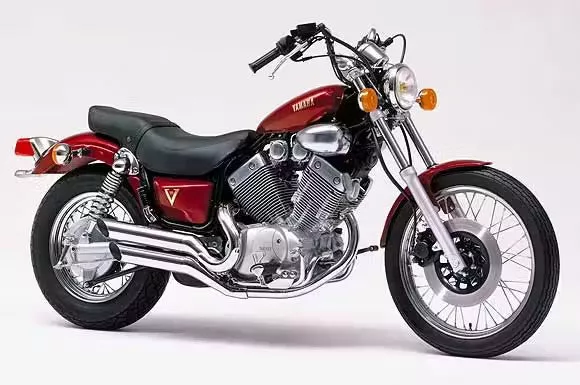
The Yamaha XV 535, bestseller of the 90s. Photo: Motorradonline
There are several reasons for this shift. On the one hand, the wild bikers of the 80s were getting older and reorienting themselves; on the other, more and more women were discovering motorcycling for themselves. This is shown most clearly by the Yamaha XV 535, the soft chopper bestseller of the 90s, around 25 percent of whose buyers were women. A low seat height and easy handling made cruisers attractive to new target groups. The peak of these boom years came in 1998 with 187,192 new bikes. Nobody suspected it at the time, but this all-time high also marked the beginning of the decline of the dominant Japanese and a long recession in the Central European motorcycle market.
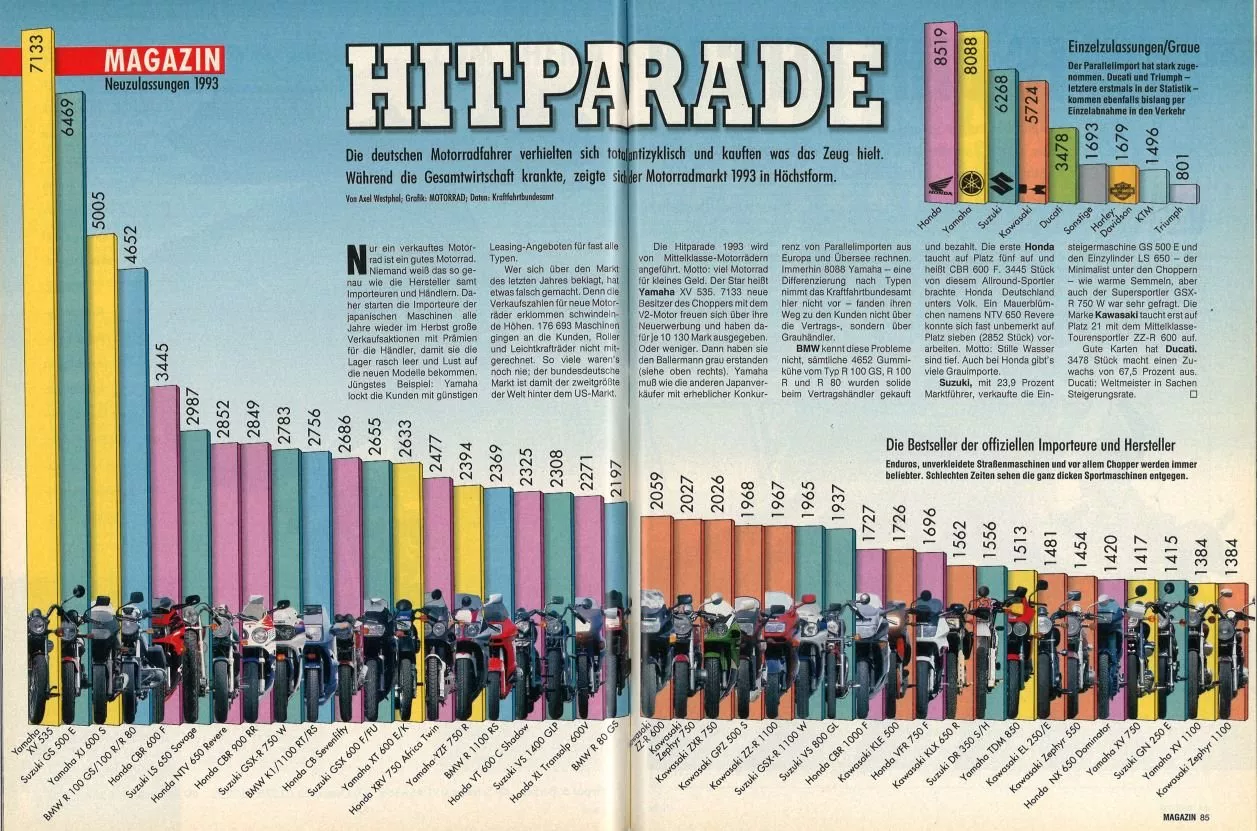
The top 40 of 1993: soft choppers and sport bikes, interspersed with a few enduros and naked bikes. MOTORRAD issue 6, 1994.
The motorcycle market in the 2000s: crisis, growing displacement and the dawn of the GS era
Time jump: by the end of 2003, the German motorcycle market was heading into a deep valley of tears. Around 40,000 fewer new bikes were registered than ten years earlier, and as many as 50,000 fewer than in 1999. The great boom of the 90s was over, the pie was getting smaller, and many of the once-dominant Japanese manufacturers were losing ground. Yet even in this phase there were winners. First and foremost BMW, which nearly doubled its numbers to around 28,000 bikes compared with 1993. KTM, Triumph and Harley-Davidson were also on a good path, while Ducati remained largely stable. At the same time, it wasn't just market share that shifted, but also buyers' tastes. Displacements grew, choppers and cruisers declined. Those who still went for a cruiser no longer rode a Suzuki VN, Honda VT or Yamaha XV, but a Harley-Davidson. And many opted straight for all-rounders, a category that was able to grow decisively.
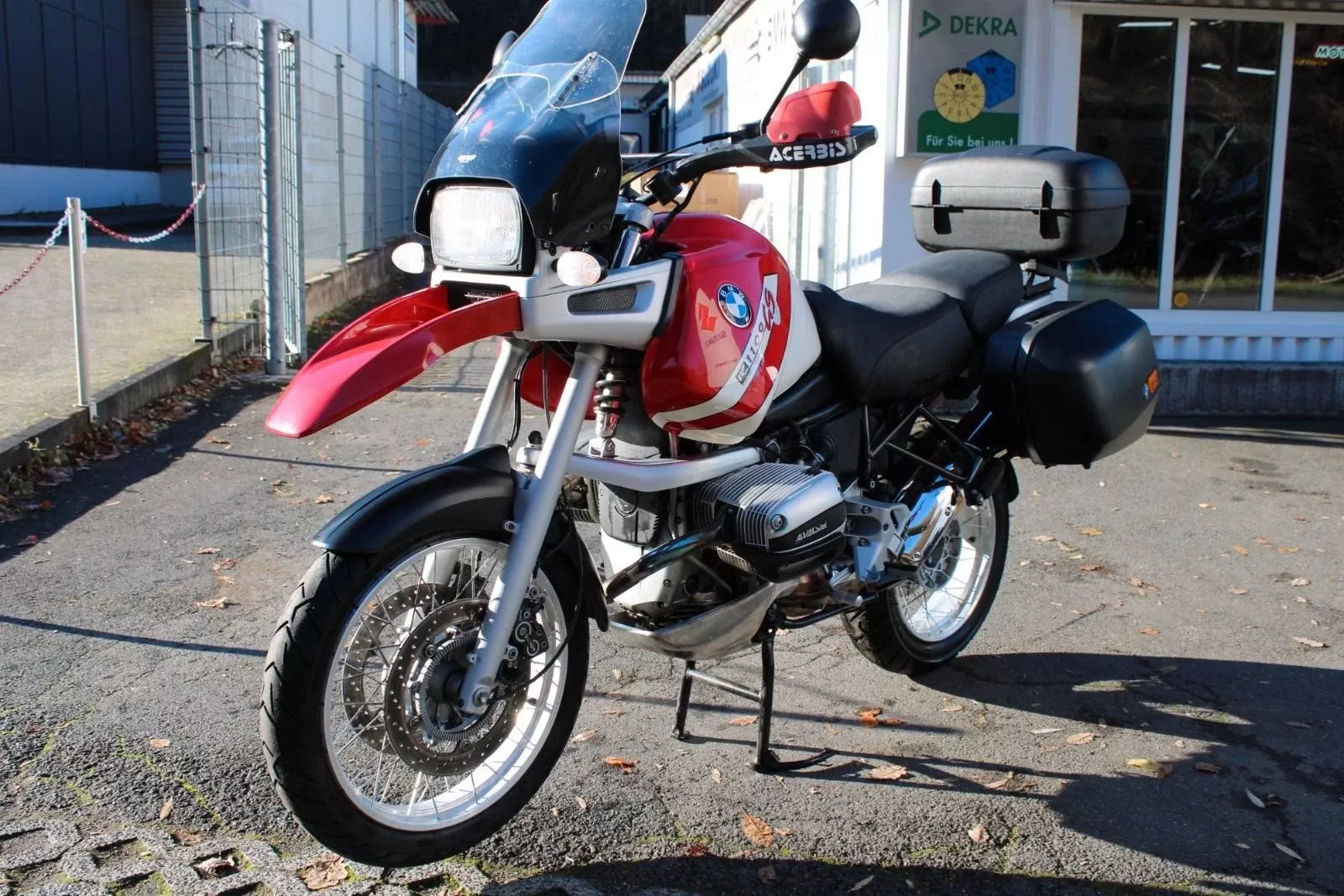
With the R 1100 GS at the latest, BMW's triumphal march on the European market had begun.
But the crisis wasn't just a question of sales figures, it was also about usage. Average annual mileage dropped from 7149 kilometres in 1994 to just 4740 kilometres in 2011. In between, partly under the impact of the financial crisis, the market fell in 2010 to a depressing low of 80,280 new bikes in Germany. This period of upheaval saw, after a brief renaissance of sport bikes, above all the rise of adventure bikes - and the beginning of the GS dominance we now take for granted. In the 90s, BMW still had a modest portfolio of Boxer and K series models, but bikes like the F 650 GS and later the R 1100 GS kicked off the Bavarians' success shortly before the turn of the millennium. In 2003, the BMW R 1150 GS was already at the top of the new registration charts, closely followed by the Suzuki 1200 Bandit, the Suzuki SV 650 and the F 650 GS. The market kept shrinking until the end of the 2000s, especially sharply in 2008/2009 - but this also opened up the chance for the Europeans and Harley-Davidson to shake off decades of Japanese dominance.
The motorcycle market in the 2010s: Euro 4 boom, European triumph and adventure bike dominance
Ultimately, the 2010s were a decade of two halves. After the 2008/2009 financial crisis, new sales initially dropped significantly once more in 2010, by 7.1 percent. Things slowly picked up over the following four years, but fewer than 100,000 bikes were sold each year. Only in the second half of the decade did the market regularly pass that mark again, with a big peak in 2016. The trigger was the newly introduced Euro 4 emissions standard: bikes still homologated to Euro 3 had to be registered for the first time by the end of 2016. No wonder, then, that sales settled back at 2015 levels in 2017. All in all, the German motorcycle market still grew by around 40 percent over ten years.
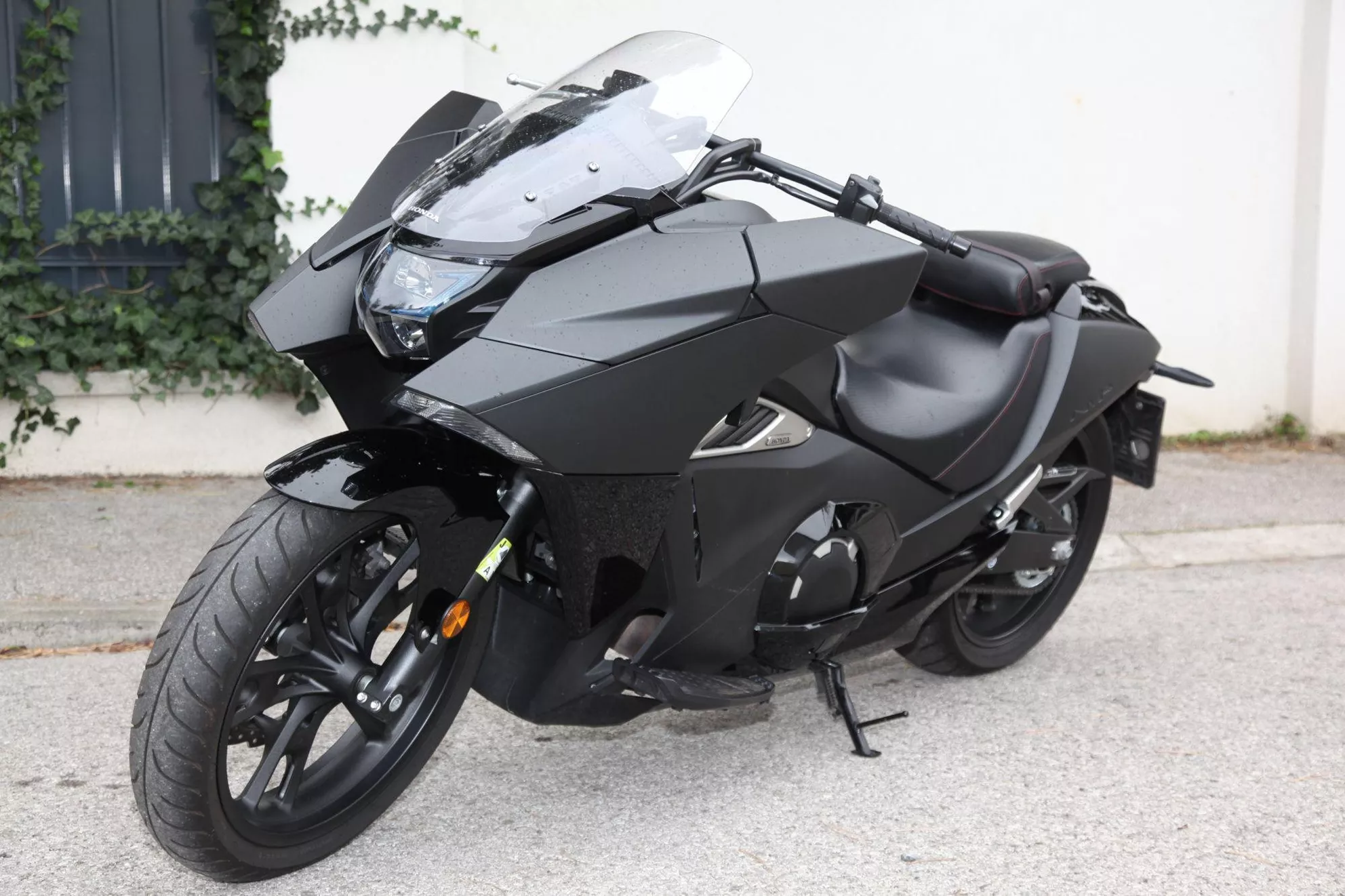
In the 2010s, the Japanese lost a lot of market share here. Even creative models like the 2014 NM4 Vultus couldn't turn the tide.
At the same time, the Japanese manufacturers continued to lose ground. Japan's "Big Four" – Honda, Kawasaki, Yamaha and Suzuki – slipped from 46.6 to just 37.8 percent market share. Suzuki in particular struggled dramatically. The 2010s thus brought the definitive breakthrough of the European brands in Germany, which together account for almost half of all new sales. BMW consistently dominates its home market with around 22 percent, and seven of the decade's ten best-selling bikes in Germany come from Munich alone. With just one interruption, the big GS has been Germany's best-selling bike since 1999. KTM more than doubled its share, Husqvarna almost quadrupled it.
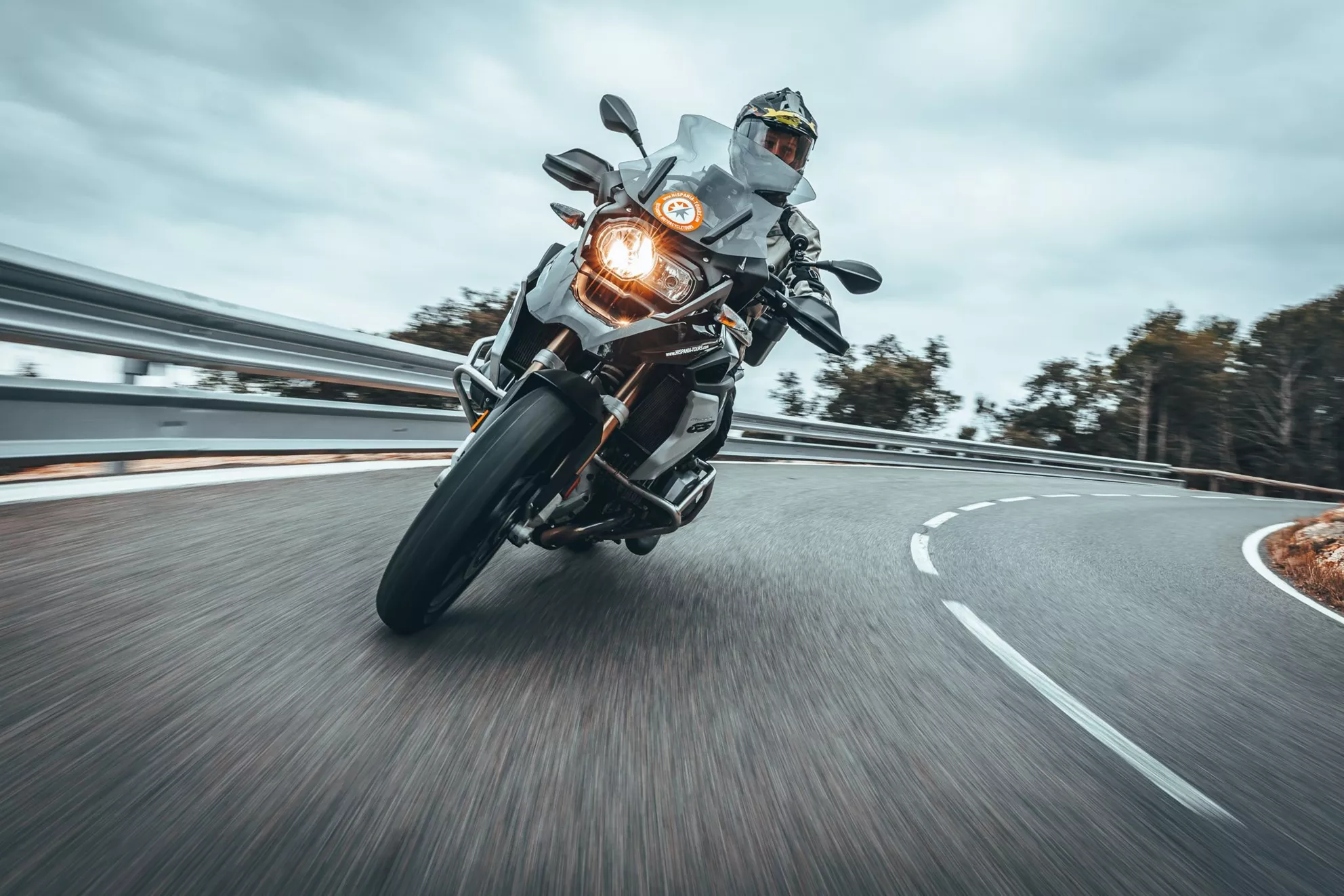
By the end of the 2010s at the latest, Europe's mountain passes were dominated by the BMW GS.
The segments are also shifting towards versatility. Enduros and supermotos recently accounted for every third bike sold, while all-rounders and naked bikes even expanded their share to 45.5 percent. Together, these two categories make up almost 80 percent of all new sales. Sport bikes lost massive popularity, and classic sport touring bikes collapsed almost completely. People no longer travel tucked in low, but sitting tall and relaxed up on adventure bikes. At the same time, carburettors disappeared for good, ABS became standard, and traction control and ride-by-wire became increasingly common from 2013 onwards. Technical change became mandatory – and for some manufacturers an opportunity: Yamaha pulled off its turnaround in 2014 with the MT-07 and MT-09, whose engine concepts still shape the market today.
Bikes from 2020 to 2024: electronics, premium adventure bikes and new competition
The trend continued consistently from 2020 to 2024: adventure bikes remain the dominant prestige segment, displacements keep growing, and bikes are more powerful and electronically complex than ever before. BMW holds the top spot unchallenged, and the big GS has long been more than just a bike – it's both a status symbol and the benchmark. At the same time, a look at the top ten new registrations shows that it's not only expensive premium bikes that are in demand. Many middleweight naked bikes are also up front, because they're affordable, accessible and attractive to a wide range of buyers.
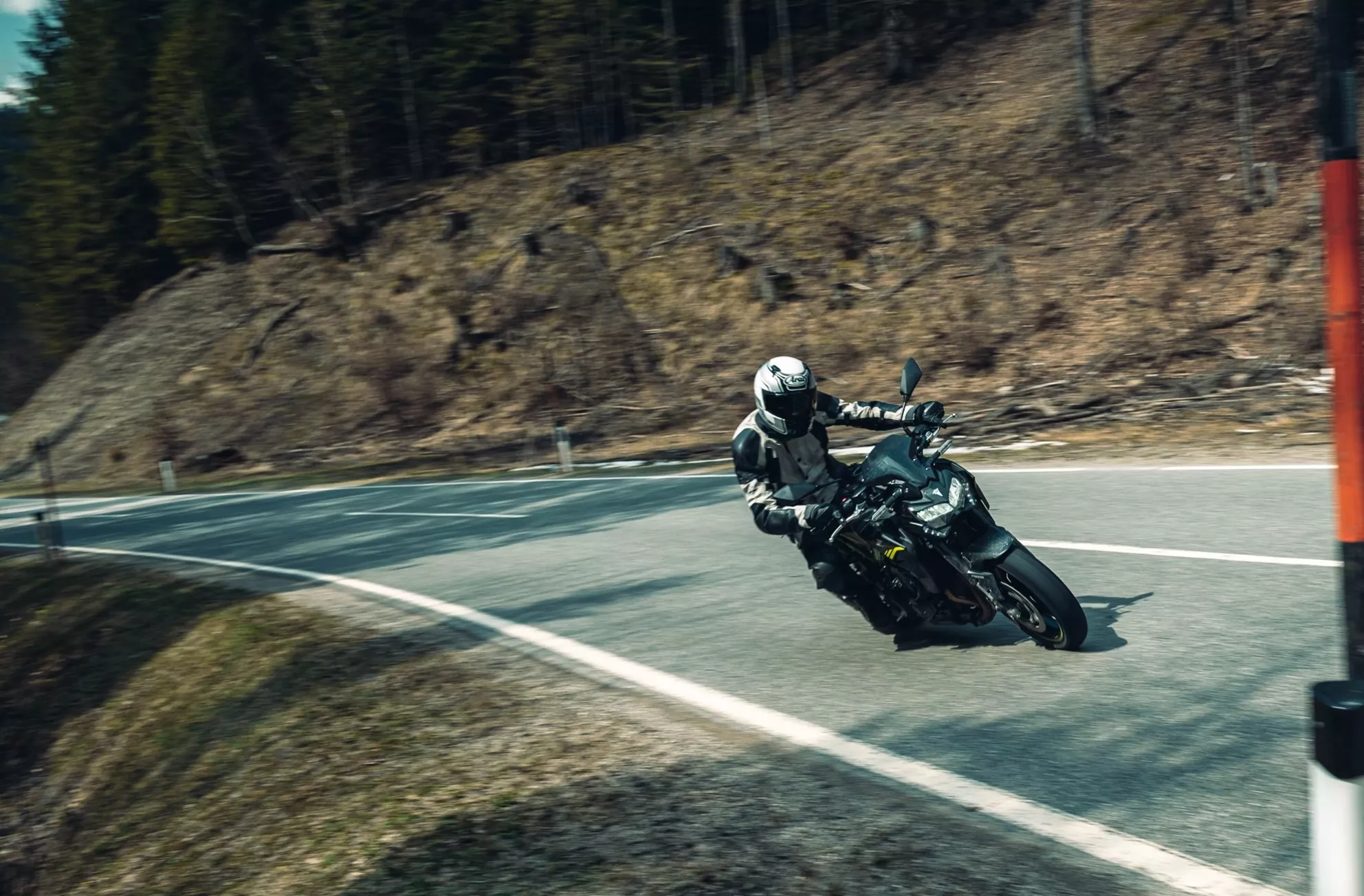
Alongside the premium touring bikes, well-balanced, mostly Japanese naked bikes also became sales hits.
But the most recent decade isn't shaped only by model trends, but also by global turbulence. In 2020, the Covid pandemic initially triggered a motorcycle boom as many people sought personal freedom and new hobbies. Just a few years later, however, the market had to take some hits again: wars, trade conflicts, high inflation and general uncertainty weighed on buyers' appetite. Even so, 2024 turned into another record year with 151,036 new registrations over 125 cc, to a large extent also thanks to pre-registrations ahead of the switch to Euro 5+. That makes the 2025 headlines hit all the harder, when weaker numbers immediately conjure up the 'demise of the motorcycle market' once again.
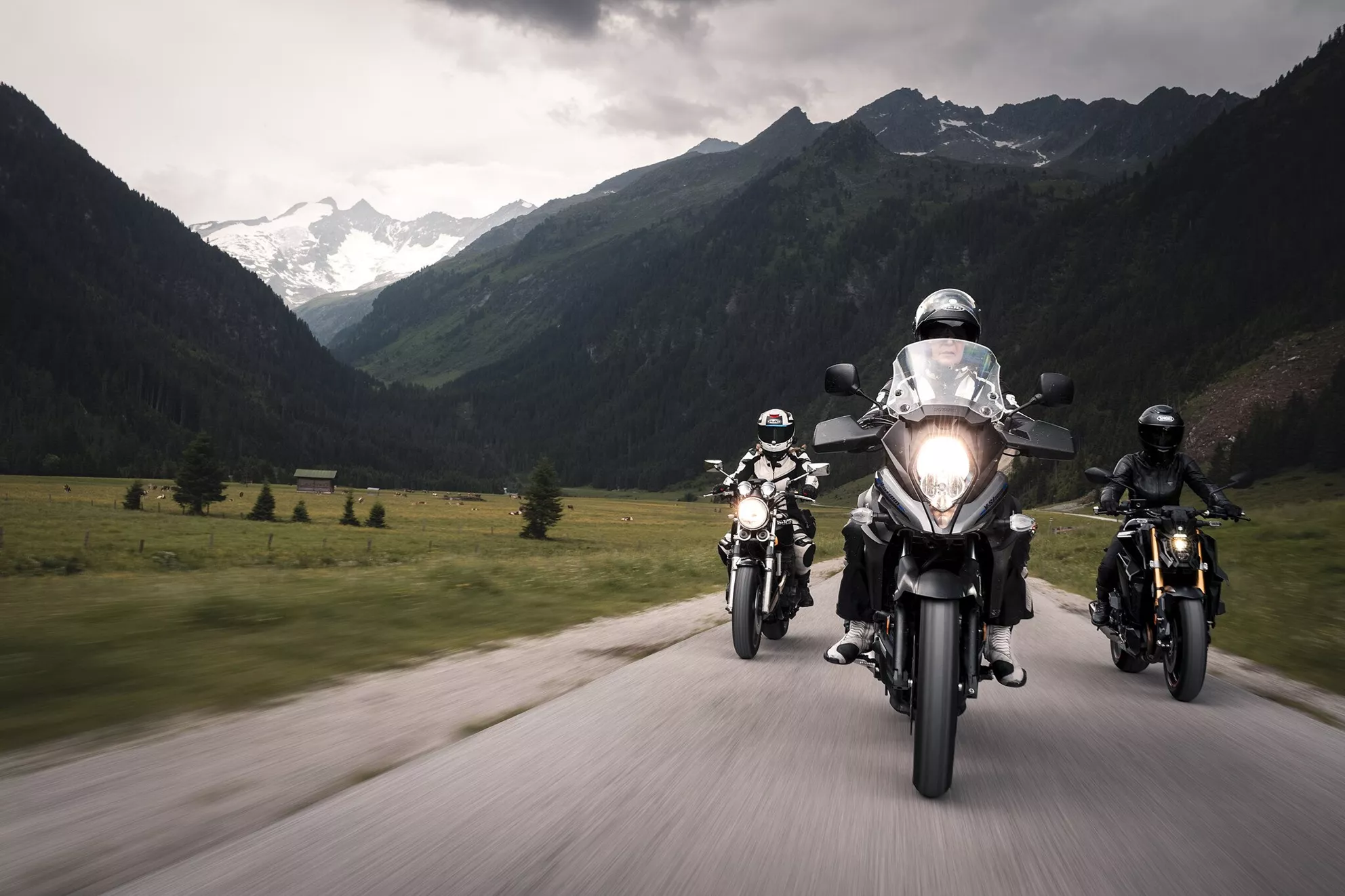
Which bikes will we see on our roads in the future? The future seems uncertain. But at the same time, the past shows that many a prophesied demise ultimately opened up new opportunities.
The reasons for these fluctuations are many. Globalisation is shifting into overdrive, KTM suddenly went from years of soaring high into a steep nosedive in 2024, and alongside the Japanese, Indian and Chinese manufacturers are increasingly pushing into Europe with growing competitiveness. Cause for concern? Looking back shows that crises and fears about the future have accompanied the motorcycle market for decades – and that the ups and downs keep repeating. At the same time, it has to be admitted: today's challenges go far beyond models, segments and manufacturers. But how riders and their environment have changed is another story, one we'll tackle another time.
Technical trends: growing displacement, an explosion of electronics and shifting segments
Looking at the technical developments of recent decades, one thing stands out above all: bikes have become bigger, more powerful and more complex. When it comes to displacement, the trend is clear. In 1987, around two thirds of bikes on the road had less than 500 cc. By 2012, the ratio had almost reversed: 2.5 million bikes were already above the 500 cc mark, with only 1.4 million below it. Today the picture is more nuanced. The preference for big displacement remains unbroken, but at the same time the entry-level market is growing strongly, fuelled by the introduction of the A1 and A2 licence classes from 2013. A kind of U-shaped distribution is striking: most new registrations are found either right at the bottom in the small classes up to 125 cc or right at the top among the powerful big bikes over 81 kW. The middle between 126 and 499 cc, on the other hand, remains a vacuum. If you leave out the light motorcycles, Germany suddenly becomes the land of displacement giants: three out of four newly registered bikes then have at least 500 cc. This threshold is hugely important psychologically and in terms of market strategy, because almost all bestsellers sit well above it.
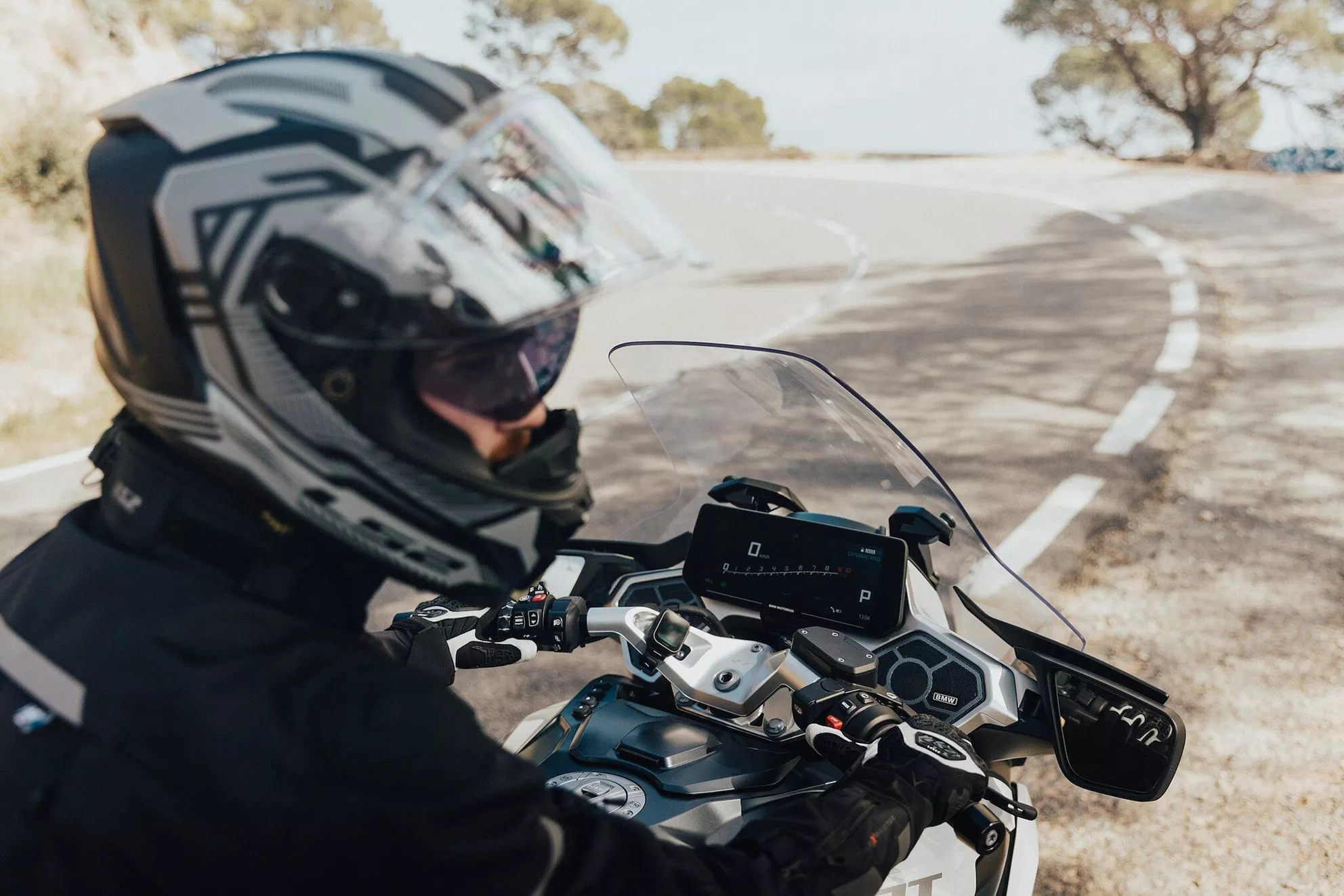
Huge flat-screen TVs in the cockpit and pages-long feature lists are part and parcel of the modern bike.
At the same time, electronic rider aids have become indispensable today. ABS became legally mandatory, traction control helps make 150 hp machines manageable even for less experienced riders, and stricter emissions standards made engine management ever more complex. Ride-by-wire, riding modes and electronic interventions have long been a must rather than a nice-to-have. The segments also changed radically: supersports, sport touring bikes and soft choppers once defined the roads, today adventure bikes and versatile all-rounders dominate. One of the few constants remains the middleweight naked bike as a perennial favourite. And the brands show constant ups and downs too: BMW has dominated Central Europe since the late 90s, European manufacturers have fought for market share, the Japanese have recovered – and now new challengers from China and India are pushing forward. The future remains exciting.
Conclusion: not everything was better back then, but a lot was simpler
Comparing the last four decades impressively shows how much bikes have changed – and how closely this development is tied to the people behind them. In the 80s, razor-sharp supersports and the Japanese arms race dominated, the 90s brought a boom and entirely new groups of buyers, while the 2000s led the market into a crisis from which European manufacturers in particular emerged stronger. By the 2010s at the latest, it became clear that the adventure bike had become not just a segment, but the role model of a new generation of motorcycles: versatile, comfortable, technically loaded and a perfect fit for a community that has grown older and more demanding.
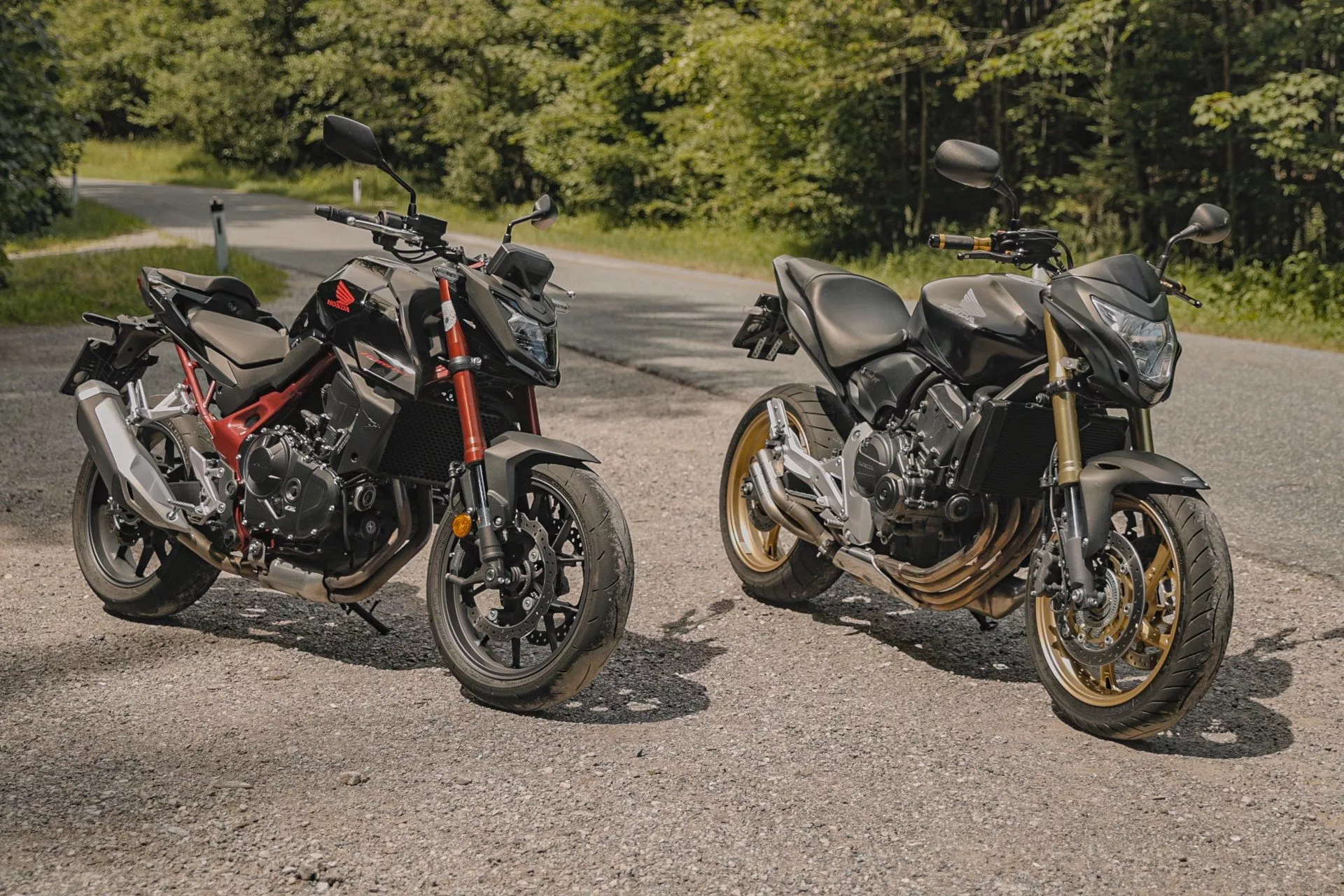
Which era of motorcycling was the best is, just like choosing a bike, purely a matter of taste.
Bikes didn't necessarily become heavier or 'worse' in the process, just different. Displacements grew, electronics went from luxury to a given, and machines evolved from pure sporting tools into complex high-tech products. At the same time, the present shows an interesting split: while the big prestige bikes dominate at the top, a strong entry-level market is growing at the bottom thanks to the A1 and A2 classes. The middle remains surprisingly empty, as if the market only knew extremes.
And so, in the end, one insight above all remains: not everything was better back then – but a lot was simpler. The bikes of yesteryear were more direct, rawer, less regulated. Today's bikes are faster, safer and more comfortable. But the fascination has remained. Only the way we seek freedom on two wheels has changed over time, and it will continue to do so.