The smartphone is everywhere today - even on the bike. Navigation, music or quick photos are hardly imaginable without a phone. But when it comes to mounting the device securely on the handlebar, two big names have dominated the market for years: SP Connect and Quadlock Moto. In between there are countless no-name brands offering simpler mounts and mounting systems at a low price. Now Peak Design enters the game, a brand that wants to give the established heavyweights some serious competition. How well this succeeds is what we checked over thousands of kilometers during the 2025 season.
Peak Design smartphone motorcycle mounts tested
A new premium rival for SP Connect and Quadlock?
The smartphone has long been a constant companion - even on the bike. Peak Design wants to challenge the other premium manufacturers SP Connect and Quadlock Moto with innovative technology. We tested the system on the motorcycle.
&width=72&height=72&bgcolor=rgba_39_42_44_0&mode=crop "Author: Gregor")
Gregor
published on 29/10/2025
18,315 Views
From world travel to premium mount - the story of Peak Design
Who or what actually is Peak Design? The company emerged in 2011 from a Kickstarter campaign. Founder Peter Dearing was a civil engineer at the time, took a sabbatical and went on a world trip - with a motorcycle and a camera. This presented him with a very practical problem: where and how do you stow the camera so you can grab it quickly during a short stop? The answer was simple but ingenious: a clip that lets you hang the camera directly on the backpack strap. This idea became Peak Design's first successful Kickstarter campaign - and the starting shot for a brand that today stands for clever tech solutions.
In the following years the range grew: camera bags, backpacks, and later entire accessory systems for photographers. During the Covid era, smartphone mounts were added for the first time. From 2022, Peak Design developed its own motorcycle mounts - followed by a complete redesign in 2024. Now, in 2025, the brand enters the next round with newfound confidence. The company is headquartered in San Francisco, with production in Asia.
The Peak Design system - magnetic, clever, different
While SP Connect and Quadlock rely on mechanical twist-lock systems, Peak Design takes a completely different approach. There is no classic twist mechanism and less fumbling when clicking it in. Instead, the system relies on patented magnet-hook technology.
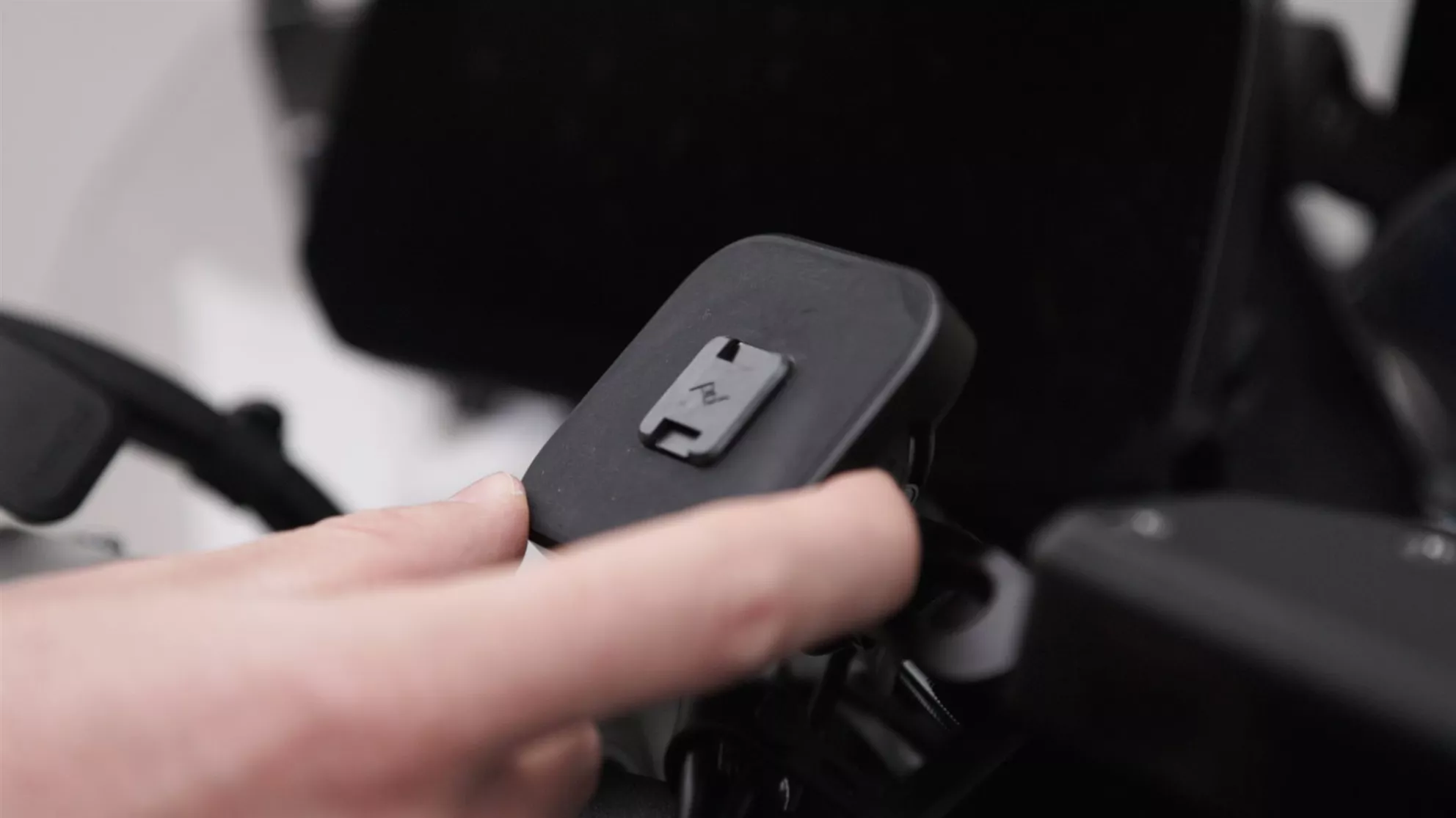
Pressing one of the two side buttons retracts the small locking hooks and releases the smartphone.
Magnets sit inside the smartphone case, automatically pulling it into the correct position on the mount. There, two small metal hooks engage a square ring and secure the phone. To remove the phone, a simple press of one of the two side buttons on the mount is enough. The hooks retract and release the phone. The whole thing works with just one hand - whether left or right.
Pros and cons of the Peak Design concept
In everyday use it shows: this system is very intuitive and practical. Thanks to the magnetic guidance, the smartphone practically snaps into place by itself, no matter how you position it. The sometimes tedious search for the correct locking position known from other systems is completely eliminated. Removal works just as easily - one press of the button is enough, and the device is free. Anyone who often wears gloves or uses their camera or phone during short stops knows how valuable such simple one-handed operation is.
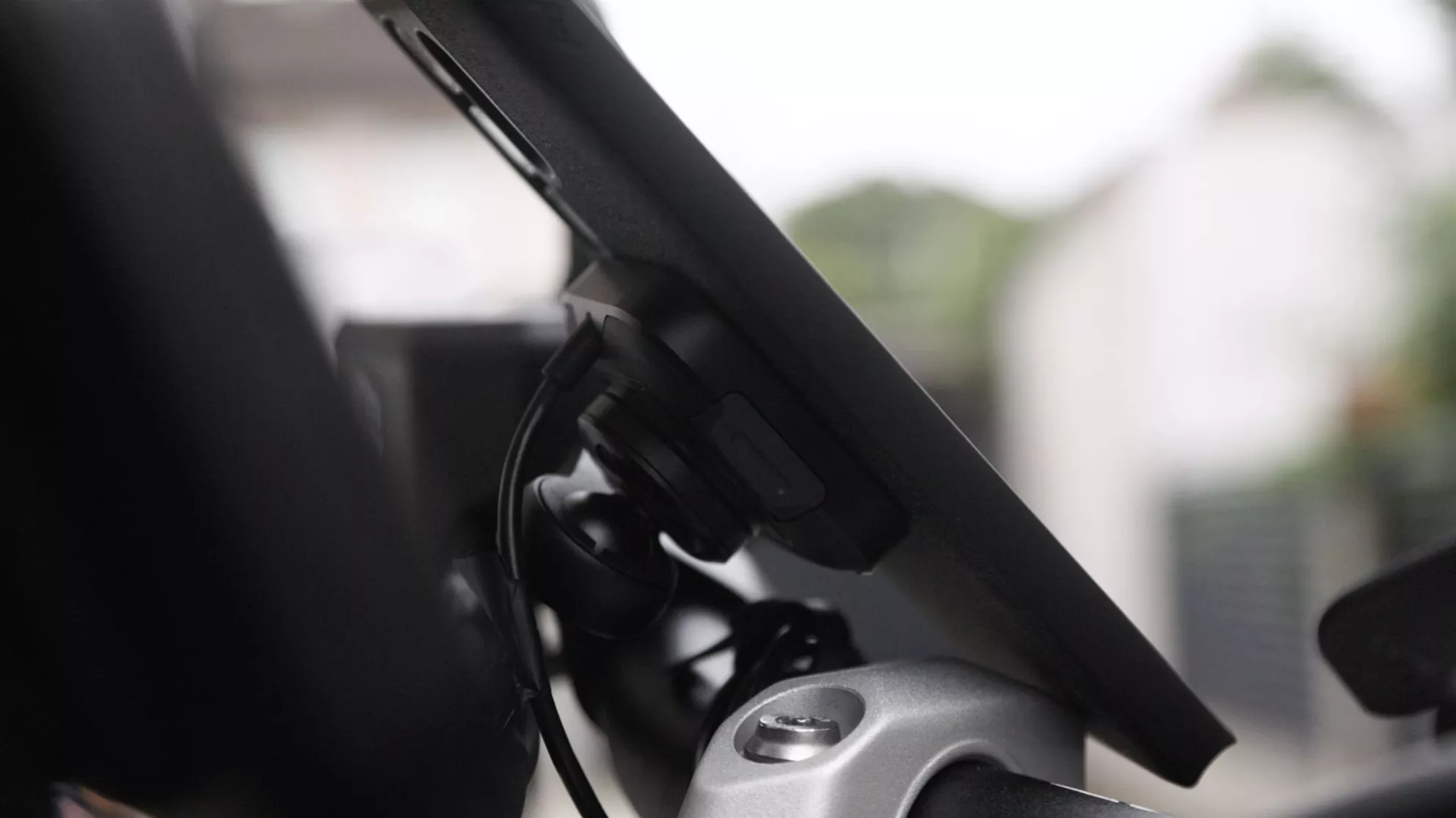
Practical and fast: the smartphone can be mounted and removed with just one hand, without any twisting motion.
A small residual risk remains: if the phone is placed on very carelessly, it can happen that the magnets hold the smartphone without the hooks actually being engaged. This so-called "false positive" - i.e. an apparent lock-in - is rare but can happen. This has also occurred with other manufacturers, for example the Quadlock system. At Peak Design, at least there is an audible metallic click when the lock actually engages. If this sound is missing, a short tug test is enough - and you know immediately whether the smartphone is really secured.
Peak Design test - robustness of the mechanism
When I first held the system in my hands, I was honestly skeptical. The small hooks, the thin metal ring - compared to the bulky twist-locks of SP Connect or Quadlock, it initially looked almost fragile. Can this really hold up when riding over cobblestones, through twisty roads or even off-road? But the impression is deceiving. Peak Design's central ring is made of zirconium, a lightweight yet extremely resistant metal used, among other things, in space technology and dentistry.
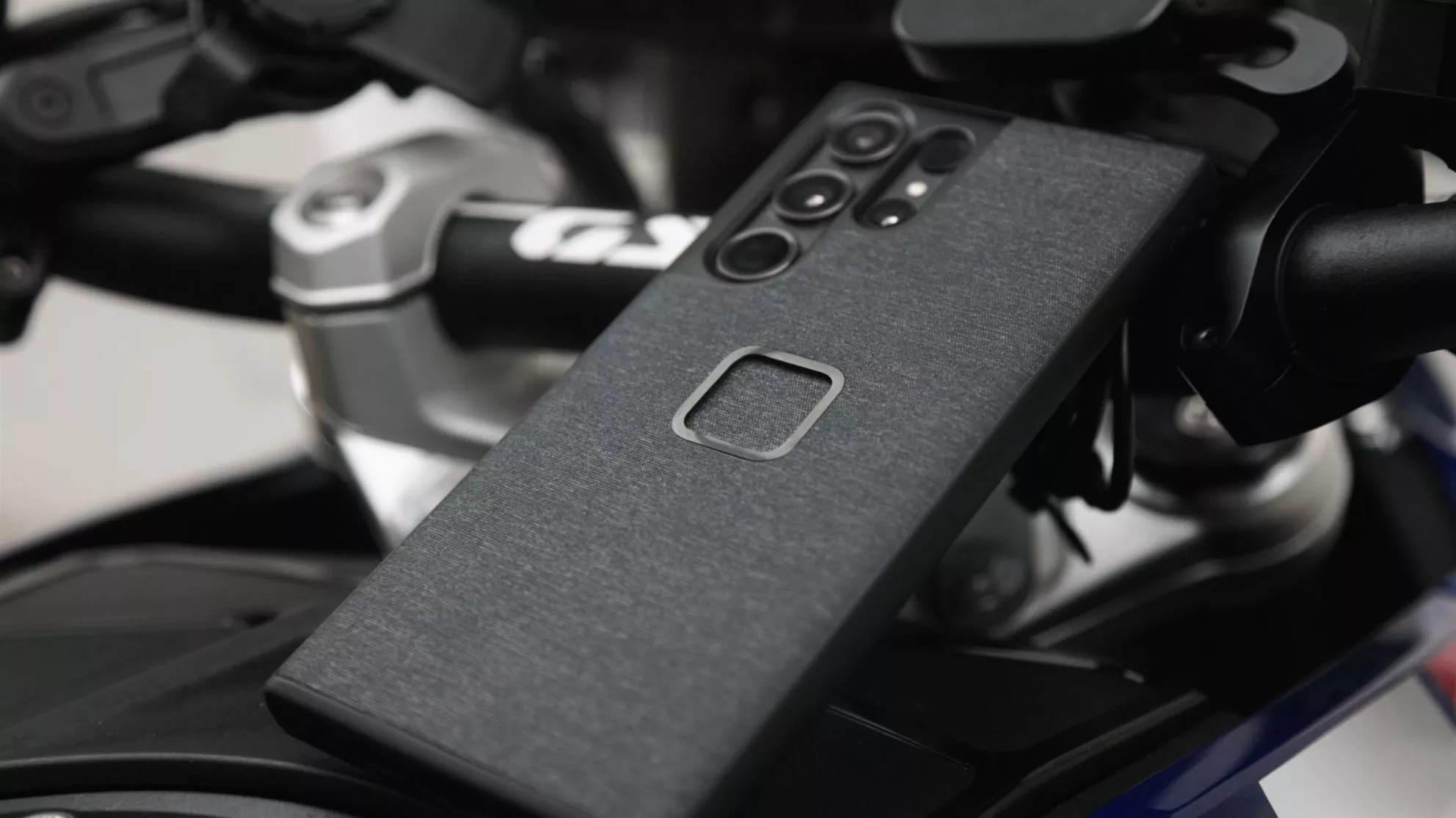
The zirconium ring holds what it promises.
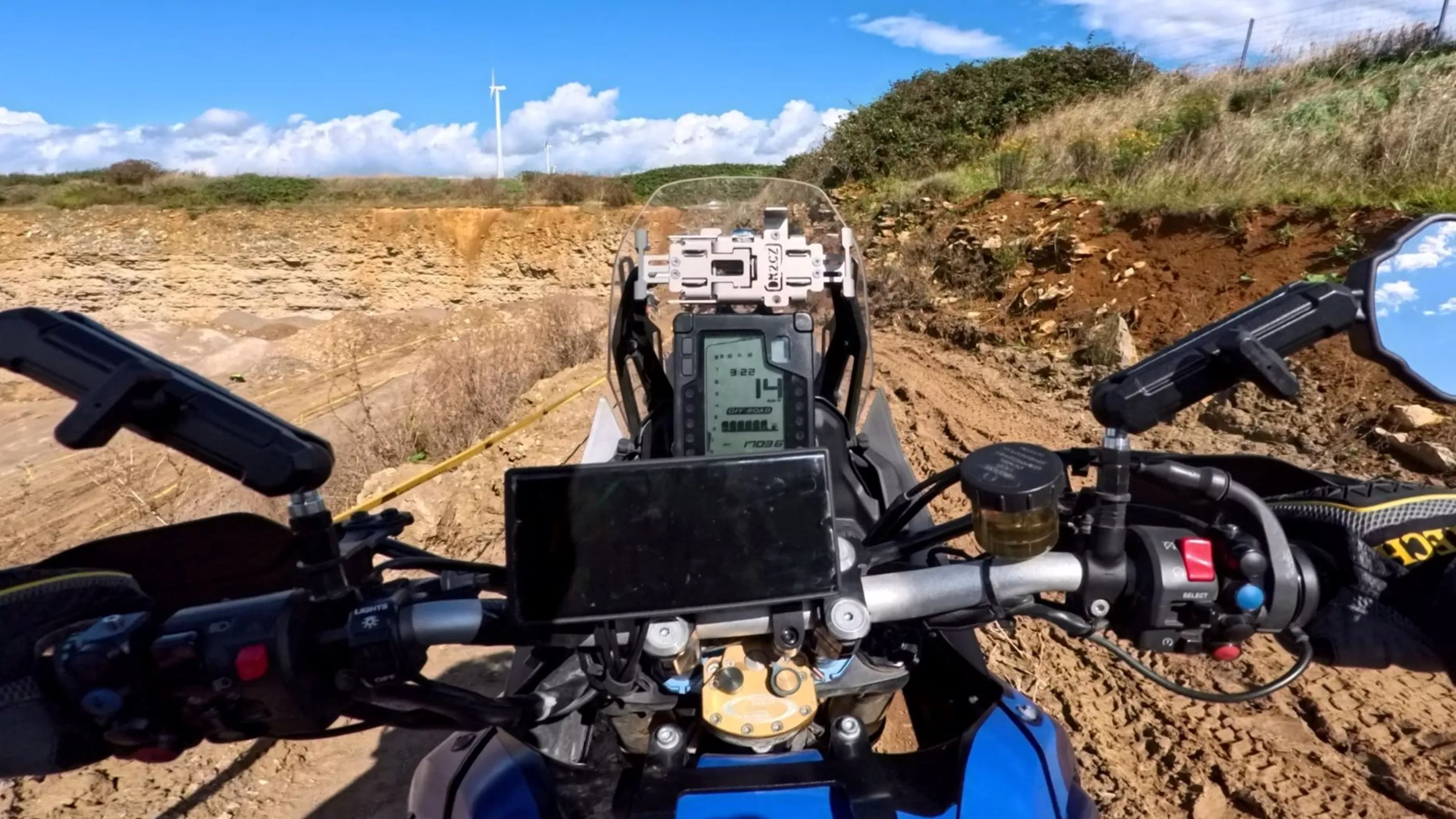
The final stress test of the Peak Design mechanism took place at the Touratech Active Adventure Event. On my Yamaha Tenere, the system had to prove what it could do. Trails, quarries, motocross track - all no problem. The smartphone stayed rock solid, even without a twist mechanism. Even fairly hard impacts didn't rattle the mount.

Even the motocross track couldn't manage to separate my smartphone from the Peak Design mount.
Peak Design vibration dampener - protection for sensitive cameras
Vibration remains an evergreen topic with motorcycle phone mounts. iPhones in particular are sensitive - their optical image stabilizers can be damaged by constant vibrations at the handlebar. That's why all manufacturers offer their own vibration dampeners. Peak Design has solved the problem like this: a rubber layer sits at the front of the mount, absorbing light vibrations. However, the main work is done by six rubber cylinders inside, which dampen the vibrations.
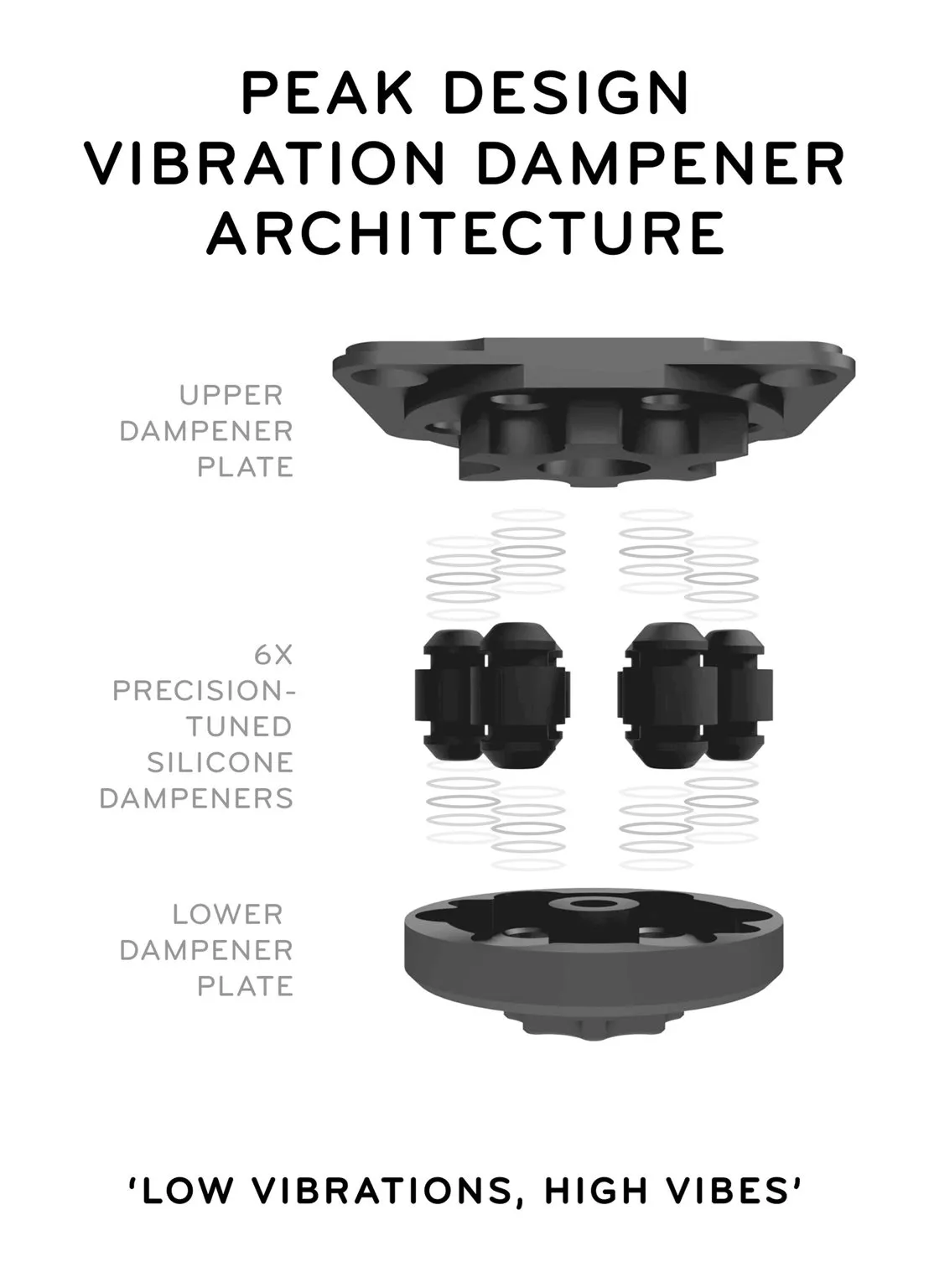
This is how Peak Design's vibration dampener works
I myself rode almost 4,000 kilometers with my Samsung S23 Ultra on the Peak Design mount, and my colleague Amelie covered another nearly 1,000 km with her iPhone - the image stabilizer remained intact in both cases.
Peak Design smartphone cases tested
Unlike the other two premium manufacturers, Peak Design relies less on a purely pragmatic case with a plastic finish and instead tries to make the smartphone case more appealing. There is a wider range of colors and the subtle fabric finish looks more refined than the black rubber cases from SP Connect or Quadlock. Due to the slimmer mounting mechanism, they are also noticeably slimmer than the competition at just 3 millimeters thick (6-7 mm), making them better suited for wireless charging as well. The Peak Design Wireless Charger delivers up to 32 watts of charging power, while other systems max out at 15 watts.
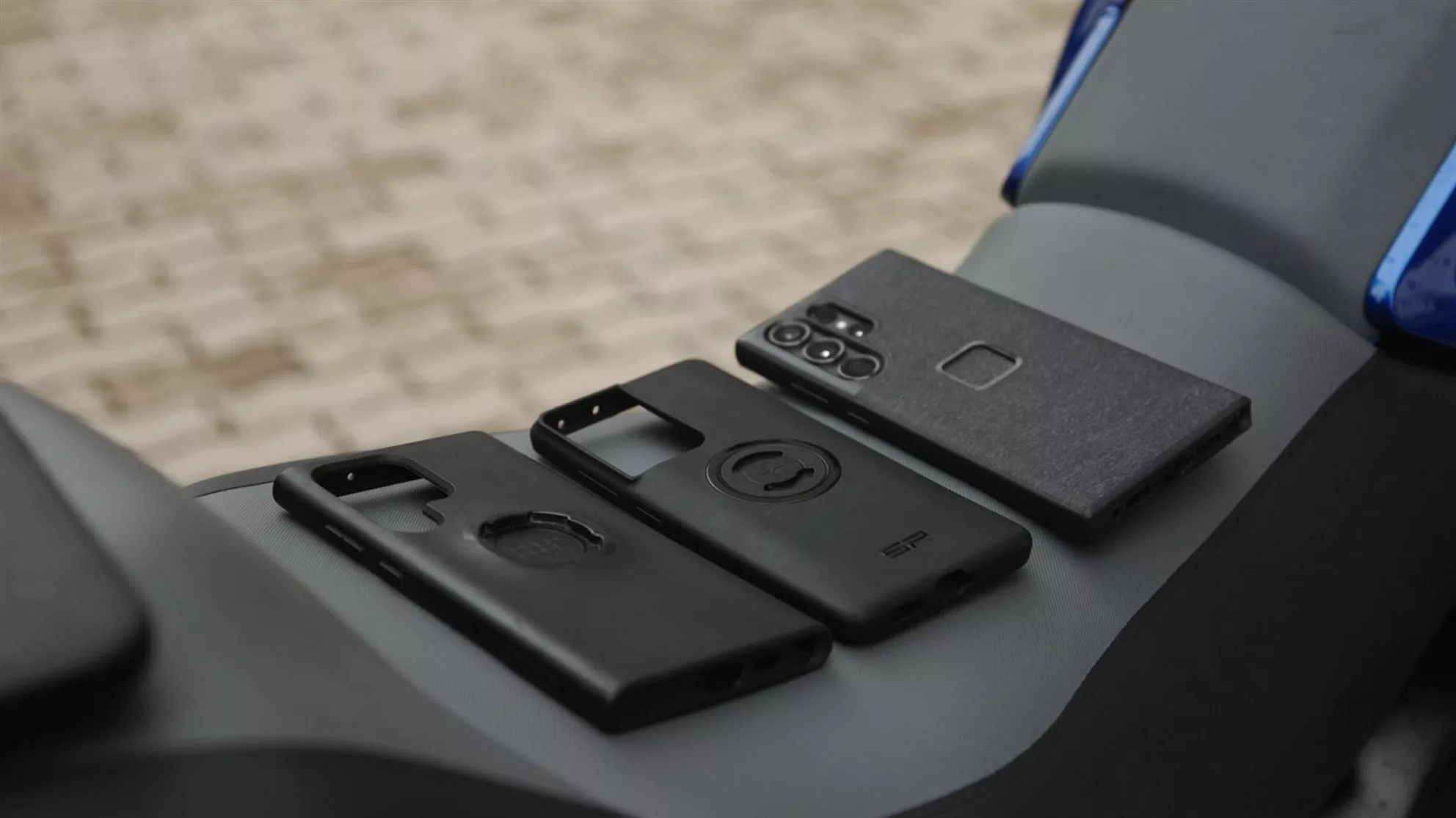
The Peak Design cases not only look somewhat more refined, but are also thinner than the cases from other manufacturers.
Thanks to the magnets in the case, plenty of accessories can also be attached to the smartphone: small card holders or smartphone tripods, for example. Anyone needing more protection can opt for the GNAR Case. This one is more robust, thicker, is said to let the smartphone survive a fall from up to 4.5 meters, and protects the charging port from water and dust with a cover.
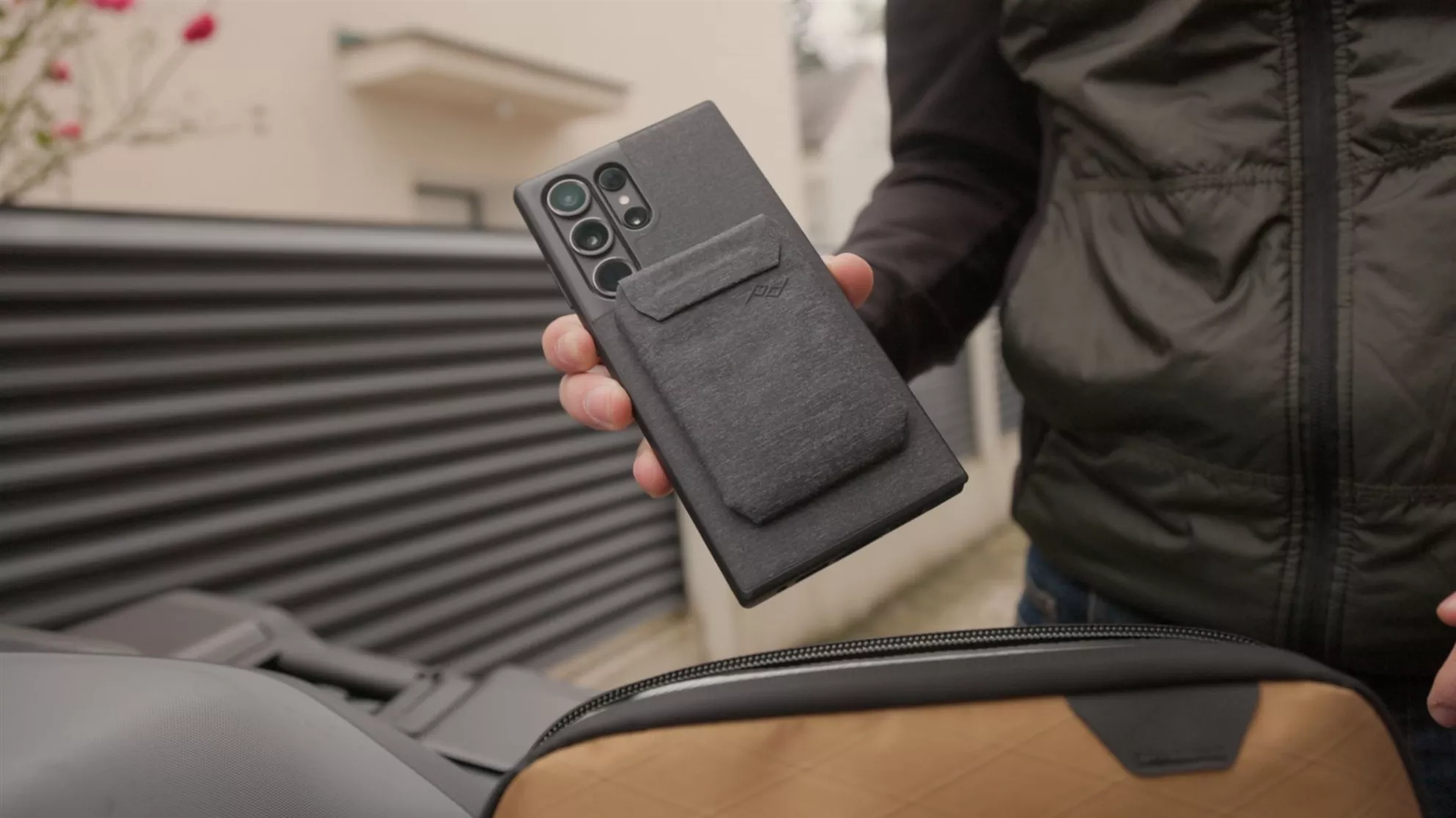
Thanks to the case's magnets, numerous accessories can be attached.
Peak Design mounts tested
Whether motorcycle, bicycle, car or wall - Peak Design, like the competition, offers a huge variety of mounts for pretty much every use case. For motorcycles, there are typically mirror, handlebar and bolt-on mounts, and Peak Design is no exception. The first two come with rubber inserts for various diameters, so these mounts can be fitted to almost any bike. Only with very thick handlebars - such as on the BMW R 1300 GS - do you hit the limits of the handlebar clamp, but that applies to the other manufacturers too. One solution from Peak Design for this problem is, for example, the tool-free universal mount with rubber strap and hook, which can be attached to any handlebar quickly and simply.
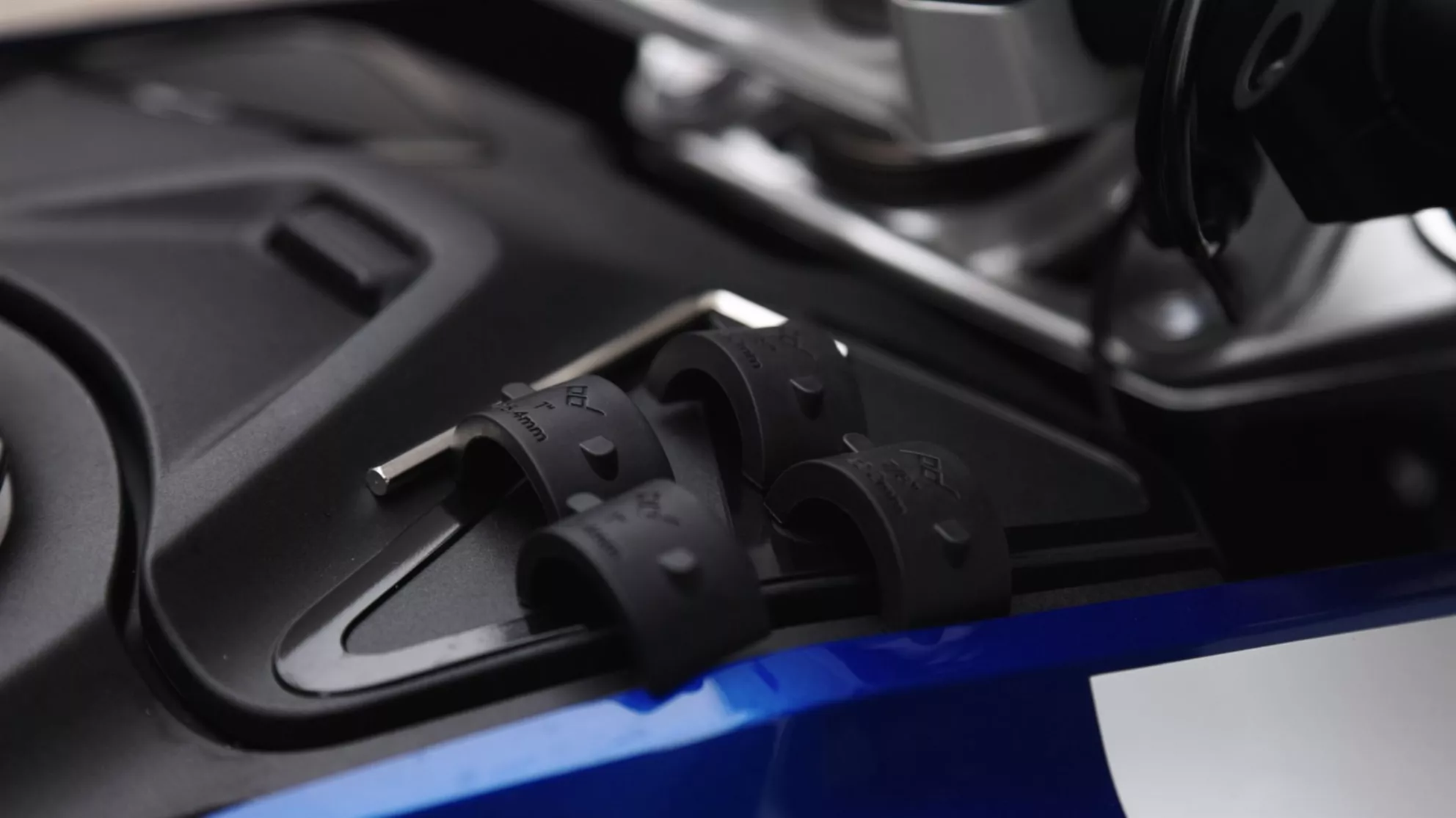
Rubber inserts of varying thickness allow the handlebar mount to be adapted to the handlebar diameter.
If mirror mounts form the lower end and handlebar mounts the broad middle of the Peak Design mounts, then the charging mount with integrated vibration dampener and wireless charging function is the spearhead. We tested this one and the universal mount and can report hardly any problems. The only point of criticism: the adjustment screw on the rear joint sometimes sits awkwardly when the handlebar is heavily built up with brake fluid reservoirs and the like. On the other hand, the ball joint of the charging mount is convincing, offering maximum flexibility in positioning. The universal mount can also be rotated practically, and in general the Peak Design mounts offer a very high level of build quality. Perhaps the only real drawback is that Peak Design also demands a high price for this quality.
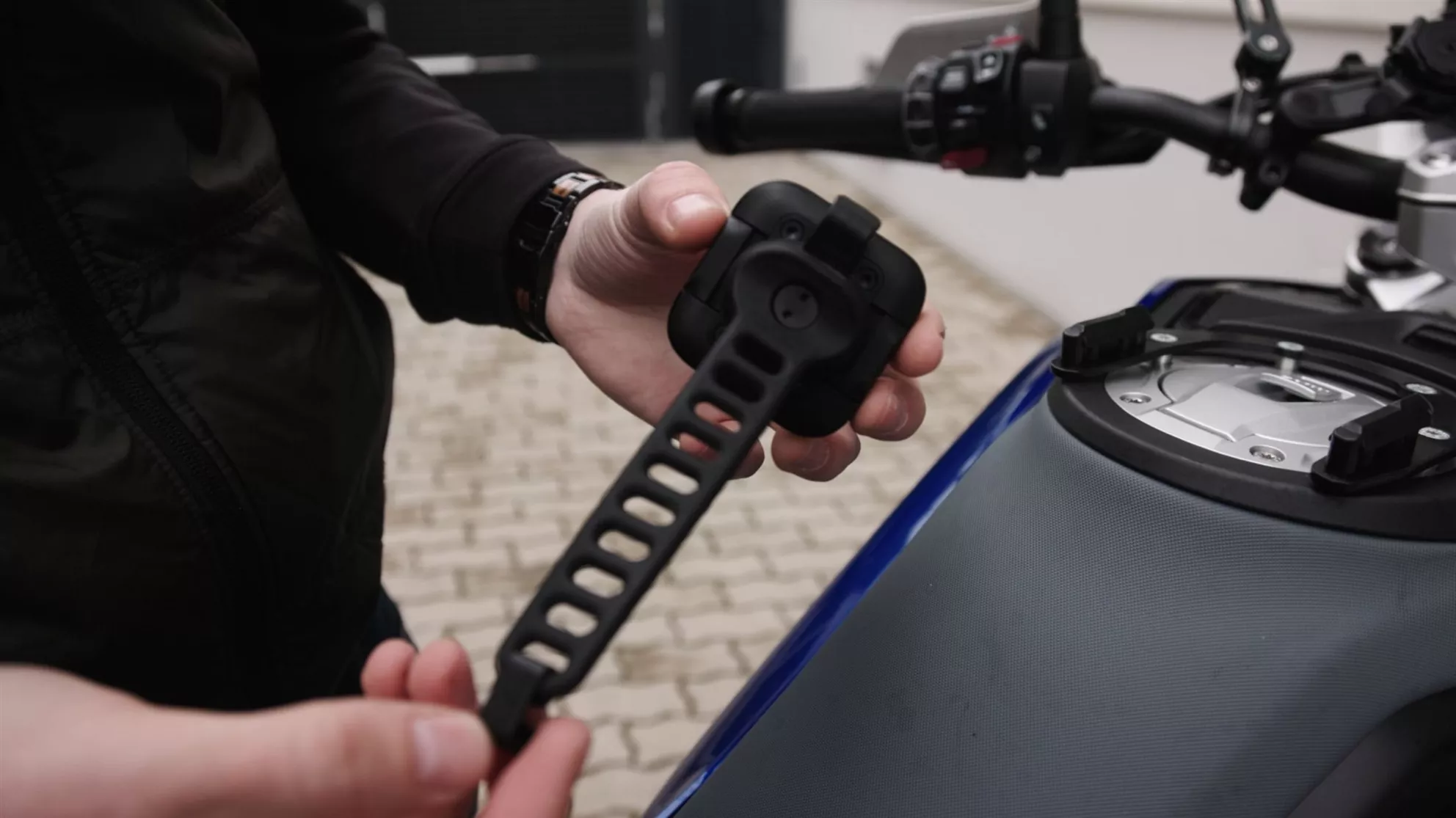
Peak Design's universal mount can be fitted to any handlebar without tools and in a flash.
Peak Design cost and price comparison with SP Connect & Quadlock Moto
Peak Design positions itself clearly in the premium segment - and is priced even above SP Connect and Quadlock. The standard cases cost, depending on the smartphone model, around €40. For the robust Gnar case you have to pay around €60. With SP Connect we're looking at €40 to €80 (€80 for an extra robust case variant), and with Quadlock the prices range from €40 to €45.
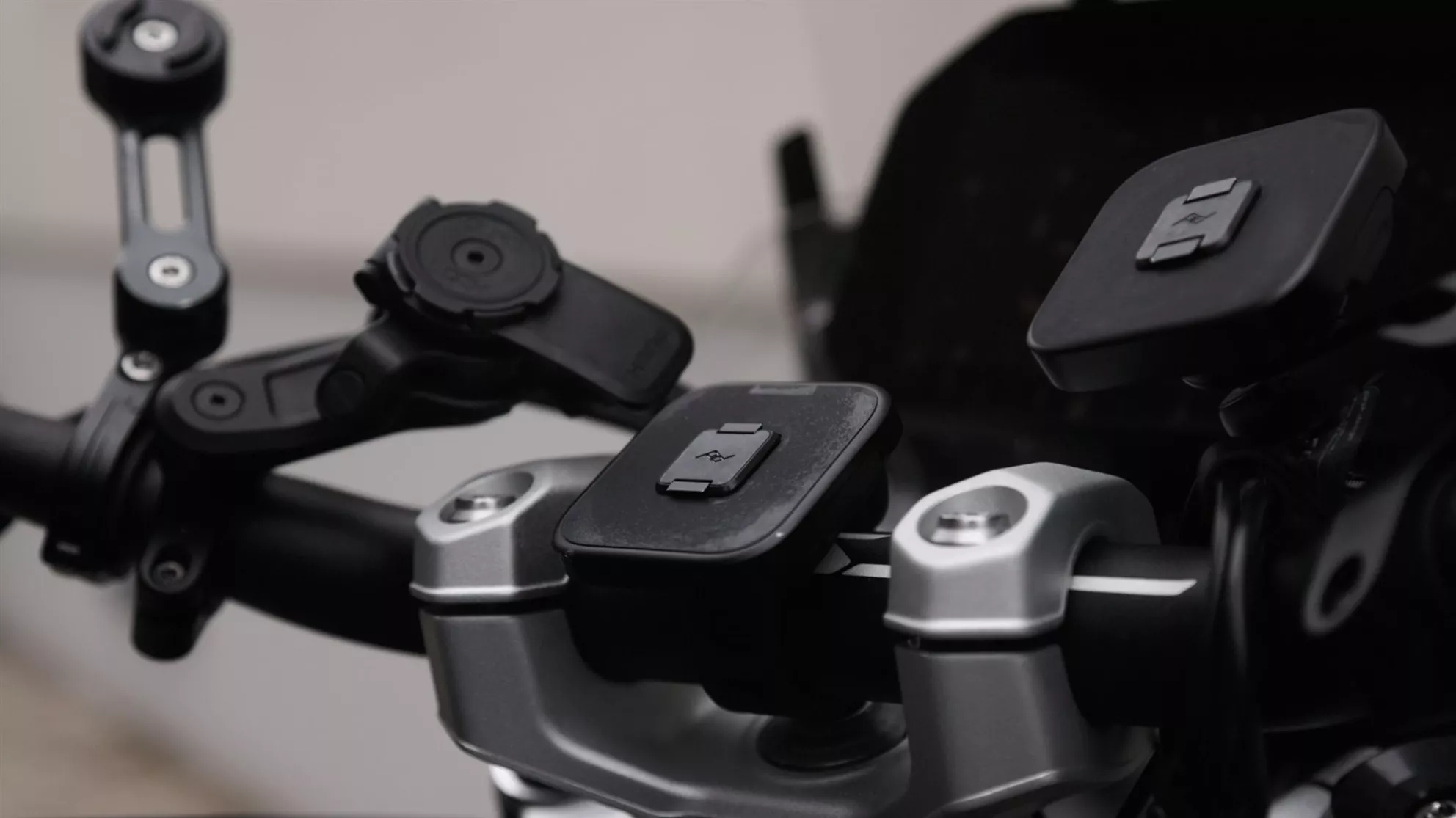
SP Connect and Quadlock mounts are cheaper, but in some cases noticeably bulkier than the Peak Design solutions.
When it comes to mounts, the differences between Peak Design and the competition are sometimes even more glaring, especially with mirror mounts. A hefty €120 is charged here for the mirror mount, while the SP Connect equivalent costs only €30 and Quadlock's €40. At the other end of the spectrum, however, the prices don't diverge quite as much. Peak Design's wireless premium mount with vibration dampener costs around €190, but it is a complete system. The competition relies on modular systems, where the charging head and/or vibration dampener are sold separately. This puts the price difference into perspective in practice: SP Connect comes to around €130 (€100 vibration-dampened charging head + at least €30 for the cheapest mirror mount), Quadlock to about €143 (€80 charging head + €23 vibration dampener + at least €40 for the mount) when combining all modules. Peak Design remains the most expensive system, but as a complete system it appears more compact, elegant and higher quality - less of a DIY solution, more of a design object.
Sustainability as a major goal of Peak Design
Perhaps this can offer a bit of consolation for the high Peak Design prices: sustainability is, according to the company, a major aspect at Peak Design. The company regularly publishes an Impact Report, uses recycled materials and is even Fairtrade-certified - an absolute rarity in this segment. The focus is mainly on the sustainability of smartphone cases, since phones and accessories are often replaced every two to three years. Peak Design wants to make this cycle more sustainable - with durable, recycled fabrics and conscious production.
Where can I buy Peak Design motorcycle mounts?
Peak Design is available both through photo specialty stores and motorcycle accessory dealers such as Wunderlich. Online, the products are available in the Peak Design online shop and on Amazon. In Austria, shipping costs around 10 euros; from an order value of 150 euros, delivery is free of charge - an amount you reach fairly quickly at these prices.
Peak Design test conclusion
After years with SP Connect and Quadlock and now a season with Peak Design, it's clear that the newcomer can hold its own with confidence in the premium segment of smartphone mounts. The locking mechanism is intuitive and practical, the vibration dampener works reliably, and the design feels well thought-out down to the last detail. There were hardly any downsides, but instead quite a few unique technical solutions.
Anyone already satisfied with another system doesn't necessarily need to switch, since SP Connect and Quadlock also offer pragmatic solutions for everyday motorcycle use. But anyone equipping themselves anew and looking for the best overall package of technology, feel and pragmatism will find in Peak Design what is currently probably the most refined smartphone mount for motorcycles.
Conclusion: Peak Design smartphone motorcycle mounts tested
Peak Design challenges the established smartphone mounts with a distinctive magnet-hook technology and has proven convincing over thousands of test kilometers in the 2025 season. Instead of a twist mechanism, magnets pull the phone into position, two metal hooks made of resistant zirconium engage a ring and secure it, and removal is done one-handed at the press of a button. The system practically snaps into place by itself and ends the tedious search for the right position. An audible click signals genuine locking, since with careless placement the magnets can hold without the hooks being engaged. In the stress test on trails, in a quarry and on the motocross track, the smartphone stayed rock solid, and the six internal rubber cylinders protected the image stabilizer over almost 4,000 kilometers. The cases are slimmer than the competition at 3 millimeters, more refined in their fabric finish, and can be expanded with accessories thanks to their magnets; the wireless charger charges at up to 32 watts. Build quality and the flexibility of the ball joints are high, but the adjustment screw sometimes sits awkwardly on heavily built-up handlebars. The biggest drawback is the high price, especially for the mirror mount. For demanding high-mileage riders who value one-handed operation and build quality over price, this system is the right choice.
Peak Design smartphone motorcycle mounts tested Images
Source: 1000PS


