Three years full of motorcycle tours, press trips, enduro holidays and 1000PS productions, from Iceland to Bosnia, in constant rain, heat waves and rough terrain. My foundation through all these situations: the Daytona TransTourMan GTX boot. At 1000PS we generally use products from a wide variety of manufacturers, and each editor often has different favourite brands when it comes to helmets, jackets and the like. But when it comes to boots, Daytona has won everyone over over the years, since this high-quality footwear offers a high level of quality, durability, safety and comfort. Our good experiences, however, have been limited exclusively to road-oriented Daytona boots, such as the Road Star GTX or the Travel Star GTX. So it was quite exciting to see whether the only off-road boot from Daytona could maintain that high standard.
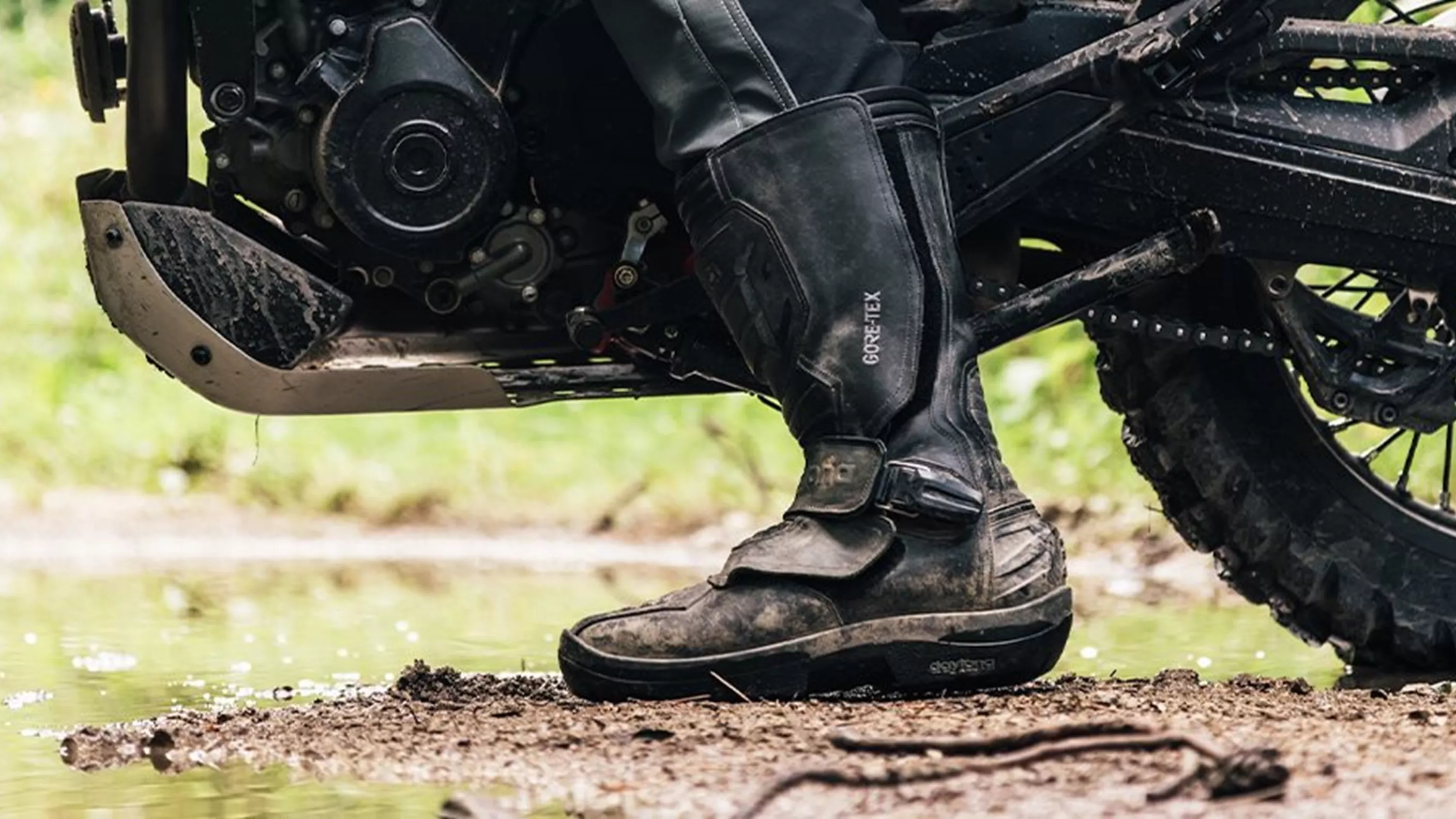
Daytona TransTourMan GTX Long-Term Test
Iceland, Bosnia, Tuscany - how good is Daytona's enduro boot?
Iceland, mud and 40 degrees: I wore the Daytona TransTourMan GTX for three years on trips, rallies and tours. Here are my experiences with Daytona's only off-road boot.
&width=72&height=72&bgcolor=rgba_39_42_44_0&mode=crop "Author: Gregor")
Gregor
published on 31/07/2025
Between River Crossings and Rally Dust
As a touring boot for adventure-enduro tours on and off paved roads, a lot is also demanded of the TransTourMan. While other boots often only have to convince in one category, an enduro boot on tour has to be safe yet comfortable, waterproof yet not too hot, or protective yet light. On just one day of riding in Iceland alone, the boot had to endure 14 river crossings, tramping through black volcanic sand, two falls and the ascent of a volcano. A few weeks later, the boots and I were already on the move again, this time on the Bosnia Rally with extremely rocky terrain and over 40°C. This extreme versatility also defines the supreme discipline of touring boots: use on enduro tours.
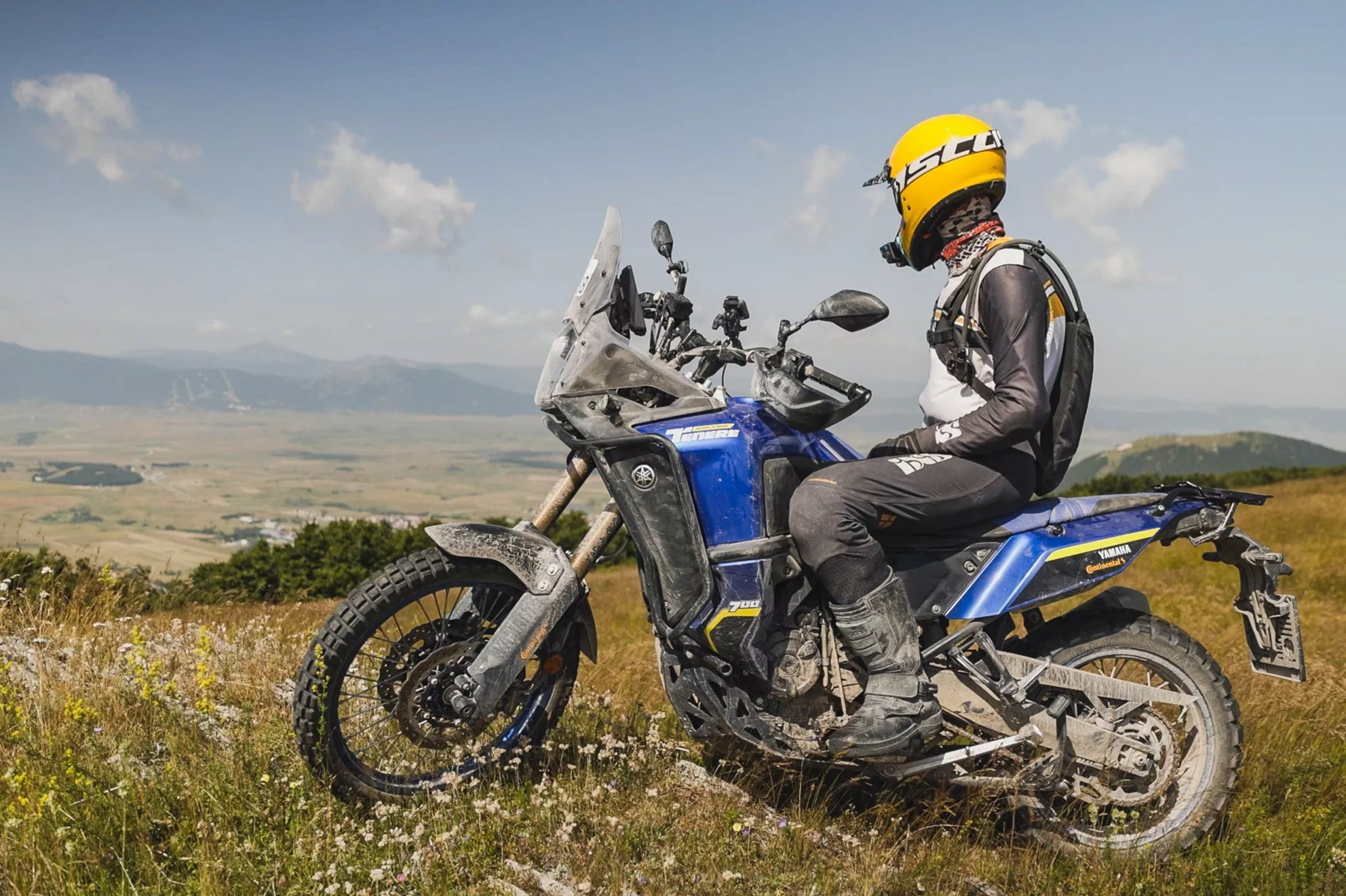
In terms of sportiness and material stress, the Bosnia Rally 2023 was probably the toughest test the Daytona TransTourMan boots have faced.
Daytona TransTourMan GTX Technology and Materials at a Glance
The TransTourMan GTX is based on sturdy, water-repellent greased special full-grain cowhide leather and brings around 34 cm of high shaft protection. The GORE-TEX Duratherm membrane keeps the foot area reliably waterproof while remaining breathable. The PU midsole provides pleasant cushioning, and an anatomically shaped climate insole contributes to comfort. Inside is a mix of protection and flexibility: a plastic-reinforced insole with a hot-dip galvanised steel insert, a massive shin protector, a plastic heel, a slip-resistant enduro sole with a replaceable footpeg wear part.
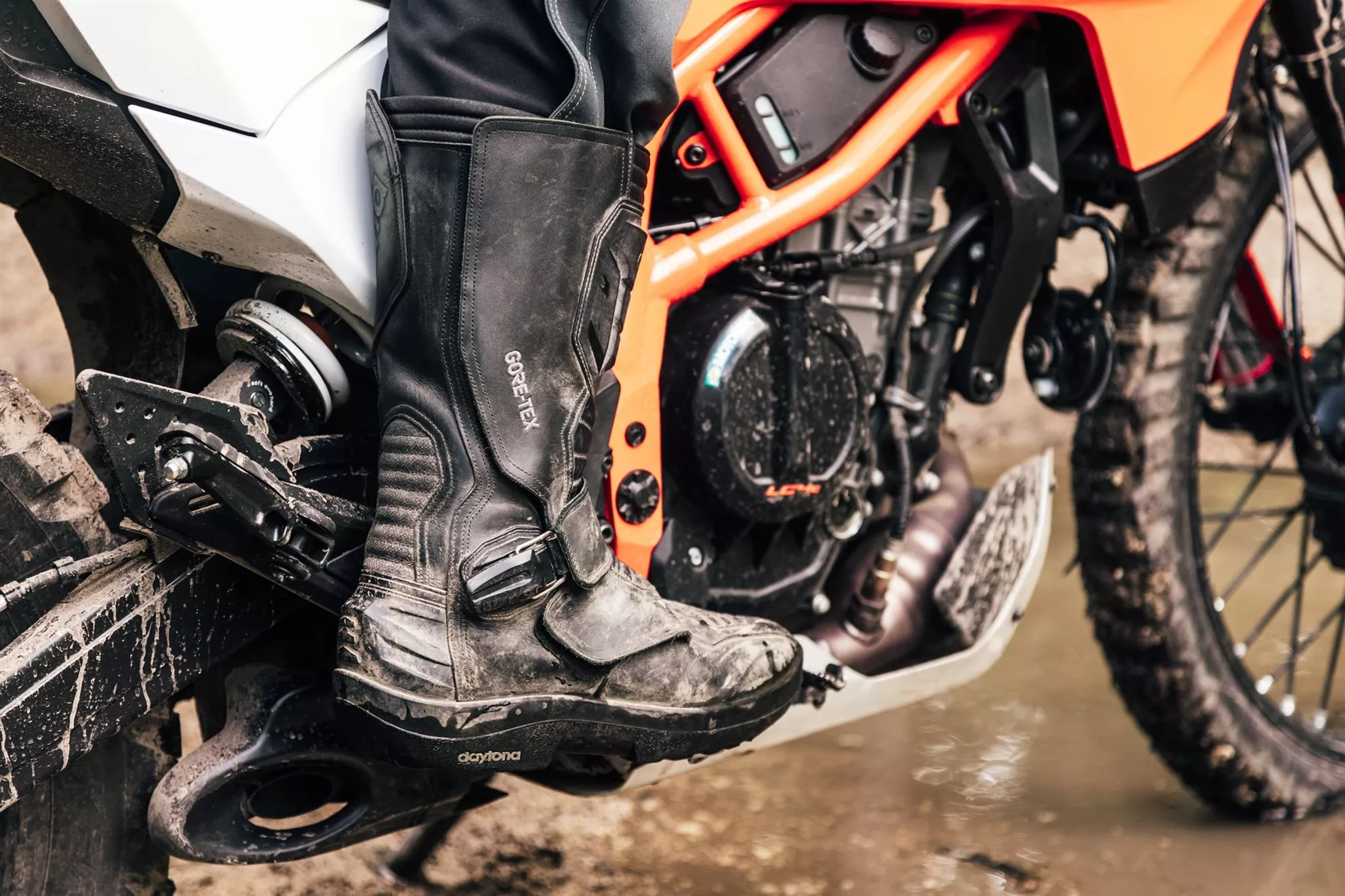
Waterproof, good protection for foot and toes, yet comfortable while walking - the Daytona TransTourMan offers a good compromise for adventure-enduro riders.
Daytona TransTourMan GTX First Riding Impressions - Bulky, But Comfortable
Anyone wearing the boot for the first time notices: yes, it is bulky. Above all, the wide front foot stands out, which can sometimes be a bother when carving through twisties on sportbikes. But as soon as you get onto an enduro bike or into off-road terrain, it pays off. Thanks to the stiff sole, the foot is well protected, whether against flying rocks or a bike lying on your foot after a crash. At the same time, it still rolls sufficiently while walking. The fit convinces, there are no annoying pressure points, and the comfort is impressive right from the start.
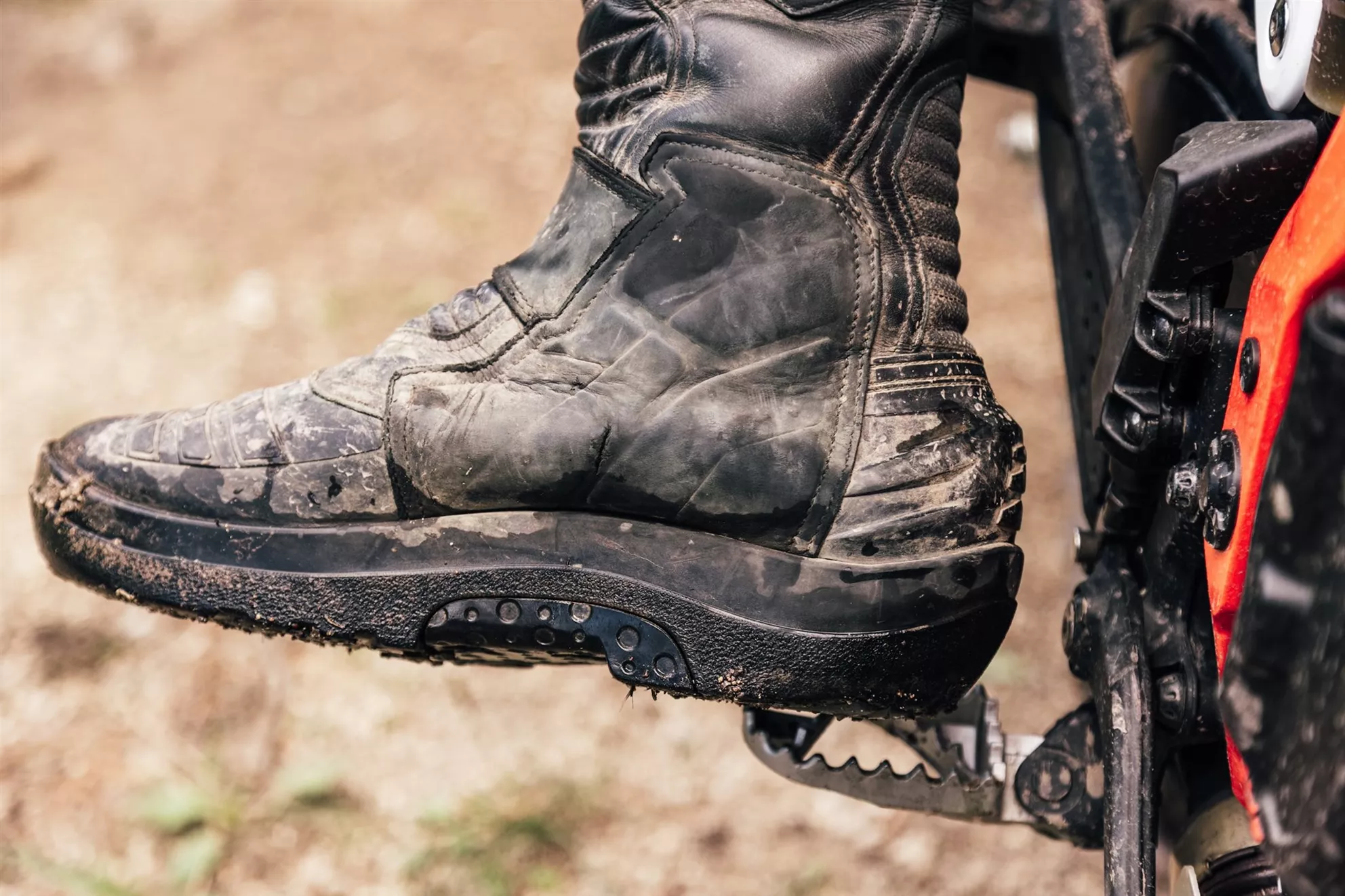
The sole of the TransTourMan is really solid. This means good protection for the foot on the one hand, but a fairly high weight of the boot on the other.
Protection and Ruggedness of the Daytona TransTourMan GTX Motorcycle Boot
The protection for the shin and heel is strong, but the ankle area is more flexible than on genuine enduro boots, which makes walking comfort high as a result. It must also be clearly stated, however, that it is precisely in the ankle area where protection is lowest, and where the biggest difference to fully-fledged hard-enduro boots appears. It remains a compromise with advantages and disadvantages. For my own subjective sense of risk and safety, the Bosnia Rally was the limit of the TransTourMan. The loose rocks that kept being kicked up and hammering against the boot are shrugged off easily by the rugged boot. But a real crash with possible contact between bike, boot and ground was something I wanted to avoid at all costs on the rough Balkan gravel, and with a stiffer boot I would probably have felt a bit more reassured blasting over rocks and roots. After three years now, this is how it has settled for me: if only relatively leisurely gravel, field and forest tracks are being ridden, I wear the comfortable TransTourMan GTX. But as soon as extra obstacles get in the way, the paths become single-track, or major traction problems are to be expected, I prefer to rely on stiffer boots that are, however, much less comfortable off the bike.
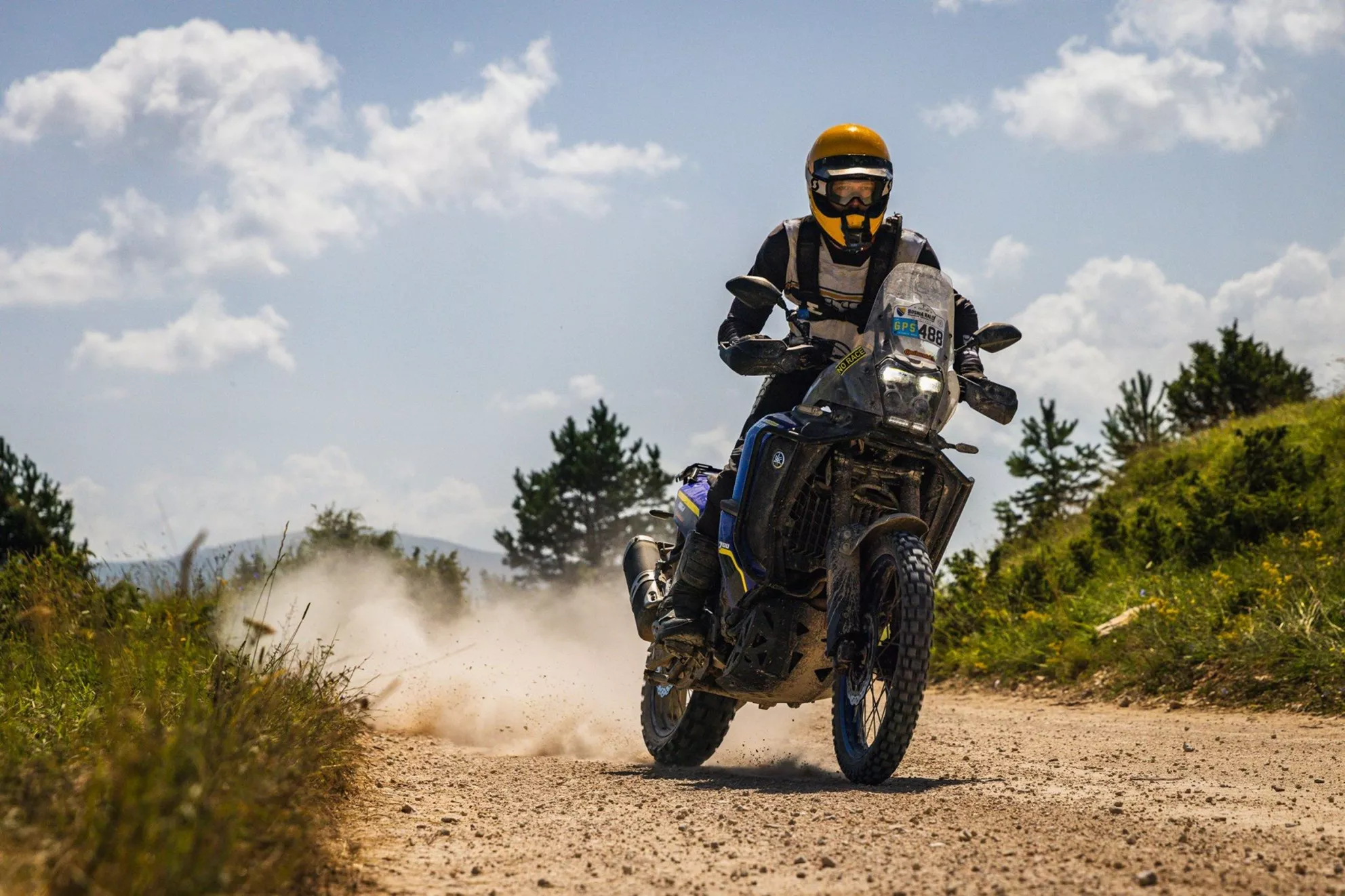
Stones kicked up bounce off the Daytona TransTourMan without effect. However, due to the lack of massive ankle protection, one should avoid getting the leg trapped between the bike and the terrain.
Waterproofing and Weather Protection of the Daytona TransTourMan GTX Boot
Particularly positive: the tightness. In Iceland, the weather was extremely poor. It rained and stormed for four days, and when the water wasn't coming from above, it was splashing up from below. While other riders complained about wet socks, I wade through Icelandic rivers without batting an eyelid. Not a single drop gets through the TransTourMan and its very tall shaft. Only when water sloshes over the top edge of the boot do my feet get wet. This experience is also a good example of the excellent workmanship of the Daytona boot. All seams are tight, glued areas are clean, and the system is well thought out. At the other end of the thermometer, the TransTourMan also holds up reasonably well - the high degree of waterproofing does, however, lead to hot feet despite all the breathability. But since I've never had off-road boots that didn't get hot and sweaty inside on a long, active riding day, in my opinion there isn't much to hold against the Daytona here either. It's simply not a light summer boot, but it remains wearable even at 40°C.
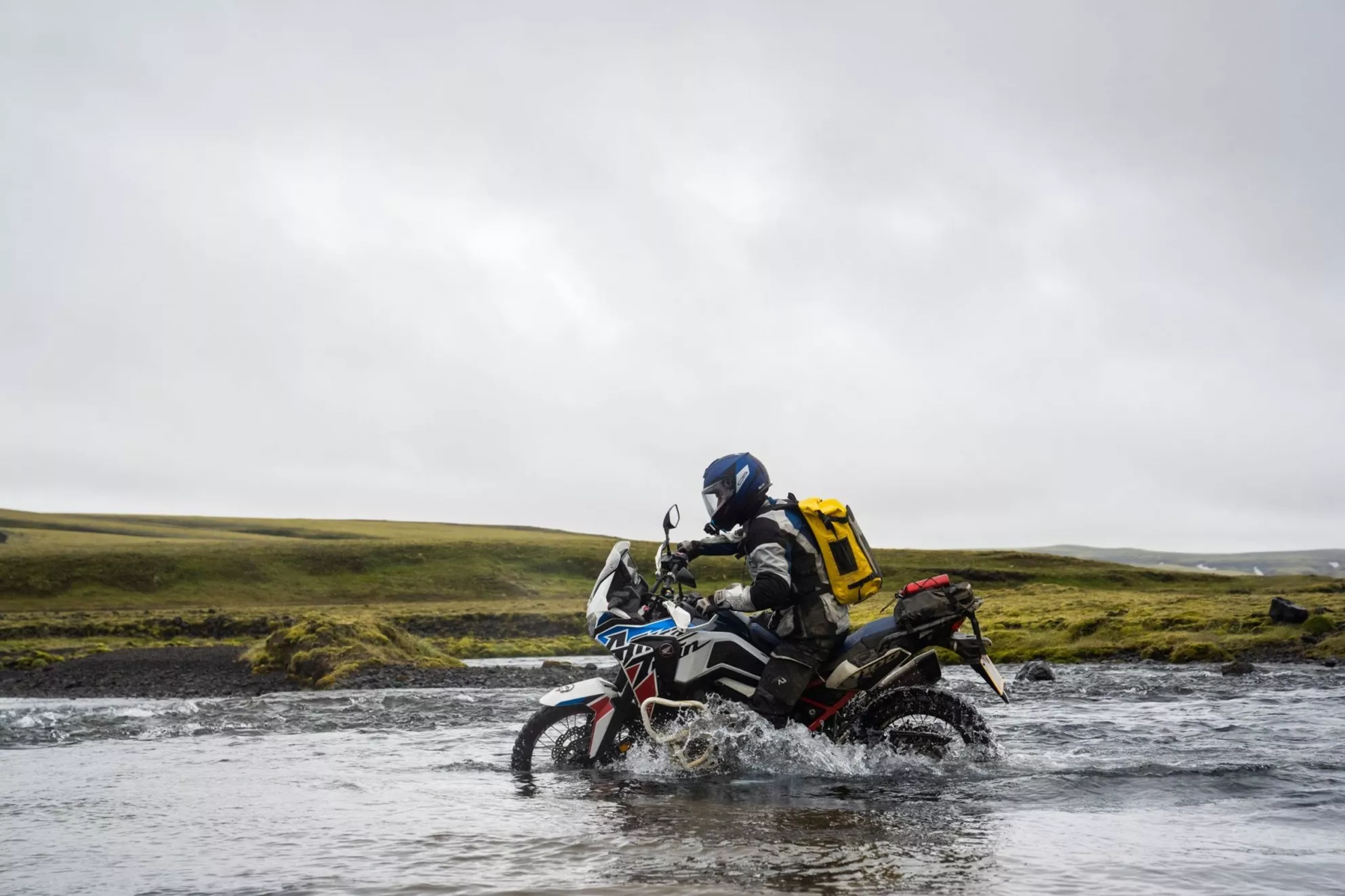
In Iceland, more than a dozen rivers sometimes have to be crossed in a day. Liquid only penetrates the Daytona boots once it runs in over the top edge of the boot.
Daytona TransTourMan GTX - Durability, Spare Parts and Repair
A major plus point of the TransTourMan GTX is its ease of maintenance. Even after years of intensive use, the boot doesn't need to be retired. Firstly, the boot has held up quite well through all the aforementioned and many further hardships, and that completely without any care. The outer leather layer may be somewhat roughened, but that doesn't change anything about its functionality. The mechanism of the individual buckle as well as the velcro closure of the shaft still work flawlessly too. Secondly, Daytona also offers the option of replacing heavily stressed parts. Particularly practical is the replaceable wear part on the enduro sole: anyone regularly riding on aggressive rally footpegs can restore grip in a targeted way without having to replace the entire boot. The single buckle that helps close the boot can also be replaced if needed - a real advantage over the multi-part, complex closure systems of other manufacturers, which are often laborious to repair.
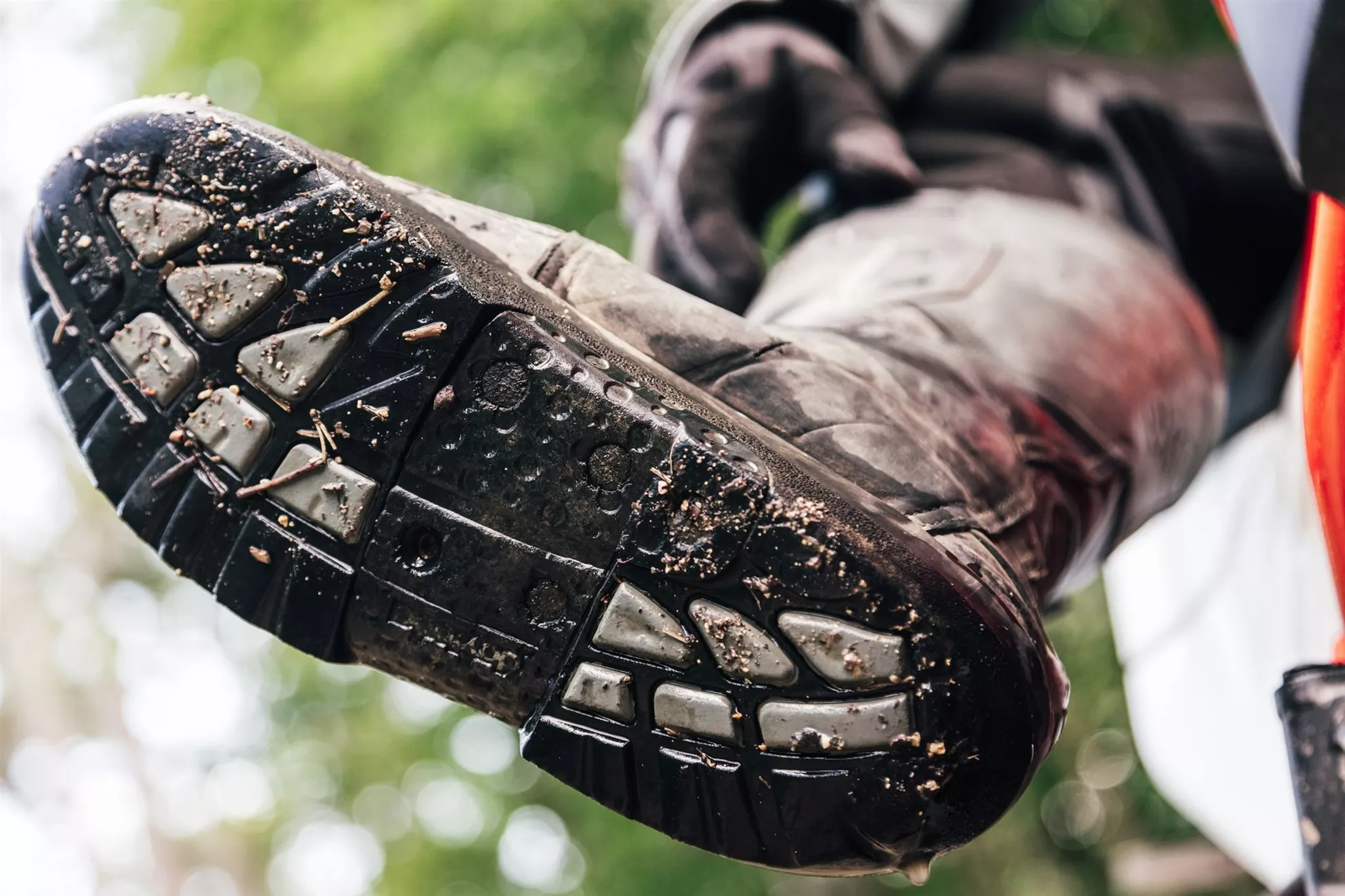
The middle part of the sole, which gets chewed up by sharp footpeg teeth during off-road tours, can be removed and replaced using a few screws.
In general: Daytona offers an excellently organised repair service, where even heavily worn examples can be brought back up to scratch. From sole replacement to seal checks - sustainability isn't just promised here, it's lived. This is a valuable argument especially for high-mileage riders or off-road adventurers who don't want to replace their gear every year.
Comparison & Positioning Within the Daytona Range
The TransTourMan is clearly the most off-road-oriented boot in the Daytona range. No other model offers this balance of protection, waterproofing and touring comfort. Anyone wanting more ankle protection has to reach for genuine motocross boots - but loses comfort and everyday usability in the process. The other Daytona boots, such as the Road Star or Travel Star, are tour-capable but not designed for rough terrain. On Daytona's website, under the "Touring Offroad" category, only the Trans Open GTX is listed alongside the TransTourMan, but that is more of a slightly more rugged version of the road boots and doesn't come close to the standalone TransTourMan.
Conclusion Daytona TransTourMan GTX Test - Reliable, Rugged, Willing to Compromise
The Daytona TransTourMan GTX is no show boot. But it is a reliable, uncompromisingly rugged companion for adventure-enduro riders who travel both on- and off-road. It protects, stays comfortable, stays tight - and lasts. After years of use without any care, it is still fully functional. For ankle protectors like in motocross, the price would be comfort. So it remains an excellent compromise between road and gravel.
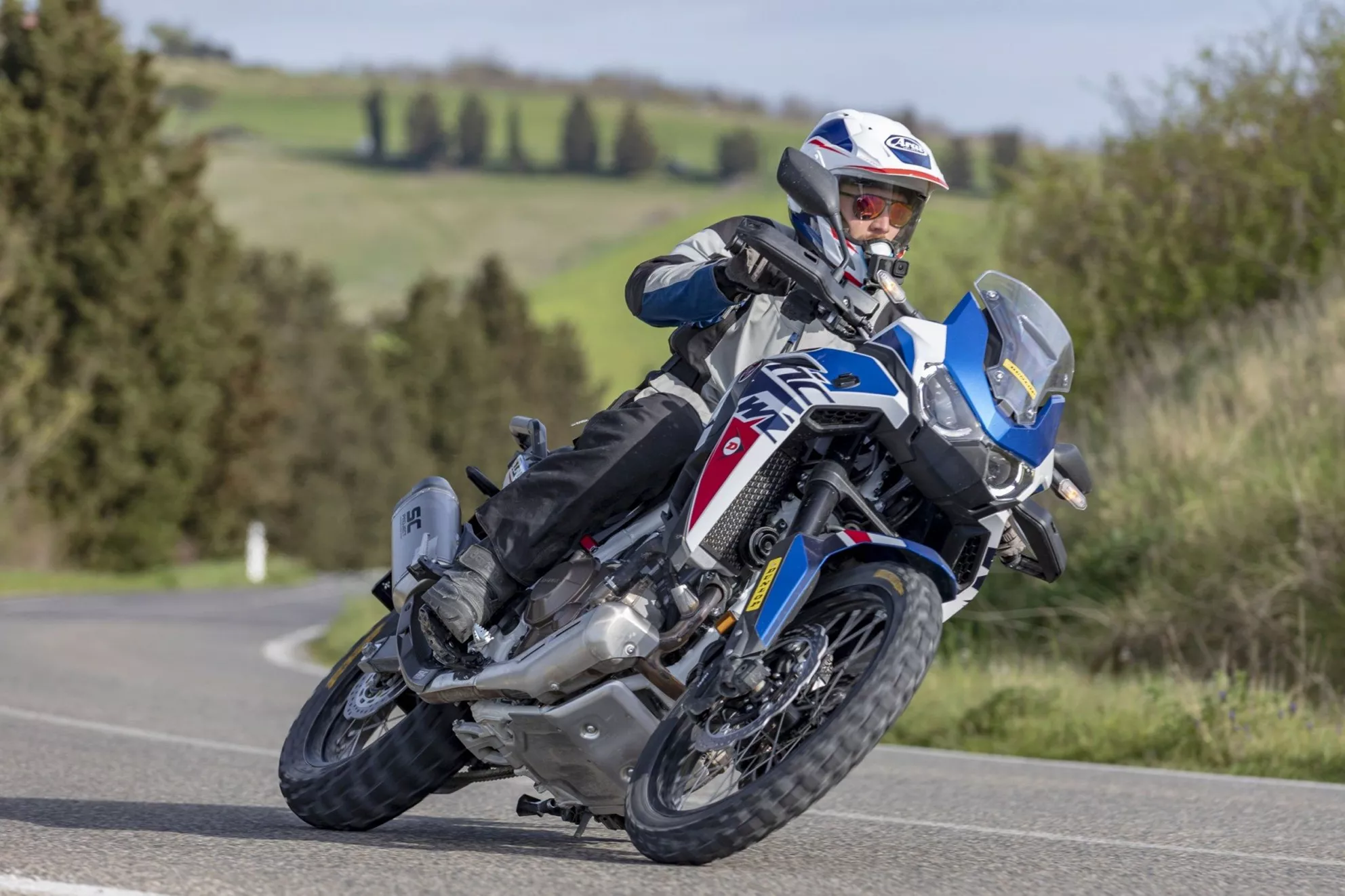
The Daytona TransTourMan is a fantastic boot for adventure-enduro riders who want their footwear prepared for any weather and any terrain.
Conclusion: Daytona TransTourMan GTX Enduro Boot Long-Term Test
The TransTourMan GTX holds up over three years and tours from Iceland to Bosnia, including 14 river crossings, falls and temperatures over 40 degrees. The Gore-Tex Duratherm membrane and the roughly 34 cm high shaft remain absolutely tight. The stiff sole reliably protects foot and shin, and comfort is convincing right from the start. Ankle protection is lower than on genuine hard-enduro boots - a deliberate compromise for greater walking comfort. Ease of maintenance is a strength, with a replaceable sole wear part and a replaceable buckle. Recommended for adventure-enduro riders on mixed on- and off-road terrain, while for tough terrain a genuine cross boot is the better choice.
Daytona TransTourMan GTX Long-Term Test Images
Source: 1000PS


