My colleague Horvath has already summarized all the news and updates for the Yamaha MT-07 2025 here. We also have a video about it. So this test report should focus on how all these changes actually ride in everyday use. The fourth generation has been so fundamentally reworked that we want to briefly summarize the highlights: new design, extensive electronics update, two different transmission variants, completely new chassis, radial brake calipers up front, new ergonomics, and Euro5+ adjustments for the familiar CP2 engine.
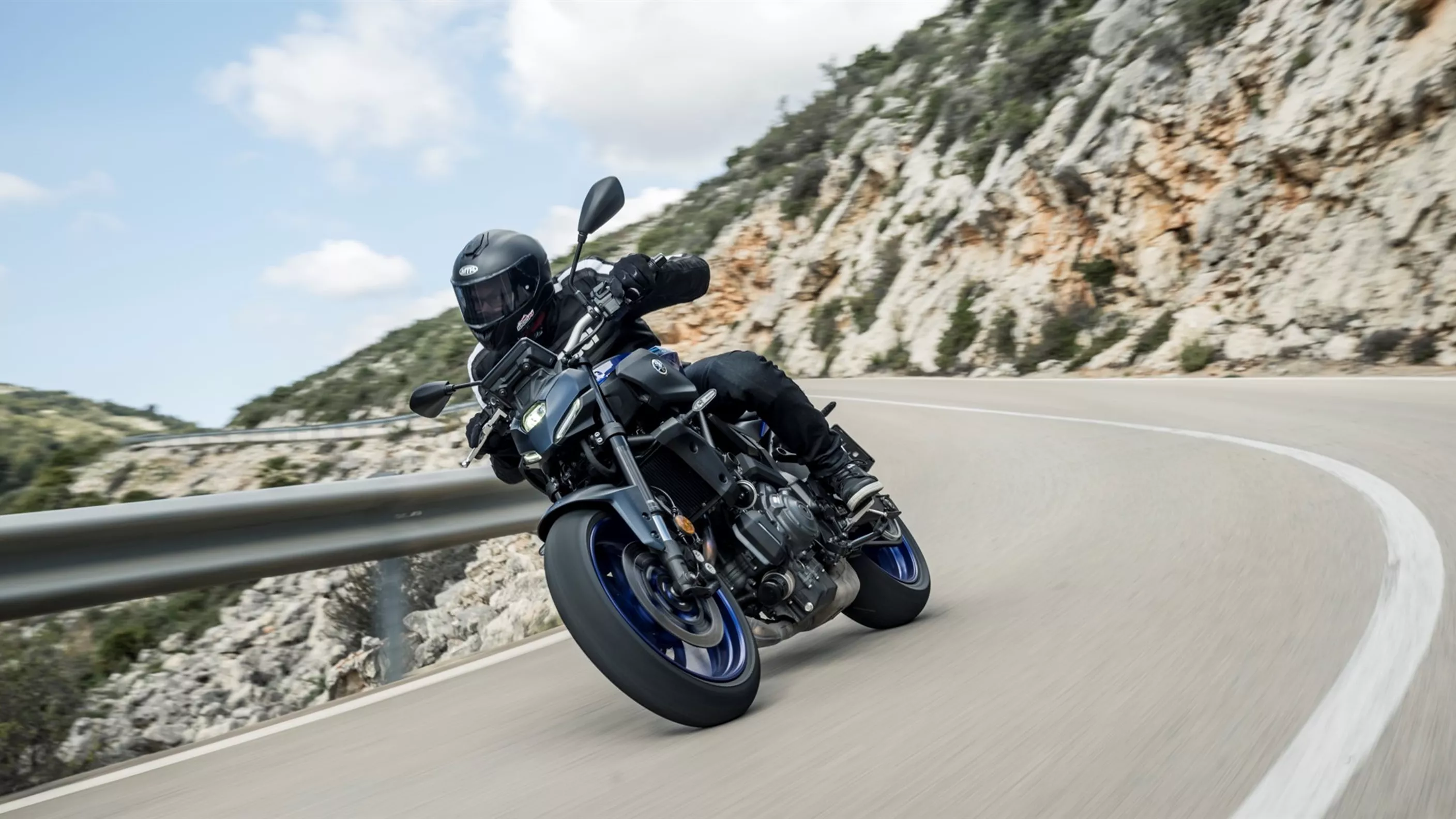
Test Yamaha MT-07 2025
The best MT-07 we've ever had.
The MT-07 is extremely important for Yamaha. Since its introduction in 2014, around 195,000 units have been sold in Europe alone to date. For 2025, Yamaha has given the MT-07 a major update, because the fourth generation was meant to mature in order to appeal to even more riders. This much can already be revealed: it has succeeded. The new Yamaha MT-07 is definitely the best MT-07 we've ever had. But: it could also turn into a luxury problem for Yamaha and its dealers.
&width=72&height=72&bgcolor=rgba_39_42_44_0&mode=crop "Author: Philipp")
Philipp
published on 30/03/2025
41,537 Views
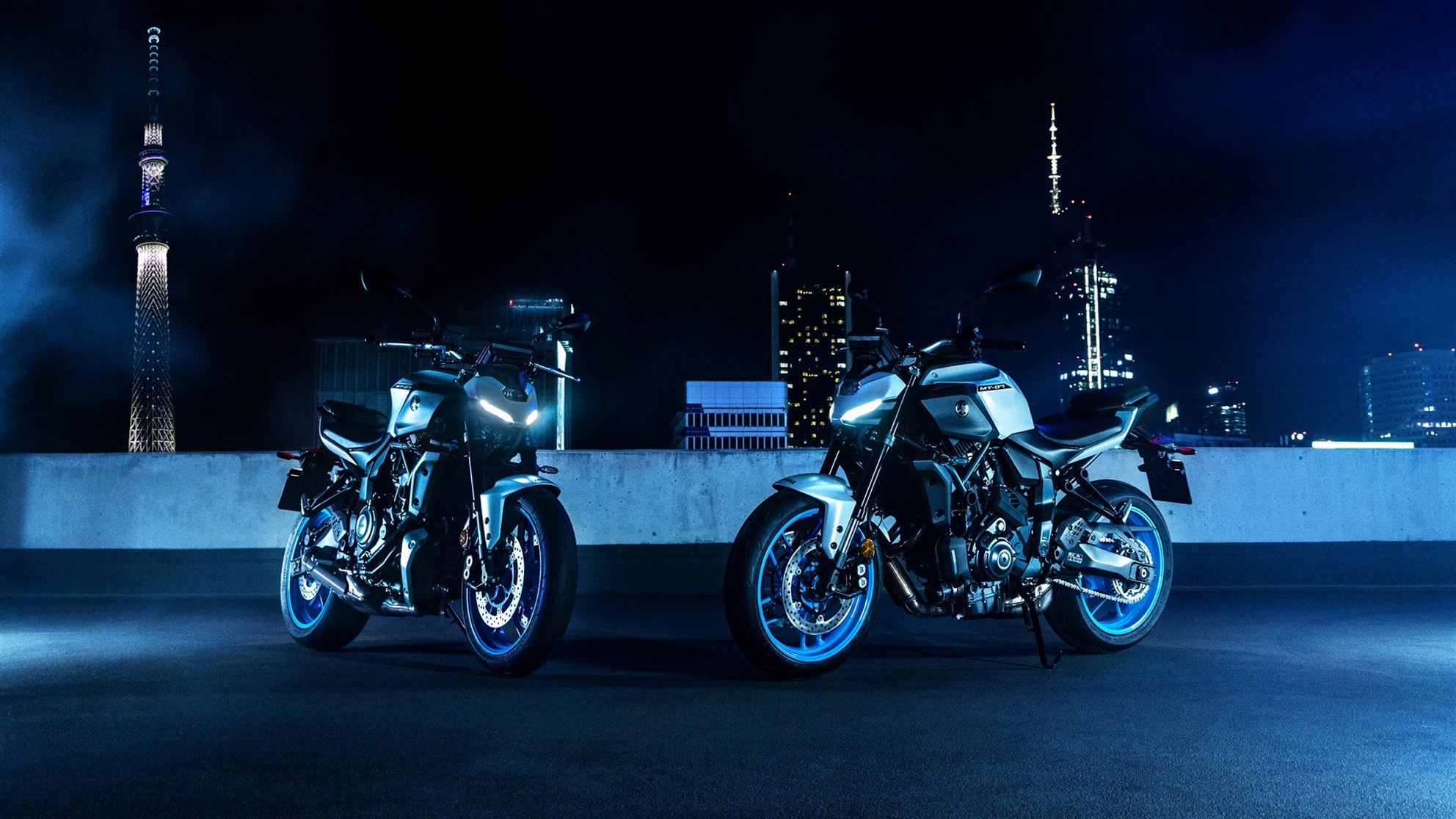
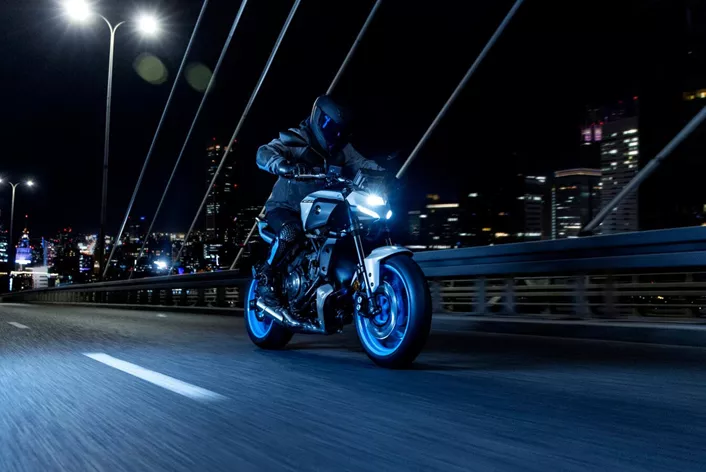
The new MT-07 closely resembles the MT-09.
The Yamaha MT-07 has matured
The MT-07 has been a best-seller for various reasons: for one, ever since its introduction in 2014 it has always offered a lot of bike for the money. The biggest selling point up to now: the inline twin engine (dubbed CP2 by Yamaha), which operates in a torque-oriented way, has always been finely tuned, and put a smile on the face of beginners and motorcycle veterans alike on the open road. The sound was cheeky, throttle response, revviness and power delivery nearly flawless. That's how you build an open-road engine – full stop.
On top of that, Yamaha always fitted the MT-07 with a solid but also unspectacular chassis. The bike was rather small and compact, the chassis (especially the fork) somewhat underdamped, which meant that under late, hard braking the fork dived heavily and the bike practically sank to its knees. Absolutely sufficient for beginners, but a bit too soft once riding skill increased. Yamaha made improvements, but the competition quickly caught up and overtook the MT-07 in recent years. Above all, the Suzuki GSX-8S offers a very harmonious chassis in this class and sets the benchmark. On the engine side, it's now the Honda CB750 Hornet leading the class. On top of that, the MT-07 was ultimately missing a modern electronics package.
But the good news: Yamaha has taken all of that to heart and packed it into the fourth generation – without losing its basic character as an accessible naked bike for practically everyone.
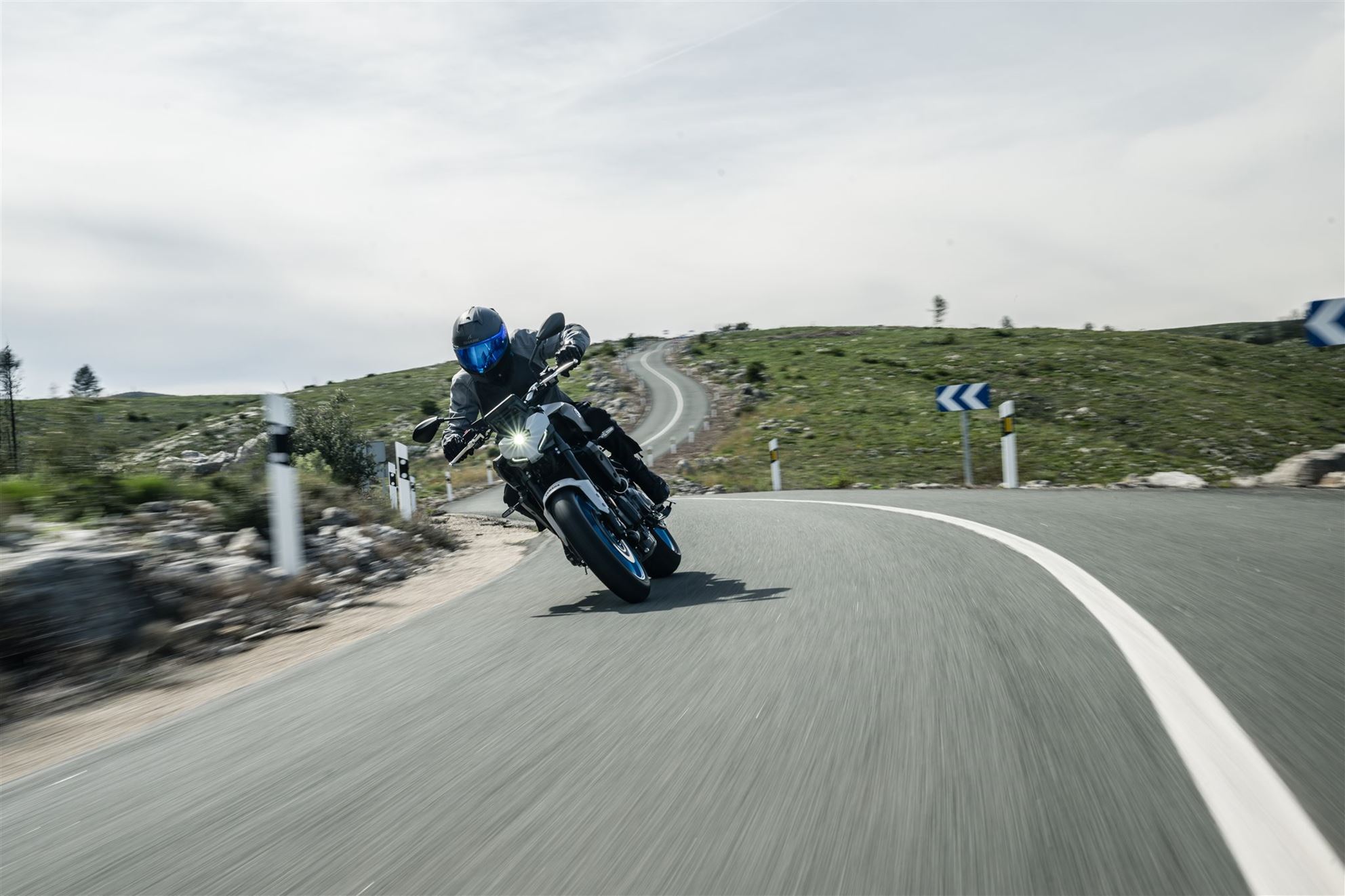
Better than ever - the new MT-07.
Chassis with update Yamaha MT-07 – fine handling
Up front there's now a new 41mm USD fork from KYB (non-adjustable). This is clamped into a new, lighter aluminum triple clamp (-400 grams) and delivers noticeably better damping along with a better look. At the bottom of the fork, two radial brake calipers from Advics, each with four brake pistons, now bite onto the unchanged 298mm brake discs. Not only does this look more modern and sportier, it rides that way too. Praise is due here for the brakes: although the disc and pad combination remains the same, the braking feel is somewhat more precise. Unfortunately, non-maintenance-free rubber brake lines are still used.
On top of that there are also lightweight spin-forged rims – a Yamaha patent that allows rims to be built lighter while maintaining the same robustness. The fork now offers significantly more feedback and reserves, no longer dives as heavily under braking, and provides hydraulic damping support in every riding situation. The setup is chosen so that even short, sharp impacts can be well absorbed without getting headshake. A genuinely major improvement over all three previous generations. Since the front end of the new Yamaha MT-07 has become so much better and sportier, the main frame had to be adapted, as did the swingarm and the rear suspension (the shock is adjustable for preload and rebound).
Yamaha states that the chassis as a whole has become 13 percent stiffer. You can feel that in the bike at every meter – and that's a good thing. The handling, however, has remained unchanged: the bike turns in precisely and nimbly, but now stays stable and predictable for longer. Together with the flawless brakes, every corner entry – whether slow or brisk – can be hit right on the mark. The added stability from the new chassis brings the MT-07 noticeably closer to its bigger sister, the MT-09.
That's also down to the new, better and somewhat more riding-active ergonomics: the handlebar has become wider and now sits 2.2 centimeters lower. This gives the rider more feedback from the front wheel. The footpegs are positioned one centimeter lower, but thanks to the better chassis and slightly narrower positioning on the frame, the pegs scrape noticeably later than on the predecessor models. And that despite now having a more relaxed knee angle – a clear plus especially for taller riders over 1.75 meters. Together with the new tires (Dunlop Sportmax Q5A), you enjoy the simple, predictable handling in the saddle of the MT-07 and genuinely wonder why it wasn't always like this. A simply outstanding improvement – with no downside at all.
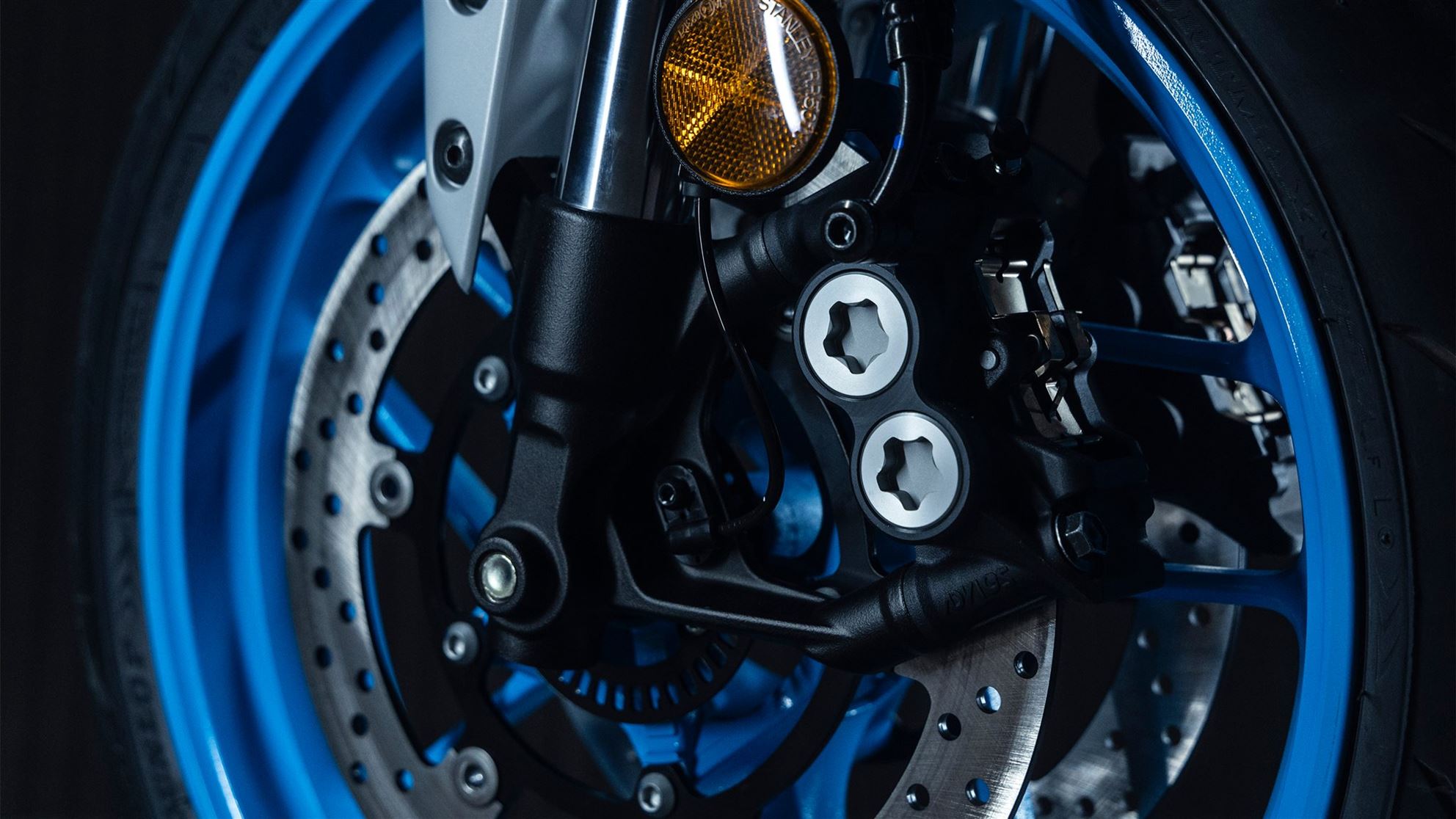
New brake system, new fork, massive improvement.
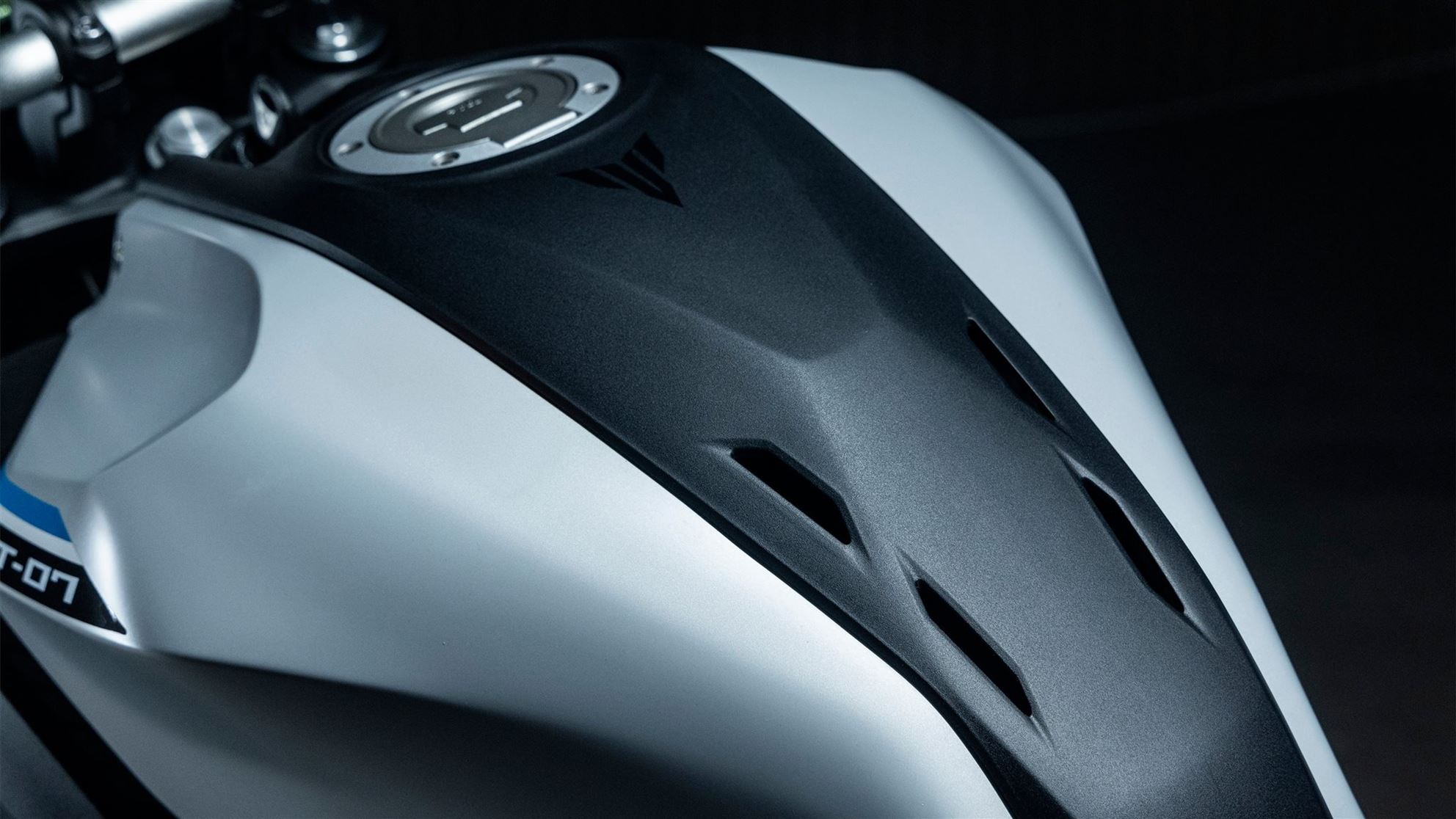
The four small slits in the tank cover provide a cool sound for the rider.
Yamaha CP2 engine – everything stays better
Not much has changed in the engine's construction: from 689 cubic centimeters of displacement the inline twin still delivers 73.4 hp (54 kW) at 8,750 rpm and 68 Nm of torque at 6,500 rpm. Nice detail: despite the Euro5+ updates, Yamaha's engineers were able to improve torque in the mid-rev range, so there's now more grunt available earlier. On the test ride, however, this wasn't really noticeable, since there was never much criticism of the MT-07's CP2 engine to begin with, and that hasn't changed in the 2025 model generation either.
A nice gimmick from Yamaha: to preserve the sporty sound despite stricter regulations, there are now four slits in the middle tank cover. Underneath is the "Sound Enhancer", which channels the intake noise through to the rider. And that works really well while riding, because in the saddle of the MT-07 you always have a potent, bassy twin sound in your ear. Yamaha states the engine's consumption at 4.1 liters per 100 kilometers. You'll only achieve that if you ride fairly moderately. If you let the CP2 engine and its revviness run free, a bit more fuel runs through the combustion chambers.
The tank volume of 13 liters has stayed the same, and you can manage around 250 kilometers of range with it even riding very spiritedly. Optionally, the new Yamaha MT-07 is also available as a 48hp (35 kW) A2 variant.
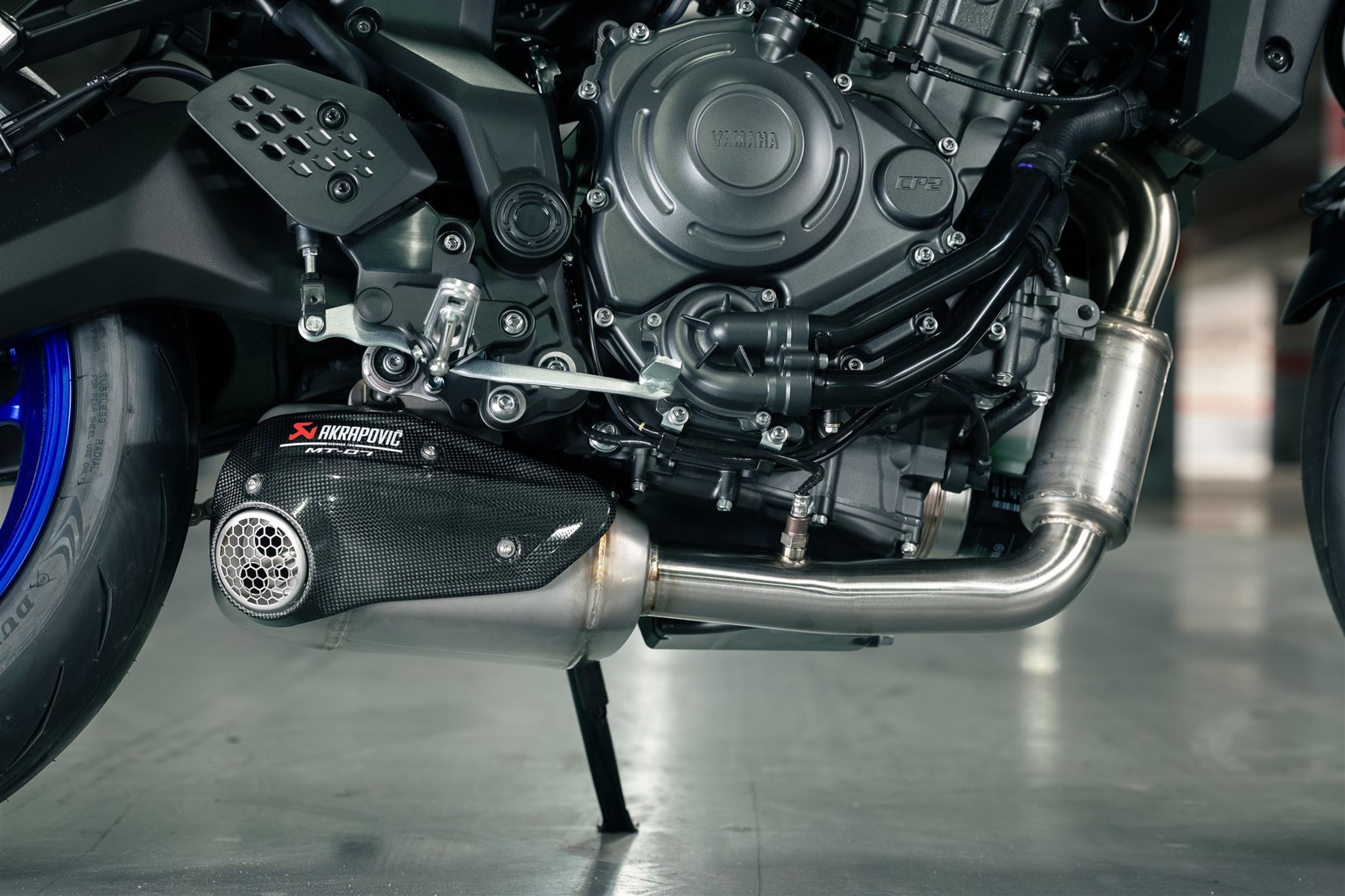
Optionally available: the Akrapovic exhaust
Highlight of the MT-07: Y-AMT – two transmission types
Technically and in terms of riding dynamics, the new Yamaha transmission Y-AMT (Yamaha Automated Manual Transmission) is the biggest news. It's a semi-automatic shifting system based on a conventional manual transmission, but which automates the clutch and shifting processes.
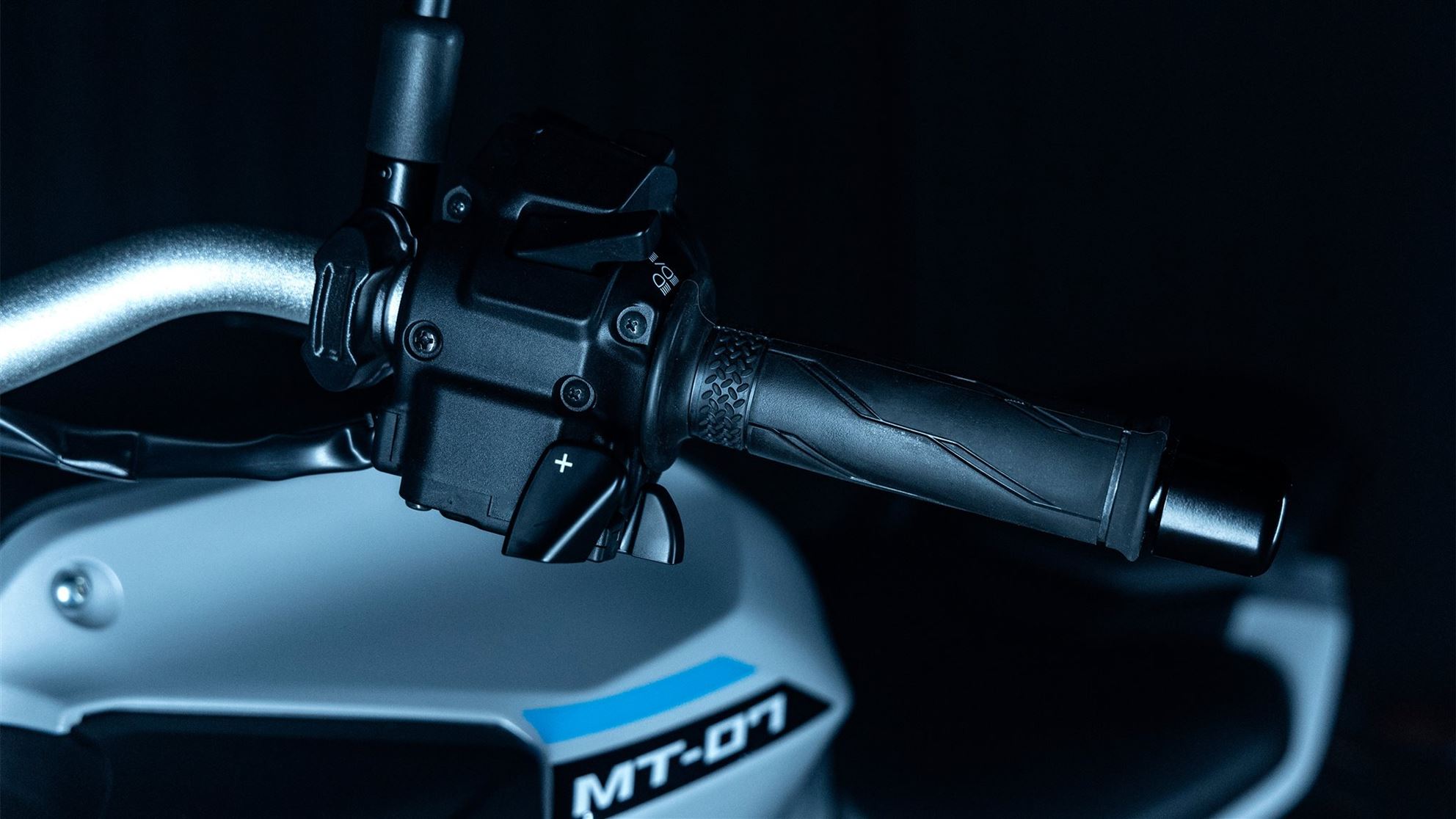
At its core is an electronically controlled actuator that operates the clutch and shift mechanism precisely and quickly – with no clutch lever at all. The rider can choose between different modes: Automatic mode (AT mode), where the system takes over shifting completely, similar to a classic automatic transmission. Manual mode (MT mode): the rider shifts up or down themselves at the push of a button on the handlebar – without having to use a clutch. This happens via what Yamaha calls the see-saw switch on the left handlebar cluster. There is no longer a clutch lever or shift lever with this system.
AT mode has two sub-modes: D and D+. In D+, the shift logic is set up somewhat more sportily. This means: the MT-07 shifts up later, lets you wind out the gears more, and shifts down earlier so you can also ride in lower gears with higher revs, for example when trail braking hard and sportily into corners. Y-AMT weighs just 2.8 kilograms and raises the wet weight from 183 to 186 kilograms. Y-AMT can be understood both as a comfort feature and a performance feature.
On our test ride in the Spanish hinterland of Alicante, where you practically fall from one tight corner into the next, we were able to test the system extensively. Also available: a conventional 6-speed manual transmission, optionally with a quickshifter for clutchless up- and downshifting. Unfortunately we weren't able to try the quickshifter.
The shift unit for Y-AMT.
Experience with Y-AMT on the Yamaha MT-07 2025
Y-AMT isn't entirely new; it's already known from the bigger sister MT-09. Until now, however, the transmission hasn't been available for the CP2 engine. Thanks to the switch to a new ride-by-wire system for the MT-07 (and also all other models with a CP2 engine, for example the Tenere 700 or Tracer 7), implementation is now possible. According to Yamaha, the shift time is 0.1 seconds, in every riding situation, both up and down.
Indeed, gear changes in manual mode (MT) happen briskly. One push of the see-saw switch (which is really more of a rocker) and bang, the gear is changed. Still, it takes a while to get used to shifting with your left hand instead of your left foot. Surprisingly, downshifting works noticeably smoother than upshifting. Operating the system while leaned over, you notice a brief jolt especially when upshifting. It's not disruptive, but a well-tuned quickshifter executes gear changes more smoothly and less noticeably.
When downshifting, Y-AMT is on quickshifter level and there are no complaints. The shift speed is absolutely sufficient and can't be made faster conventionally. It is somewhat irritating, however, that when riding downhill you tend to need to downshift earlier, since you miss a bit of engine braking effect. Especially with a twin, whose engine braking effect tends to be higher, this is something that first needs to be programmed into the rider's brain.
Switching into D or D+ mode, the MT-07 handles all shifting and clutch operations completely automatically. Here it stands out that despite the sportier setup of D+ mode, a gear that's one too high tends to be selected when riding downhill. This means that – if you want to ride through corners with a bit of throttle support – you have to give noticeably more gas, since the selected rpm is lower. Here you can feel that the system is set up rather conservatively and for fuel saving.
Handy: even in automatic mode, the rider can override the system at any time via the shift rocker, i.e. additionally shift down or up manually. After a certain time (fairly quickly) Y-AMT then takes over the shifting again. Y-AMT is genuinely handy in city traffic or on very tight mountain passes when you're already tired or simply too lazy to shift. Because the system skillfully prevents the engine from stalling, no matter how slowly and carefully you roll into a hairpin.
This can be a real safety plus especially for beginners. If you add Y-AMT to your purchase, cruise control is included as standard. For the conventional manual transmission, cruise control isn't even available as an option for extra cost. So you need to decide early on (right at the time of purchase) how important this feature is to you. After the test in Spain, it can be said without reservation that Y-AMT is absolutely production-ready and will surely quickly find its fans.
The system isn't perfect yet, especially if you want to ride rather sportily. Interesting side note for tech fans: the transmissions of Y-AMT and the 6-speed manual transmission are not identical. For Y-AMT, a different gear order is used, namely N-1-2-3-4-5-6. This is simpler for the shift logic. Y-AMT also saves itself a parking brake this way. You can simply park and start the bike in first gear.
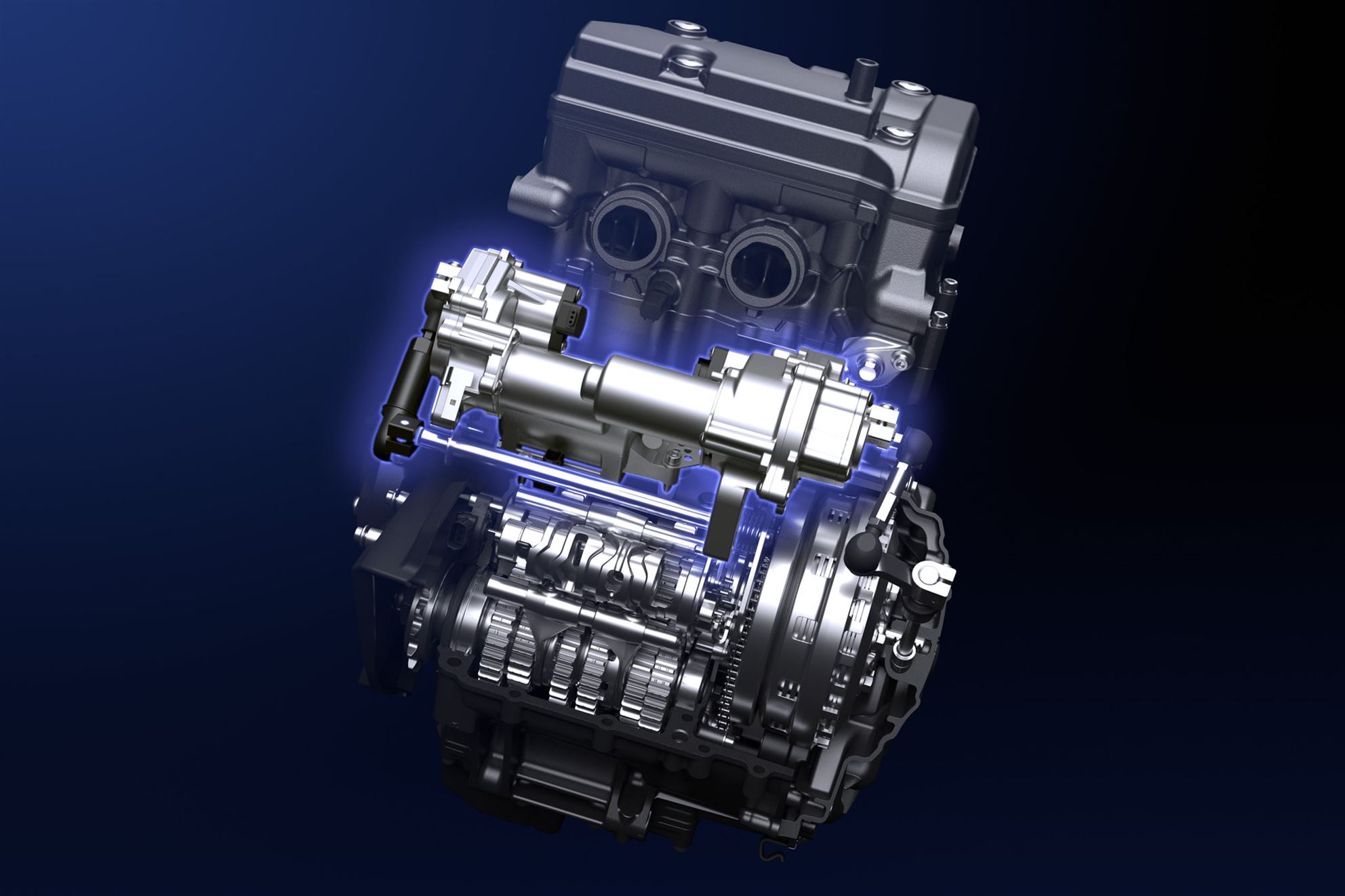
The Y-AMT mechanism weighs just 2.8 kg.
More rider aids for the Yamaha MT-07 2025
Besides chassis, transmission and design, the major model update also affects the electronics. And that will probably please a great many prospective buyers, because until now the MT-07 was rather spartan when it came to rider aids. Thanks to the aforementioned ride-by-wire system, there are now three different riding modes available: Street, Sport and Custom. These differ in power delivery and in the traction control setting, which is being used on the MT-07 for the first time.
Important to know: the fourth-generation Yamaha MT-07 does not have a 6-axis IMU, which means ABS and traction control do not act lean-angle-dependent. That remains reserved for the bigger sister, the MT-09. In our test, however, ABS and traction control were absolutely solidly tuned. As long as there isn't very low grip (slick asphalt, wet conditions), the traction control is barely needed, since the linear power delivery of the CP2 engine and the grippy Dunlop tires put the power down to the road sufficiently in almost every riding situation, without any slip at all.
The traction control can nevertheless be completely deactivated; to do so you just need to switch off the TC in a submenu on the 5-inch color TFT display. If you then turn the ignition off and on again, you have to repeat the process, because the traction control automatically switches back on. A deliberate decision by Yamaha in favor of rider safety. Anyone who likes riding on the rear wheel needs to deactivate the TC and should opt for the conventional transmission. Then wheelieing works in no time – thanks to the MT-07's high torque.
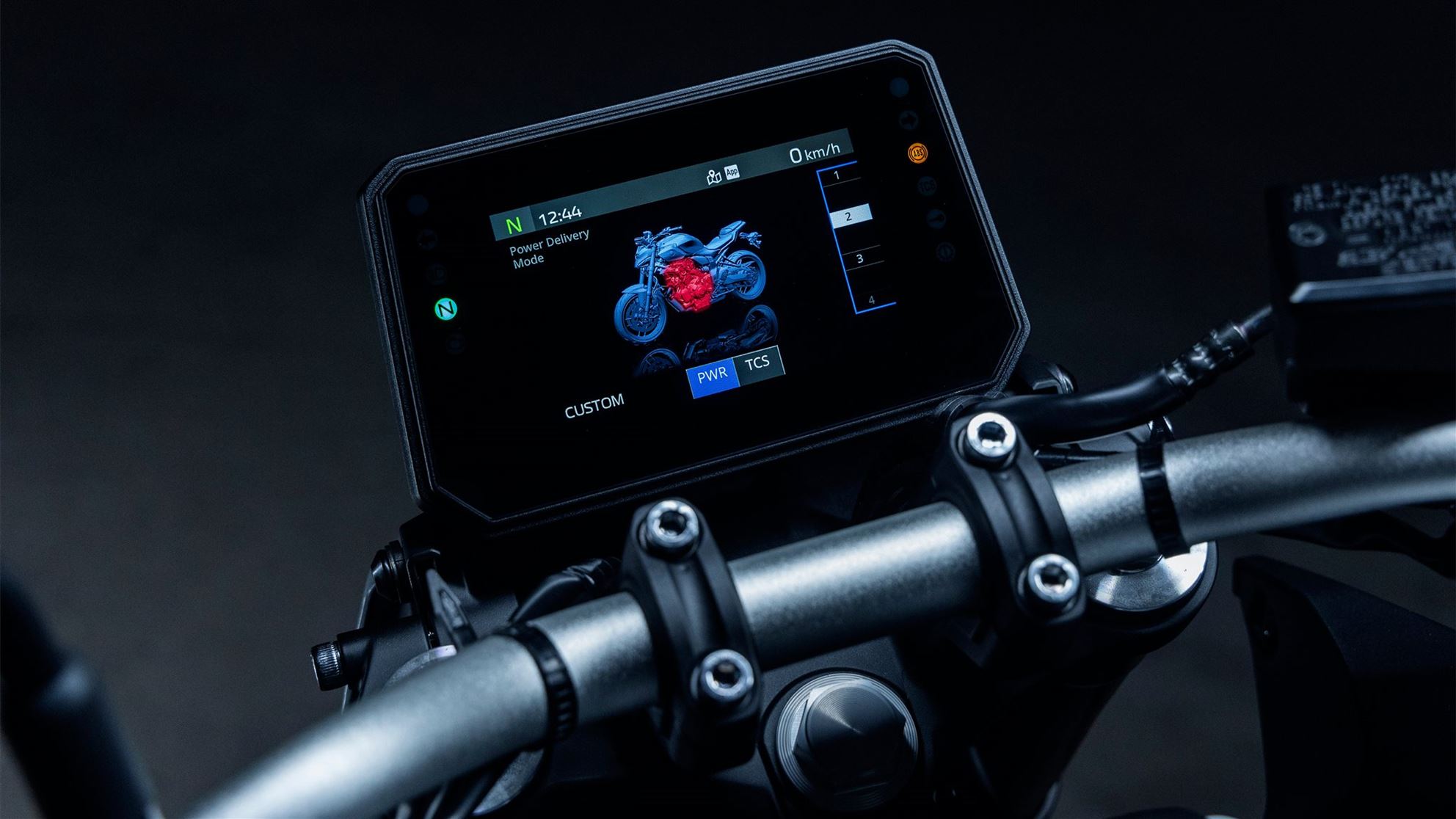
The new 5-inch TFT display turned out well - and is very informative.
Design resembles the Yamaha MT-09
The new light mask with LED lighting elements leans heavily on that of the bigger sister MT-09. The same goes for the controls, the display, and the finish of the entire bike. Visually, the MT-07 stays true to its basic lines, but thanks to the USD fork, the radial brake calipers and the new light mask, you have to take a second look to recognize that it's an MT-07 and not an MT-09 – especially from the front.
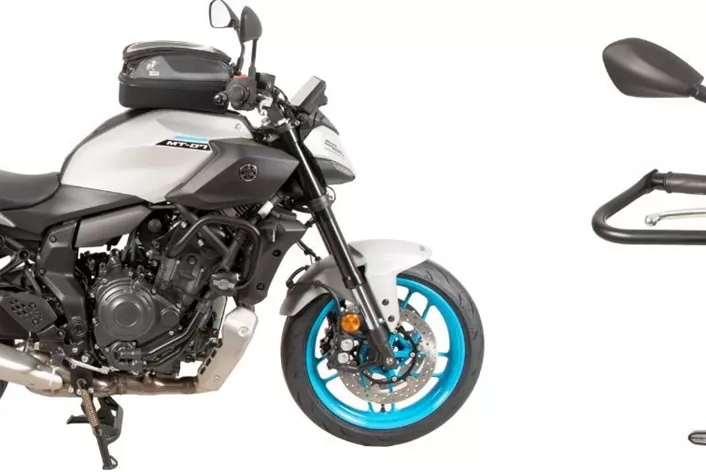
Three colors are available: Ice Storm (a matte grey with light-blue rims), Icon Blue (Yamaha blue with a matte blue mask and fender and blue rims), and Tech Black. There's a rich range of genuine accessories comprising 96 parts, 32 of which are new for the fourth generation of the MT-07 – including an Akrapovic exhaust system.
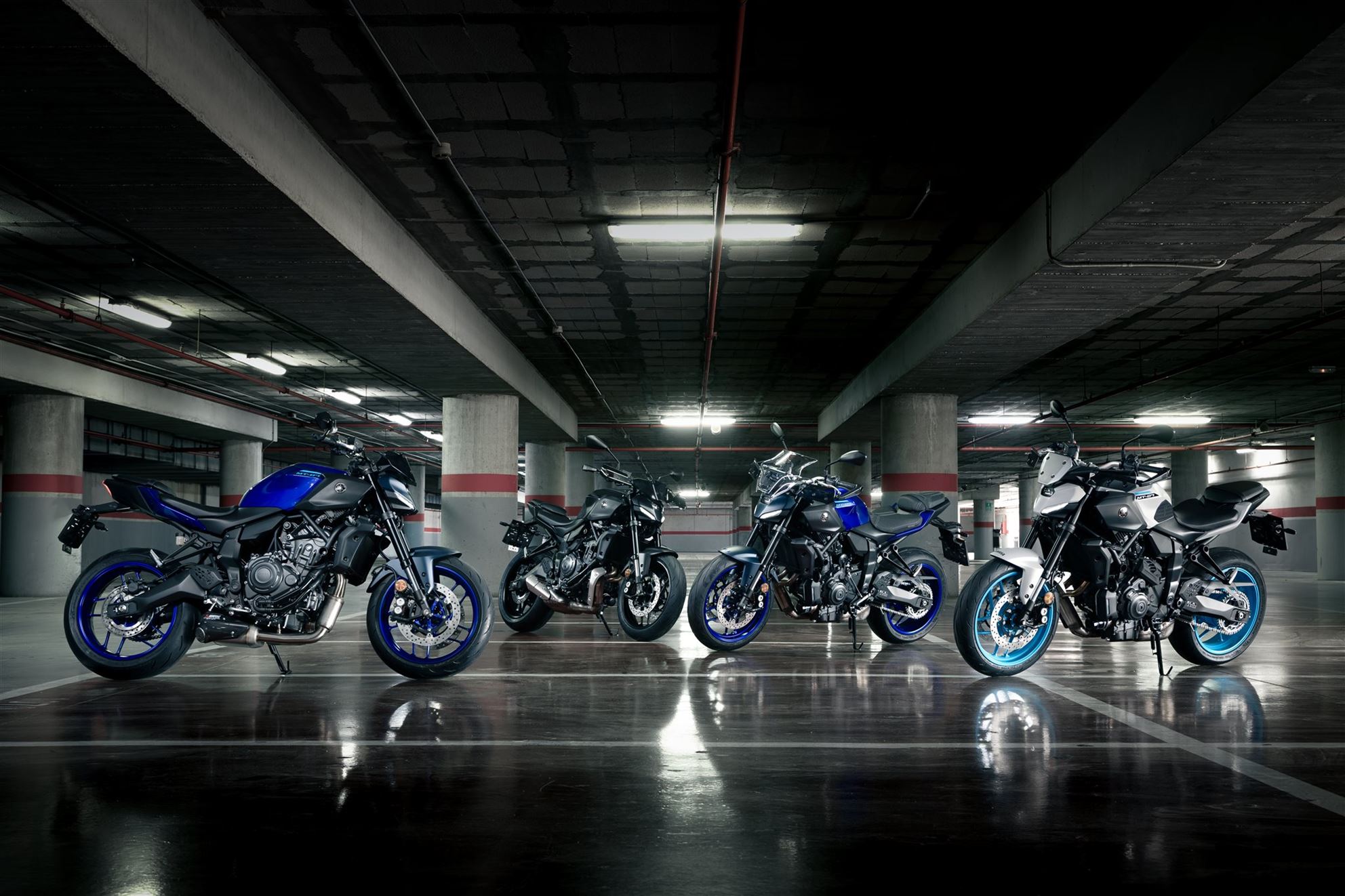
Thanks to a rich accessory program, the MT-07 can easily be personalized.
Prices Yamaha MT-07 / Y-AMT 2025
In Germany the Yamaha MT-07 costs from 8,524 euros, with Y-AMT costing a 500-euro surcharge. In Austria the MT-07 starts at 8,799 euros, with Y-AMT costing a 600-euro surcharge. In Switzerland the MT-07 starts at 8,590 CHF, with Y-AMT it costs 8,990 CHF (400 CHF surcharge). The models are already available now from Yamaha dealers.
Experience with motorcycle gear from Vanucci and MTR helmet
Since the Yamaha MT-07 tends to appeal to younger riders and newcomers, we also deliberately wanted to try out affordable motorcycle gear for exactly that target group during the MT-07 test.
The helmet comes from the Louis house brand MTR and is called the S-1 Fiber in matte black. The helmet meets the latest ECE 22.06 test standard and, at around 1.45 kilograms, is a rather lightweight helmet. It has an integrated sun visor, and the clear visor is prepared ex-works for a Pinlock anti-fog insert. We also ordered the optional tinted main visor. The helmet stands out for its low price, currently 149.99 euros, and its very comfortable fit. The inner lining is soft and highly adaptable. Basically, the helmet is cut exactly right in terms of head size, but the outer shell of the helmet is rather compact.
You notice this because there isn't much space left between your lips and chin area. Two vents are present (forehead and chin), and these can also be operated easily with motorcycle gloves. The forehead vent cooled noticeably, the chin vent was rather unremarkable. The ratchet closure is comfortably thickly padded, which underlines the very high wearing comfort. A helmet that really offers a very attractive price-performance ratio.
The jacket is from Vanucci, model RVX-3. A textile jacket with a slightly sporty cut, water-repellent and pleasantly windproof. A warm inner lining can be removed, and the soft protectors at the shoulders and elbows fit well. A several-hour rain ride in city traffic was handled dry by the jacket. Only at the cuff end can a bit of moisture get pushed in. Handy: the vents on the upper arms for high temperatures in summer. With the inner lining, the jacket is suitable for the whole season. We also retrofitted a thicker back protector. For just under 250 euros the jacket leaves hardly anything to be desired.
The VUT-7 motorcycle jeans, also from Vanucci, are currently on sale for 219.97 euros and are cut in a way that is above all pleasant and suited to riding. The soft hip protectors are large but not dimensioned in a bothersome way. The soft knee protectors are a bit fiddly to fix with two velcro fasteners, but are also height-adjustable. The cut is a bit wider than normal jeans of this size, and above all the trousers turn out a bit longer. That makes sense for riders, though, since otherwise you'd quickly have bare ankles due to the knee angle when sitting. During the first rain ride, the trousers only bled very minimally, which isn't unusual for jeans though. The workmanship and material thickness are flawless.
The Vanucci VUB-5 motorcycle shoes were particularly well liked. Thanks to SympaTex, the sporty-looking motorcycle sneakers are genuinely pleasantly rain-resistant and reliably keep your feet dry. In exchange, there's no real ventilation otherwise, and you tend to get slightly sweaty feet in them. The cut is normal, not too tight, not too wide, and the size runs roughly similar to sports shoes.
The only sticking point with the shoes: there's both a lace closure and a side zipper. Normally, zippers are meant so you don't have to lace and unlace the shoe every time. But if you tie it tighter, the length of the zipper isn't enough to put the motorcycle shoe on and take it off without lacing. The sole grips well, even in wet conditions.
The lightweight Vanucci VCT-1 gloves are rather unremarkable companions in everyday riding. The knuckle protection is comfortably shaped, as are the fingers. A light reinforcement on the palm doesn't get in the way while riding either. These gloves tend to be recommendable rather for warm temperatures of around 20 degrees and above, since they're not particularly windproof. The entire outfit comes in at under 850 euros and is definitely recommendable. There's far less comfortable motorcycle gear out there for more money.
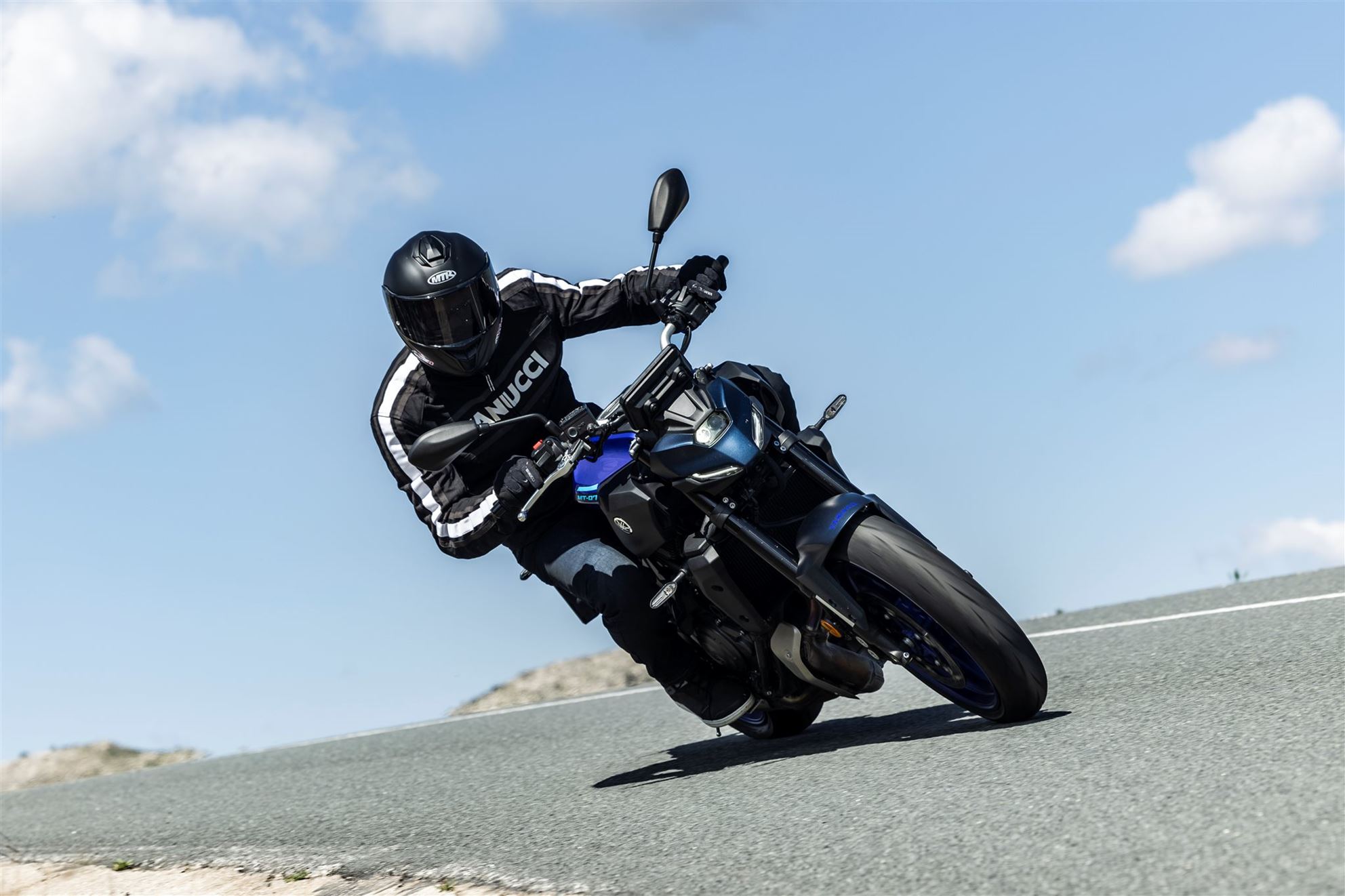
Cool outfit for under 850 euros! Where? At Louis.
- How much does a Yamaha MT-07 cost?
- Here you will find an overview of the price level of new and used motorbikes!
&width=60&height=60&bgcolor=rgba_39_42_44_0&mode=crop "Author: Philipp")
Yamaha MT-07 2025 - Experiences and Expert Review
Philipp
The new Yamaha MT-07 is the best there has ever been. The criticisms and wishes of MT-07 riders were heard and implemented. The new MT-07 rides better and more stably in every respect and widens the spread even further: both beginners and newcomers will get along with it, as will very experienced pilots, since it's now a more mature, more potent bike. It has closed the gap to the competition; only in pure engine power is there still a 10-20 hp deficit compared to the competition. But that's not a big deal, since the CP2 engine remains a guarantee for riding pleasure and a wide grin under the helmet. Whether or not to choose the optional Y-AMT transmission is something you should definitely try out yourself on a test ride – the surcharge for it is reasonable. So: big praise to the Yamaha engineers who have significantly upgraded their megaseller without changing the character of the MT-07. Yamaha does have one problem now, though: the residual values of the previous three generations will likely drop, since the differences to the current generation are noticeably large. And as we know, the better is the enemy of the good.
More from 1000PS Magazine
Test Yamaha MT-07 2025 Images
Source: 1000PS


