In blazing sunshine and a summery 36 degrees, we tested the next development stage of our Ducati Panigale V4 tuning project at the Pannonia-Ring. New on the bike: the Öhlins FGR 254, the radiator from Taleo Tecnoracing, and a machined triple clamp from CNC Racing. Together with our technical expert Martin Bauer, we spent two intensive days working on the new chassis and an individual setup for our Panigale.
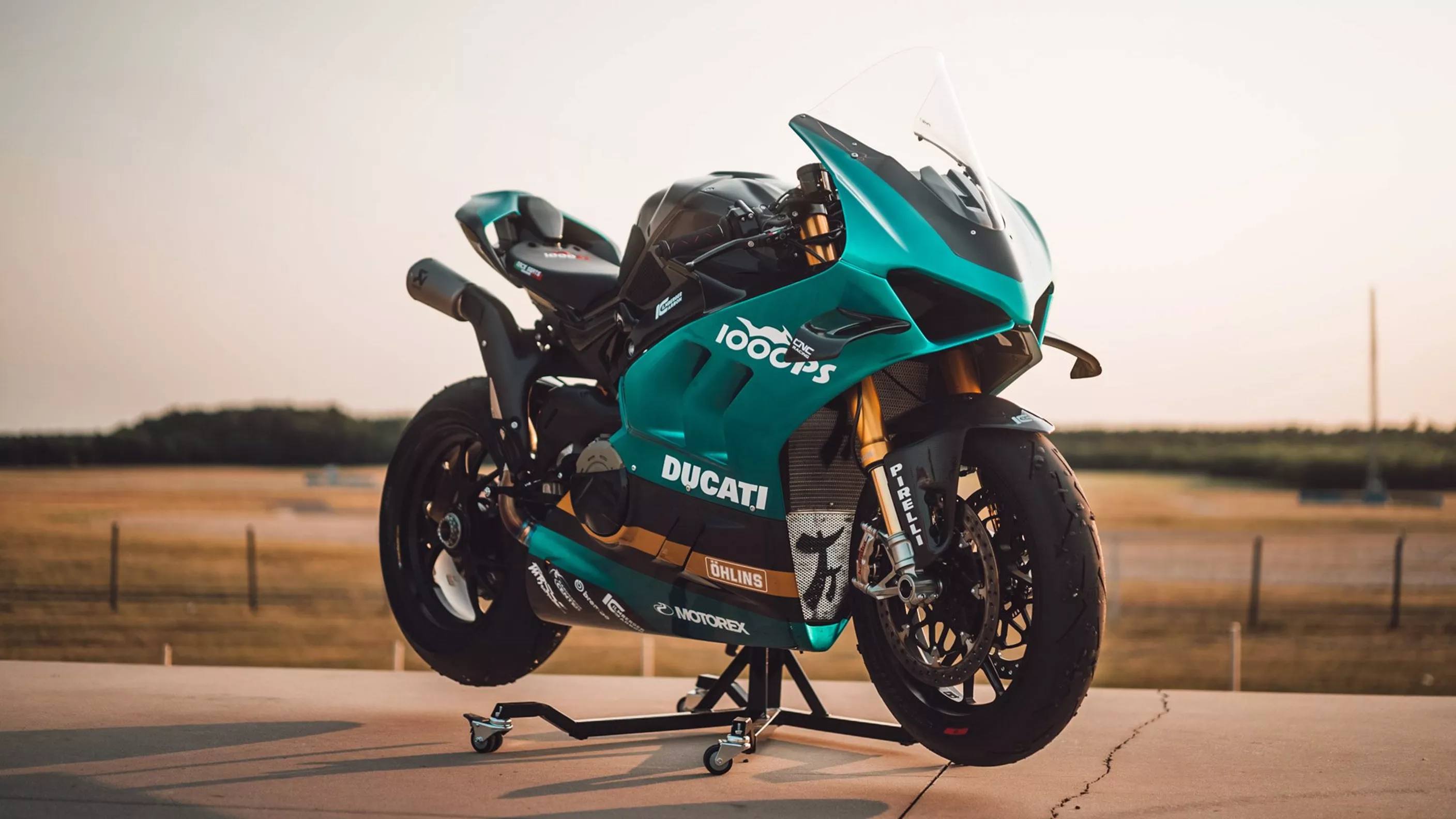
World championship chassis plug & play for everyone! The new Öhlins FGR 254
World championship technology for your sport bike
We present the latest plug & play version of the Öhlins FGR 250 fork using our Ducati Panigale V4 racebike project as an example. This chassis brings world championship-level performance and fits easily, without additional adjustment work. Truly plug & play!
&width=72&height=72&bgcolor=rgba_39_42_44_0&mode=crop "Author: Mex")
Mex
published on 02/08/2024
17,699 Views
Öhlins FGR 254 compared to the universal fork FGR 250
Compared to the universal fork FGR 250, the FGR 254 has received a bike-specific layout that allows for straightforward fitment, in our case to the Ducati Panigale V4. This applies in particular to the diameter of the fork tubes, which matches the original triple clamp. All mounting points, such as for the fender, wheel speed sensor, and brake caliper mounts, correspond to those of the stock fork. This means the product truly lives up to its plug & play promise. In terms of damping setup, the FGR 254 differs not only from the FGR 250 but also, in small details, from the FGR 252, which is available as a plug & play version for the Yamaha R1. The damping pistons and shim setting are identical, and the spring rate of 10.0N/mm also stays the same. Changes are found in the oil level, air chamber, and spring preload in the as-delivered state.
Where does the Öhlins FGR 254 show its strengths?
Öhlins relies on high-quality materials and special coatings on the FGR 254, which reduce internal friction. One of the most important strengths of the FGR 254 is its ability to continue effectively following the bumps in the track surface even under full braking. The larger diameter at the critical points reduces the bending moment and thus also the internal friction, keeping the fork smooth and responsive. In practice, this means more stability and precision - even under maximum load, when the entire weight rests on the fork.
The FGR 254 also offers an excellent foundation for individual adjustments. It allows the setup to be comparatively easily tuned to personal needs. Öhlins supplies 3 different spring rates directly with the fork. Genuine pro-level material that leaves nothing to be desired and is used in exactly this form in the Moto2 World Championship. The quality of the components and the sophisticated engineering make the FGR 254 a first-class choice for enthusiasts. The price of around 6,300 euros reflects this high quality. The investment is worthwhile for demanding racers looking for a perfect basis for individual adjustments.
Summary: What makes the Öhlins FGR 254 so special?
- Plug & Play: No additional effort required, simply install and ride
- Low Friction: For smooth and efficient damping
- Superbike Design Fork Bottom: Looks and functionality straight from the superbike world
- 3 sets of springs included: Perfect adaptation to the rider's needs
- TTX Spring Pressurized Damping System: High-quality damping technology designed exclusively for the race track
- Performance boost: Extra performance thanks to higher stiffness and less friction compared to the stock fork
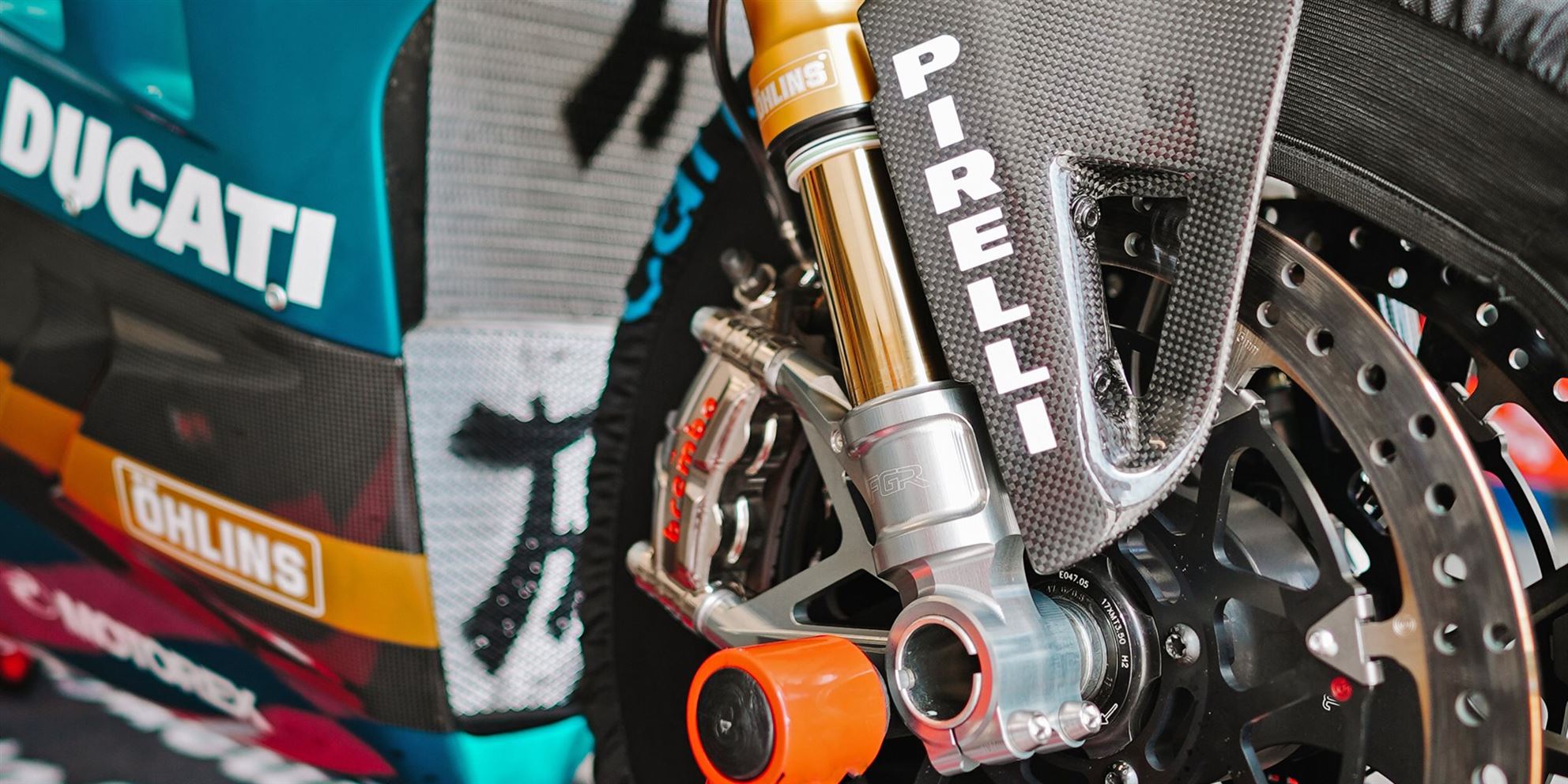
Looks classy and, with a bit of setup work, performs magnificently. The Öhlins FGR 254 is a highlight!
Future outlook: Which superbike gets it next?
After the Yamaha R1 and the Ducati Panigale V4, the BMW S/M 1000RR will be the next machine to soon receive a plug & play version of the FGR 250. More information on this will soon be available at www.ohlins.eu
Also world championship material: racing radiator from Taleo Tecnoracing for the Ducati Panigale V4
Since we had already removed the fork along with the triple clamp, a radiator from Taleo Tecnoracing was installed right away. This offers an expanded cooling surface, leading to more efficient engine cooling. The racing radiator from the Spanish manufacturer is about one and a half centimeters wider and also has an enlarged cooling surface for the oil cooler in the lower section. This does require some adjustments to the plastic frame in which the stock radiator sits, but that was no problem for Martin Bauer's experienced team. The larger surfaces ensure that the bike runs several degrees cooler under extreme conditions, which increases performance and ensures the longevity of the engine.
A worthy finishing touch to the Panigale V4 project with a machined triple clamp from CNC Racing
We also installed the new Öhlins hardware together with a high-quality triple clamp from CNC Racing. Unlike the stock version, here the lower triple clamp is machined from a solid billet of aluminum and finished with high-quality anodizing. This ensures a super classy look on the one hand, but also great stiffness combined with low weight on the performance side. As with the other parts from CNC Racing that we've fitted to our Panigale V4, such as the rear set footpeg assembly or the clip-ons, we're impressed by the solid, high-quality build of the components. This achieves a worthy finishing touch to the Panigale V4 project, both visually and technically.
So the lap time is always in view: AIM Solo 2 datalogger
An old racer's wisdom says: anyone who rides in circles often enough will eventually want to know their lap time. So a lap timer is a must! For this purpose, we got a product from AIM, namely the Solo 2 DL. By the way, the "DL" abbreviation speaks to important qualities beyond simply measuring lap times - it stands for datalogger. The device is connected to the bike via CAN bus and can therefore record important data matched to each lap, complete with exact GPS position, such as throttle position, brake pressure, or traction control interventions. This makes analysis back in the pit enormously easier and ruthlessly reveals individual room for improvement. But even while riding, thanks to intermediate or sector times (which can optionally be combined with colored LEDs), you can already draw conclusions about what a different line or an altered brake point brought you in a given lap. A great piece of kit - really valuable for any ambitious racer!
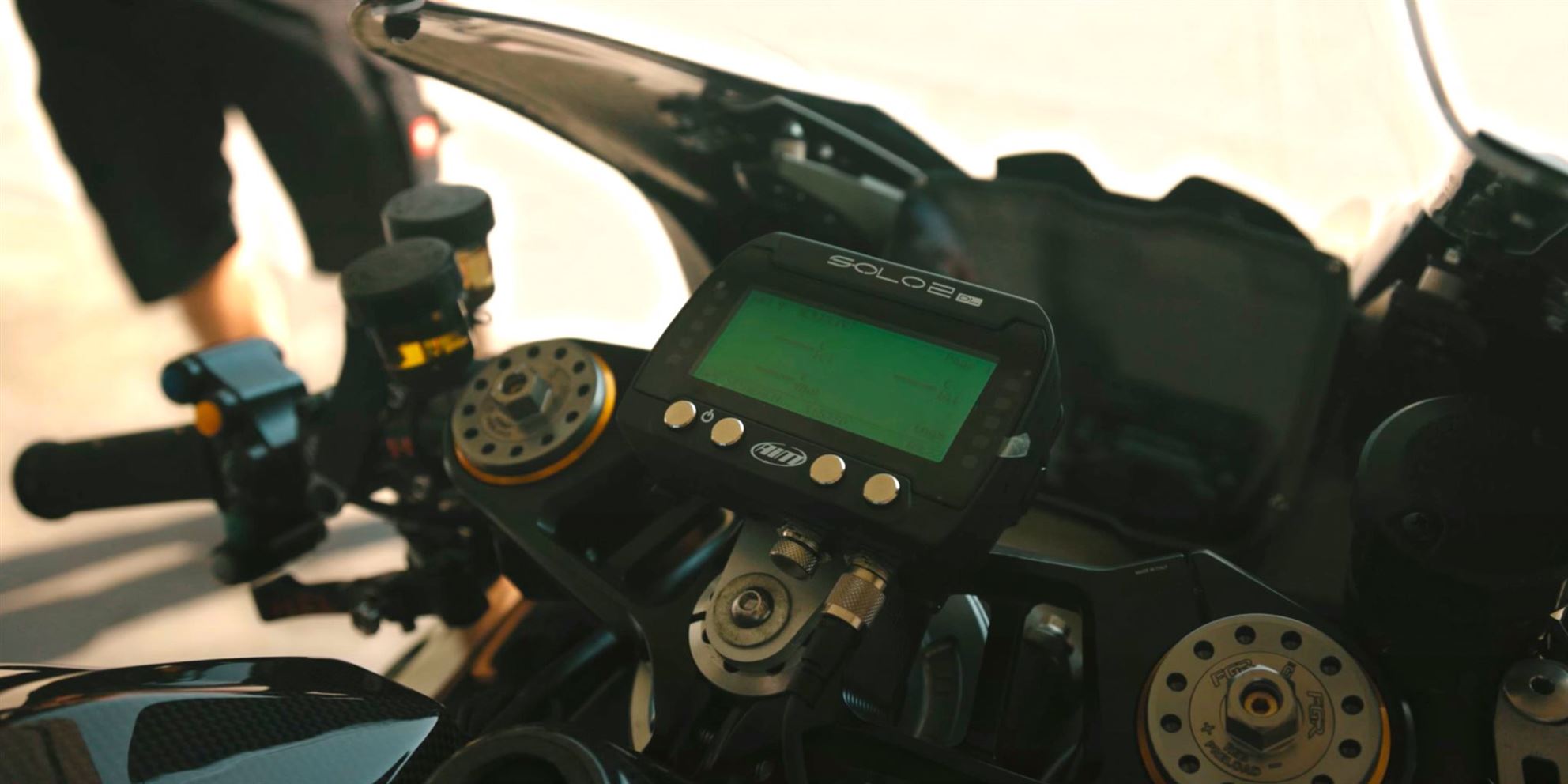
Not only useful for always keeping an eye on lap times: the Solo 2 DL also enables data analysis!
Conclusion: Öhlins FGR 254 for the Ducati Panigale V4
The FGR 254 truly delivers on its plug-and-play promise. Fork tube diameter and all mounting points for the fender, wheel speed sensor, and brake caliper match the original triple clamp of the Panigale V4, so fitment succeeds without any modifications. In use, the fork follows the bumps even under full braking, when the entire weight rests on the front. The larger diameter at the critical points reduces bending moment and internal friction, the result being more stability and precision under load. Three spring rates are included, and the setup can be comparatively easily tuned to the rider. This is genuine pro-level material, as also used in the Moto2 World Championship. At around 6,300 euros, the damping system shows its strengths exclusively on the race track. For ambitious racers with a Panigale V4 looking for a perfect basis for individual adjustments, the investment is worthwhile, because stiffness and low friction are clearly superior to the stock fork.
World championship chassis plug & play for everyone! The new Öhlins FGR 254 Images
Source: 1000PS


