Text: Justin Case
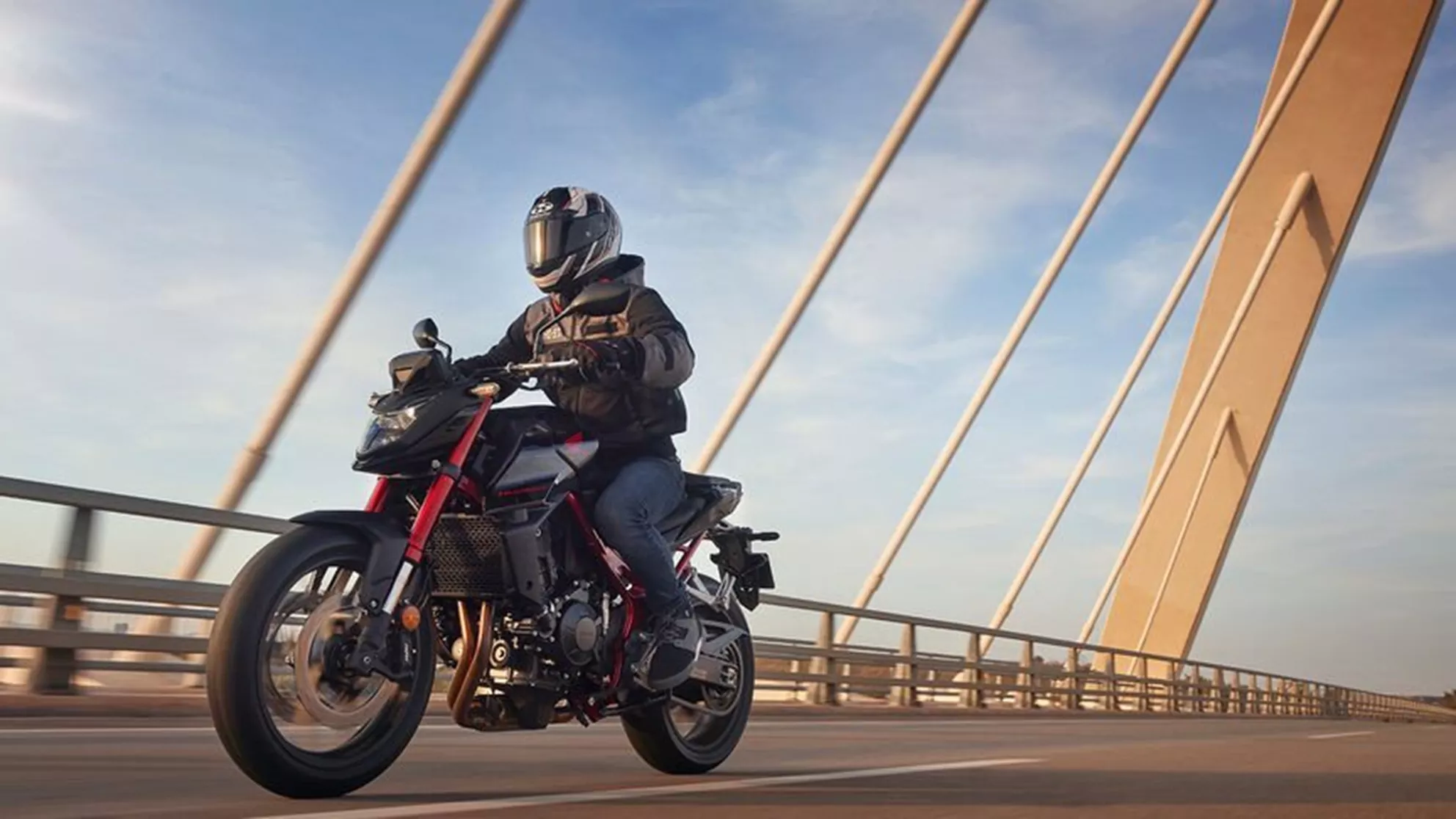
Honda CB750 Hornet 2024 test on Tenerife
A hornet's excursion across Tenerife
In the wild, hornet colonies never survive the winter. Honda's Hornet, on the other hand, has already lasted 14 years once before - and now wants to crown itself queen of the mid-size class once again. How does the Honda roadster perform during our test rides on Tenerife?
&width=72&height=72&bgcolor=rgba_39_42_44_0&mode=crop "Author: 1000PS.at")
1000PS.at
published on 18/02/2024
46,074 Views
You think hornets are dangerous? It's time to bust that myth. Their deep buzzing may sound threatening, but these giant insects are actually far less aggressive than their relatives, the "conventional" wasps. Hornets have no interest in sweets or lemonade on the balcony table. Among other insects, they even eat pesky wasps, and their stings aren't any more painful than those of bees. Whether all of that was known at Honda in 1998, when the first "Hornet", type code PC34, celebrated its premiere, is doubtful. For 14 years the popular inline-four Hornet nested in Honda's model range, until the manufacturer let it go extinct and it was succeeded in 2014 by the CB650F, without the catchy name.
The Honda Hornet already impressed back in 2023
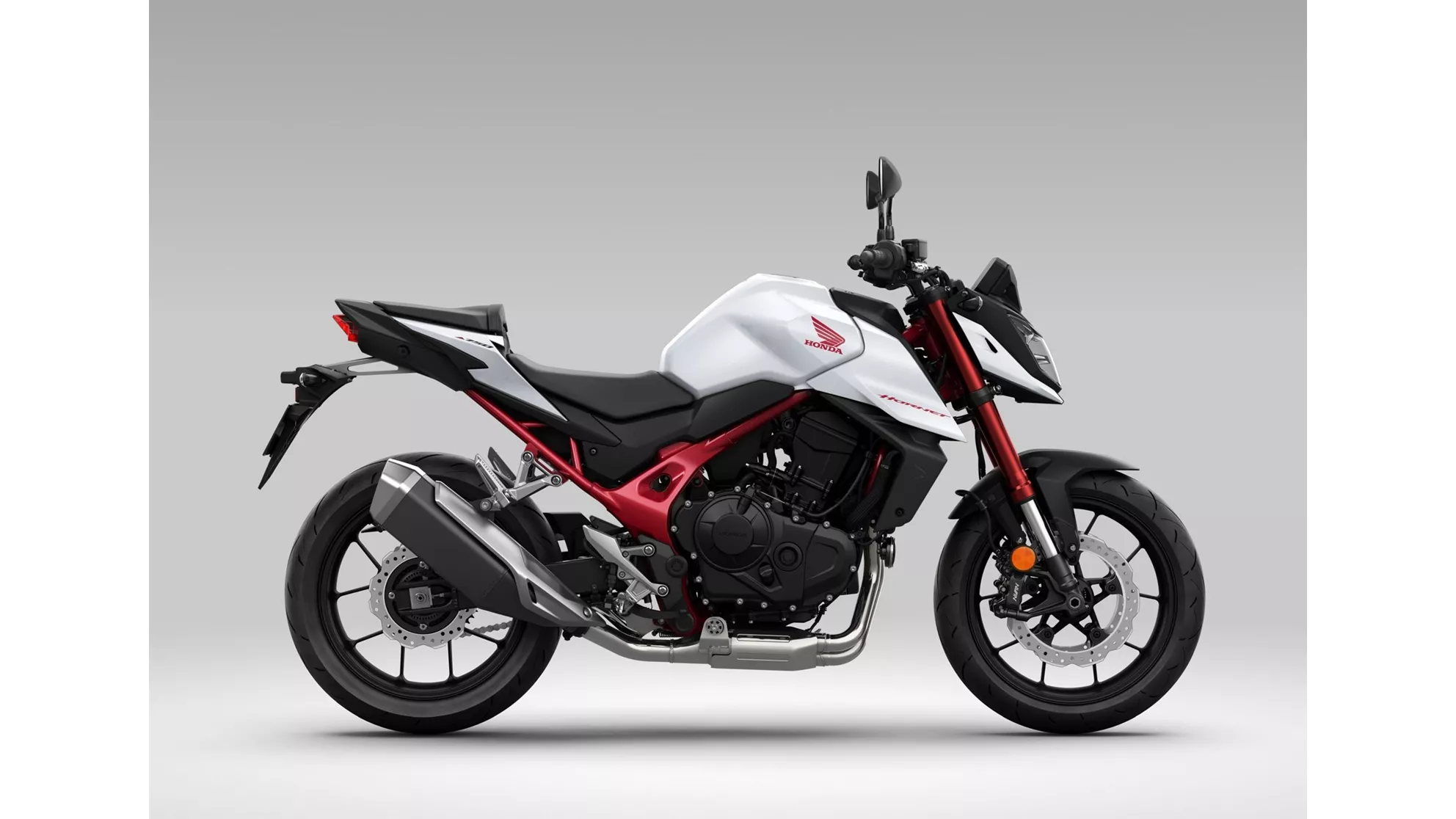
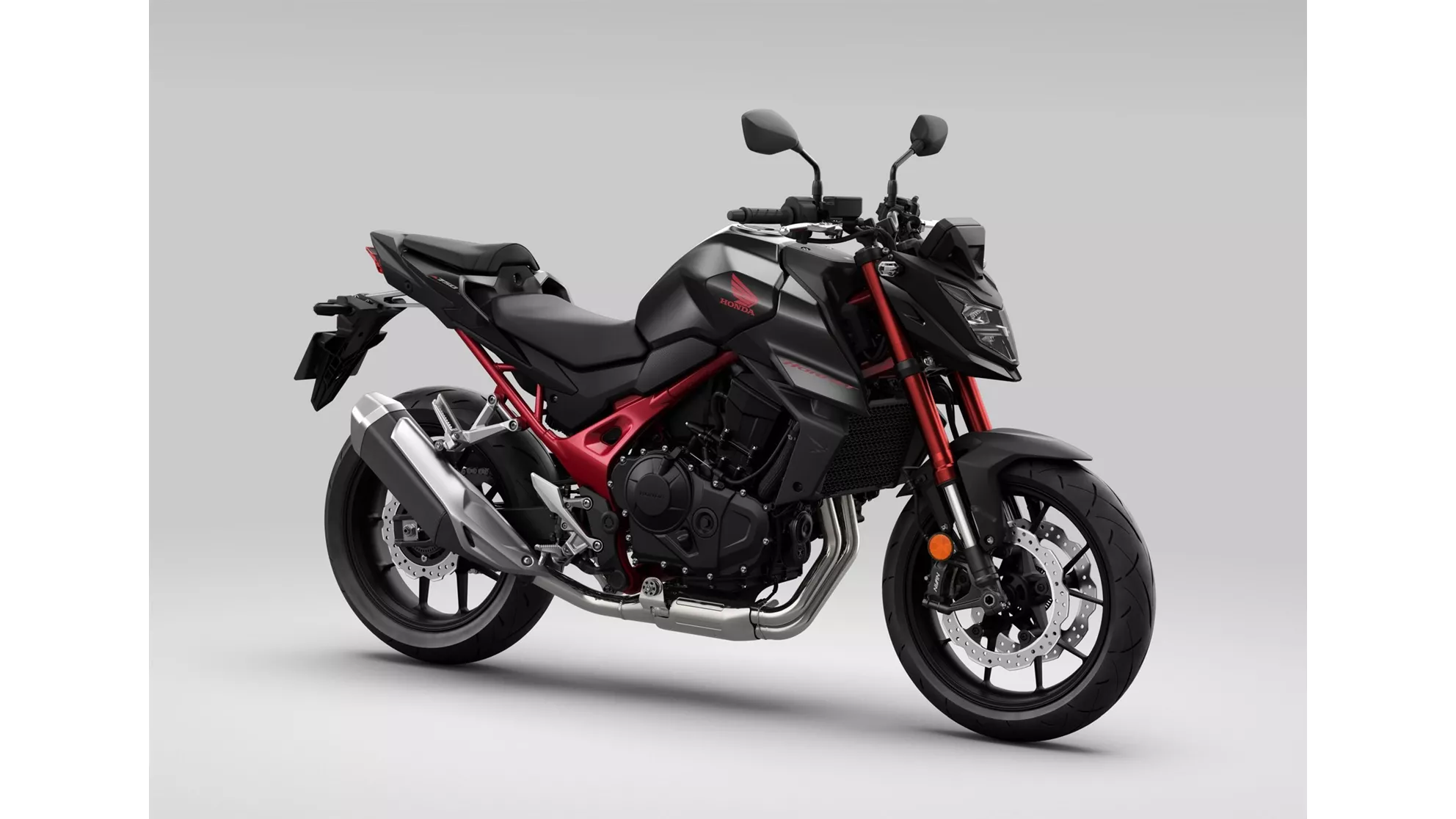
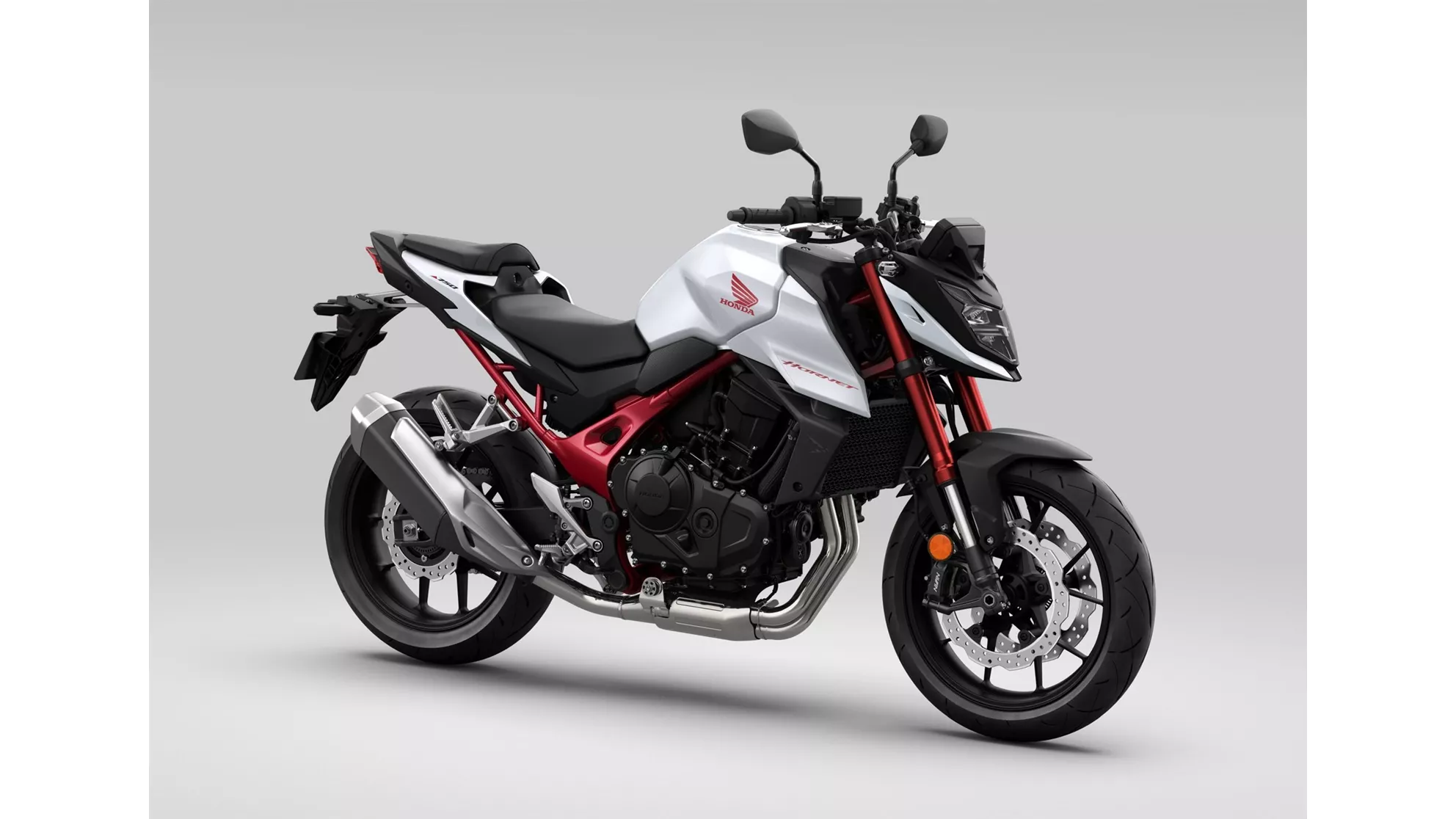
Since last year, though, the stinging insect is finally allowed to fly again at Honda: the Japanese engineers have redesigned the iconic Hornet from the ground up, and in the mid-size class now rely on a parallel-twin engine (a four-cylinder, by contrast, will power the upper-class Honda CB1000 Hornet, available from mid-2024).
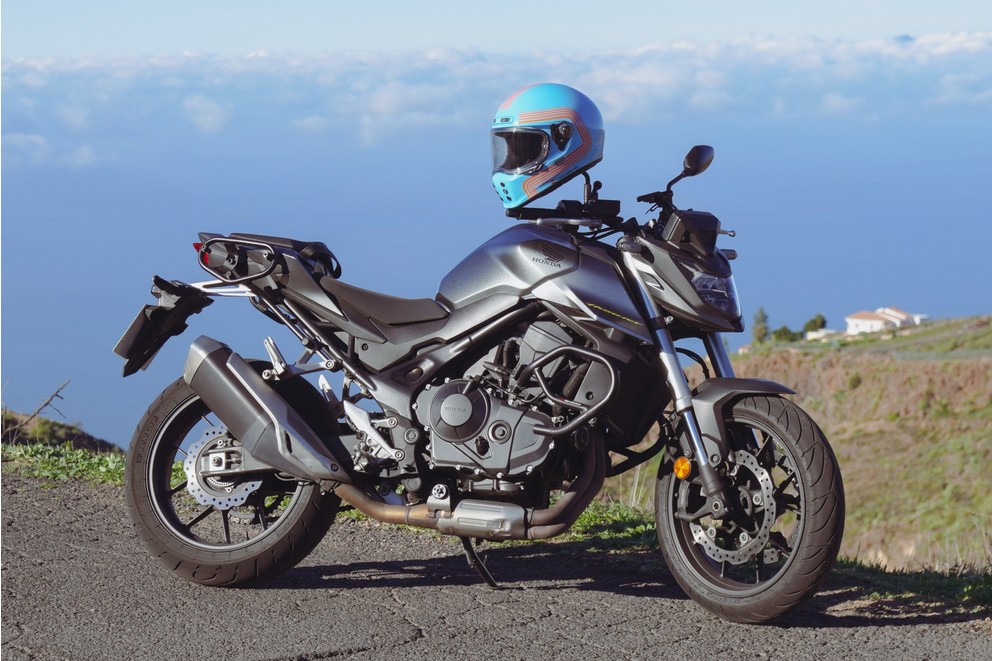
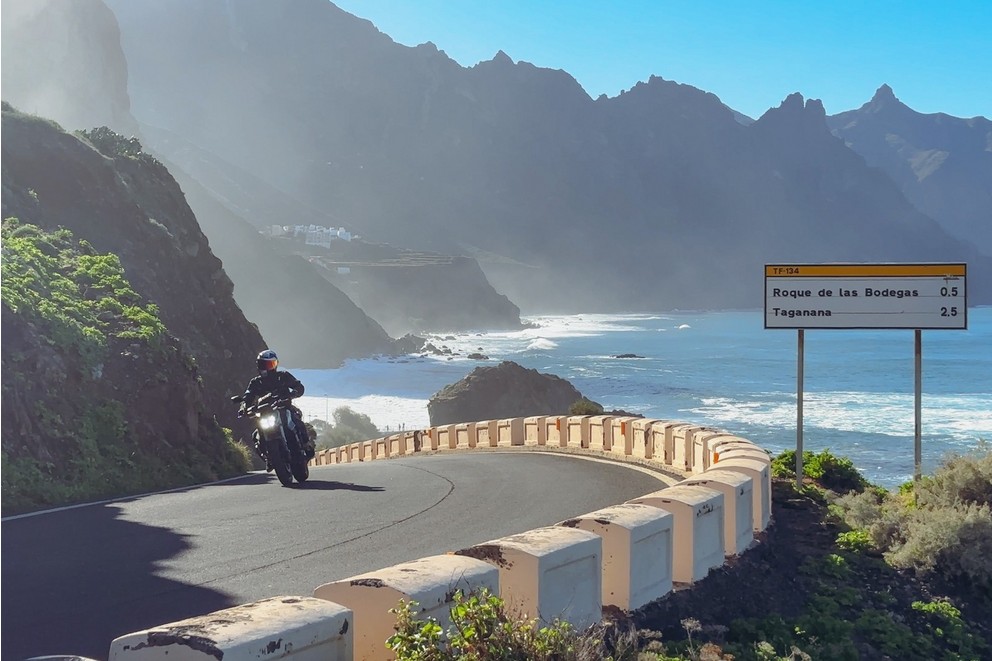
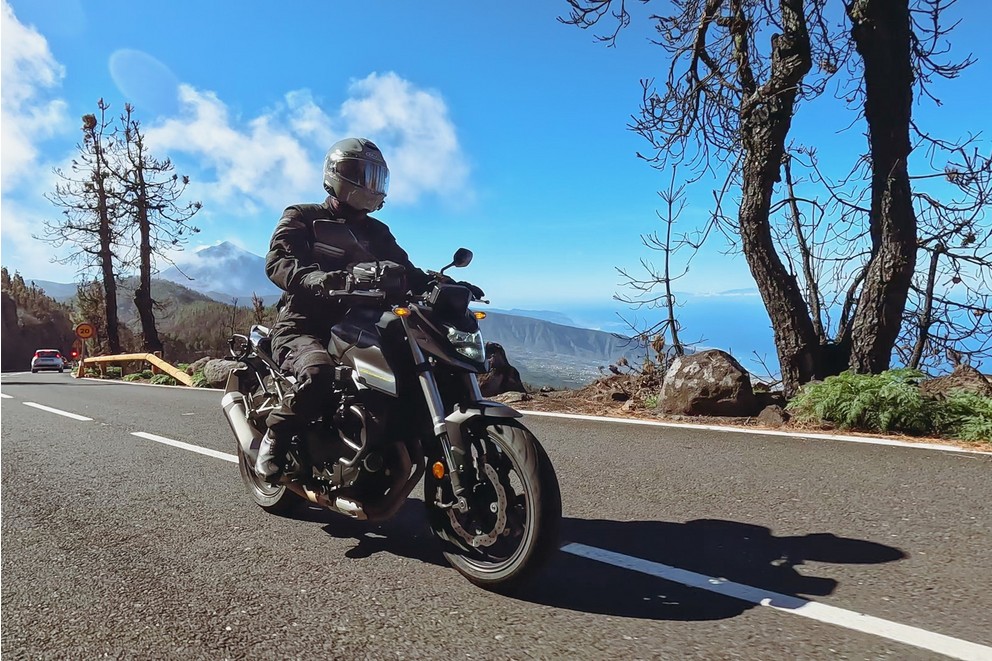
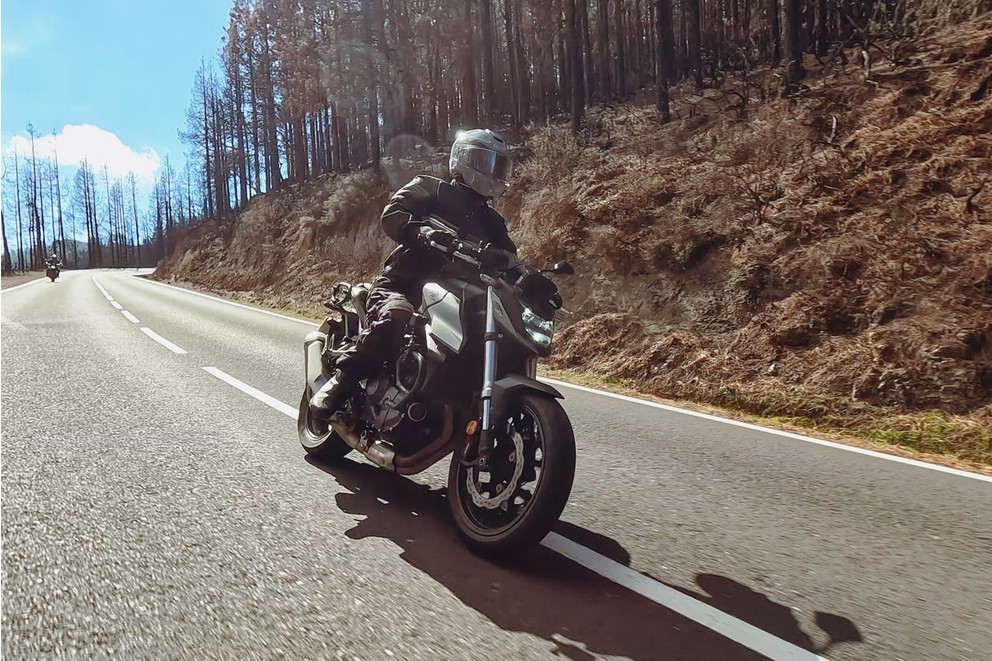
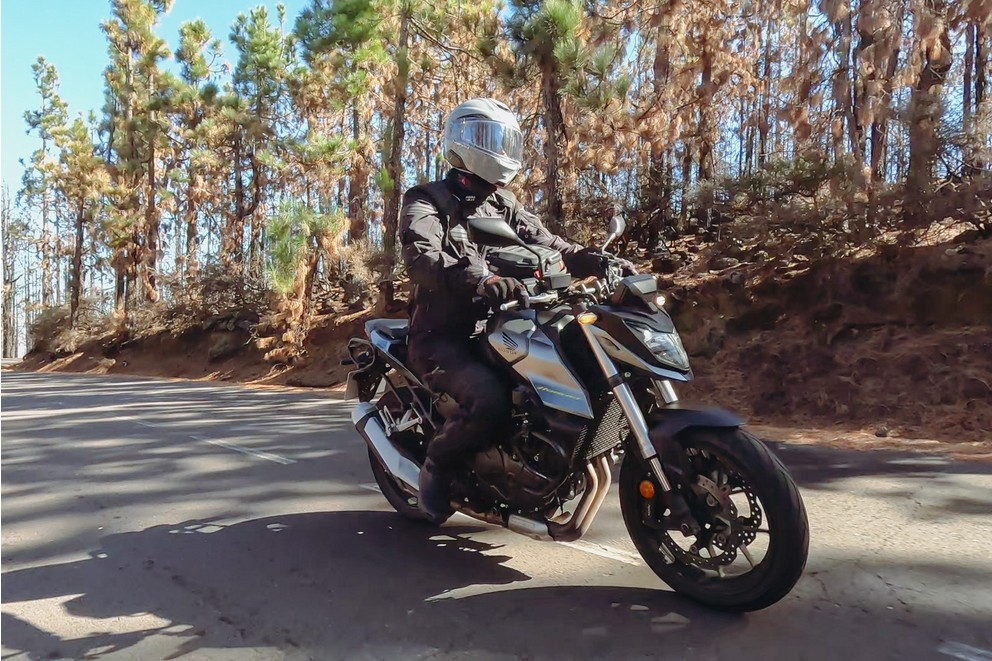
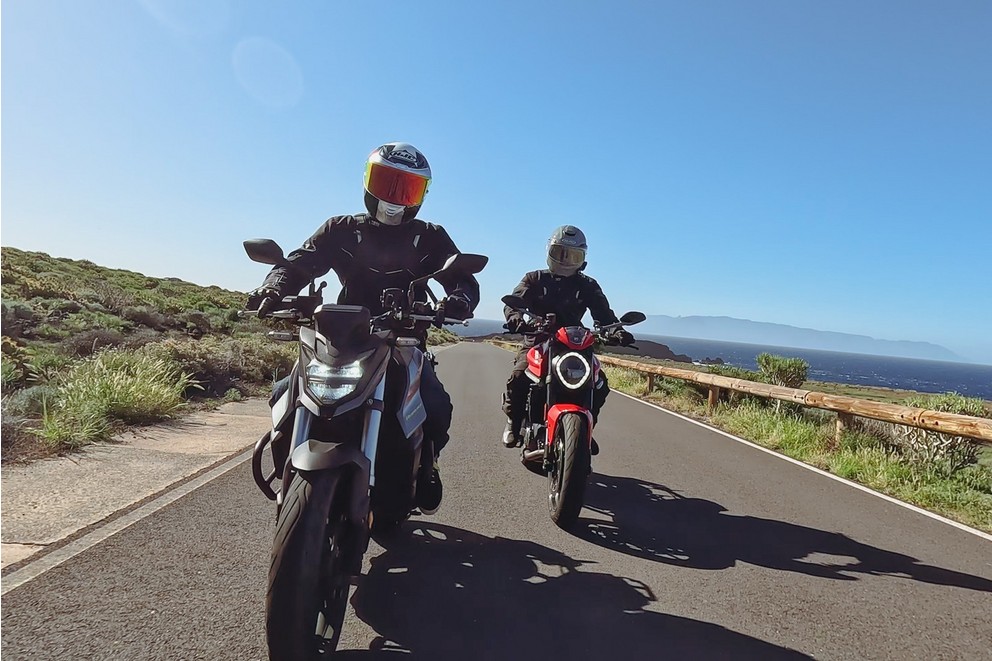
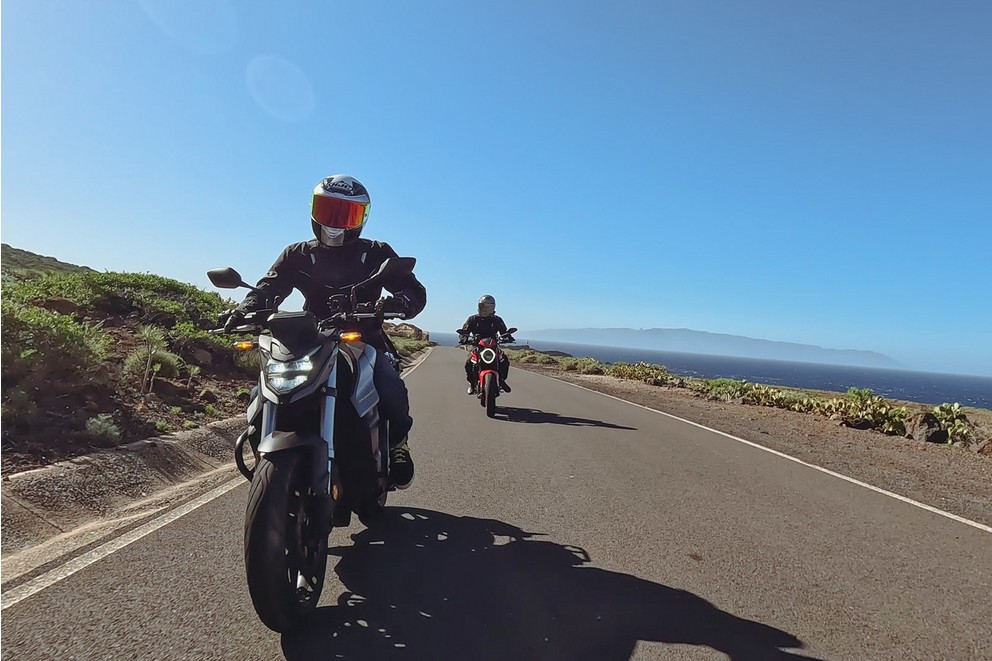
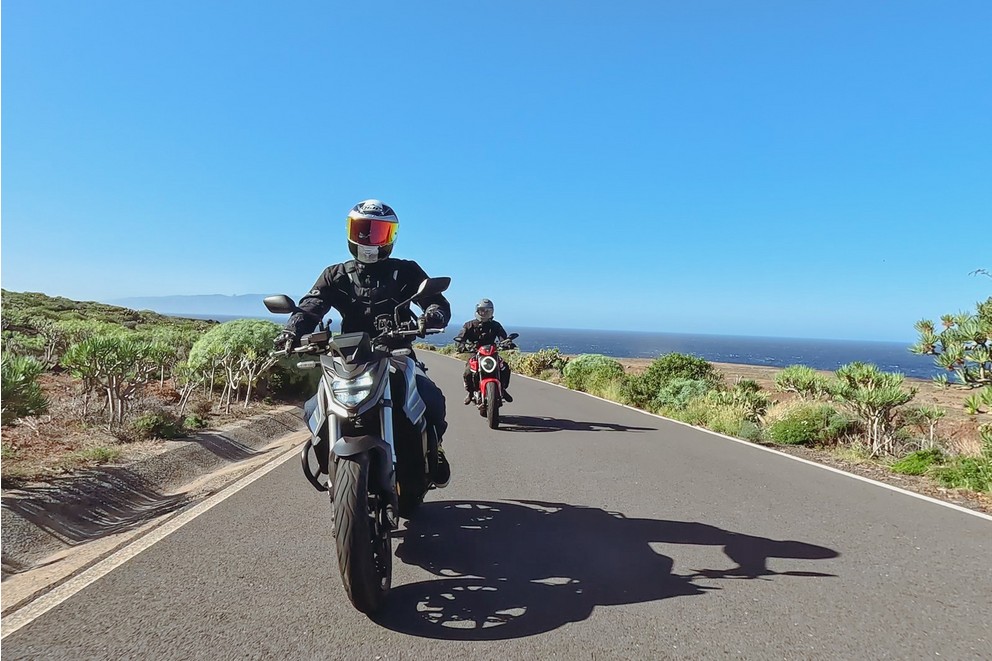
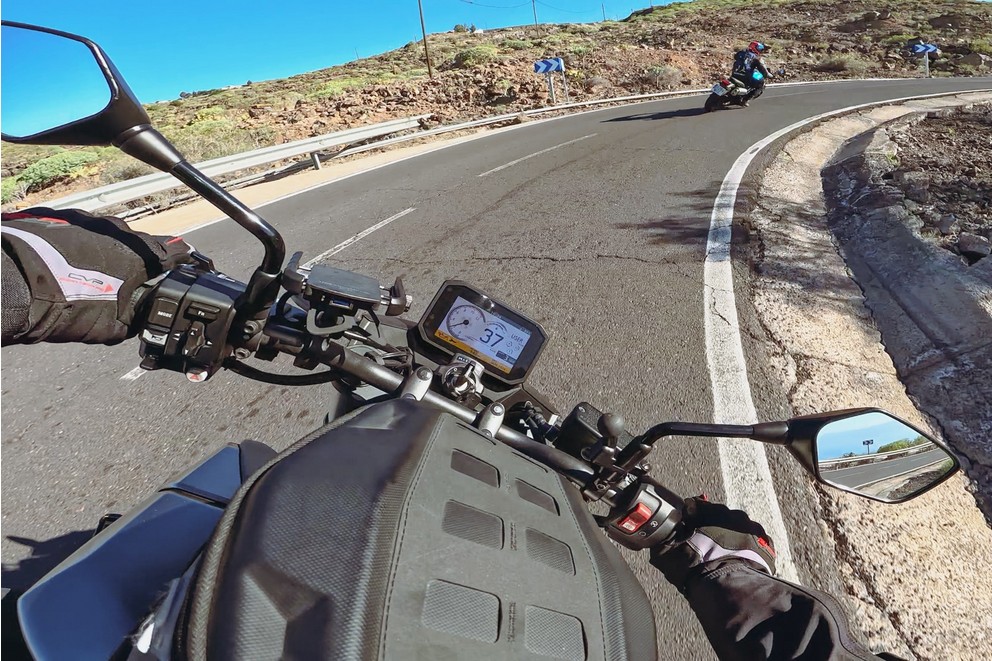
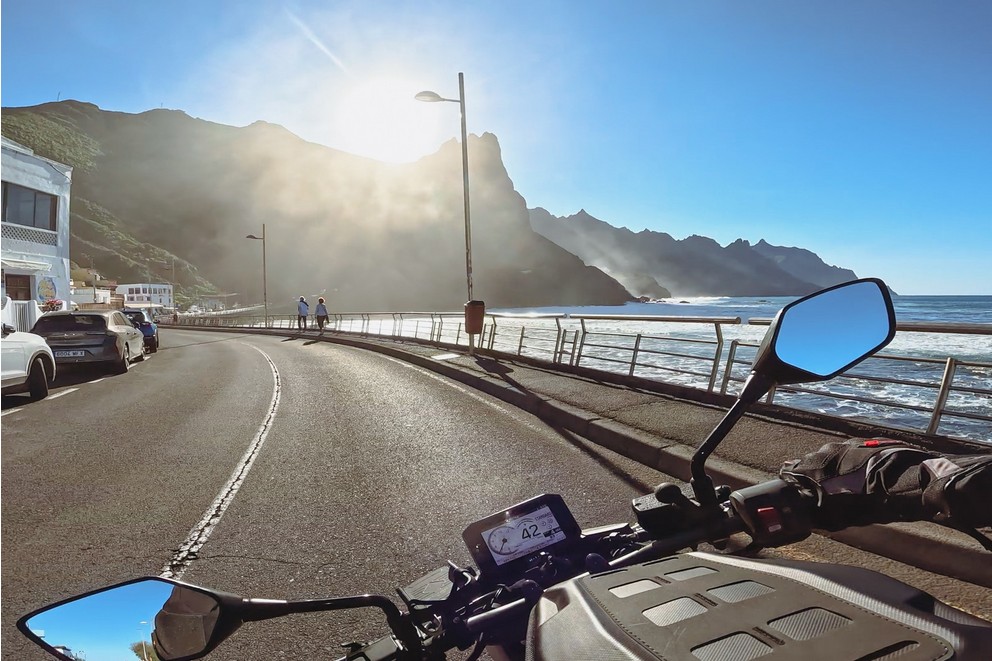
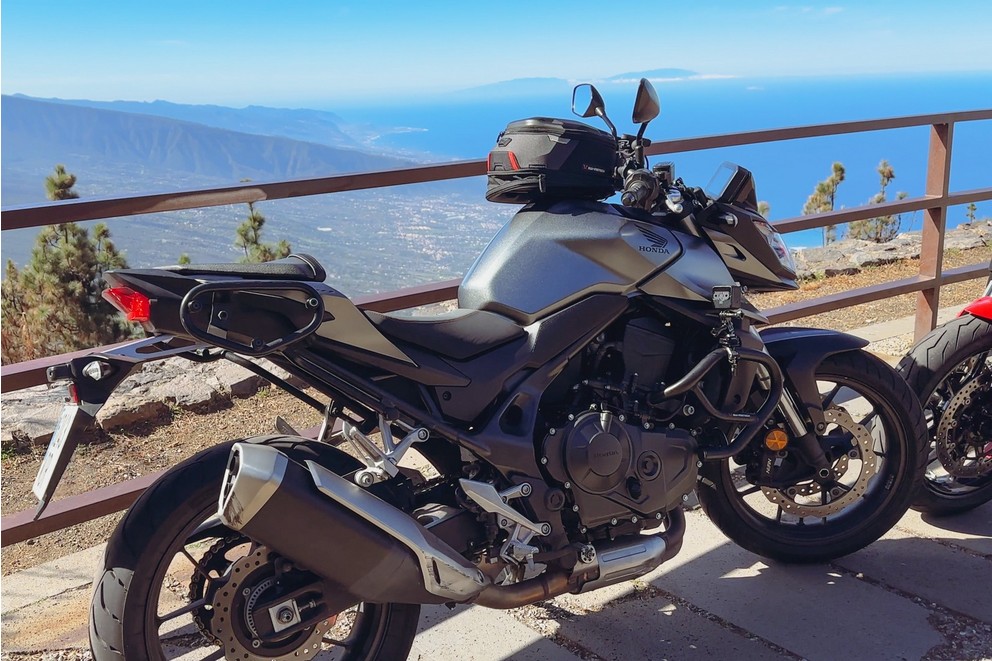
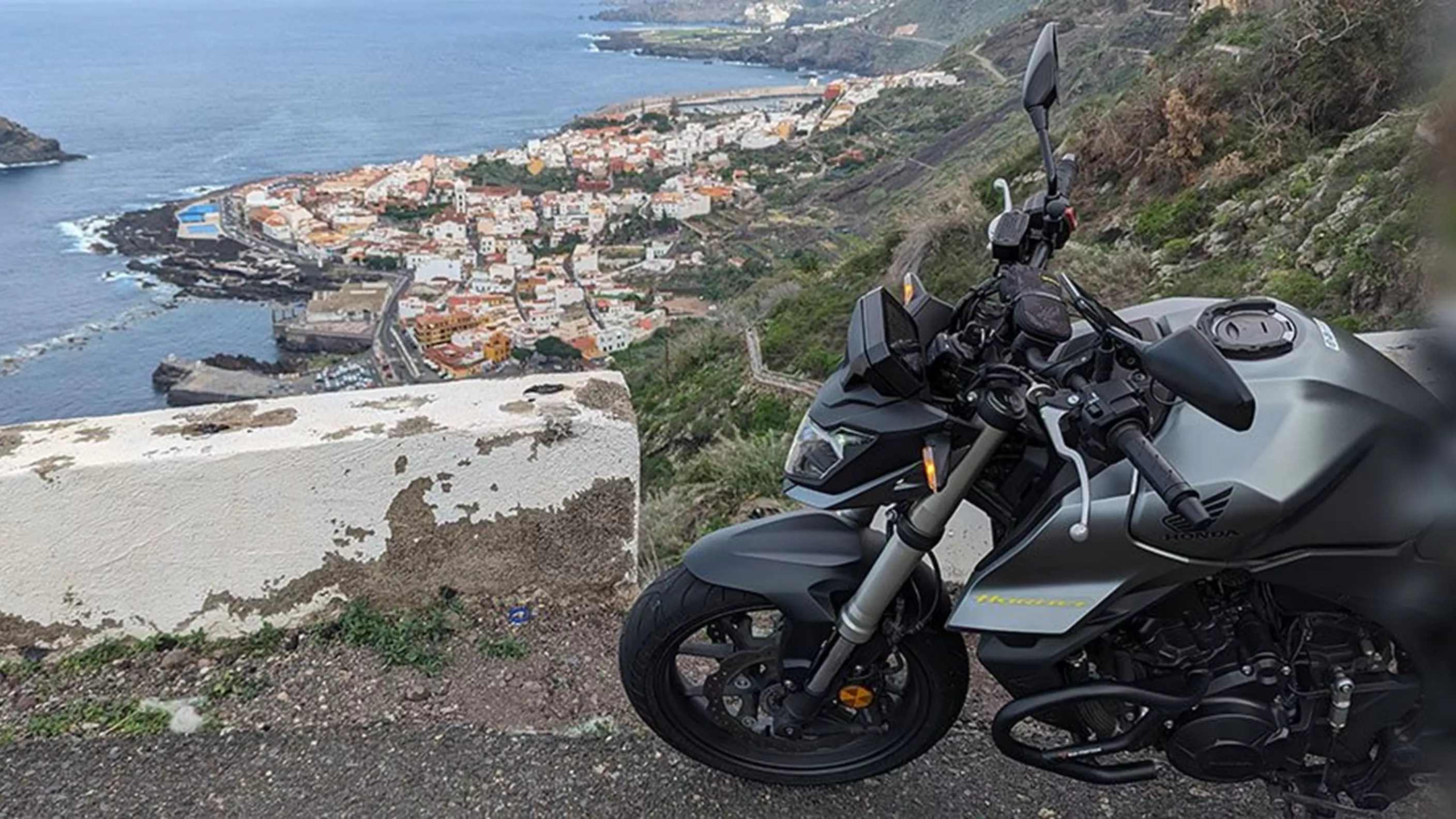
Already during our first test rides on home turf, the Hornet 750 left a consistently positive impression. On nearly 2000 twisty kilometres, it now completed its final trial by fire under the Tenerife sun (the test bike was provided by Canary Ride and can be rented there for 105 euros/day). Already during our first Hornet test ride 13 months ago, the compact 755cc inline-twin with two balancer shafts and just one camshaft (Unicam valve actuation) generated genuine enthusiasm. With a potent 92 hp, the Honda twin with 270-degree crank throw is always well on the boil, and in terms of peak output it can even easily keep pace with noticeably pricier and more powerful (on paper) machines like the KTM 790 Duke or Aprilia Tuono 660.
Blasting or cruising? The Hornet can do both
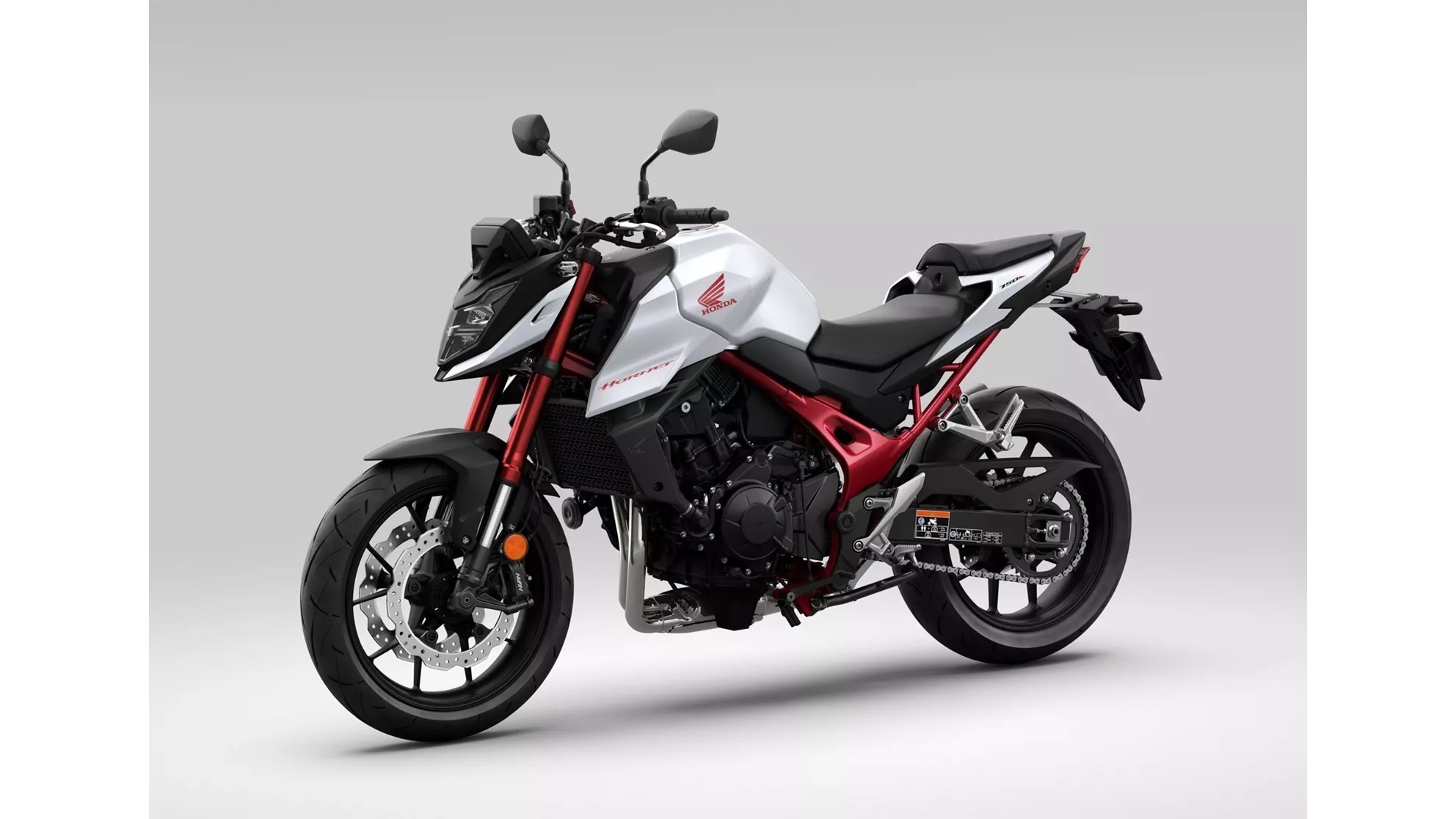
The Hornet's greatest strength is probably its versatility. Its drive never bores even jaded motorcycling veterans, yet its predictability never overwhelms newcomers or those getting back into riding either. Right from idle, the naked Japanese bike accelerates without shaking or juddering, and from 3500 rpm the engine pulls forward confidently and evenly. Maximum thrust and up to 75 Nm of torque, however, are only generated at higher revs. Nimble as a quickstep dancer, the sportily-tuned twin moves through its broad rev range, with peak power reached at around 9500 crankshaft rotations. Anyone wanting to fully exploit the CB750's power should therefore favor the high revs.
Nevertheless, even laid-back touring riders who shift up before the engine can unfold its full temperament enjoy the largely linear power delivery. In practice on Tenerife, that means personal taste and riding style get to decide in which of the lowest three gears tight hairpins are tackled. The Honda can either launch out of a corner ready to pounce in first gear with maximum thrust, or glide silky and stress-free through the radius in third.
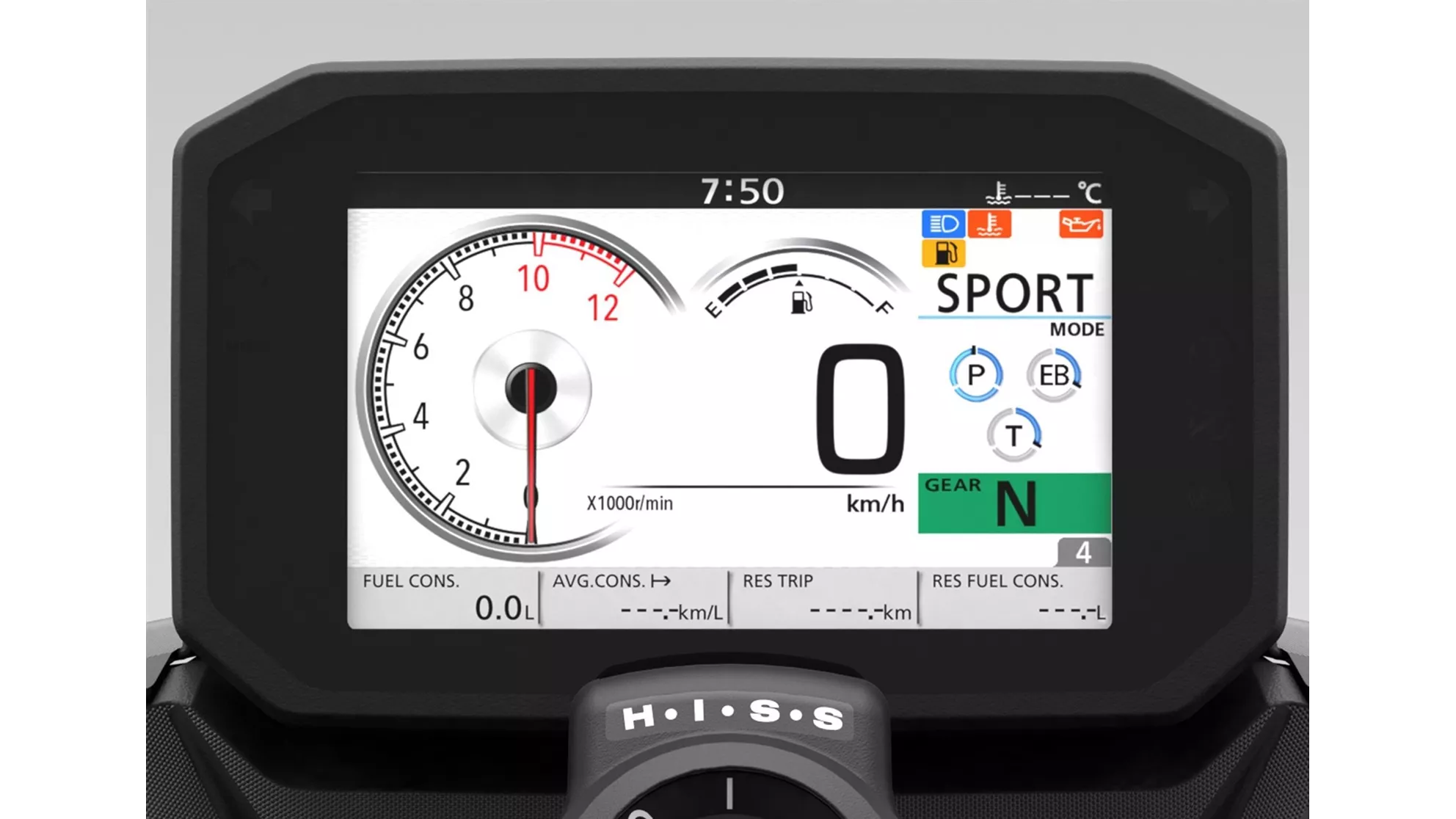
Honda CB750 Hornet riding modes
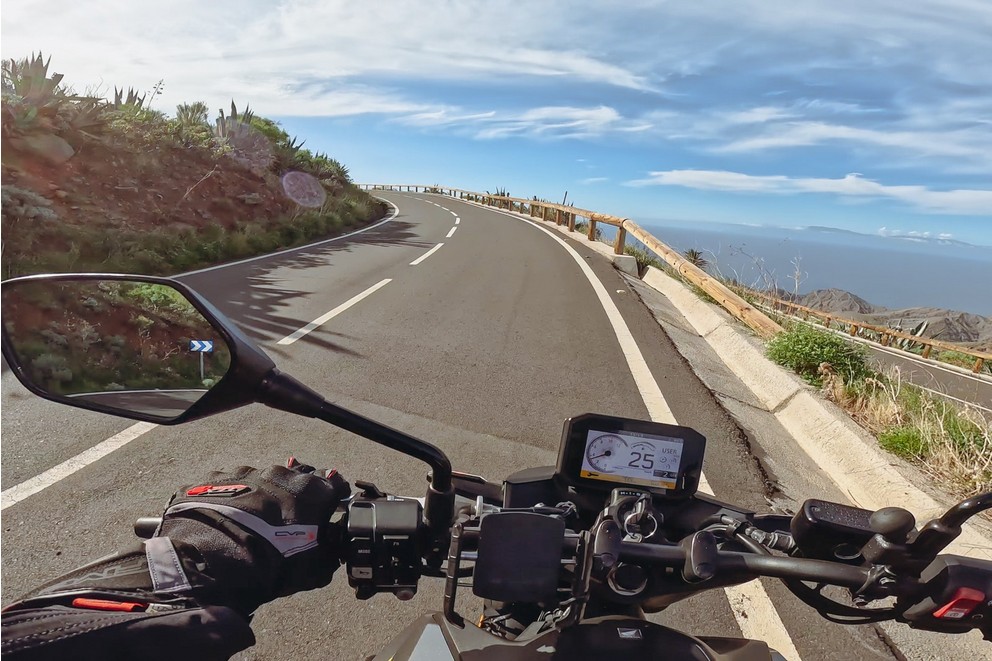
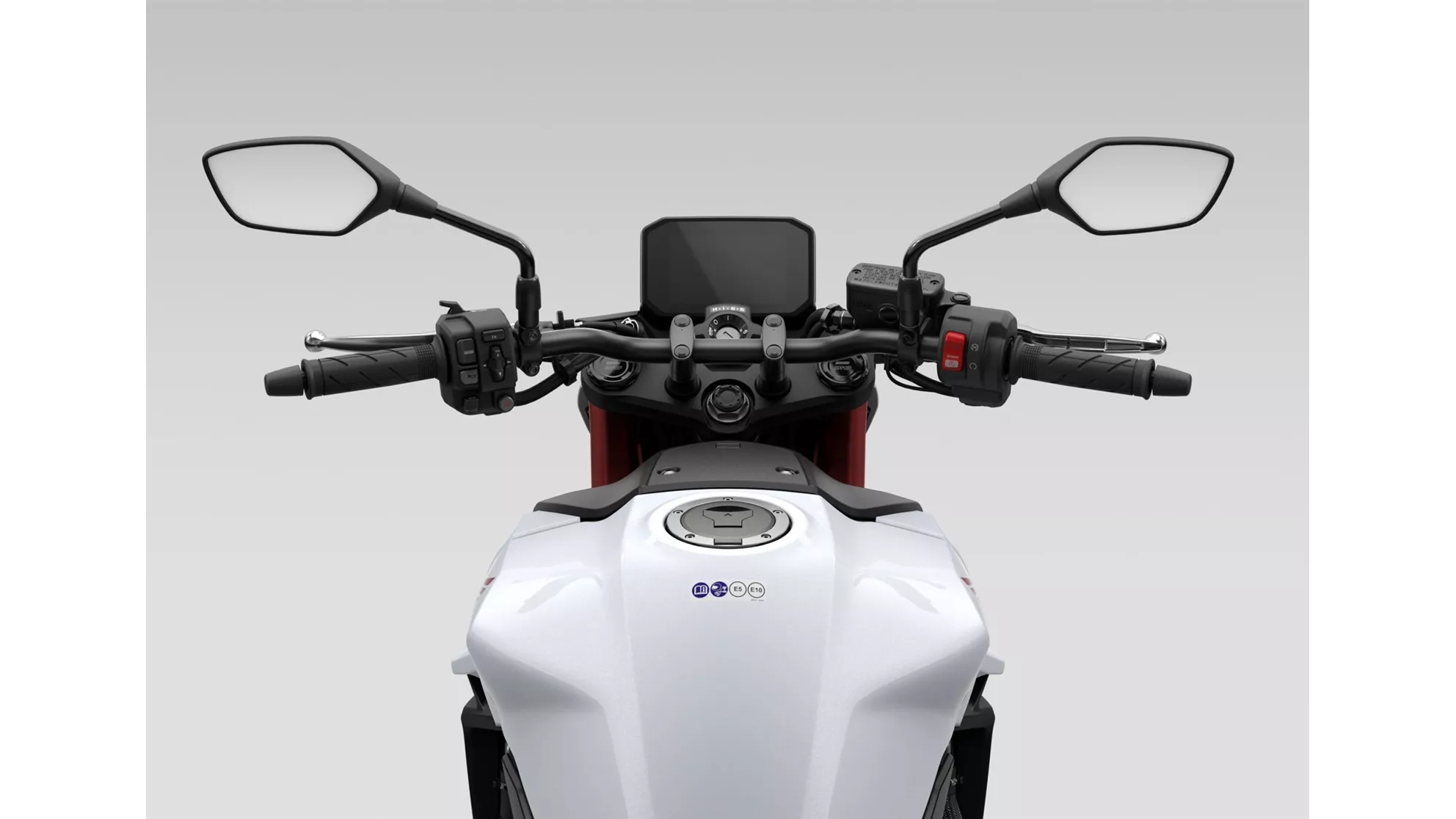
The low-vibration ride is underscored by the surprisingly hearty sound of the visually rather plain-looking muffler. The exceptionally light-action lever of the standard anti-hopping clutch is gentle even on delicate hands, and gear changes happen quickly and smoothly thanks to the crisp, precise six-speed gearbox. Still, it's a shame that a quickshifter is only available from Honda as an optional extra. Aside from that, the Honda shines from the factory with a colourful 5-inch TFT dash featuring four layouts and smartphone connectivity. An automatic turn signal cancel and up-to-date rider aids are also on board, well above the usual class standard.
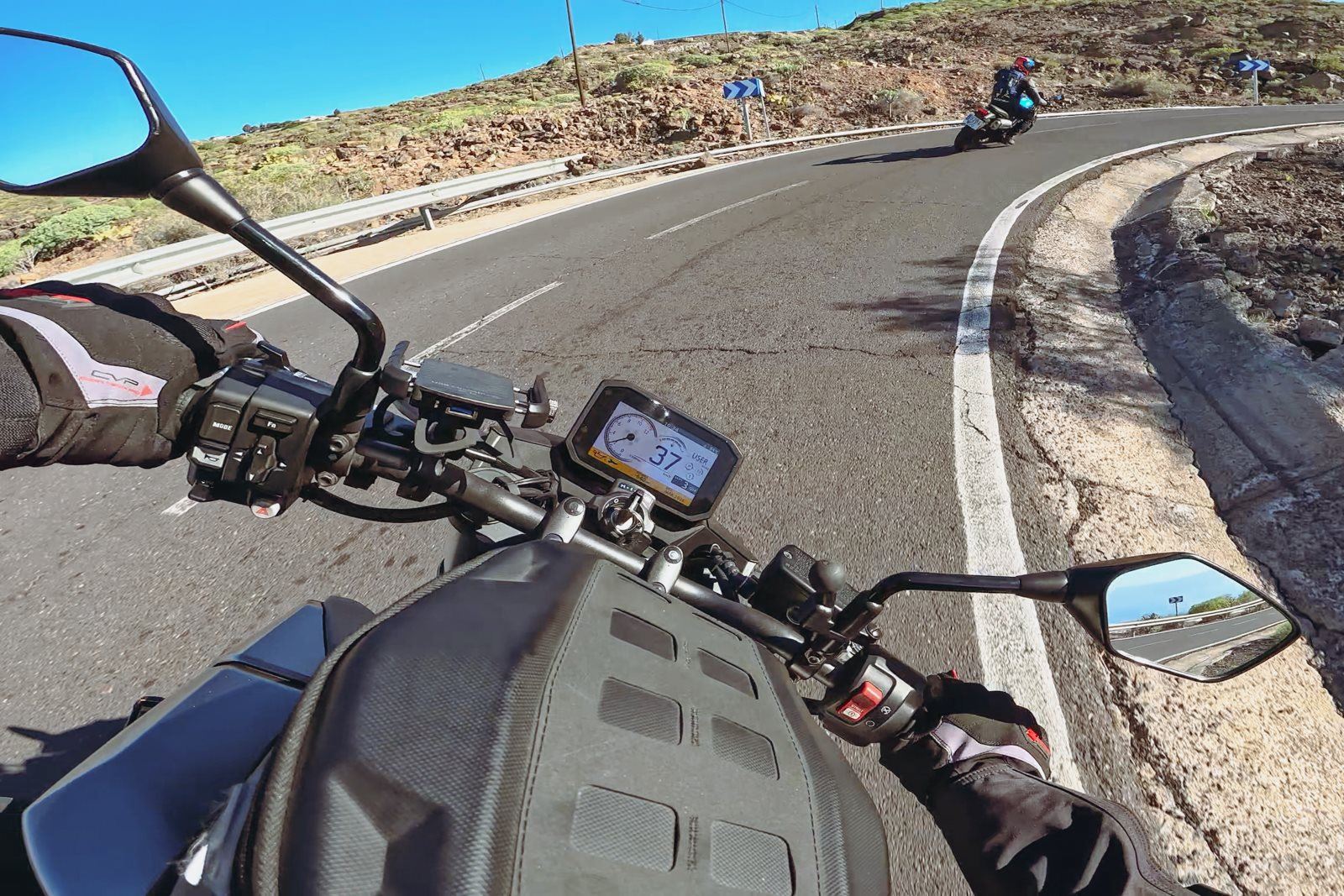
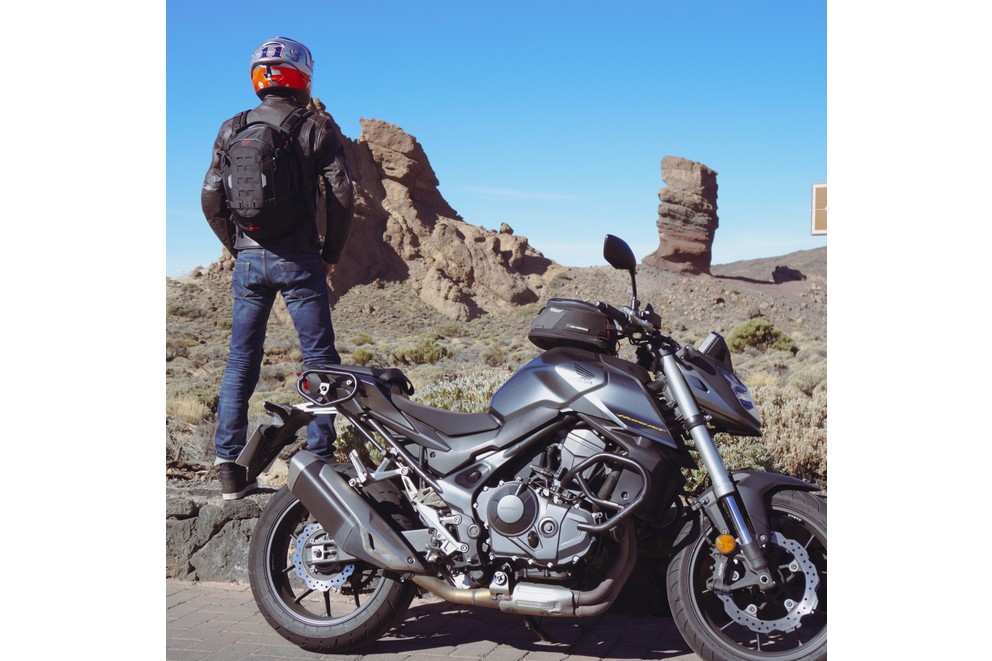
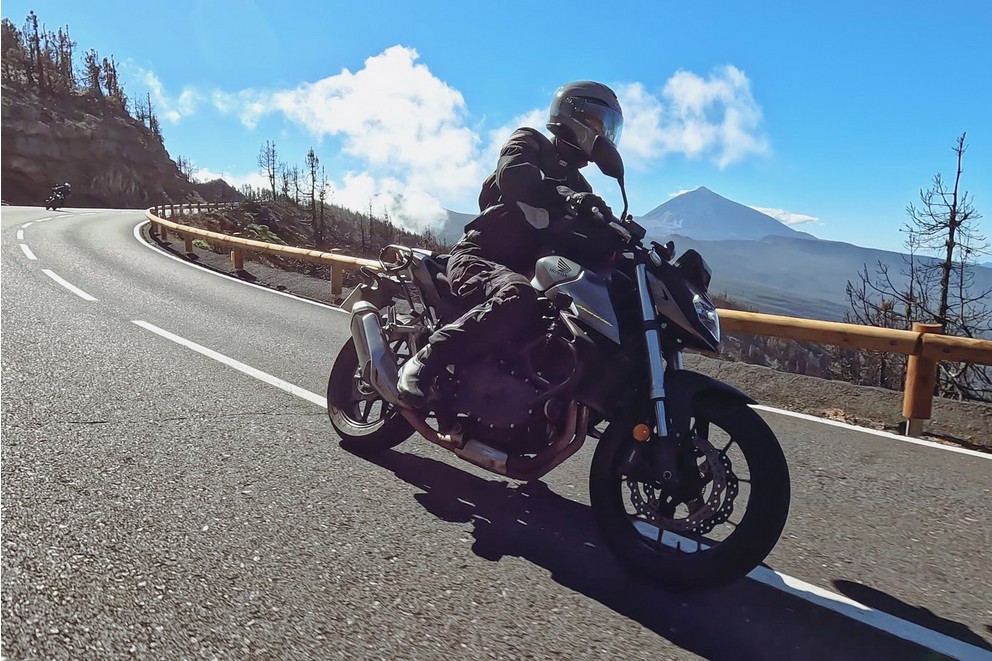
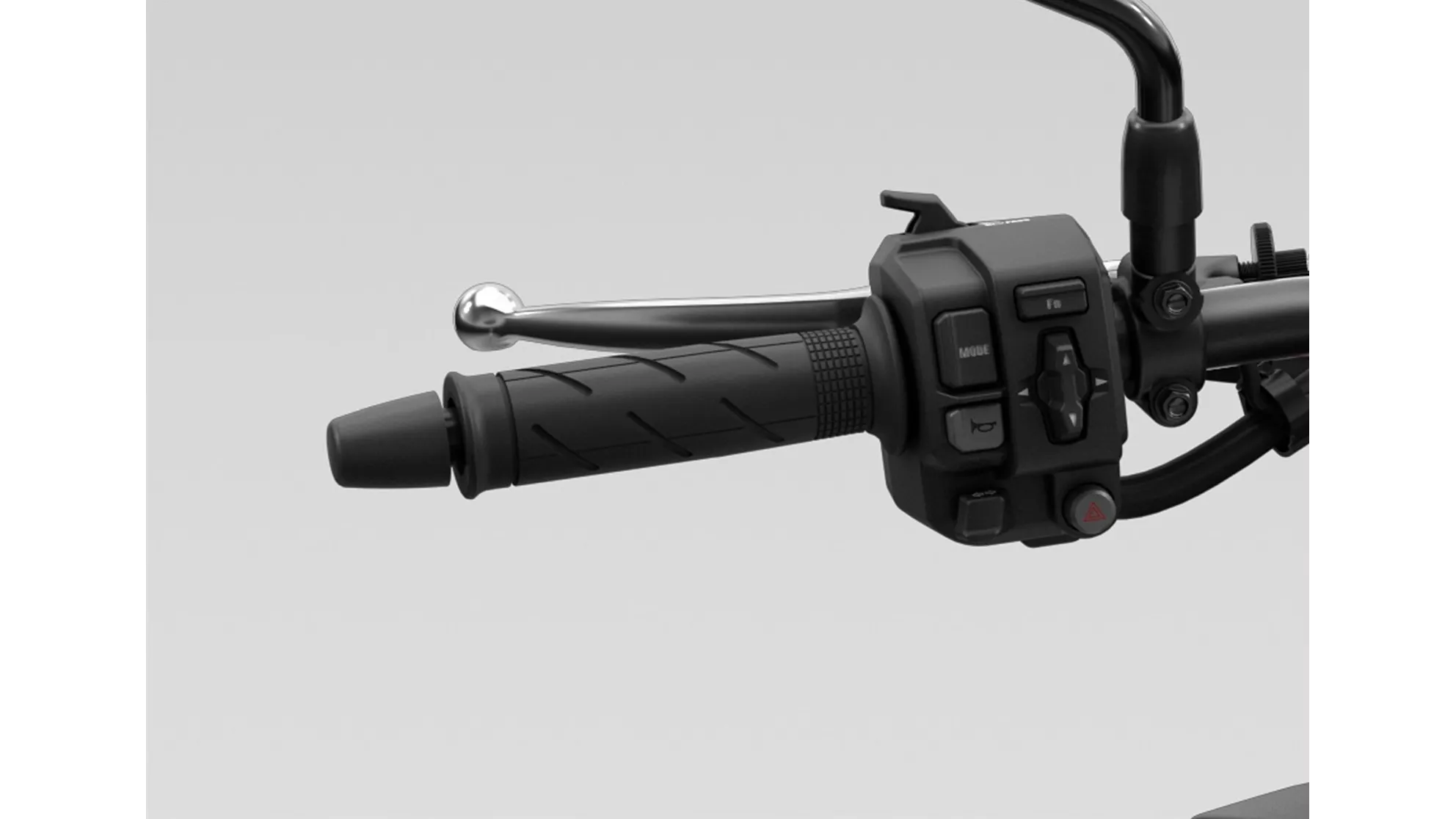
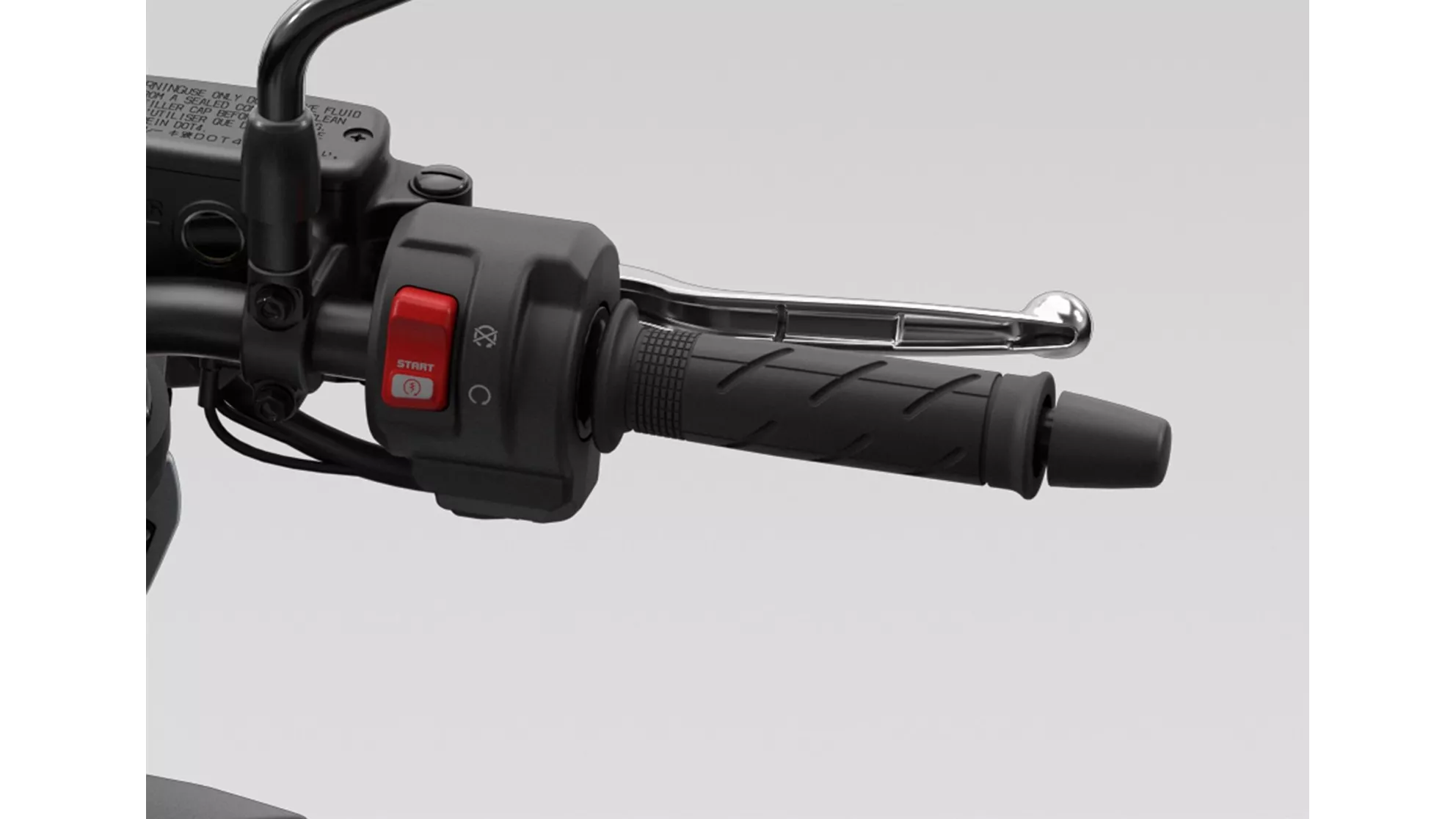
In "Rider" mode, the values for engine responsiveness, engine braking, and traction control (coupled with wheelie control) can be combined individually, and as usual, Sport, Rain and Standard offer fixed pre-programmed setups. In particular, adjusting the ride-by-wire throttle response proved genuinely helpful during our island tours: on level three, occasional on/off-throttle reactions were hard to ignore while carving sweeping corners on the wide-radius approach road up to Mount Teide. Level one, however, provides efficient relief at the push of a button and calms the chassis down - it also turns out to be the first choice for the tight hairpins of the Masca Gorge.
Good setup for brisk tours
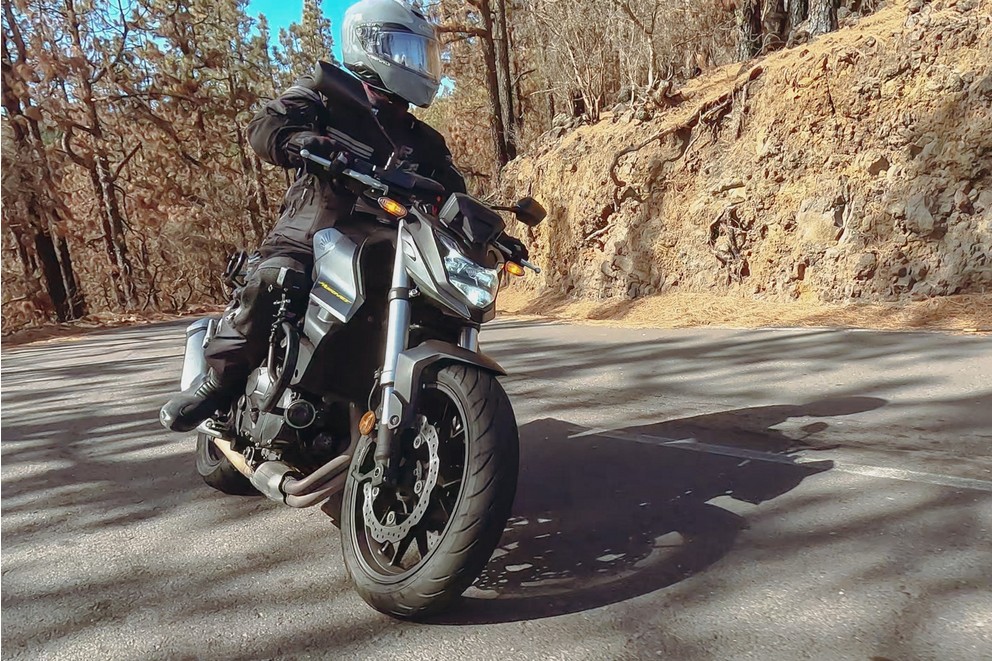
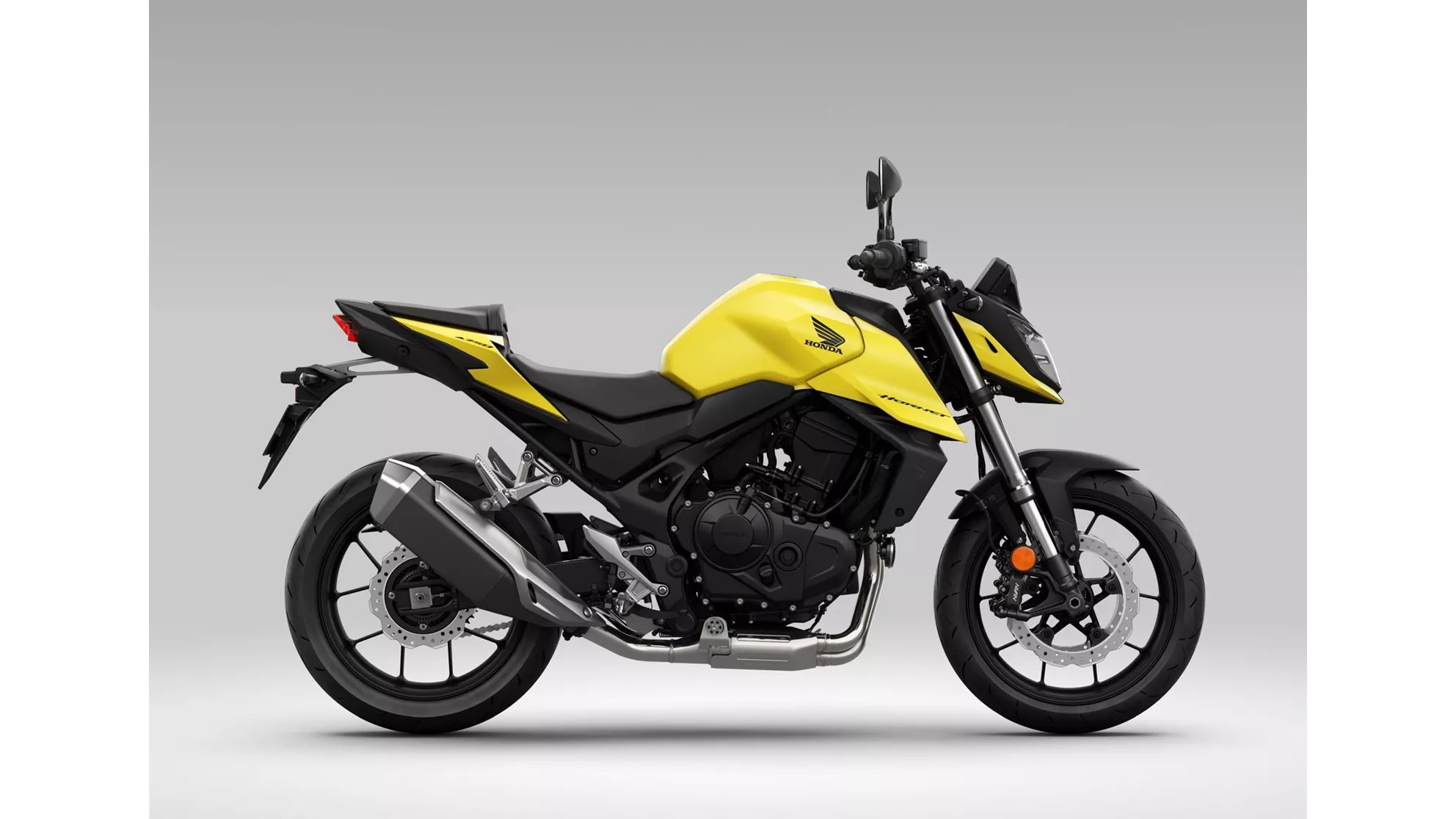
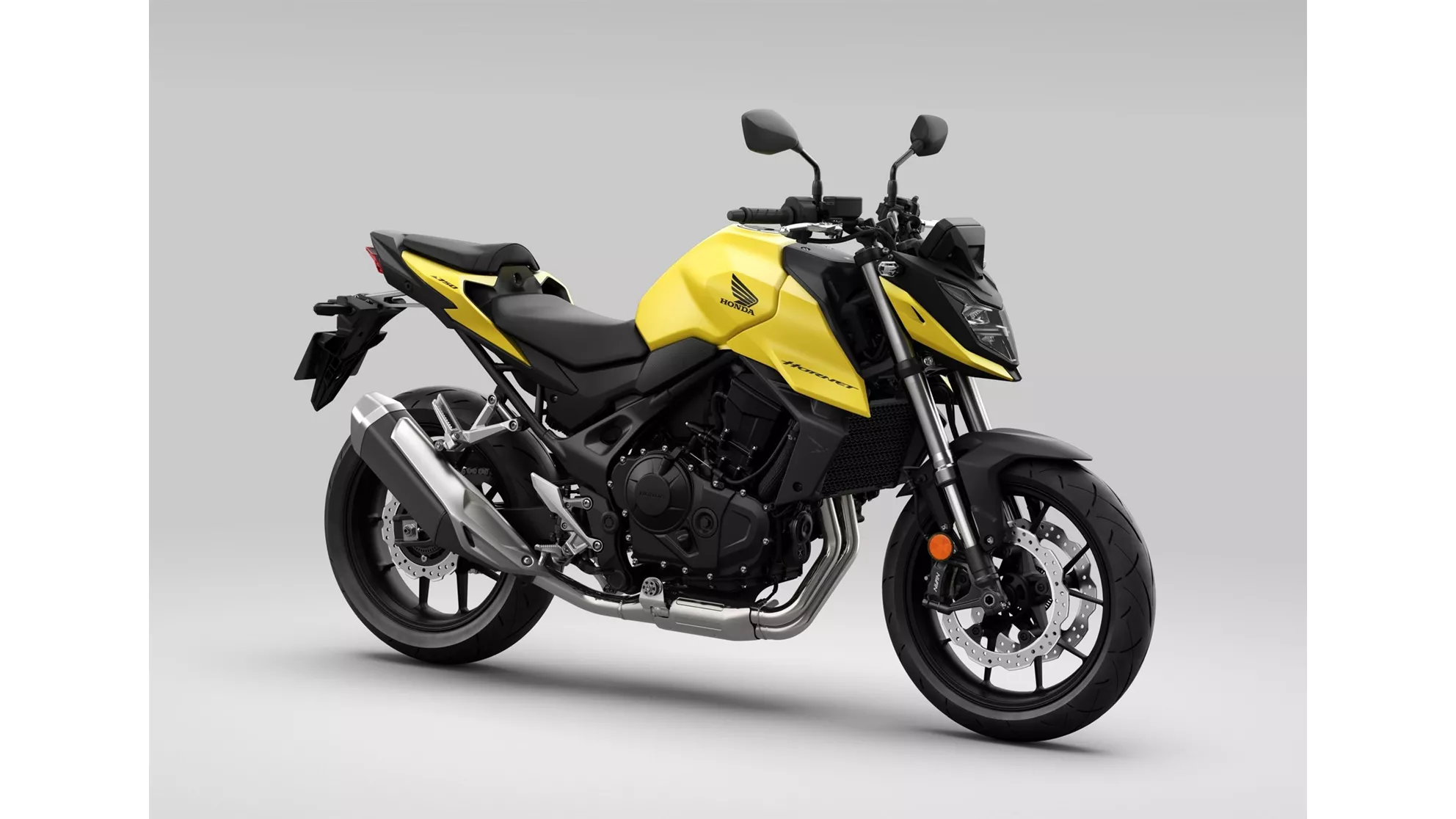
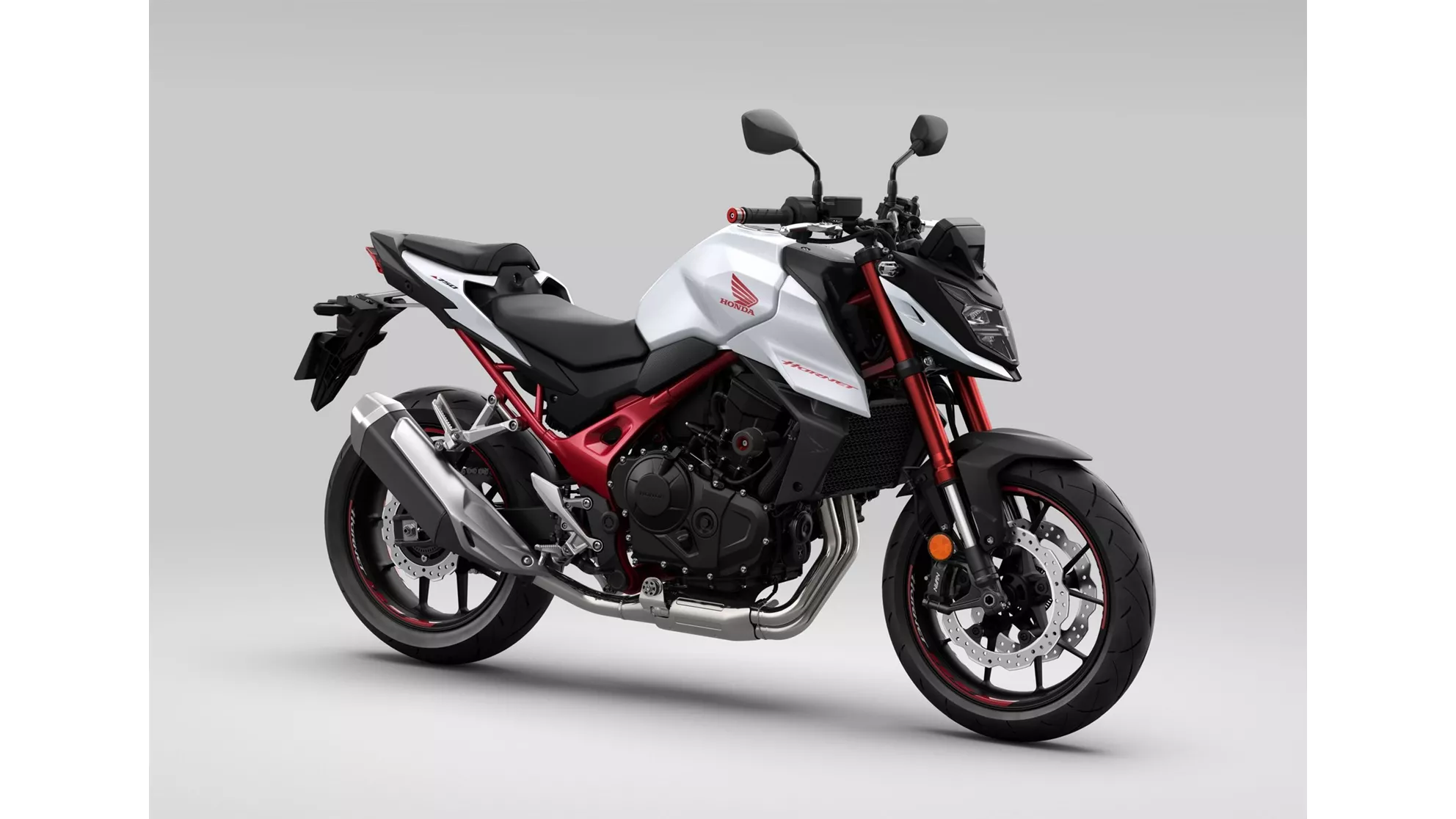
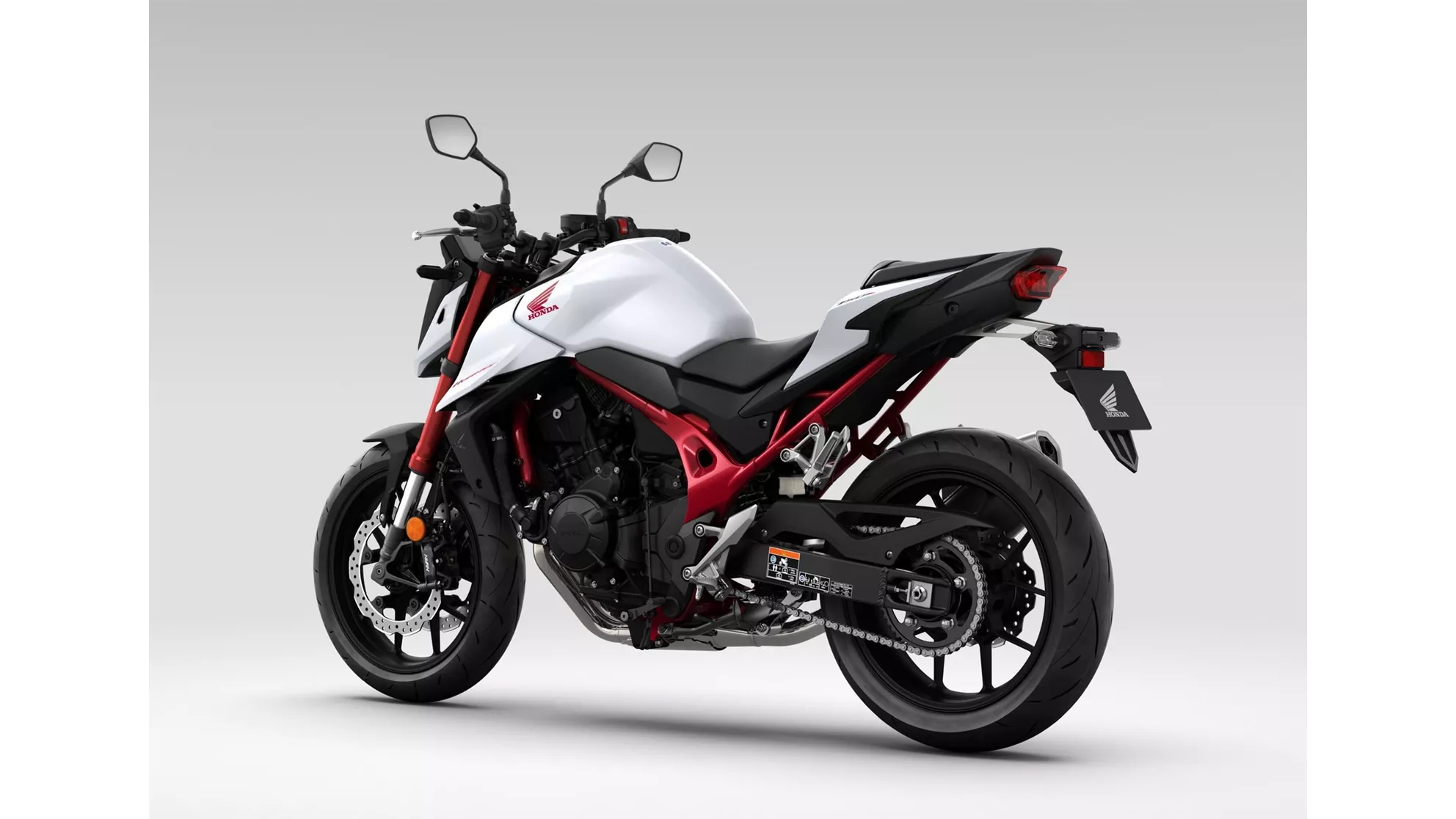
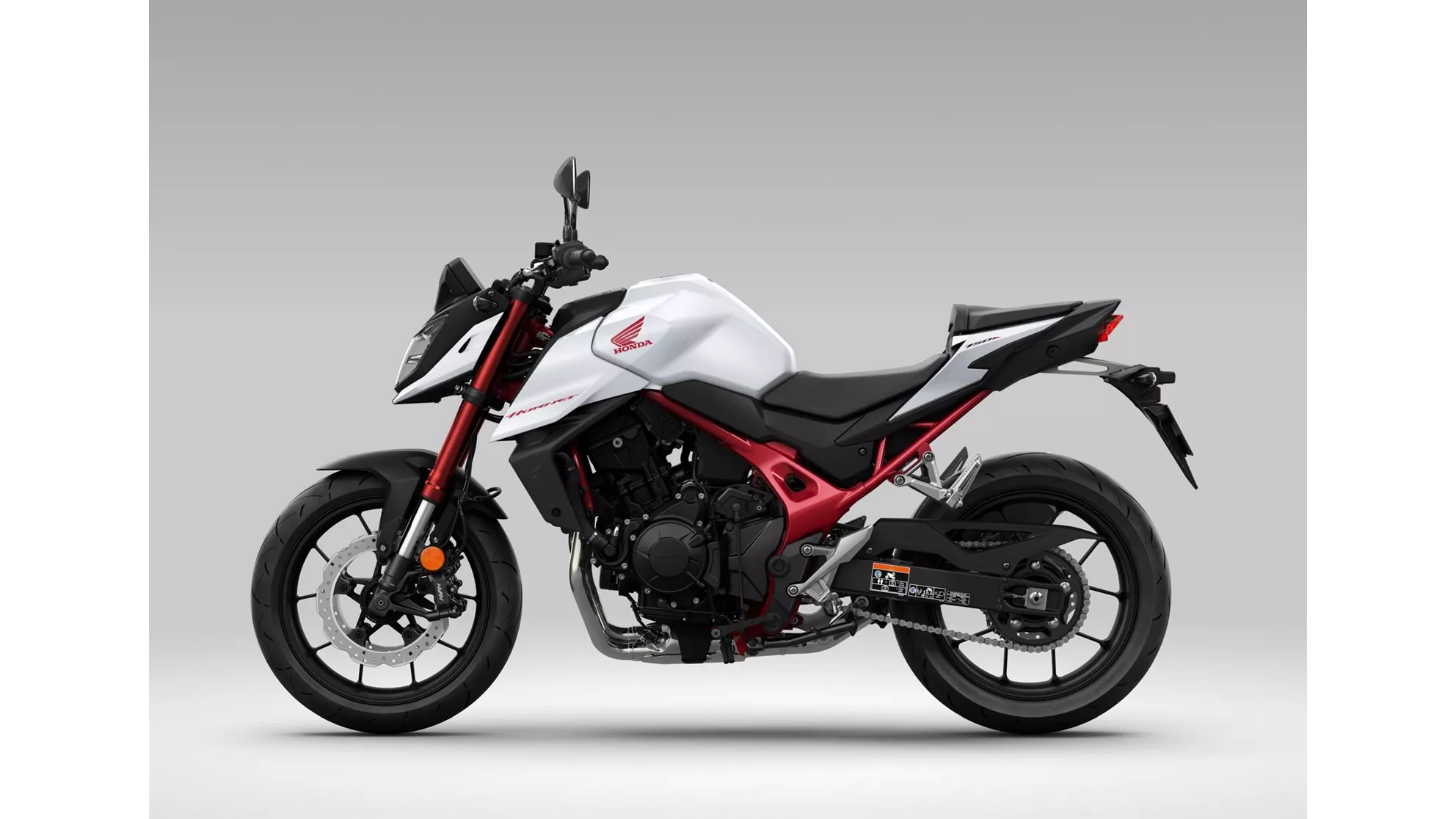
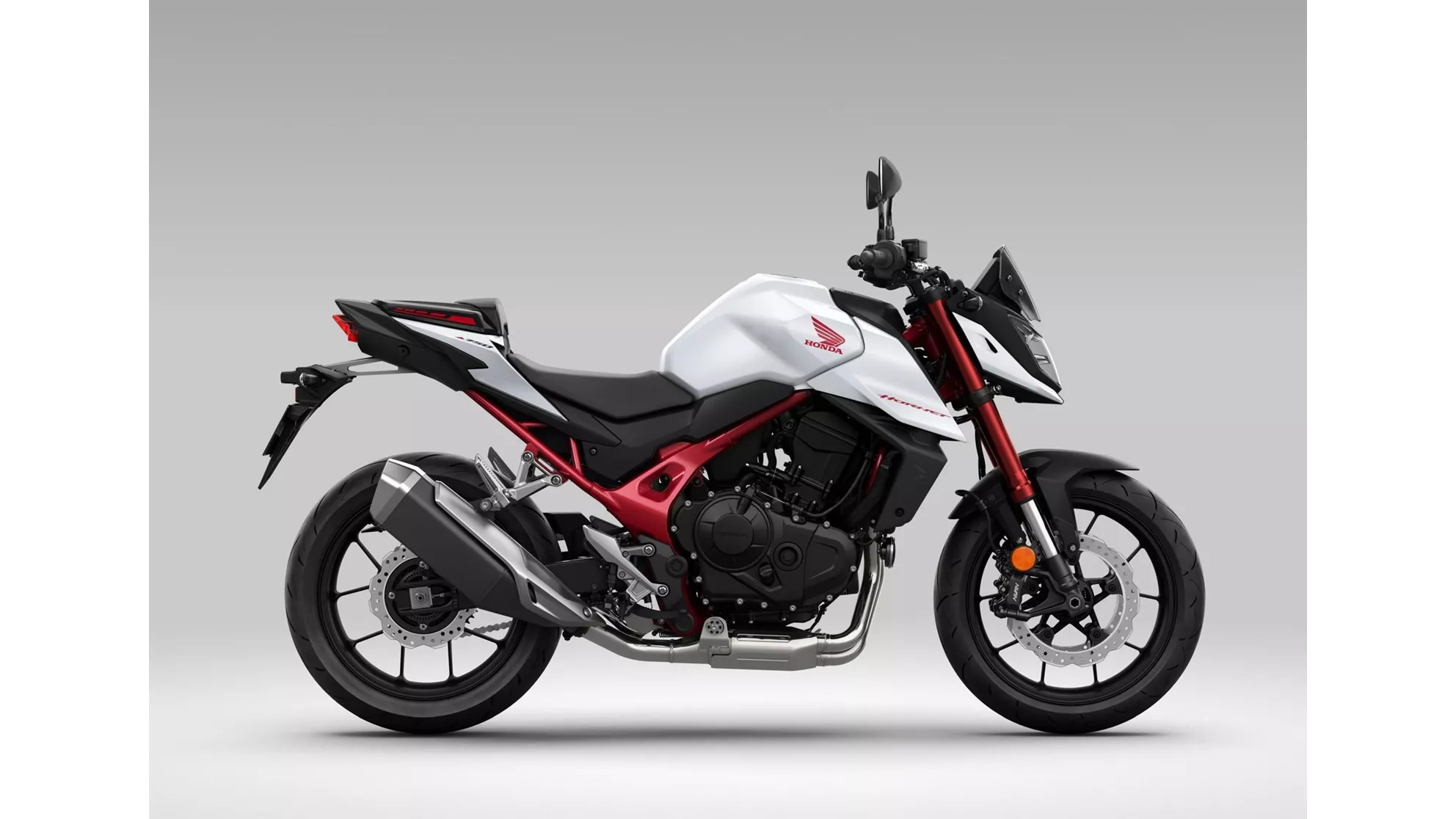
Speaking of chassis: the 16.6 kg steel bridge frame features a rear subframe welded directly to the main frame. That reduces both weight and price, but increases the chance of irreparable total damage in a crash. For the test rider's 75 kg body weight, the base setup proves spot-on for brisk touring - lucky, since apart from five-way adjustable shock preload, there's no adjustability on the Showa components with their 16 cm of travel. Not too bad, though, since the chassis performance suits the Hornet's universal remit well enough. Only under overly ambitious sporty riding do the damping reserves slowly reach their limits - at a rapid pace, the Hornet's front end tends to understeer first, and clear front-wheel feedback then falls by the wayside.
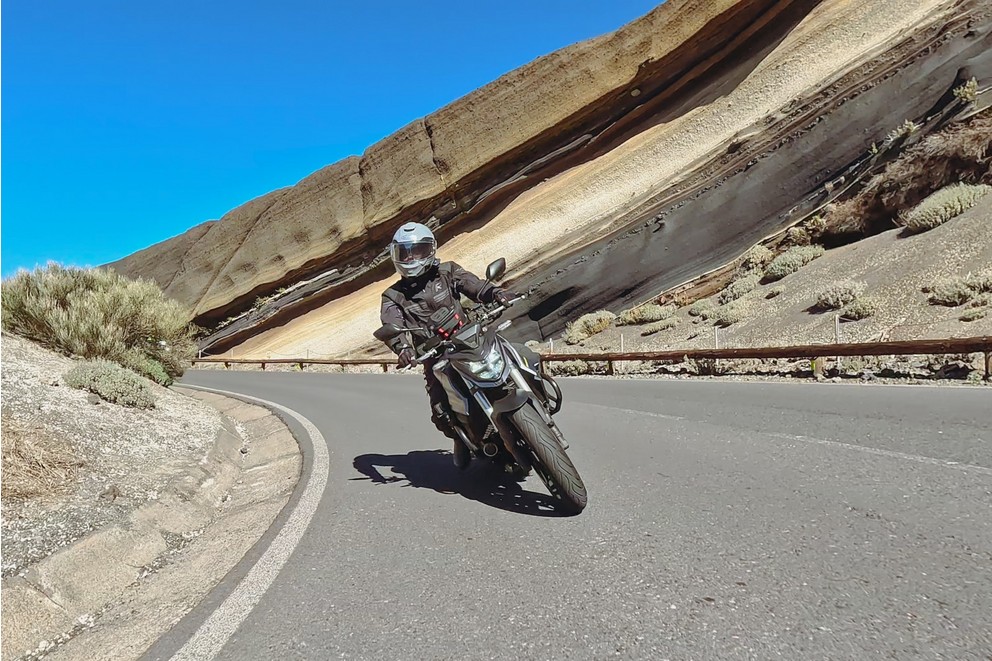
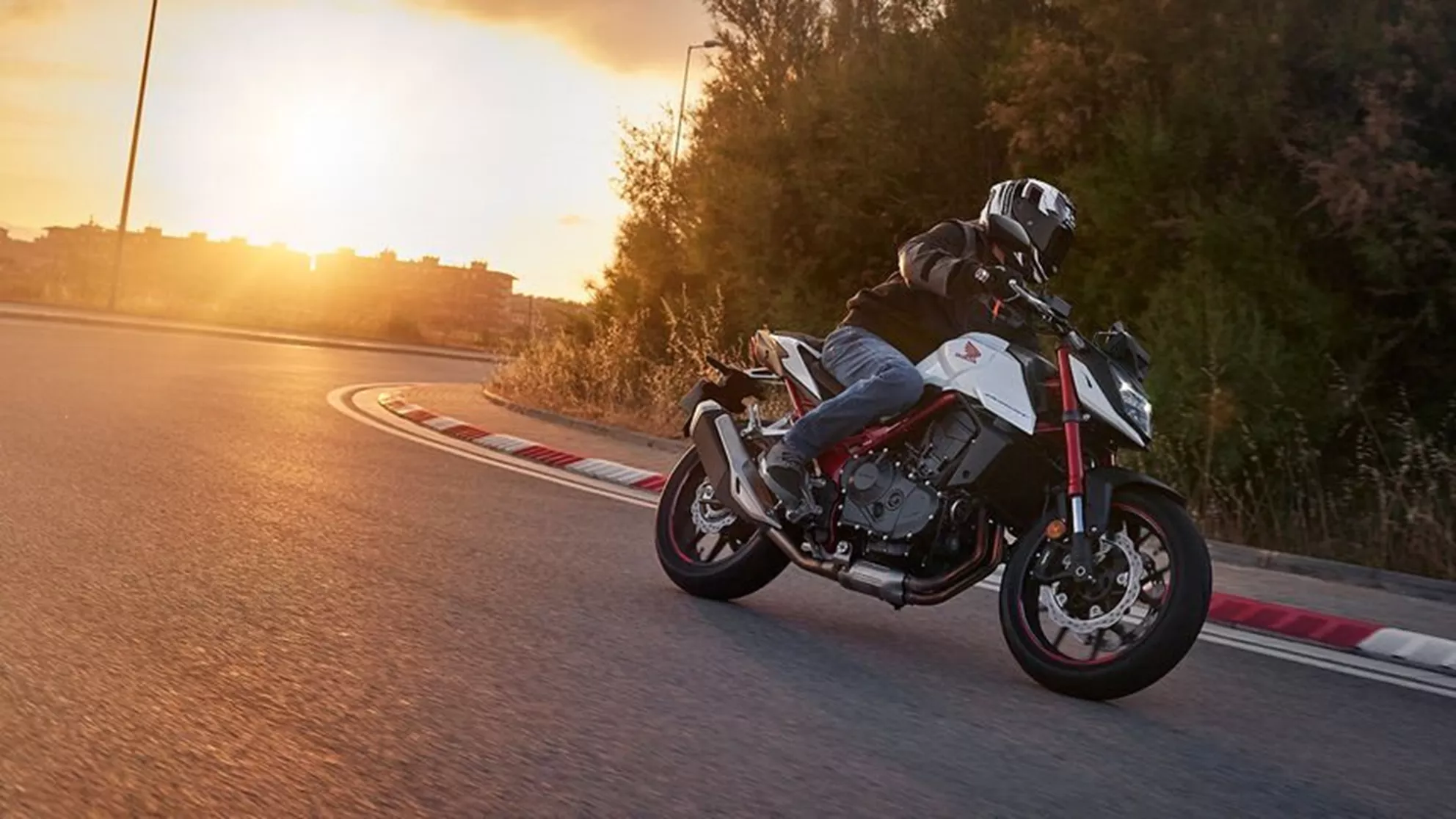
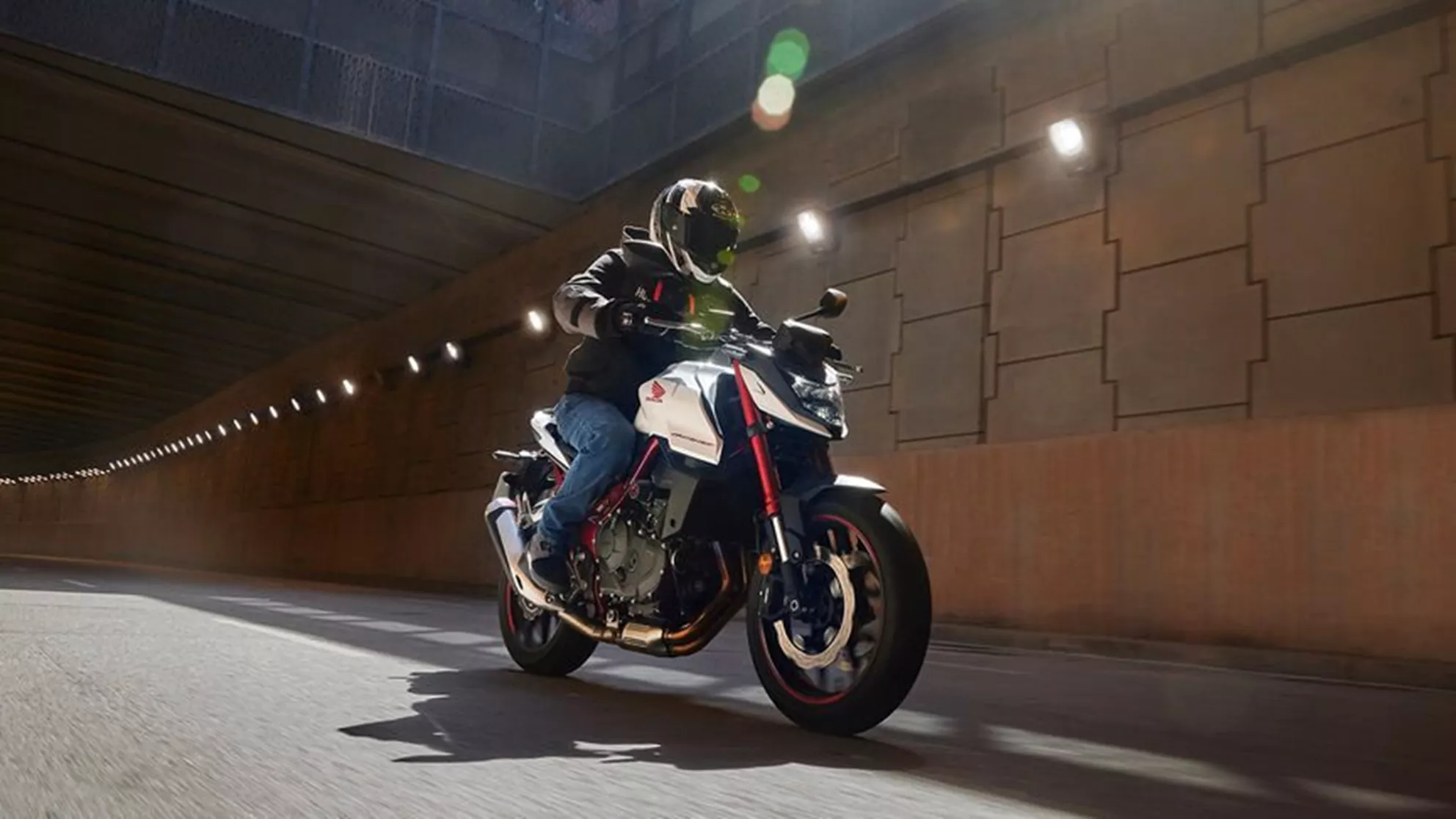
Away from the stressed pursuit of speed, however, twisty terrain and quick changes of lean angle are right up the alley of the Hornet, which tips the scales at a wet weight of just 190 kg. Contributing to this are the compact 1420 mm wheelbase, the steep steering head angle and short trail - and likely also the narrow rear tyre, unusual for this class at just 160 mm wide, which spins in a visually rather sober steel twin-sided swingarm. Admittedly, the 160-section rubber looks a touch undersized on critical inspection of the rear end, but the slim tyre positively influences riding dynamics with fabulous agility throughout. The Hornet drops into lean noticeably more nimbly than its class rivals, so steering inputs to initiate direction changes can be extremely gentle. That makes life enormously easier at touring pace and particularly pleases relaxed riders as well as less experienced ones.
The Hornet rides straight into your heart!
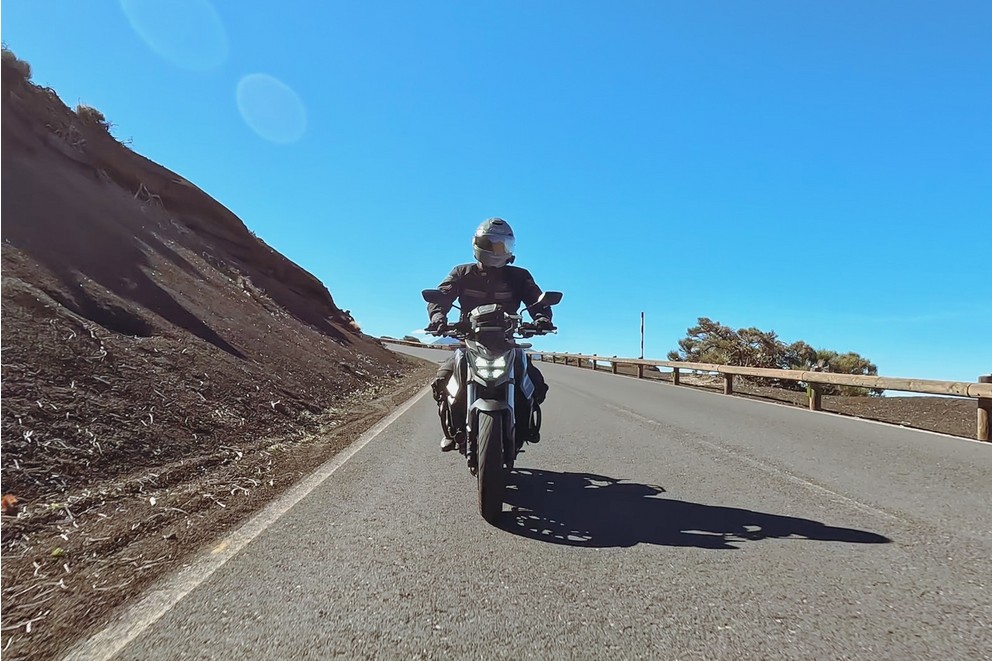
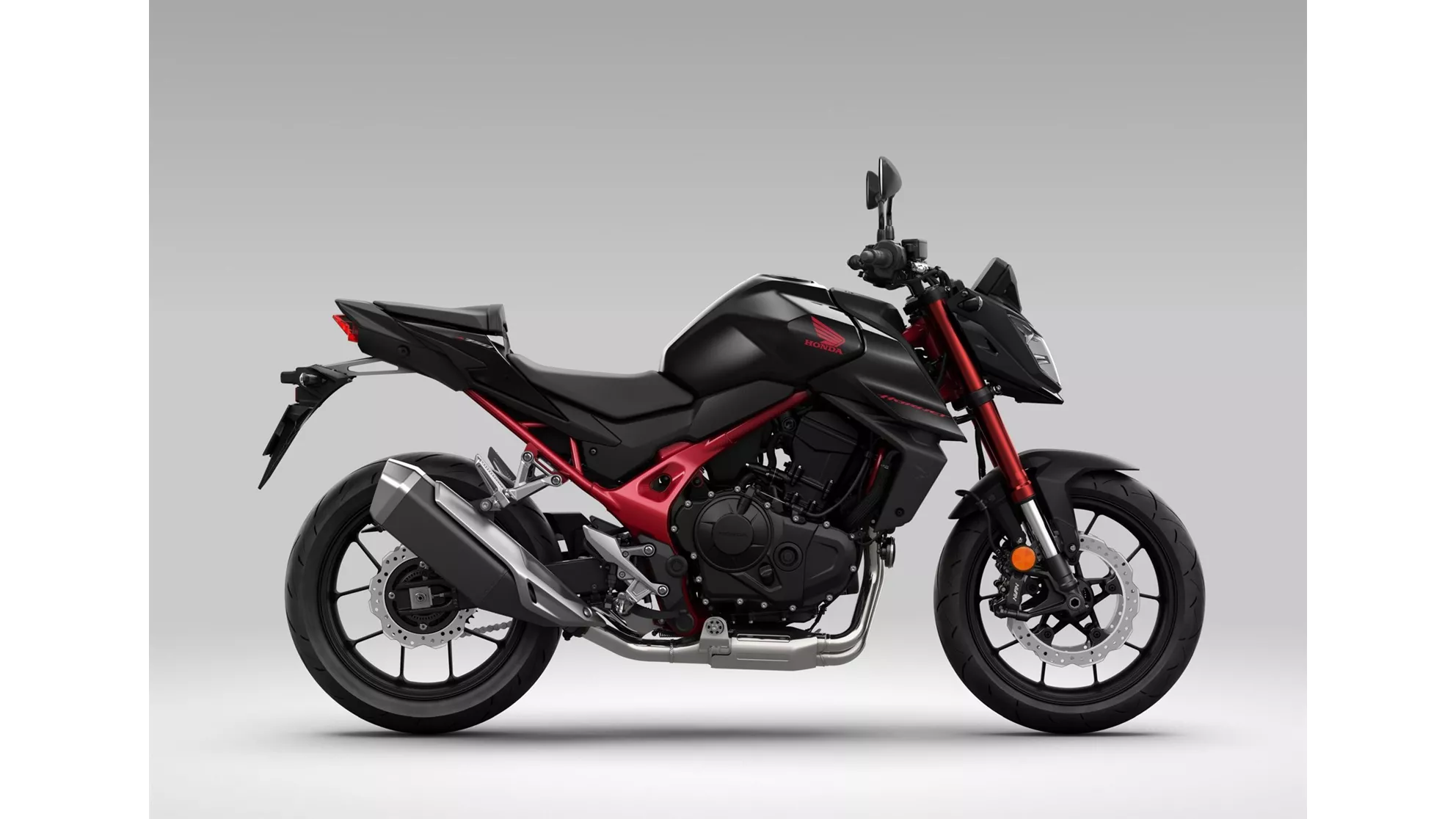
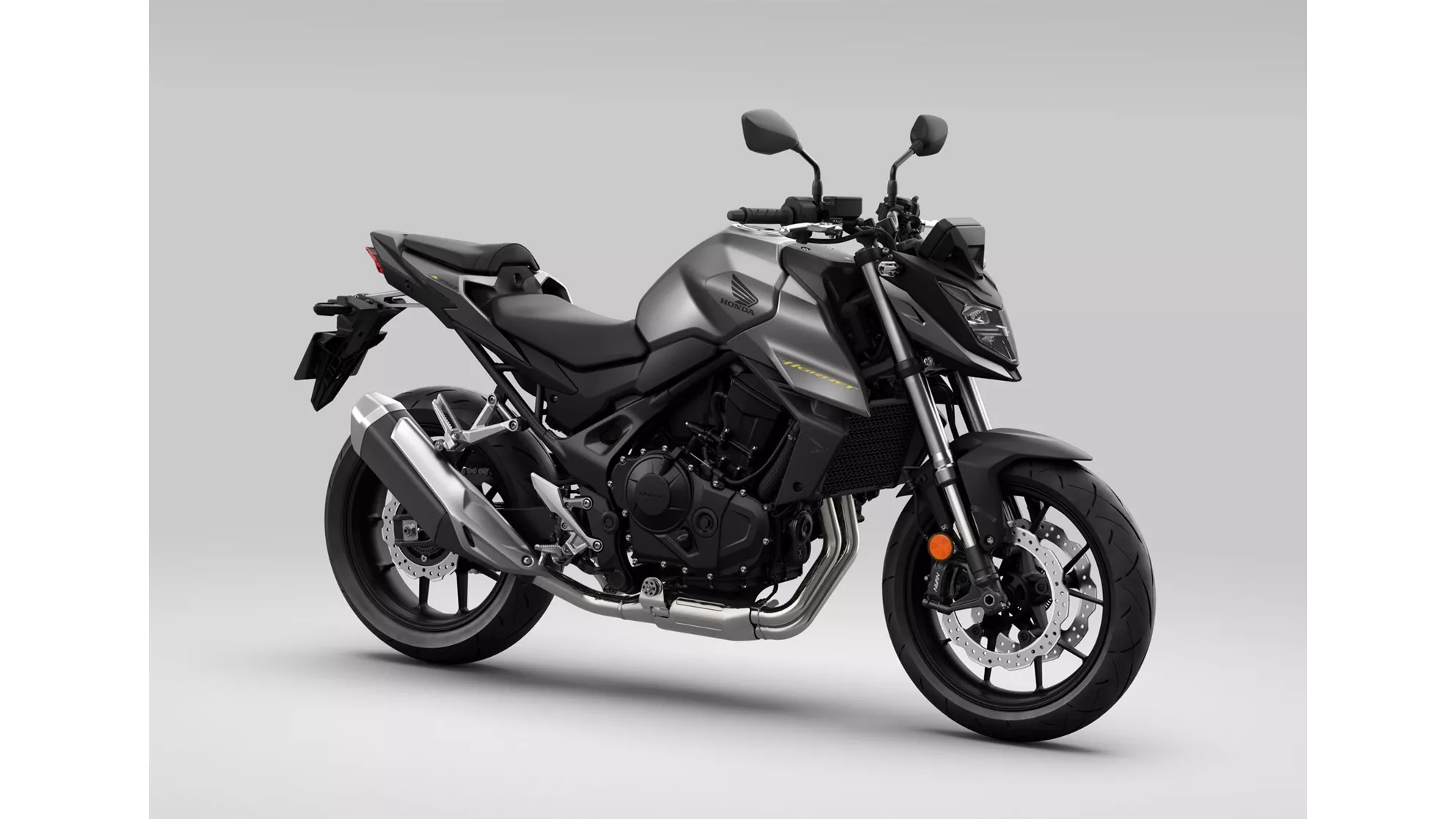
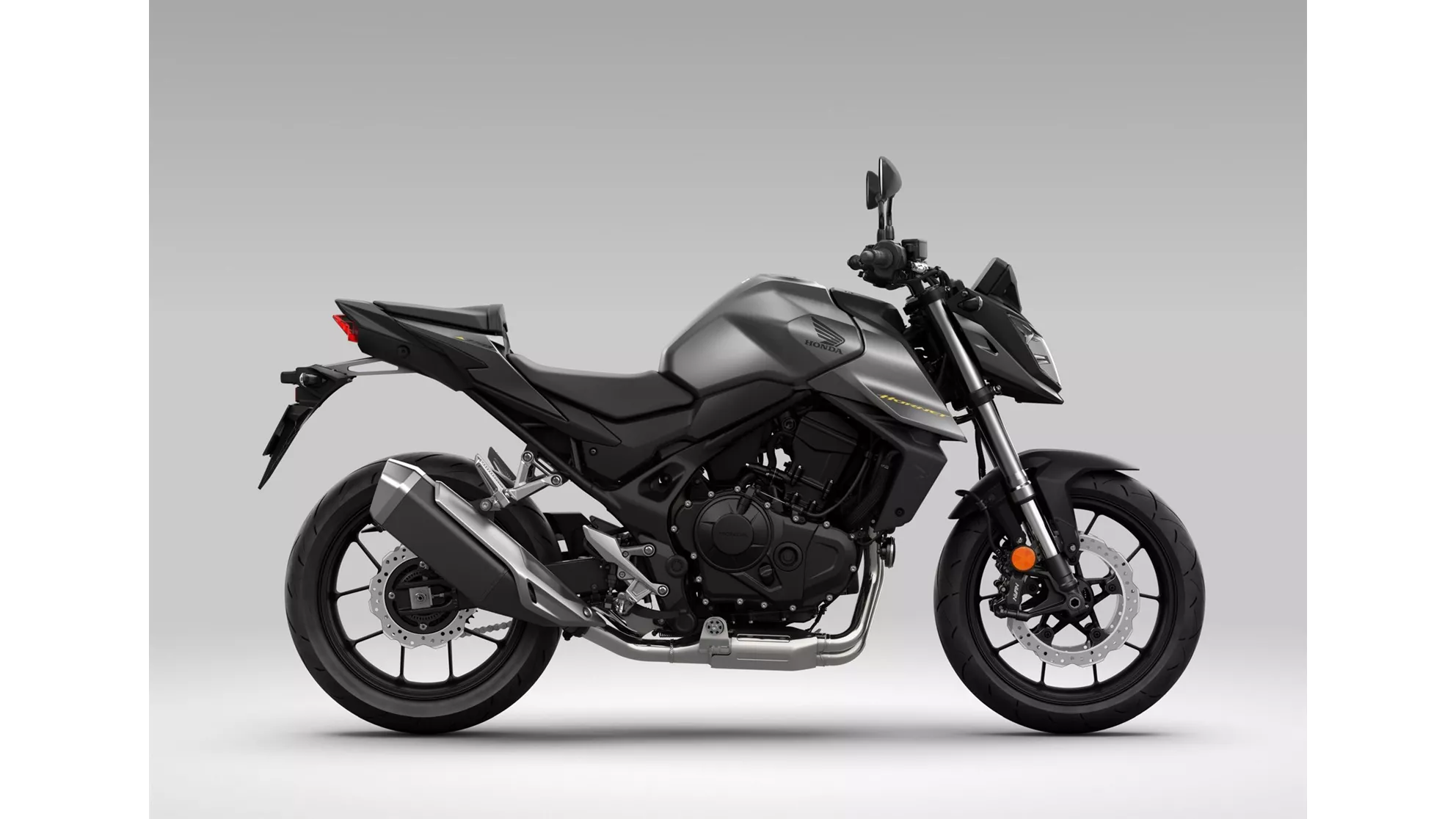
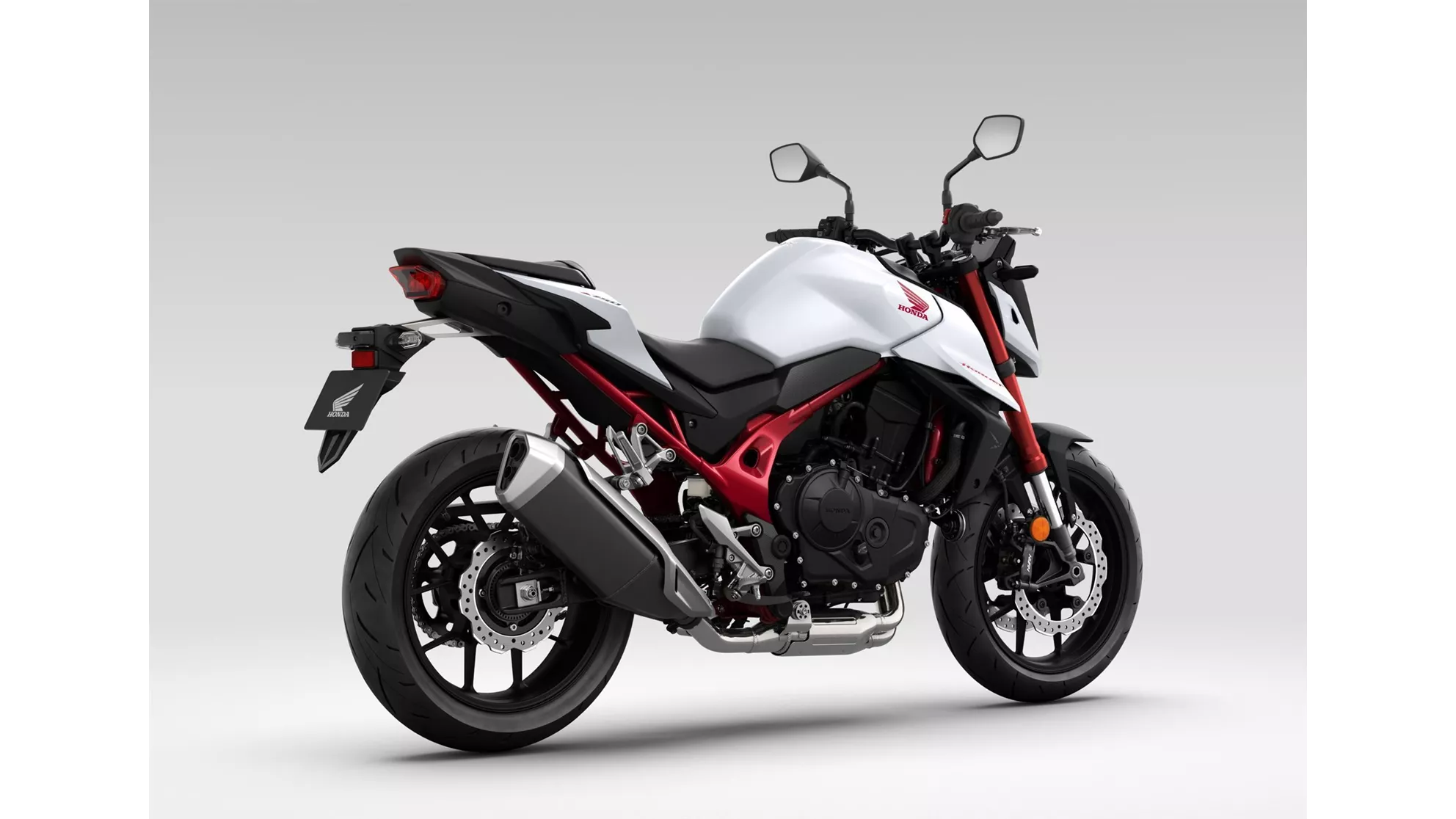
The low seat height of 795 mm as well as the relaxed seating position fit the all-round character of the naked Honda like a glove. Generally, you sit so comfortably on the Hornet that you never really start thinking about "ergonomics" while riding. The knee angle at the 15.2-litre tank is compact, the rider's seat is comfortable enough for extended day trips, the steel handlebar is comfortably bent, and the footpegs sit at exactly the right height for generous maximum lean angle without knee trouble.
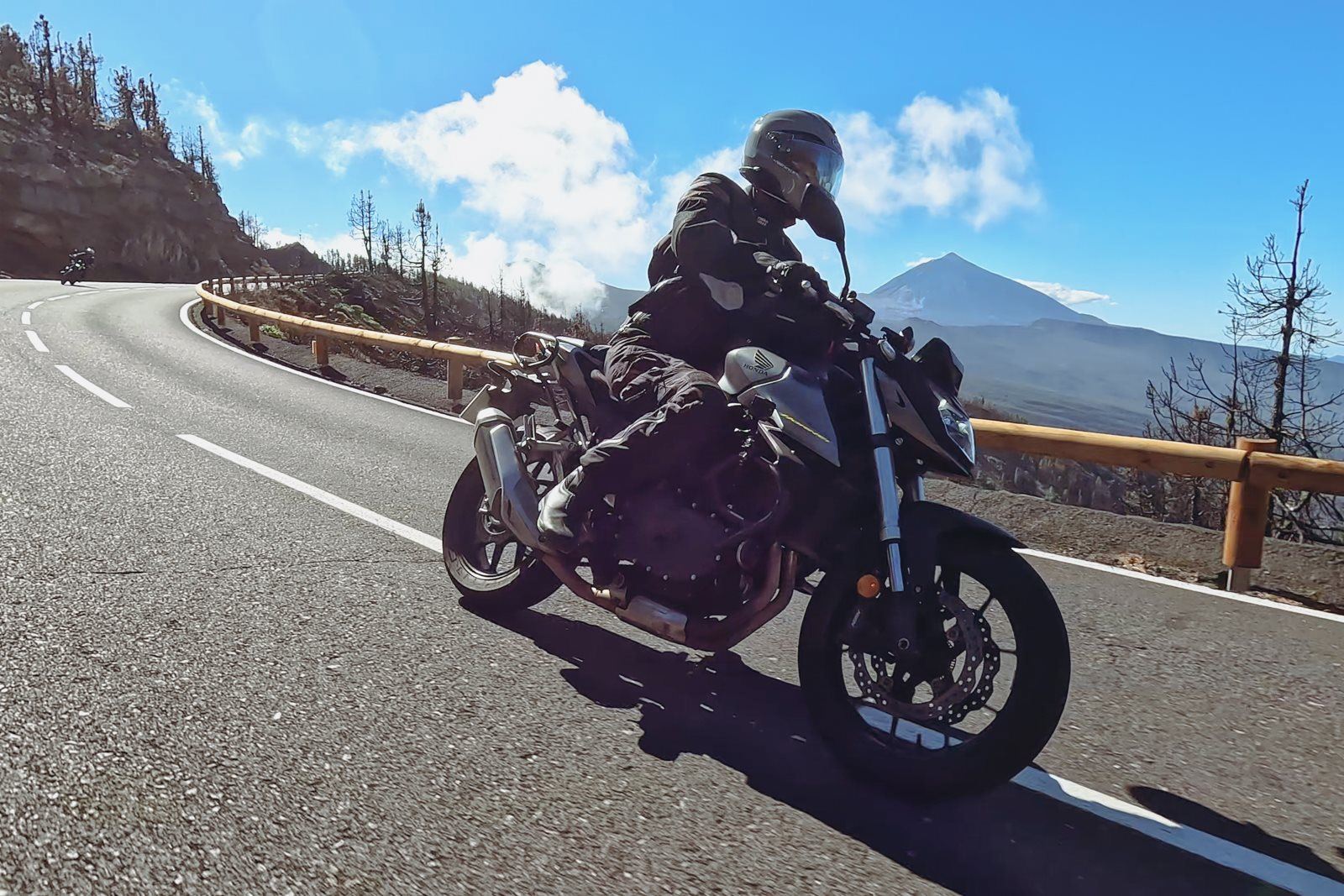
Overall, the Hornet places its rider in a rather passive, further rearward, upright and low seating position - which particularly benefits shorter riders. But even at over 180 centimetres tall, we were able to complete the intensive day rides on Tenerife from sunrise to sundowner at the hotel bar completely pain-free. The only thing we'd like to see moved for the next Hornet generation is the USB socket under the seat - up to the cockpit instead, so the power supply for our navigating phone would be more conveniently within reach.
After a week of carving up corners on the largest Canary Island, the mid-size roadster - with its Italian design (developed at Honda's design centre in Rome), its reliably familiar Japanese engineering, and its almost Scottish pricing (just 8890 euros in Austria and 8780 euros in Germany) - won our hearts right away.
Here you'll find offers and current prices for the Hornet: Buy a Honda CB750 Hornet.
- How much does a Honda CB750 Hornet cost?
- Here you will find an overview of the price level of new and used motorbikes!
&width=60&height=60&bgcolor=rgba_39_42_44_0&mode=crop "Author: 1000PS.at")
Honda CB750 Hornet 2024 - Experiences and Expert Review
1000PS.at
No one really needs more bike than what the CB750 Hornet offers for just 8890 euros (in Austria) or 8780 euros (in Germany), for universal all-round use between city transport, day-tour mount, and after-work fun rocket. A broad grin under the helmet is pretty much unavoidable on the Hornet thanks to its "easy going" character. Like a real hornet in nature, the Honda Hornet turns out to be surprisingly amiable and useful in everyday life. But if cornered, it knows exactly how to use its sting in close combat.
Honda CB750 Hornet 2024 test on Tenerife Images
Source: 1000PS